

Kirjailija
Valmiki
Kirjat ja teokset yhdessä paikassa: 48 kirjaa, julkaisuja vuosilta 1829–2026, suosituimpiin kuuluu The Great Indian Epics. Vertaile teosten hintoja ja tarkista saatavuus suomalaisista kirjakaupoista.
Nimi esiintyy myös muodoissa: . Valmiki, Vālmīki, Vâlmîki
48 kirjaa
Kirjojen julkaisuvuodet: 1829–2026.


Ce po me, unissant en lui l' quit , l'amour et le bien, est plein de vari t ; il embrasse une foule de sujets; pareil la mer qui porte les perles, il contient en lui l'essence du monde. Friedrich von Schlegel. Le R m yana signifie le parcours de R ma, ce texte fondamental de l'hindouisme est un po me sanscrit attribu au sage V lm ki. Il nous conte la naissance et l' ducation du prince R ma, la conqu te de Sita, son pouse et leur exil (R ma est le septi me avatar du dieu Vishnou). Ce texte est consid r aujourd'hui encore par beaucoup d'indiens comme un v ritable livre de d veloppement personnel lire et relire sans fin. Cette oeuvre majeure s'adresse tous ceux qui souhaitent s'initier et d couvrir l'Inde, sa culture, ses croyances, ses traditions et ses rites.
The Iliad of the East - A selection of legends drawn from Valmiki's Sanskrit poem, the Ramayana is an unchanged, high-quality reprint of the original edition of 1886. Hansebooks is editor of the literature on different topic areas such as research and science, travel and expeditions, cooking and nutrition, medicine, and other genres. As a publisher we focus on the preservation of historical literature. Many works of historical writers and scientists are available today as antiques only. Hansebooks newly publishes these books and contributes to the preservation of literature which has become rare and historical knowledge for the future.
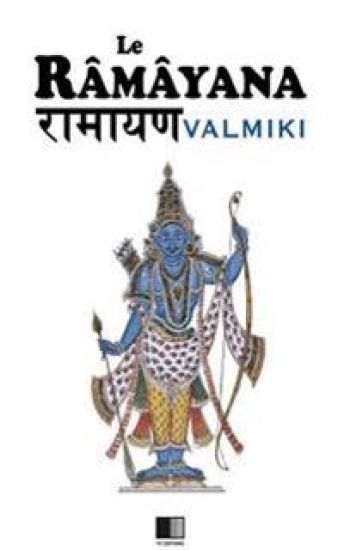
Le RAMAYANA est l'un des crits fondamentaux de l'Hindouisme. Ce texte sacr , d'une force incroyable, suscite encore de nos jours une immense ferveur.









Fleurs de l'Inde, contenant la mort de Yaznadate, episode tire de la Ramaide de Valmiki, traduit en vers latins et en vers francais, avec texte sanscrit en regard, et plusieurs autres poesies indoues, suivies de Deux chants arabes et de l'Apologue du derviche et du petit corbeau. On y a joint une troisieme edition de l'Orientalisme rendu classique dans la mesure de l'utile et du possibleDate de l'edition originale: 1857Ce livre est la reproduction fidele d'une oeuvre publiee avant 1920 et fait partie d'une collection de livres reimprimes a la demande editee par Hachette Livre, dans le cadre d'un partenariat avec la Bibliotheque nationale de France, offrant l'opportunite d'acceder a des ouvrages anciens et souvent rares issus des fonds patrimoniaux de la BnF. Les oeuvres faisant partie de cette collection ont ete numerisees par la BnF et sont presentes sur Gallica, sa bibliotheque numerique. En entreprenant de redonner vie a ces ouvrages au travers d'une collection de livres reimprimes a la demande, nous leur donnons la possibilite de rencontrer un public elargi et participons a la transmission de connaissances et de savoirs parfois difficilement accessibles. Nous avons cherche a concilier la reproduction fidele d'un livre ancien a partir de sa version numerisee avec le souci d'un confort de lecture optimal. Nous esperons que les ouvrages de cette nouvelle collection vous apporteront entiere satisfaction. Pour plus d'informations, rendez-vous sur www.hachettebnf.fr"
El Ramayana o Ramaiana (c. siglo III a. C.) es un texto pico escrito por Valmiki. Forma parte de los textos sagrados smriti (textos no revelados directamente por Dios, sino transmitidos por la tradici n). Es una de las obras m s importantes de la India antigua. Conocido ampliamente gracias a sus numerosas traducciones, el Ramayana ha ejercido importante influencia en la literatura india. El Ramayana tuvo una importante influencia en la poes a s nscrita. Siendo una de las m s importantes obras literarias de India antigua tiene un profundo impacto en el arte y la cultura del subcontinente indio y del sureste de Asia. La historia de Rama tambi n inspir numerosas obras literarias modernas en diversos lenguajes, entre los cuales se pueden resaltar los trabajos del poeta hind Tulsidas (siglo XVI), y el poeta tamil Kambar (siglo XIII). El Ramaiana no solamente es un cuento religioso. El pueblo hind comenz a colonizar el sureste de Asia en el siglo VIII, y establecieron varios reinos, como el Jemer, Majapajit, Shailendra, Champa y Sri Vijaya. Gracias a esto, el Ramaiana se volvi popular en el sureste de Asia y se manifest en la literatura y en la arquitectura de los templos, particularmente en Indonesia, Tailandia, Camboya, Laos, Malasia, Birmania, Vietnam y Filipinas.
A sweeping tale of abduction, battle, and courtship played out in a universe of deities and demons, The Ramayana is familiar to virtually every Indian. Although the Sanskrit original was composed by Valmiki around the fourth century BC, poets have produced countless versions in different languages. Here, drawing on the work of an eleventh-century poet called Kamban, Narayan employs the skills of a master novelist to re-create the excitement he found in the original. A luminous saga made accessible to new generations of readers, The Ramayana can be enjoyed for its spiritual wisdom, or as a thrilling tale of ancient conflict. (This text refers to an another abridged edition.)

A sweeping tale of abduction, battle, and courtship played out in a universe of deities and demons, The Ramayana is familiar to virtually every Indian. Although the Sanskrit original was composed by Valmiki around the fourth century BC, poets have produced countless versions in different languages. Here, drawing on the work of an eleventh-century poet called Kamban, Narayan employs the skills of a master novelist to re-create the excitement he found in the original. A luminous saga made accessible to new generations of readers, The Ramayana can be enjoyed for its spiritual wisdom, or as a thrilling tale of ancient conflict. (This text refers to an another abridged edition.)

The fifth and most popular book of the Ramáyana of Valmíki, Súndara recounts the adventures of the monkey hero Hánuman leaping across the ocean to the island citadel of Lanka. Once there, he scours the city for the abducted Princess Sita. The poet vividly describes the opulence of the court of the demon king, Rávana, the beauty of his harem, and the hideous deformity of Sita's wardresses. After witnessing Sita's stern rejection of Rávana's blandishments, Hánuman reveals himself to the princess, shows her Rama's signet ring as proof of identity, and offers to carry her back to Rama. Co-published by New York University Press and the JJC Foundation For more on this title and other titles in the Clay Sanskrit series, please visit http://www.claysanskritlibrary.org