Kirjojen hintavertailu – 12 859 819 kirjaa ja 27 kauppaa

Kirjailija

Vamik D. Volkan

Kirjat ja teokset yhdessä paikassa: 29 kirjaa, julkaisuja vuosilta 1977–2025, suosituimpiin kuuluu Enemies on the Couch. Vertaile teosten hintoja ja tarkista saatavuus suomalaisista kirjakaupoista.

Nimi esiintyy myös muodoissa: Vamik D Volkan

29 kirjaa

Kirjojen julkaisuvuodet: 1977–2025.

Human Aggression, War and Genocide: The Psychological Roots of Violence

Human Aggression, War and Genocide: The Psychological Roots of Violence

Kevin Volkan; Vamik D. Volkan

Pitchstone Publishing
2025
nidottu
Human Aggression, War and Genocide explores sociopolitical phenomena through the lens of psychoanalysis and neuroscience, concentrating on concepts like aggression, leadership, and the psychology of ethnic, national, religious, and ideological large groups. Drawing inspiration from the famous " Why war?" exchange between Albert Einstein and Sigmund Freud that examined the psychological roots of war and violence, the authors expand on that discussion to examine racism, large-group dynamics, chosen traumas and chosen glories, and the relationship between leaders and their followers. Offering psychological analysis and insight into historical and contemporary conflicts, including the Russia-Ukraine and Israel-Hamas wars, they provide a novel insights for understanding the psychological conditions that lead to large-scale human aggression, war, and genocide.
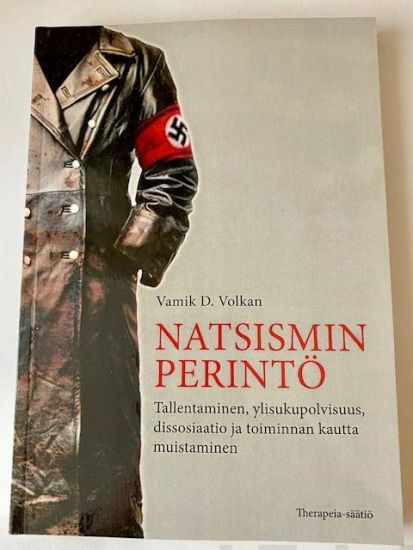
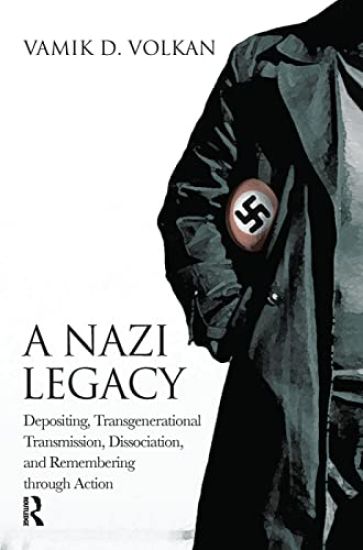
Natsismin perintö

Natsismin perintö

Vamik D Volkan

THERAPEIA-SÄÄTIÖ
2020
nidottu
Natsismin perintö (A Nazi Legacy) kuvaa edellisen sukupolven kokemusten tiedostamatonta siirtymistä seuraaville sukupolville. Ylisukupolvisuuden ilmiö havainnollistuu kirjassa hyvin elävästi. Psykoanalyysissa oleva potilas toimi öisin dissosiatiivisessa tilassa tuottaen hämmennystä läheisilleen. Hoidon aikana avautui vähitellen oireiden yhteys potilaan isoisän natsimenneisyyteen, josta potilas ei ollut lainkaan tietoinen. Kirja auttaa ymmärtämään erityisesti laajoja joukkoilmiöitä sekä sotaa ja väkivaltaa kokeneiden ihmisten traumoja ja syventää näkemystä psykoanalyyttisen psykoterapian merkityksestä muunlaisten traumakokemusten kohtaamisessa. Kirjaa suositellaan kaikille psykoterapiatyötä tekeville ja ihmismielen toiminnasta kiinnostuneille.
Would-Be Wife Killer

Would-Be Wife Killer

Vamik D. Volkan

Routledge
2019
sidottu
The author believes that studying a therapeutic process closely from its beginning to its termination is one of the best ways to observe, learn, and teach psychoanalytic concepts. This book is unusual since it describes a man's drastic internal psychological changes over forty years. He was thirty-nine years old when he wanted to cut off his wif
Animal Killer

Animal Killer

Vamik D. Volkan

Routledge
2019
sidottu
A psychoanalytic process from its beginning to its termination is described to illustrate crucial technical issues in the treatment of individuals with narcissistic personality organization and the countertransference manifestations such patients stimulate in the analyst. The subject of this book exhibited cruelty to confirm and stabilize his grandiosity. His internal world was a "reservoir" of the deposited image of his father figure, an individual most severely traumatized during World War II. The patient was given the task to be a mass-"killer" of animals instead of being a hunted one. This book most clearly illustrates how the transgenerational transmission of trauma takes place and how the impact of war continues in future generations. The book also provides an understanding of a special kind of psychological motivation that directs a person to use weapons for mass killing. In this era of pluralism in psychoanalysis, providing the story of a psychoanalytic case in its duration opens ways for comparison and discussion of technique and can be used as a teaching tool.
Siblings in the Unconscious and Psychopathology

Siblings in the Unconscious and Psychopathology

Gabriele Ast; Vamik D. Volkan

Routledge
2019
sidottu
This book examines adults' identifications and internal relationships with their siblings' mental representations. The authors believe that the best way to illustrate clinical formulations and psychoanalytic theoretical concepts is to provide detailed clinical data. The influence of childhood sibling experiences and associated unconscious fantasies, in their own right, in adults' personality characteristics, behaviour patterns, and symptoms are presented from seventeen case reports. Clinicians who have patients with fear of pregnancy, claustrophobia, incestuous fantasies, extreme dependency on or murderous rage against siblings, guilt due to the death of a sister or brother in childhood, replacement child syndrome, history of adoption, certain types of animal phobias and related issues will find this volume most helpful. The authors have made a rare, but needed, psychoanalytic contribution that examines mental representations of sisters and brothers in our daily lives.
Immigrants and Refugees

Immigrants and Refugees

Vamik D. Volkan

Routledge
2019
sidottu
Aside from the many political, cultural and economic aspects of the present refugee crisis in Europe, it is also crucial to consider the psychological element. In our fast-changing world, globalisation, advances in communication technology, fast travel, terrorism and now the refugee crisis make psychoanalytic investigation of the Other a major necessity. Psychoanalyst Vamik Volkan, who left Cyprus for the US as a young man, brings his own experiences as an immigrant to bear on this study of the psychology of immigrants and refugees, and of those who cross paths with them. In Part 1, case examples illustrate the impact of traumatic experiences, group identity issues, and how traumas embedded in the experience of immigrants and refugees can be passed down from one generation to the next. Part 2 focuses on the host countries, considering the evolution of prejudice and how fear of newcomers can affect everything from international politics to the way we behave as individuals.
Life After Loss

Life After Loss

Vamik D. Volkan; Elizabeth Zintl

Routledge
2019
sidottu
How we cope with grief and come to terms with the death of a loved one shapes our world. In this comprehensive guide to the mourning process, Dr Volkan, a world-recognised authority on grief, shows how each mourning is as individualised as our fingerprints, encoded with our past history of losses. Anecdotal and compassionate, this is a profoundly moving and informative study of how grief and loss shape all our lives.
A Nazi Legacy

A Nazi Legacy

Vamik D. Volkan

Routledge
2019
sidottu
This book relates the psychoanalytic journey of a man in his thirties, a grandson of a high-level SS officer, whose case illustrates how individuals can sometimes suffer greatly or cause the suffering of other innocent persons, simply because they are descendants of perpetrators. In it, technical considerations in treating such an individual, including countertransference issues and concepts related to transgenerational transmissions-for example, identification, depositing, dissociation, encapsulation, and remembering through actions-are explored. The man had a repeating daydream of carrying a big egg under his arm. The imagined egg, representing his encapsulated dissociated state, contained the mental representation of his Nazi grandfather and his grandfather's victims, along with images of most tragic historical events. He attempted to turn his grandfather's image from a life-taker to a life-giver and wished to own the older man's grandiose specialness, while fearing the loss of his own life. These opposite aims created unnamed "catastrophes".
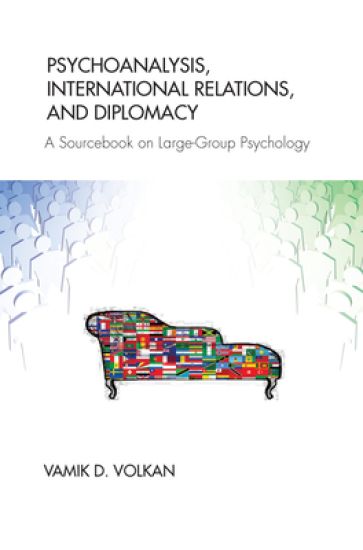
Psychoanalysis, International Relations, and Diplomacy
The author has three goals in writing this book. The first is to explore large-group identity such as ethnic identity, diplomacy, political propaganda, terrorism and the role of leaders in international affairs. The second goal is to describe societal and political responses to trauma at the hands of the Other, large-group mourning, and the appearance of the history of ancestors and its consequences. The third goal is to expand theories of large-group psychology in its own right and define concepts illustrating what happens when tens of thousands or millions of people share similar psychological journeys. The author is a psychoanalyst who has been involved in unofficial diplomacy for thirty-five years. His interdisciplinary team has brought "enemy" representatives, such as Israelis and Arabs, Russians and Estonians, Georgians and South Ossetians, together for dialogue. He has spent time in refugee camps and met many world leaders.
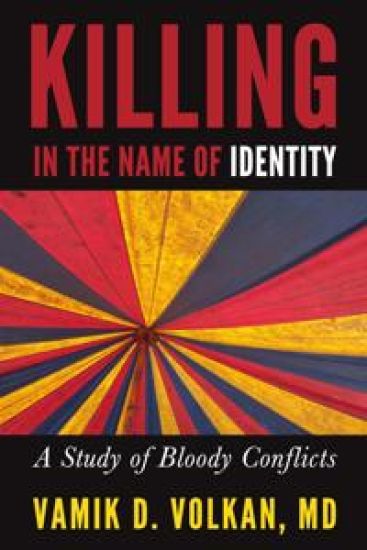
Killing in the Name of Identity

Killing in the Name of Identity

Vamik D. Volkan

Pitchstone Publishing
2019
pokkari
“Why do we kill ‘the other’?” Vamik D. Volkan offers a compelling, humane, and universal response to a central riddle of the human condition. In this far-reaching and timely book, Volkan explains the relationship between large-group identities and massive traumas and current events and conflicts around the world, including those related to the horrific attacks of 9/11. In the process, he takes the reader deep into the dark and vulnerable collective mind of ethnic, religious, cultural, and national group conflict. Through his eyes and words, we find ourselves looking into and making contact with the universal elements present in humanity and in ourselves that converge in producing the conditions for great human tragedies. Perhaps no one understands nor writes about large-group terror and violence in a more compassionate and profoundly instructive way.
Immigrants and Refugees

Immigrants and Refugees

Vamik D. Volkan

Karnac Books
2017
nidottu
Aside from the many political, cultural and economic aspects of the present refugee crisis in Europe, it is also crucial to consider the psychological element. In our fast-changing world, globalisation, advances in communication technology, fast travel, terrorism and now the refugee crisis make psychoanalytic investigation of the Other a major necessity. Psychoanalyst Vamik Volkan, who left Cyprus for the US as a young man, brings his own experiences as an immigrant to bear on this study of the psychology of immigrants and refugees, and of those who cross paths with them. In Part 1, case examples illustrate the impact of traumatic experiences, group identity issues, and how traumas embedded in the experience of immigrants and refugees can be passed down from one generation to the next. Part 2 focuses on the host countries, considering the evolution of prejudice and how fear of newcomers can affect everything from international politics to the way we behave as individuals.
A Nazi Legacy

A Nazi Legacy

Vamik D. Volkan

Karnac Books
2015
nidottu
This book relates the psychoanalytic journey of a man in his thirties, a grandson of a high-level SS officer, whose case illustrates how individuals can sometimes suffer greatly or cause the suffering of other innocent persons, simply because they are descendants of perpetrators. In it, technical considerations in treating such an individual, including countertransference issues and concepts related to transgenerational transmissions-for example, identification, depositing, dissociation, encapsulation, and remembering through actions-are explored. The man had a repeating daydream of carrying a big egg under his arm. The imagined egg, representing his encapsulated dissociated state, contained the mental representation of his Nazi grandfather and his grandfather's victims, along with images of most tragic historical events. He attempted to turn his grandfather's image from a life-taker to a life-giver and wished to own the older man's grandiose specialness, while fearing the loss of his own life. These opposite aims created unnamed "catastrophes".
Life After Loss

Life After Loss

Vamik D. Volkan; Zintl Elizabeth

Karnac Books
2015
nidottu
How we cope with grief and come to terms with the death of a loved one shapes our world. In this comprehensive guide to the mourning process, Dr Volkan, a world-recognised authority on grief, shows how each mourning is as individualised as our fingerprints, encoded with our past history of losses. Anecdotal and compassionate, this is a profoundly moving and informative study of how grief and loss shape all our lives.
Would-Be Wife Killer

Would-Be Wife Killer

Vamik D. Volkan

Karnac Books
2015
nidottu
The author believes that studying a therapeutic process closely from its beginning to its termination is one of the best ways to observe, learn, and teach psychoanalytic concepts. This book is unusual since it describes a man's drastic internal psychological changes over forty years. He was thirty-nine years old when he wanted to cut off his wife's head with an axe and he was hospitalized; previous to this incident he had delusions and hallucinations. He died at age eighty-two as a beloved community leader. The author provides clinical illustrations of primitive transference and counter transference manifestations. He defines "satellite states" in which an individual finds a balance between experiencing individuation and remaining dependent on the Other and "crucial juncture" experiences that are necessary to learn how to integrate self and object images and move up the developmental steps. Various concepts such as the replacement child, actualized unconscious phantasy, emotional flooding, and linking interpretation and therapeutic play are explored.
Third Reich in the Unconscious

Third Reich in the Unconscious

Vamik D. Volkan; Gabriele Ast; Jr. Greer

Routledge
2014
nidottu
The Third Reich in the Unconscious: TransgenerationalTransmission and Its Consequences examines the effects of the Holocaust on second-generation survivors and specifically describes how historical images and trauma are transferred. The authors reveal the many ways in which the psychological legacy of the Nazi regime manifests itself in subsequent generations and how psychopathology, if present, can assume a number of different forms. Among the detailed case histories and treatment considerations, the text provides insight for developing strategies that will tame and eventually prevent transgenerational transmission.
Psychoanalysis, International Relations, and Diplomacy
The author has three goals in writing this book. The first is to explore large-group identity such as ethnic identity, diplomacy, political propaganda, terrorism and the role of leaders in international affairs. The second goal is to describe societal and political responses to trauma at the hands of the Other, large-group mourning, and the appearance of the history of ancestors and its consequences. The third goal is to expand theories of large-group psychology in its own right and define concepts illustrating what happens when tens of thousands or millions of people share similar psychological journeys. The author is a psychoanalyst who has been involved in unofficial diplomacy for thirty-five years. His interdisciplinary team has brought "enemy" representatives, such as Israelis and Arabs, Russians and Estonians, Georgians and South Ossetians, together for dialogue. He has spent time in refugee camps and met many world leaders.
Enemies on the Couch

Enemies on the Couch

Vamik D. Volkan

Pitchstone Publishing
2013
sidottu
For more than 30 years, renowned psychoanalyst Vamik D. Volkan has applied the theories of his profession to societies in conflict, venturing into cauldrons of unrest as observer, mediator, and practitioner. In this volume, he shares his experiences facilitating dialogue between opposing enemy groups, in numerous contexts and conflict zones, and presents the pioneering theoretical and practical frameworks he developed. In the process, he provides a unique window onto watershed moments of the recent past—from major historical events, such as the collapse of the Soviet Union and the fall of the Berlin Wall, to the tragedy of September 11, 2001, and continued violence in the Middle East. The findings and observations presented in this volume provide not only a new way of looking at recent historical events, but also offer a novel set of tools for understanding and shaping the present and future.
Hevosnainen

Hevosnainen

Vamik D. Volkan

THERAPEIA-SÄÄTIÖ
2010
nidottu
Yhdysvaltalaisen psykoanalyytikon Vamik D. Volkanin Hevosnainen - Psykoanalyyttinen tapausselostus on kirjoittajan toinen suomennettu psykoanalyyttisen hoitoprosessin kuvaus. Kuten aiemmin julkaistu Haussa täydellinen nainen, tämäkin teos avaa lukijalle vaikeiden psyykkisten ongelmien ja ristiriitojen vaivaamaa mielenmaailmaa ja sitä ainutlaatuista vuorovaikutusta, joka psykoanalyyttisessa hoidossa tarjoutuu ymmärryksen ja eheytymisen mahdollistumiseksi. Volkan kirjoittaa psykoanalyyttisesta hoidosta arkikielellä onnistuen puhuttelemaan niin tavallista lukijaa kuin psykoanalyysin ammattilaistakin. Hevosnaisen tapausselostus on kertomus vakavasta persoonallisuushäiriöstä kärsivän naisen psykoanalyysista ja hänen taistelustaan mielensä hirviöitä vastaan. Volkan kuvaa elävästi analyysituntien kulkua ja vuoropuhelua, jossa avautuu Pattien - Hevosnaisen - mielenmaailma, kuten myös kirjoittajan psykoanalyyttinen työskentely ja ajattelu. Yli kuusi vuotta kestäneen psykoanalyyttisen yhteistyön tarina alkaa Hevosnaisen astuessa Volkanin huoneeseen eräänä kevätpäivänä." Hänessä oli hevosen haju, ja huomasin, että lika hänen farkkushortseissaan oli kuin olikin kuivunutta lantaa. - 'Olen tullut potilaaksenne. Olette viimeinen toivoni.' Havaitsin välittömästi, että karkean ja paksunahkaisen olemuksen sisällä oli pelästynyt lapsi. Hän kosketti sydäntäni. Hän muistutti minua myös aiemmista 'erittäin vaikeista' potilaista, joiden kanssa olin työskennellyt. Pyysin häntä istumaan alas ja puhumaan minulle." Kyproksenturkkilainen Volkan sai lääketieteellisen koulutuksensa Turkin Ankarassa. Vuonna 1957 hän muutti Yhdysvaltoihin, missä hän pätevöityi psykiatriksi ja psykoanalyytikoksi. Emeritusprofessori Volkan jatkaa edelleen työtään Virginian yliopistossa ja Eriksonin Koulutus- ja tutkimusinstituutissa Massachusettsissa.