Kirjojen hintavertailu – 12 859 818 kirjaa ja 27 kauppaa
Kirjailija
Vanda Felbab-Brown
Kirjat ja teokset yhdessä paikassa: 9 kirjaa, julkaisuja vuosilta 2012–2025, suosituimpiin kuuluu Drug Trafficking, Violence, and Instability. Vertaile teosten hintoja ja tarkista saatavuus suomalaisista kirjakaupoista.
Crime and security expert Vanda Felbab-Brown conducted more than eight years of fieldwork across Mexico analyzing policy interventions in key crime and violence hotspots, as well as in control cases. The result is Narco Noir: Mexico's Cartels, Cops, and Corruption, an extensive and unique set of organized crime case studies that include principal cases like, Ciudad Juarez, Tijuana, Monterrey, Michoacan, and Chiapas - as well as in Mexico City. Narco Noir provides detailed assessments of the various law enforcement strategies, socio-economic anti-crime policies, and civil society mobilization efforts in key violent hotspots. The cases cover a wide variety of crime patterns and dynamics as well as policy responses. Felbab-Brown also includes an extensive section of policy recommendations, providing a detailed analysis of how to improve law enforcement capacity and strategies, change interdiction patterns to achieve greater deterrence capacity, and restructure socio-economic anti-crime policies.
"Conventional political theory holds that the sovereign state is the legitimate source of order and provider of public services in any society, whether democratic or not. But Hezbollah and ISIS in the Middle East, pirate clans in Africa, criminal gangs in South America, and militias in Southeast Asia are examples of nonstate actors that control local territory and render public services that the nation-state cannot or will not provide. This fascinating book takes the reader around the world to areas where national governance has broken down—or never really existed. In these places, the vacuum has been filled by local gangs, militias, and warlords, some with ideological or political agendas and others focused primarily on economic gain. Many of these actors have substantial popularity and support among local populations and have developed their own enduring institutions, often undermining the legitimacy of the national state. The authors show that the rest of the world has more than a passing interest in these situations, in part because transborder crime and terrorism often emerge but also because failed states threaten international interests from trade to security. This book also poses, and offers answers for, the question: How should the international community respond to local orders dominated by armed nonstate actors? In many cases outsiders have taken the short-term route—accepting unsavory local actors out of expediency—but at the price of long-term instability or damage to human rights and other considerations. From Africa and the Middle East to Asia and Latin America, the local situations highlighted in this book are, and will remain, high on today's international agenda. The book makes a unique contribution to global understanding of how those situations developed and what can be done about them. This title is part of the Geopolitics in the 21st Century series."
The planet is currently experiencing alarming levels of species loss caused in large part by intensified poaching and wildlife trafficking driven by expanding demand, for medicines, for food, and for trophies. Affecting many more species than just the iconic elephants, rhinos, and tigers, the rate of extinction is now as much as 1000 times the historical average and the worst since the dinosaurs died out 65 million years ago. In addition to causing irretrievable biodiversity loss, wildlife trafficking also poses serious threats to public health, potentially triggering a global pandemic. The Extinction Market explores the causes, means, and consequences of poaching and wildlife trafficking, with a view to finding ways of suppressing them. Vanda Felbab-Brown travelled to the markets of Latin America, South and South East Asia, and eastern and southern Africa, to evaluate the effectiveness of various tools, including bans on legal trade, law enforcement, and interdiction; allowing legal supply from hunting or farming; alternative livelihoods; anti- money-laundering efforts; and demand reduction strategies. This is an urgent book offering meaningful solutions to one of the world's most pressing crises.
The planet is currently experiencing alarming levels of species loss caused in large part by intensified poaching and wildlife trafficking driven by expanding demand, for medicines, for food, and for trophies. Affecting many more species than just the iconic elephants, rhinos, and tigers, the rate of extinction is now as much as 1000 times the historical average and the worst since the dinosaurs died out 65 million years ago. In addition to causing irretrievable biodiversity loss, wildlife trafficking also poses serious threats to public health, potentially triggering a global pandemic. The Extinction Market explores the causes, means, and consequences of poaching and wildlife trafficking, with a view to finding ways of suppressing them. Vanda Felbab-Brown travelled to the markets of Latin America, South and South East Asia, and eastern and southern Africa, to evaluate the effectiveness of various tools, including bans on legal trade, law enforcement, and interdiction; allowing legal supply from hunting or farming; alternative livelihoods; anti- money-laundering efforts; and demand reduction strategies. This is an urgent book offering meaningful solutions to one of the world's most pressing crises.
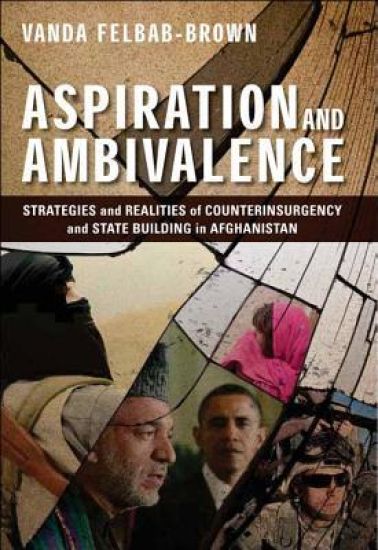
After more than a decade of great effort and sacrifice by America and its allies, the Taliban still has not been defeated, and many Afghans believe that a civil war is coming. Aspiration and Ambivalence analyses the U. S. and international efforts in Afghanistan and offers detailed recommendations for dealing with the precarious situation leading up to the 2014 transition to Afghan control and beyond. Vanda Felbab-Brown argues that allied efforts in Afghanistan have put far too little emphasis on good governance, concentrating too much on short-term military goals to the detriment of long-term peace and stability. The Western tendency to ally with bullies, warlords, smugglers, and other shady characters in pursuit of short-term military advantage actually empowers the forces working against good governance and long-term political stability. Rampant corruption and mafia rule thus persist, making it impossible for Afghans to believe in the institutional reforms and rule of law that are clearly necessary. This must change — otherwise, the chances of building responsive and sustainable governmental structures are slim, indeed. Felbab-Brown combines thorough research and analysis with vivid personal accounts of her time spent in the war-torn nation —powerful vignettes illustrating the Afghan aspirations for peace, stability, and sovereignty and the stubborn obstacles to securing them. ""The year 2014 will mark a critical juncture in Afghanistan's odyssey. After more than a decade of arduous fighting and political involvement, the U. S. and international presence there will be significantly reduced and circumscribed. Although the international community has committed itself not to abandon Afghanistan as it did in the 1990s, the onus will be on the Afghan government to provide for the security of the country, its economic development, and governance that attempts to meet the needs of the Afghan people. Difficult challenges, major unresolved questions, and worrisome trends surround all three sets of processes. The biggest hole in the U. S. strategy and international efforts to stabilize the country is the failure to adequately address the country's fractured and brittle political system and very poor governance."" —from Aspiration and Ambivalence
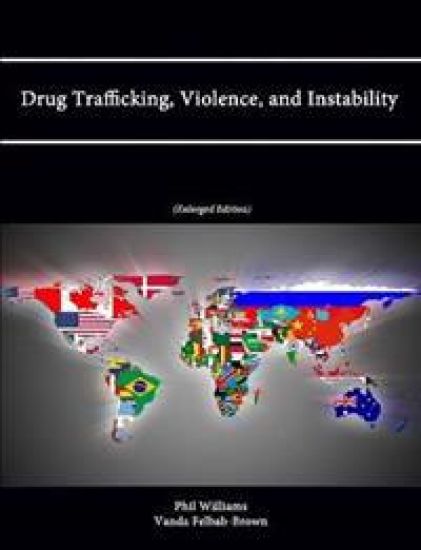
Over the past two years, the Strategic Studies Institute (SSI) and the University of Pittsburgh Matthew B. Ridgway Center for International Security Studies (Center for Latin American Studies and Office of the Provost) have conducted two conferences: The first was entitled "Drug Trafficking, Violence, and Instability in Mexico, Colombia, and the Caribbean: Implications for U. S. National Security," and the second was "Violent Armed Groups: A Global Challenge." Keynote speakers for the first conference were: Bruce Bagley, Professor and Chair, Department of International Studies, University of Miami and Director, University of Miami's Center of Latin American Studies, who addressed "What Can the Mexican State Do to Combat Organized Crime?"; and Jorge Chabat, Professor/Investigator, Centro de Investigaci n y Docencia Econ micas (Center for Research and Teaching in Economics), who discussed "The Drug War in Mexico: Dilemmas and Options." Speakers for the second conference included Dr. Robert Mandel, Professor of International Affairs at Lewis & Clark College, and John Robb, author of the book Brave New War. Dr. Mandel addressed "Global Security Upheaval: Armed Non-State Groups as Stability Enhancers," and Mr. Robb addressed "The Bazaar of Violence." The conference sponsors found the presentations at the two conferences to be sufficiently complementary to combine them in a series of monographs under the main title of Violent Armed Groups. Specific monographs within the series will have subtitles encompassing groups of works selected from among the presentations by the four keynote speakers and over 40 panelists. The introduction to this first monograph, "Drug Trafficking, Violence, and Instability," will serve to: (1) introduce the series by providing general conceptions of the global security challenges posed by violent armed groups; (2) identify the issues of greatest import to scholars studying the phenomenon; and, (3) emphasize the need for the U. S. Government to understand variations in the challenges it faces from a wide range of potential enemies. In this first report, Dr. Phil Williams and Dr. Vanda Felbab-Brown provide the strategic context for the series and highlight many of the issues that will be addressed in more detail by authors of subsequent monographs in the series. SSI is pleased to offer this report in fulfillment of its mission to assist U. S. Army and Department of Defense senior leaders and strategic thinkers in understanding the key issues of the day.