Kirjojen hintavertailu – 12 859 828 kirjaa ja 27 kauppaa

Kirjailija

Vandana Shiva

Kirjat ja teokset yhdessä paikassa: 40 kirjaa, julkaisuja vuosilta 2002–2025, suosituimpiin kuuluu Water Wars. Vertaile teosten hintoja ja tarkista saatavuus suomalaisista kirjakaupoista.

40 kirjaa

Kirjojen julkaisuvuodet: 2002–2025.

The Fight Against Monsanto’s Roundup: The Politics of Pesticides
Chemical poisons have infiltrated all facets of our lives – housing, agriculture, work places, sidewalks, subways, schools, parks, even the air we breathe. More than half a century since Rachel Carson issued Silent Spring – her call-to-arms against the poisoning of our drinking water, food, animals, air, and the natural environment – The Politics of Pesticides takes a fresh look at how activists around the world are fighting back against Monsanto’s most dangerous creation, glyphosate. The scientists and activists contributing to The Politics of Pesticides, edited by long-time Green activist Mitchel Cohen, explore not only the dangers of glyphosate – better known as “Roundup” – but the campaign which ended with glyphosate declared as a cancer-causing agent. In an age where banned pesticides are simply replaced with newer and more deadly ones, and where corporations such as Monsanto, Bayer, Dow and DuPont scuttle attempts to regulate the products they manufacture, what is the effective, practical, and philosophical framework for banning glyphosate and other pesticides? The Politics of Pesticides explores the best strategies for winning the struggle for healthy foods and a clean environment. It takes lessons from activists who have come before, and offers a new, holistic and radical approach that is essential for defending life on this planet and creating for our kids, and for ourselves, a future worth living in.
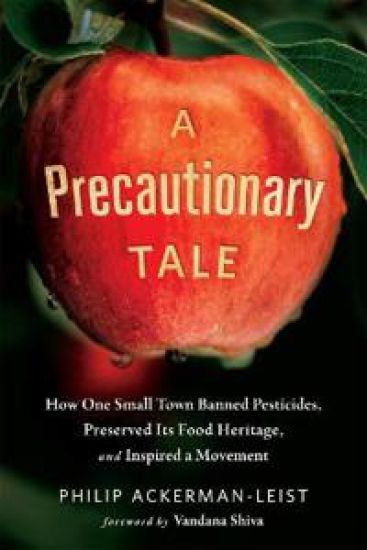
A Precautionary Tale

A Precautionary Tale

Philip Ackerman-Leist; Vandana Shiva

Chelsea Green Publishing Co
2017
nidottu
Mals, Italy, has long been known as the breadbasket of the Tyrol. But recently the tiny town became known for something else entirely. A Precautionary Tale tells us why, introducing readers to an unlikely group of activists and a forward-thinking mayor who came together to ban pesticides in Mals by a referendum vote—making it the first place on Earth to accomplish such a feat, and a model for other towns and regions to follow. For hundreds of years, the people of Mals had cherished their traditional foodways and kept their local agriculture organic. Their town had become a mecca for tourists drawn by the alpine landscape, the rural and historic character of the villages, and the fine breads, wines, cheeses, herbs, vegetables, and the other traditional foods they produced. Yet Mals is located high up in the eastern Alps, and the valley below was being steadily overtaken by big apple producers, heavily dependent on pesticides. As Big Apple crept further and further up the region’s mountainsides, their toxic spray drifted with the valley’s ever-present winds and began to fall on the farms and fields of Mals—threatening their organic certifications, as well as their health and that of their livestock. The advancing threats gradually motivated a diverse cast of characters to take action—each in their own unique way, and then in concert in an iconic display of direct democracy in action. As Ackerman-Leist recounts their uprising, we meet an organic dairy farmer who decides to speak up when his hay is poisoned by drift; a pediatrician who engaged other medical professionals to protect the soil, water, and air that the health of her patients depends upon; a hairdresser whose salon conversations mobilized the town’s women in an extraordinarily conceived campaign; and others who together orchestrated one of the rare revolutionary successes of our time and inspired a movement now snaking its way through Europe and the United States. A foreword by Vandana Shiva calls upon others to follow in Mals’s footsteps.
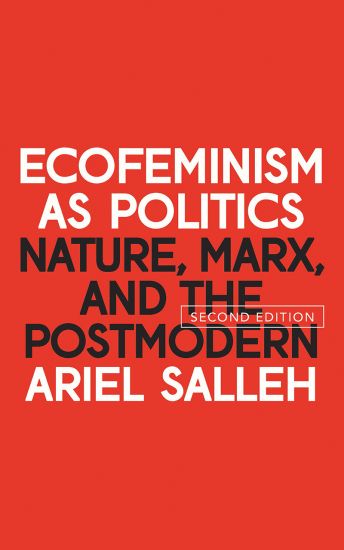
Ecofeminism as Politics

Ecofeminism as Politics

Ariel Salleh; Vandana Shiva; Professor John Clark

Zed Books Ltd
2017
nidottu
Ecofeminism as Politics is now a classic, being the first work to offer a joined-up framework for green, socialist, feminist and postcolonial thinking, showing how these have been held back by conceptual confusions over gender. Originally published in 1997, it argues that ecofeminism reaches beyond contemporary social movement ideologies and practices, by prefiguring a political synthesis of four-revolutions-in-one: ecology is feminism is socialism is postcolonial struggle. Ariel Salleh addresses discourses on class, science, the body, culture and nature, and her innovative reading of Marx converges the philosophy of internal relations with the organic materiality of everyday life. This new edition features forewords by Indian ecofeminist Vandana Shiva and US philosopher John Clark, a new introduction, and a recent conversation between Salleh and younger scholar activists.
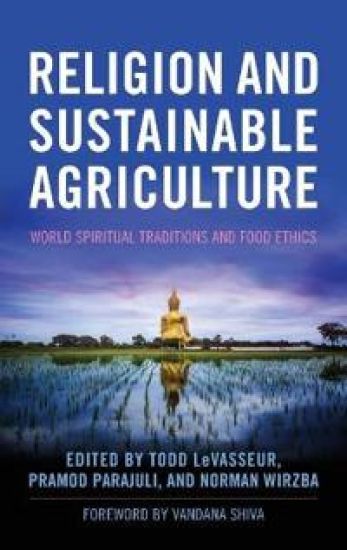
Religion and Sustainable Agriculture

Religion and Sustainable Agriculture

Vandana Shiva

The University Press of Kentucky
2016
sidottu
Distinct practices of eating are at the heart of many of the world's faith traditions -- from the Christian Eucharist to Muslim customs of fasting during Ramadan to the vegetarianism and asceticism practiced by some followers of Hinduism and Buddhism. What we eat, how we eat, and whom we eat with can express our core values and religious devotion more clearly than verbal piety. In this wide-ranging collection, eminent scholars, theologians, activists, and lay farmers illuminate how religious beliefs influence and are influenced by the values and practices of sustainable agriculture. Together, they analyze a multitude of agricultural practices for their contributions to healthy, ethical living and environmental justice. Throughout, the contributors address current critical issues, including global trade agreements, indigenous rights to land and seed, and the effects of postcolonialism on farming and industry. Covering indigenous, Buddhist, Hindu, Christian, Muslim, and Jewish perspectives, this groundbreaking volume makes a significant contribution to the study of ethics and agriculture.
Who Really Feeds the World?

Who Really Feeds the World?

Vandana Shiva

Zed Books Ltd
2016
nidottu
'One of the world's most prominent radical scientists.'The Guardian'A star among environmental, activist, and anti-corporate circles.'ViceThe world’s food supply is in the grip of a profound crisis. Humanity’s ability to feed itself is threatened by a wasteful, globalized agricultural industry, whose relentless pursuit of profit is stretching our planet’s ecosystems to breaking point. Rising food prices have fuelled instability across the world, while industrialized agriculture has contributed to a health crisis of massive proportions, with effects ranging from obesity and diabetes to cancers caused by pesticides. In Who Really Feeds the World?, leading environmentalist Vandana Shiva rejects the dominant, greed-driven paradigm of industrial agriculture, arguing instead for a radical rethink of our relationship with food and with the environment. Industrial agriculture can never be truly sustainable, but it is within our power to create a food system that works for the health and well-being of the planet and all humanity, by developing ecologically friendly farming practices, nurturing biodiversity, and recognizing the invaluable role that small farmers can play in feeding a hungry world.
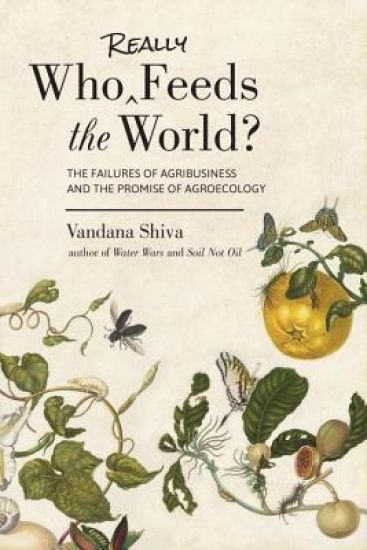
Who Really Feeds the World?: The Failures of Agribusiness and the Promise of Agroecology

Who Really Feeds the World?: The Failures of Agribusiness and the Promise of Agroecology

Vandana Shiva

NORTH ATLANTIC BOOKS
2016
nidottu

Halvin toimitettuna 18,60 €

Debunking the notion that our current food crisis must be addressed through industrial agriculture and genetic modification, author and activist Vandana Shiva argues that those forces are in fact the ones responsible for the hunger problem in the first place. Who Really Feeds the World? is a powerful manifesto calling for agricultural justice and genuine sustainability, drawing upon Shiva's thirty years of research and accomplishments in the field. Instead of relying on genetic modification and large-scale monocropping to solve the world's food crisis, she proposes that we look to agroecology--the knowledge of the interconnectedness that creates food--as a truly life-giving alternative to the industrial paradigm. Shiva succinctly and eloquently lays out the networks of people and processes that feed the world, exploring issues of diversity, the needs of small famers, the importance of seed saving, the movement toward localization, and the role of women in producing the world's food.
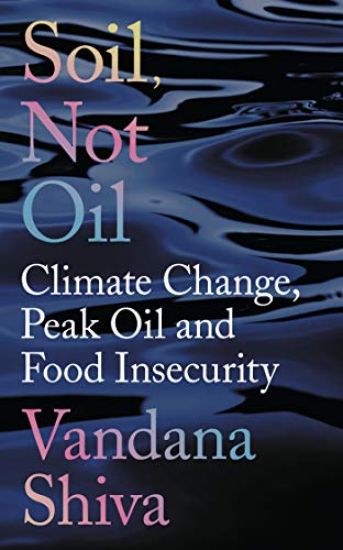
Soil, Not Oil

Soil, Not Oil

Vandana Shiva

Zed Books Ltd
2016
nidottu

Halvin toimitettuna 31,00 €

'One of the world's most prominent radical scientists.'The GuardianThis book is classic of the environmental movement. In it, Vandana Shiva envisions a world beyond our current dependence on fossil fuels and globalization, and makes the compelling case that food crises, oil dependency and climate change are all inherently interlinked. Any attempt to solve one without addressing the others is therefore doomed to failure. Condemning industrial agriculture and biofuels as recipes for ecological and economic disaster, Shiva instead champions small independent farmers. What is needed most, in a time of hunger and changing climates, are sustainable, biologically diverse farms that are better able to resist disease, drought and flooding. Calling for a return to local economies and small-scale agriculture, Shiva argues that humanity’s choice is a stark one: we can either continue to pursue a market-centred approach, which will ultimately make our planet unliveable, or we can instead strive for a people-centred, oil-free future, one which offers a decent living for all. This edition features a new introduction by the author, in which she outlines recent developments in ecology and environmentalism, and offers new prescriptions for the environmental movement.
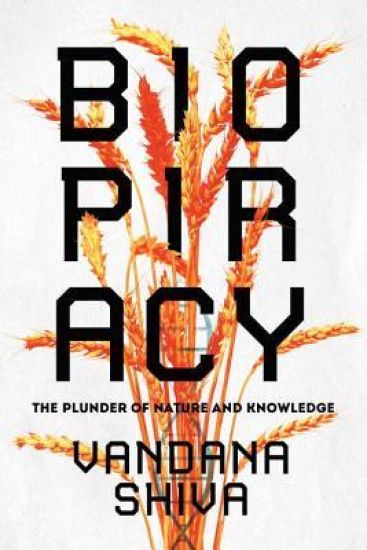
Biopiracy: The Plunder of Nature and Knowledge

Biopiracy: The Plunder of Nature and Knowledge

Vandana Shiva

NORTH ATLANTIC BOOKS
2016
nidottu
Genetic engineering and the cloning of organisms are "the ultimate expression of the commercialization of science and the commodification of nature.... Life itself is being colonized," according to renowned environmentalist Vandana Shiva. The resistance to this biopiracy, she argues, is the struggle to conserve both cultural and biological diversity. As the land, forests, oceans, and atmosphere have already been colonized, eroded, and polluted, corporations are now looking for new colonies to exploit and invade for further accumulation--in Shiva's view, the interior spaces of the bodies of women, plants, and animals. Featuring a new introduction by the author, this edition of Biopiracy is a learned, clear, and passionately stated objection to the ways in which Western businesses are being allowed to expropriate natural processes and traditional forms of knowledge.
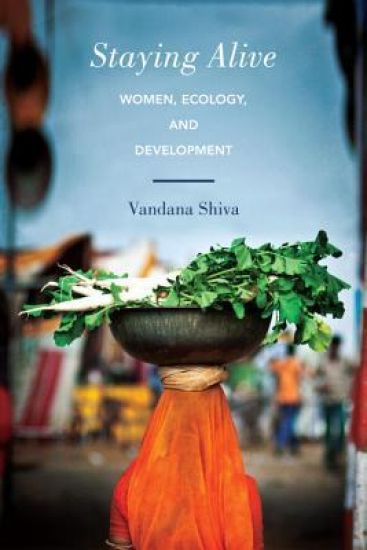
Staying Alive

Staying Alive

Vandana Shiva

Frog Ltd
2016
nidottu

Halvin toimitettuna 22,00 €

Inspired by women's struggles for the protection of nature as a condition for human survival, award-winning environmentalist Vandana Shiva shows how ecological destruction and the marginalization of women are not inevitable, economically or scientifically. She argues that "maldevelopment"--the violation of the integrity of organic, interconnected, and interdependent systems that sets in motion a process of exploitation, inequality, and injustice--is dragging the world down a path of self-destruction, threatening survival itself. Shiva articulates how rural Indian women experience and perceive ecological destruction and its causes, and how they have conceived and initiated processes to arrest the destruction of nature and begin its regeneration. Focusing on science and development as patriarchal projects, Staying Alive is a powerfully relevant book that positions women not solely as survivors of the crisis, but as the source of crucial insights and visions to guide our struggle.
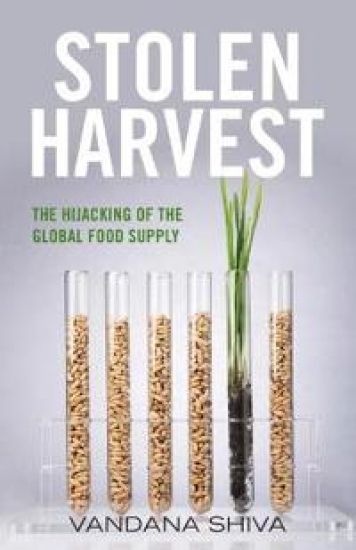
Stolen Harvest

Stolen Harvest

Vandana Shiva

The University Press of Kentucky
2016
nidottu
For the farmer, the seed is not merely the source of future plants and food; it is a vehicle through which culture and history can be preserved and spread to future generations. For centuries, farmers have evolved crops and produced an incredible diversity of plants that provide life-sustaining nutrition. In India alone, the ingenuity of farmers has produced over 200,000 varieties of rice, many of which now line store shelves around the world. This productive tradition, however, is under attack as globalized, corporate regimes increasingly exploit intellectual property laws to annex these sustaining seeds and remove them from the public sphere. In Stolen Harvest: The Hijacking of the Global Food Supply, Shiva explores the devastating effects of commercial agriculture and genetic engineering on the food we eat, the farmers who grow it, and the soil that sustains it. This prescient critique and call to action covers some of the most pressing topics of this ongoing dialogue, from the destruction of local food cultures and the privatization of plant life, to unsustainable industrial fish farming and safety concerns about corporately engineered foods. The preeminent agricultural activist and scientist of a generation, Shiva implores the farmers and consumers of the world to make a united stand against the genetically modified crops and untenable farming practices that endanger the seeds and plants that give us life.
The Violence of the Green Revolution

The Violence of the Green Revolution

Vandana Shiva

The University Press of Kentucky
2015
nidottu
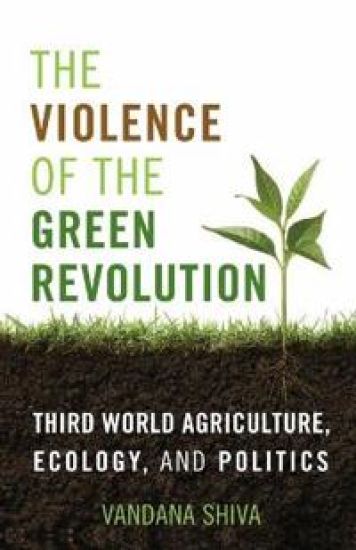
The Green Revolution has been heralded as a political and technological achievement -- unprecedented in human history. Yet in the decades that have followed it, this supposedly nonviolent revolution has left lands ravaged by violence and ecological scarcity. A dedicated empiricist, Vandana Shiva takes a magnifying glass to the effects of the Green Revolution in India, examining the devastating effects of monoculture and commercial agriculture and revealing the nuanced relationship between ecological destruction and poverty. In this classic work, the influential activist and scholar also looks to the future as she examines new developments in gene technology.
Soil Not Oil: Environmental Justice in an Age of Climate Crisis
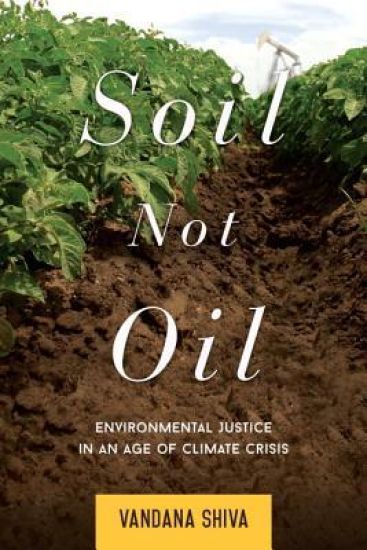
This modern-day Silent Spring addresses climate change head on, arguing that the solution to this global crisis lies in sustainable, biologically diverse farms In Soil Not Oil, Vandana Shiva explains that a world beyond dependence on fossil fuels and globalization is both possible and necessary. Condemning industrial agriculture as a recipe for ecological and economic disaster, Shiva champions the small, independent farm: their greater productivity, their greater potential for social justice as they put more resources into the hands of the poor, and the biodiversity that is inherent to the traditional farming practiced in small-scale agriculture. What we need most in a time of changing climates and millions who are hungry, she argues, is sustainable, biologically diverse farms that are more resistant to disease, drought, and flood. "The solution to climate change," she observes, "and the solution to poverty are the same." Soil Not Oil proposes a solution based on self-organization, sustainability, and community rather than corporate power and profits.
Earth Democracy: Justice, Sustainability, and Peace
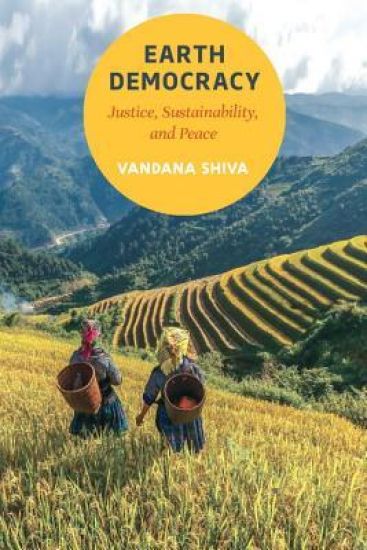
World-renowned environmental activist and physicist Vandana Shiva calls for a radical shift in the values that govern democracies, condemning the role that unrestricted capitalism has played in the destruction of environments and livelihoods. She explores the issues she helped bring to international attention--genetic food engineering, culture theft, and natural resource privatization--uncovering their links to the rising tide of fundamentalism, violence against women, and planetary death. Struggles on the streets of Seattle and Cancun and in homes and farms across the world have yielded a set of principles based on inclusion, nonviolence, reclaiming the commons, and freely sharing the earth's resources. These ideals, which Dr. Shiva calls "Earth Democracy," serve as an urgent call to peace and as the basis for a just and sustainable future.
Making Peace with the Earth

Making Peace with the Earth

Vandana Shiva

Pluto Press
2013
pokkari

Halvin toimitettuna 30,90 €

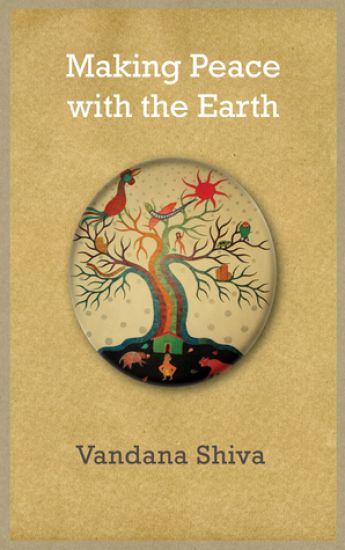
'One of the world's most prominent radical scientists', Vandana Shiva demolishes the myths propagated by corporate globalisation in its pursuit of profit and power, revealing the devastating environmental impact of corporate capitalism. Shiva argues that consumerism lubricates the war against the earth and that corporate control violates all ethical and ecological limits. She takes the reader on a journey through the world's devastated eco-landscape, one of genetic engineering, industrial development and land-grabs in Africa, Asia and South America. She concludes that exploitation of this order is incurring an ecological and economic debt that is unsustainable. Making Peace with the Earth outlines how a paradigm shift to earth-centred politics and economics is our only chance of survival and how collective resistance to corporate exploitation can open the way to a new environmentalism.
Making Peace with the Earth

Making Peace with the Earth

Vandana Shiva

Pluto Press
2013
sidottu
'One of the world's most prominent radical scientists', Vandana Shiva demolishes the myths propagated by corporate globalisation in its pursuit of profit and power, revealing the devastating environmental impact of corporate capitalism. Shiva argues that consumerism lubricates the war against the earth and that corporate control violates all ethical and ecological limits. She takes the reader on a journey through the world's devastated eco-landscape, one of genetic engineering, industrial development and land-grabs in Africa, Asia and South America. She concludes that exploitation of this order is incurring an ecological and economic debt that is unsustainable. Making Peace with the Earth outlines how a paradigm shift to earth-centred politics and economics is our only chance of survival and how collective resistance to corporate exploitation can open the way to a new environmentalism.
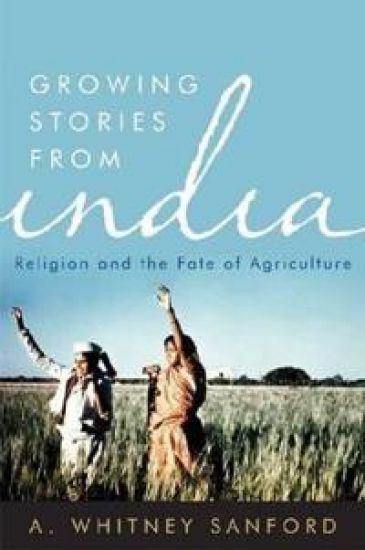
Growing Stories from India

Growing Stories from India

A. Whitney Sanford; Vandana Shiva

The University Press of Kentucky
2012
sidottu
The costs of industrial agriculture are astonishing in terms of damage to the environment, human health, animal suffering, and social equity, and the situation demands that we expand our ecological imagination to meet this crisis. In response to growing dissatisfaction with the existing food system, farmers and consumers are creating alternate models of production and consumption that are both sustainable and equitable. In Growing Stories from India: Religion and the Fate of Agriculture, author A. Whitney Sanford uses the story of the deity Balaram and the Yamuna River as a foundation for discussing the global food crisis and illustrating the Hindu origins of agrarian thought. By employing narrative as a means of assessing modern agriculture, Sanford encourages us to reconsider our relationship with the earth. Merely creating new stories is not enough -- she asserts that each story must lead to changed practices. Growing Stories from India demonstrates that conventional agribusiness is only one of many options and engages the work of modern agrarian luminaries to explore how alternative agricultural methods can be implemented.
Mänskliga rättigheter och samhällets skyldigheter : en antologi från MR-dagarna 2004

Mänskliga rättigheter och samhällets skyldigheter : en antologi från MR-dagarna 2004

Hans Blix; Vandana Shiva; Gerd Oberleitner; Diana Amnéus; Magdalena Bexell; Torben Spaak; Erik Wennerström; Elisabeth Abiri; Peter Johansson; Axel Hadenius; Charlie Santos; Stig Larsson; Anna Bruce; Reinhold Fahlbeck; Göran Gunner; Dan Hanqvist

Ordfront
2010
nidottu
Nya perspektiv i internationell rätt om humanitär intervention och nationers "ansvar att skydda" medborgare när deras mänskliga rättigheter är kränkta tas upp i denna bok. Kapitlen baseras på bidrag vid MR-dagarna 2004 och diskuterar vidare bl.a. internationell demokratisering, rättsstatsbegreppet, funktionshinder och mänskliga rättigheter samt religionsfrihet. Bland författarna finns: Hans Blix, Vandana Shiva, Gerd Oberleitner, Axel Hadenius, Stig Larsson, Reinhold Fahlbeck.
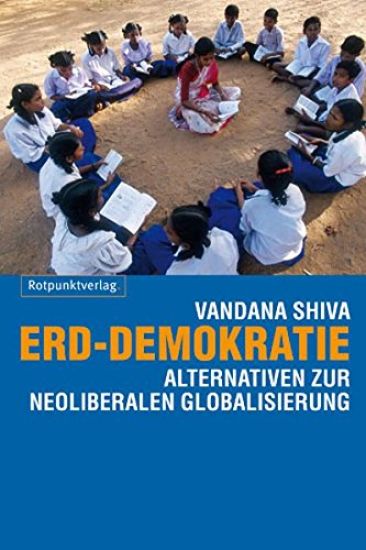
Erd-Demokratie

Erd-Demokratie

Vandana Shiva

Rotpunktverlag
2008
nidottu
Als der koreanische Bauer Lee Kyung Hae sich 2003 am WTO-Ministertreffen von Canc?n vor den Augen der Konferenzteilnehmer erstach, trug er ein Schild mit der Aufschrift "Die WTO tötet Bauern". Sein Suizid ist lediglich der sichtbarste unter Zehntausenden: In Indien etwa sind allein im letzten Jahrzehnt 30 000 Bauern durch die Globalisierungspolitik getötet worden. Die wirtschaftsorientierten Handelsregeln der WTO entziehen den Kleinbauern auf der ganzen Welt die Existenzgrundlage und treiben sie in die Verzweiflung. Die indische Ökofeministin und Trägerin des Alternativen Friedensnobelpreises Vandana Shiva nennt ihre Vision einer gerechten Weltordnung "Erd-Demokratie": eine Demokratie, die lokal und regional verankert ist - aber auf zentralen, universell gültigen Werten gründet. Eine Demokratie, die niemanden ausschließt von der Teilhabe an den Schätzen der Natur. Eine weltumspannende Demokratie, in der nicht die Interessen der Wirtschaft, sondern die Menschen und der nachhaltige Umgang mit der Natur im Zentrum stehen.
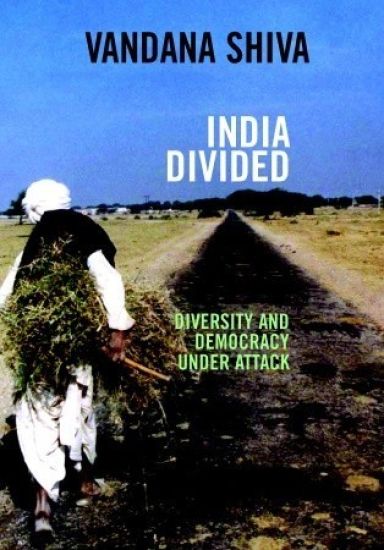
India Divided

India Divided

Vandana Shiva

Seven Stories Press,U.S.
2003
nidottu
Physicist-turned-environmental, human rights, and antiglobalization activist Dr. Vandana Shiva sees India in desperate crisis, facing potential nuclear conflict with Pakistan, the rise of fundamentalism within its own borders, and the very real threat of mass famine and economic enslavement of its citizens to the forces of globalization. In "India on Fire," Shiva offers a critical analysis of the effects of globalization. This slim book, which brings together historical, philosophical, and scientific thought, is a succinct and worthy primer for anyone who wishes to understand the crises in India and Pakistan today. Vandana Shiva is the author of many books, including "Water Wars," and won the 1993 Right Livelihood Award, also known as the Alternative Nobel Peace Prize.