Kirjojen hintavertailu – 12 859 826 kirjaa ja 27 kauppaa

Kirjailija

Various

Kirjat ja teokset yhdessä paikassa: 3 930 kirjaa, julkaisuja vuosilta 1779–2027, suosituimpiin kuuluu Graphic Classics Volume 26: Vampire Classics. Vertaile teosten hintoja ja tarkista saatavuus suomalaisista kirjakaupoista.

Nimi esiintyy myös muodoissa: Various., . Various, Various .

3 930 kirjaa

Kirjojen julkaisuvuodet: 1779–2027.

Japanese Fairy Tales

Japanese Fairy Tales

Yei Theodora Ozaki; Various

Createspace Independent Publishing Platform
2016
nidottu
Japanese Fairy TalesCompiled By Yei Theodora OzakiThis collection of Japanese fairy tales is the outcome of a suggestion made to me indirectly through a friend by Mr. Andrew Lang. They have been translated from the modern version written by Sadanami Sanjin. These stories are not literal translations, and though the Japanese story and all quaint Japanese expressions have been faithfully preserved, they have been told more with the view to interest young readers of the West than the technical student of folk-lore. Grateful acknowledgment is due to Mr. Y. Yasuoka, Miss Fusa Okamoto, my brother Nobumori Ozaki, Dr. Yoshihiro Takaki, and Miss Kameko Yamao, who have helped me with translations. The story which I have named "The Story of the Man who did not Wish to Die" is taken from a little book written a hundred years ago by one Shinsui Tamenaga. It is named Chosei Furo, or "Longevity." "The Bamboo-cutter and the Moon-child" is taken from the classic "Taketari Monogatari," and is NOT classed by the Japanese among their fairy tales, though it really belongs to this class of literature. The pictures were drawn by Mr. Kakuzo Fujiyama, a Tokio artist. In telling these stories in English I have followed my fancy in adding such touches of local color or description as they seemed to need or as pleased me, and in one or two instances I have gathered in an incident from another version. At all times, among my friends, both young and old, English or American, I have always found eager listeners to the beautiful legends and fairy tales of Japan, and in telling them I have also found that they were still unknown to the vast majority, and this has encouraged me to write them for the children of the West. Y. T. O. Tokio, 1908. CONTENTS. MY LORD BAG OF RICETHE TONGUE-CUT SPARROWTHE STORY OF URASHIMA TARO, THE FISHER LADTHE FARMER AND THE BADGERTHE "shinansha," OR THE SOUTH POINTING CARRIAGETHE ADVENTURES OF KINTARO, THE GOLDEN BOYTHE STORY OF PRINCESS HASETHE STORY OF THE MAN WHO DID NOT WISH TO DIETHE BAMBOO-CUTTER AND THE MOON-CHILDTHE MIRROR OF MATSUYAMATHE GOBLIN OF ADACHIGAHARATHE SAGACIOUS MONKEY AND THE BOARTHE HAPPY HUNTER AND THE SKILLFUL FISHERTHE STORY OF THE OLD MAN WHO MADE WITHERED TREES TO FLOWERTHE JELLY FISH AND THE MONKEYTHE QUARREL OF THE MONKEY AND THE CRABTHE WHITE HARE AND THE CROCODILESTHE STORY OF PRINCE YAMATO TAKEMOMOTARO, OR THE STORY OF THE SON OF A PEACHTHE OGRE OF RASHOMONHOW AN OLD MAN LOST HIS WENTHE STONES OF FIVE COLORS AND THE EMPRESS JOKWA
The Grey Fairy Book

The Grey Fairy Book

Various

Createspace Independent Publishing Platform
2016
nidottu
The Grey Fairy BookBy VariousEdited by Andrew LangAndrew Lang's Fairy Books are a series of twenty-five collections of true and fictional stories for children, published between 1889 and 1913. The best known books of the series are the twelve collections of fairy tales, known as Andrew Lang's "Coloured" Fairy Books or Andrew Lang's Fairy Books of Many Colors. In all, the volumes feature 798 stories, besides the 153 poems in The Blue Poetry Book. Andrew Lang (1844-1912) was a Scots poet, novelist, and literary critic. As acknowledged in the prefaces, although Lang himself made most of the selections, his wife and other translators did a large portion of the translating and retelling of the actual stories. According to Anita Silvey, "The irony of Lang's life and work is that although he wrote for a profession--literary criticism; fiction; poems; books and articles on anthropology, mythology, history, and travel...he is best recognized for the works he did not write." CONTENTSPreface Donkey SkinThe Goblin PonyAn Impossible EnchantmentThe Story Of Dschemil and DschemilaJanni and the DrakenThe Partnership of the Thief and the Liar. Fortunatus and His PurseThe Goat-faced GirlWhat Came of Picking FlowersThe Story of BensurdatuThe Magician's HorseThe Little Gray ManHerr Lazarus and the DrakenThe Story of the Queen of the Flowery IslesUdea and Her Seven BrothersThe White WolfMohammed with the Magic FingerBobinoThe Dog and the SparrowThe Story of the Three Sons of HaliThe Story of the Fair CircassiansThe Jackal and the SpringThe BearThe SunchildThe Daughter Of Buk EttemsuchLaughing Eye and Weeping Eye, or the Limping FoxThe Unlooked-for PrinceThe SimpletonThe Street MusiciansThe Twin BrothersCannetellaThe OgreA Fairy's BlunderLong, Broad, and QuickeyePrunella
The Best American Humorous Short Stories

The Best American Humorous Short Stories

Various

Createspace Independent Publishing Platform
2016
nidottu
The Best American Humorous Short StoriesVariousEdited by Alexander JessupThis volume does not aim to contain all "the best American humorous short stories"; there are many other stories equally as good, I suppose, in much the same vein, scattered through the range of American literature. I have tried to keep a certain unity of aim and impression in selecting these stories. In the first place I determined that the pieces of brief fiction which I included must first of all be not merely good stories, but good short stories. I put myself in the position of one who was about to select the best short stories in the whole range of American literature, but who, just before he started to do this, was notified that he must refrain from selecting any of the best American short stories that did not contain the element of humor to a marked degree. But I have kept in mind the wide boundaries of the term humor, and also the fact that the humorous standard should be kept second--although a close second--to the short story standard. In view of the necessary limitations as to the volume's size, I could not hope to represent all periods of American literature adequately, nor was this necessary in order to give examples of the best that has been done in the short story in a humorous vein in American literature. Probably all types of the short story of humor are included here, at any rate. Not only copyright restrictions but in a measure my own opinion have combined to exclude anything by Joel Chandler Harris--Uncle Remus--from the collection. Harris is primarily--in his best work--a humorist, and only secondarily a short story writer. As a humorist he is of the first rank; as a writer of short stories his place is hardly so high. His humor is not mere funniness and diversion; he is a humorist in the fundamental and large sense, as are Cervantes, Rabelais, and Mark Twain. CONTENTSINTRODUCTION Alexander JessupTHE LITTLE FRENCHMAN AND HIS WATER LOTS (1839) George Pope MorrisTHE ANGEL OF THE ODD (1844) Edgar Allan PoeTHE SCHOOLMASTER'S PROGRESS (1844) Caroline M. S. KirklandTHE WATKINSON EVENING (1846) Eliza LeslieTITBOTTOM'S SPECTACLES (1854) George William CurtisMY DOUBLE; AND HOW HE UNDID ME (1859) Edward Everett HaleA VISIT TO THE ASYLUM FOR AGED AND DECAYED PUNSTERS (1861) Oliver Wendell HolmesTHE CELEBRATED JUMPING FROG OF CALAVERAS COUNTY (1865) Mark TwainELDER BROWN'S BACKSLIDE (1885) Harry Stillwell EdwardsTHE HOTEL EXPERIENCE OF MR. PINK FLUKER (1886) Richard Malcolm JohnstonTHE NICE PEOPLE (1890) Henry Cuyler BunnerTHE BULLER-PODINGTON COMPACT (1897) Frank Richard StocktonCOLONEL STARBOTTLE FOR THE PLAINTIFF (1901) Bret HarteTHE DUPLICITY OF HARGRAVES (1902) O. HenryBARGAIN DAY AT TUTT HOUSE (1905) George Randolph ChesterA CALL (1906) Grace MacGowan CookeHOW THE WIDOW WON THE DEACON (1911) William James LamptonGIDEON (1914) Wells Hastings
The Crimson Fairy Book

The Crimson Fairy Book

Various

Createspace Independent Publishing Platform
2016
nidottu
The Crimson Fairy BookBy VariousEdited by Andrew LangEach Fairy Book demands a preface from the Editor, and these introductions are inevitably both monotonous and unavailing. A sense of literary honesty compels the Editor to keep repeating that he is the Editor, and not the author of the Fairy Tales, just as a distinguished man of science is only the Editor, not the Author of Nature. Like nature, popular tales are too vast to be the creation of a single modern mind. The Editor's business is to hunt for collections of these stories told by peasant or savage grandmothers in many climes, from New Caledonia to Zululand; from the frozen snows of the Polar regions to Greece, or Spain, or Italy, or far Lochaber. When the tales are found they are adapted to the needs of British children by various hands, the Editor doing little beyond guarding the interests of propriety, and toning down to mild reproofs the tortures inflicted on wicked stepmothers, and other naughty characters. CONTENTSPreface Lovely IlonkaLucky LuckThe Hairy ManTo Your Good Health The Story of the Seven SimonsThe Language of BeastsThe Boy Who Could Keep A SecretThe Prince And The DragonLittle WildroseTiidu The PiperPaperarellooThe Gifts Of The MagicianThe Strong PrinceThe Treasure SeekerThe Cottager And His CatThe Prince Who Would Seek ImmortalityThe Stone-CutterThe Gold-Bearded ManTritill, Litill, And The BirdsThe Three RobesThe Six Hungry BeastsHow The Beggar Boy Turned Into Count PiroThe Rogue And The HerdsmanEisenkopfThe Death Of Abu Nowas And Of His WifeMotiratikaNiels And The GiantsShepherd PaulHow The Wicked Tanuki Was PunishedThe Crab And The MonkeyThe Horse Gullfaxi And The Sword GunnfoderThe Story Of The Sham Prince, Or The Ambitious TailorThe Colony Of CatsHow To Find Out A True FriendClever MariaThe Magic Kettle
The Pink Fairy Book

The Pink Fairy Book

Various

Createspace Independent Publishing Platform
2016
nidottu
The Pink Fairy BookEdited by Andrew LangAll people in the world tell nursery tales to their children. The Japanese tell them, the Chinese, the Red Indians by their camp fires, the Eskimo in their dark dirty winter huts. The Kaffirs of South Africa tell them, and the modern Greeks, just as the old Egyptians did, when Moses had not been many years rescued out of the bulrushes. The Germans, French, Spanish, Italians, Danes, Highlanders tell them also, and the stories are apt to be like each other everywhere. A child who has read the Blue and Red and Yellow Fairy Books will find some old friends with new faces in the Pink Fairy Book, if he examines and compares. But the Japanese tales will probably be new to the young student; the Tanuki is a creature whose acquaintance he may not have made before. He may remark that Andersen wants to 'point a moral, ' as well as to 'adorn a tale; ' that he is trying to make fun of the follies of mankind, as they exist in civilised countries. CONTENTSPrefaceThe Cat's ElopementHow the Dragon Was TrickedThe Goblin and the GrocerThe House in the WoodUraschimataro and the TurtleThe Slaying of the TanukiThe Flying TrunkThe Snow-manThe Shirt-collarThe Princess in the ChestThe Three BrothersThe Snow-queenThe Fir-treeHans, the Mermaid's SonPeter BullThe Bird 'Grip'SnowflakeI Know What I Have LearnedThe Cunning ShoemakerThe King Who Would Have a Beautiful WifeCatherine and Her DestinyHow the Hermit Helped to Win the King's DaughterThe Water of LifeThe Wounded LionThe Man Without a HeartThe Two BrothersMaster and PupilThe Golden LionThe Sprig of RosemaryThe White DoveThe Troll's DaughterEsben and the WitchPrincess Minon-minetteMaiden Bright-eyeThe Merry WivesKing LindormThe Jackal, the Dove, and the PantherThe Little HareThe Sparrow with the Slit TongueThe Story of CiccuDon Giovanni De La Fortuna
Famous Modern Ghost Stories

Famous Modern Ghost Stories

Dorothy Scarborough; Various

Createspace Independent Publishing Platform
2016
nidottu
Famous Modern Ghost StoriesSelected, with an IntroductionBy Dorothy ScarboroughGhosts are the true immortals, and the dead grow more alive all the time. Wraiths have a greater vitality to-day than ever before. They are far more numerous than at any time in the past, and people are more interested in them. There are persons that claim to be acquainted with specific spirits, to speak with them, to carry on correspondence with them, and even some who insist that they are private secretaries to the dead. Others of us mortals, more reserved, are content to keep such distance as we may from even the shadow of a shade. But there's no getting away from ghosts nowadays, for even if you shut your eyes to them in actual life, you stumble over them in the books you read, you see them on the stage and on the screen, and you hear them on the lecture platform. Even a Lodge in any vast wilderness would have the company of spirits. Man's love for the supernatural, which is one of the most natural things about him, was never more marked than at present. You may go a-ghosting in any company to-day, and all aspects of literature, novels, short stories, poetry, and drama alike, reflect the shadeless spirit. The latest census of the haunting world shows a vast increase in population, which might be explained on various grounds. - The Willows by Algernon Blackwood- The Shadows on the Wall by Mary E. Wilkins Freeman- The Messenger by Robert W. Chambers- Lazarus by Leonid Andreyev- The Beast with Five Fingers by W. F. Harvey- The Mass of Shadows by Anatole France- What Was It? by Fitz-James O'Brien- The Middle Toe of the Right Foot by Ambrose Bierce- The Shell of Sense by Olivia Howard Dunbar- The Woman at Seven Brothers by Wilbur Daniel Steele- At the Gate by Myla Jo Closser- Ligeia by Edgar Allan Poe- The Haunted Orchard by Richard Le Gallienne- The Bowmen by Arthur Machen- A Ghost by Guy de Maupassant
Routledge Library Editions: Wordsworth and Coleridge
Beginning with the publication of their joint collection of poems Lyrical Ballads in 1798, William Wordsworth and Samuel Taylor Coleridge were instrumental in helping to establish the Romantic Movement as a major force in nineteenth century British literature. Two of the movement’s greatest figures, they were responsible for composing some of the most well-known poems in the British literary canon and influenced generations of acolytes. They were also the foremost literary critics of the period, contributing influential writings on literary theory and philosophy — exemplified by Coleridge’s Biographia Literaria. ‘Routledge Library Editions: Wordsworth and Coleridge’ assembles a wide range of scholarship and criticism that covers all aspects of their diverse output and charts the vicissitudes of their lives — examining their poetry, criticism, philosophy and sources of inspiration. It will also help introduce them to newer readers and explain notoriously difficult to understand works like Wordsworth’s The Prelude. This set reissues 14 books originally published between 1960 and 1991 and will be of interest to students of literature and literary history.
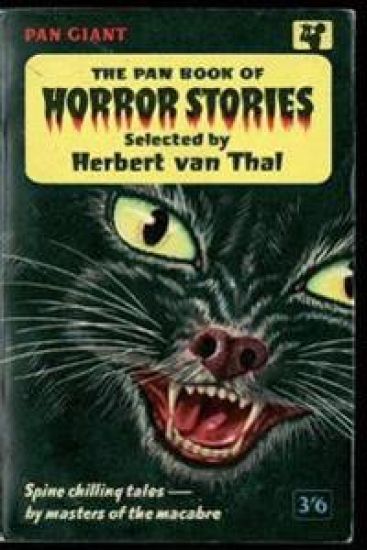
The Pan Book of Horror Stories
Fifty years ago Pan launched a series of books that were to delight and disgust - sometimes even on the same page – readers for thirty years. From classics in the genre to scraping-the-barrel nastiness, the Pan Books of Horror had them all and they continue to be a major influence in published anthologies to the present day. We're delighted, therefore, to announce the reissue of the very first Pan Book of Horror, with a new introduction by Johnny Mains. Specially selected for Pan Books, here are 22 terrifying tales of horror by such famous authors as Peter Fleming, C. S. Forester, Bram Stoker, Angus Wilson, Noel Langley, Jack Finney and L. P. Hartley. Stories of the uncanny jostle with tales of the macabre. Stories of subtle beastliness - like Raspberry Jam; of sickening horror - like The Fly or His Beautiful Hands; and of utter chilling terror - like The Horror of the Museum! The perfect bedside book - for those with nerves of steel!
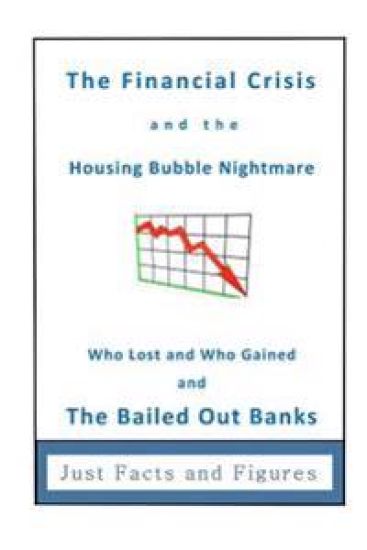
The Financial Crisis: The Housing Bubble Nightmare

The Financial Crisis: The Housing Bubble Nightmare

Various

Createspace Independent Publishing Platform
2016
nidottu
The Financial Crisis and the The Housing Bubble NightmareJust Facts and FiguresWho Lost and Who Gained and The Bailed Out BanksWho are they and how much did they get? Who where the men who destroyed the World Economy and walked away richer than ever? Just Pure Facts and Figures so you can start living the nightmare that is engulfing large parts of the world. What happens next.....is your guess... Did you know;72 per cent of the major metropolitan areas in the United States had more foreclosures in 2010 than they did in 2009According to Poverty USA, 1.6 million American children slept in a homeless shelter or some other form of emergency housing last year. In 1996, 89 per cent of Americans believed that it was better to own a home than to rent one. Today that number has fallen to 63 per cent9.7% of Greece's young active population is unemployed. An astounding 48.8 percent of all 25-year-old Americans still live at home with their parents. In 2010 sales of previously existing homes in the United States were at their lowest level in 13 yearsFor each of the past six years, more businesses have closed in the United States than have opened. Prior to 2008, this had never happened before in all of U. S. history. Includes a full list of companies that where bailed out and how much they received... THIS IS THE CURRENT REALITY AND ITS GETTING WORSERead On.....