Kirjojen hintavertailu – 12 859 826 kirjaa ja 27 kauppaa

Kirjailija

Vassilis Fouskas

Kirjat ja teokset yhdessä paikassa: 5 kirjaa, julkaisuja vuosilta 2005–2026, suosituimpiin kuuluu Cyprus 1974: Anatomy of an Invasion. Vertaile teosten hintoja ja tarkista saatavuus suomalaisista kirjakaupoista.

5 kirjaa

Kirjojen julkaisuvuodet: 2005–2026.

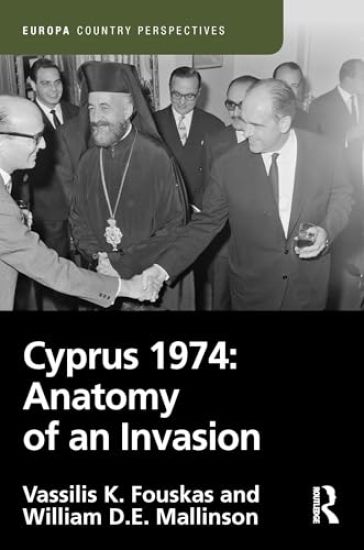
Cyprus 1974: Anatomy of an Invasion

Cyprus 1974: Anatomy of an Invasion

Vassilis Fouskas; William Mallinson

TAYLOR FRANCIS LTD
2026
nidottu
Conventional wisdom and ideologies hold that responsibility for the partition of the Republic of Cyprus in the wake of Turkey’s multiple advances on the island in summer 1974 rests on domestic ethnic and religious tensions between the Turks and the Greeks. This book, drawing on a wealth of archival material, shows that this is not the case at all. As the detailed report of the United Nations mediator, Galo Plaza, had shown in 1965, the Turks and the Greeks living on the island could easily have co-existed if left alone to determine their future. This did not happen. The partition of the island had been inscribed in NATO’s policy since the 1950s, rewarding the strongest component of NATO’s southern flank, Turkey, at the expense of Greece, the weaker component. The volume details the role of CIA agents in Greece and the machinations of the Greek junta of Dimitrios Ioannides to overthrow the charismatic leader of Cyprus, Archbishop Makarios, who had been fighting for an independent and non-aligned Cyprus. It also explains how the partition of Cyprus in 1974 has opened up prospects for the partition of the Aegean Sea between Greece and Turkey, with Greece’s eastern Aegean islands becoming ‘NATOlands’ in the service of the war against Russia. The volume is an essential reading for researchers and students of the history and politics of Cyprus, Greece, Turkey and south-eastern Europe.
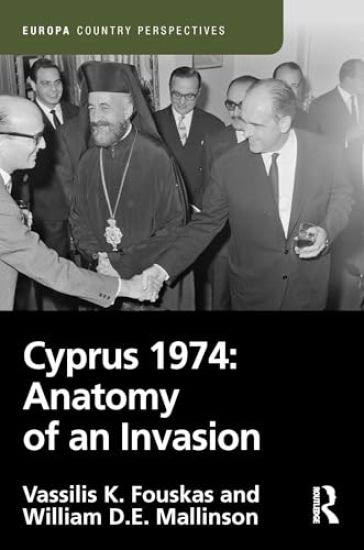
Cyprus 1974: Anatomy of an Invasion

Cyprus 1974: Anatomy of an Invasion

Vassilis Fouskas; William Mallinson

TAYLOR FRANCIS LTD
2024
sidottu
Conventional wisdom and ideologies hold that responsibility for the partition of the Republic of Cyprus in the wake of Turkey’s multiple advances on the island in summer 1974 rests on domestic ethnic and religious tensions between the Turks and the Greeks. This book, drawing on a wealth of archival material, shows that this is not the case at all. As the detailed report of the United Nations mediator, Galo Plaza, had shown in 1965, the Turks and the Greeks living on the island could easily have co-existed if left alone to determine their future. This did not happen. The partition of the island had been inscribed in NATO’s policy since the 1950s, rewarding the strongest component of NATO’s southern flank, Turkey, at the expense of Greece, the weaker component. The volume details the role of CIA agents in Greece and the machinations of the Greek junta of Dimitrios Ioannides to overthrow the charismatic leader of Cyprus, Archbishop Makarios, who had been fighting for an independent and non-aligned Cyprus. It also explains how the partition of Cyprus in 1974 has opened up prospects for the partition of the Aegean Sea between Greece and Turkey, with Greece’s eastern Aegean islands becoming ‘NATOlands’ in the service of the war against Russia. The volume is an essential reading for researchers and students of the history and politics of Cyprus, Greece, Turkey and south-eastern Europe.
Italy, Europe, The Left

Italy, Europe, The Left

Vassilis Fouskas

Routledge
2020
nidottu
Published in 1998. Was the Italian Communist Party (PCI) a typical Social Democratic party in tune with the programmatic principles of the Second International? What is the appropriate context within which the strategies of 'historic compromise' and Eurocommunism in the 1970s can be analyzed and understood? In what form and to what extent has the process of European integration and the crisis of Keynesianism contributed to the transformation of the party in 1989-91? What caused the collapse of the ruling political class of the First Italian Republic? Why did the transformed PCI, the PDS (Democratic Party of the Left), fail to lead the transition to the Second Italian Republic between 1992 and 1996? Is there any link between the party’s historical factions and the current divisions in the Italian Left? Is it possible to theorize and speculate upon these divisions? Italy, Europe, the Left seeks to answer these questions, debating conventional views and examining the extent to which the end of the Cold War has contributed to a redefinition of the Left’s identity in Italy and Europe. The exemplary methodological framework and the wider European perspective adopted throughout, make the book an indispensable reading in the field of Italian and European politics.
Italy, Europe, The Left

Italy, Europe, The Left

Vassilis Fouskas

Routledge
2018
sidottu
Published in 1998. Was the Italian Communist Party (PCI) a typical Social Democratic party in tune with the programmatic principles of the Second International? What is the appropriate context within which the strategies of 'historic compromise' and Eurocommunism in the 1970s can be analyzed and understood? In what form and to what extent has the process of European integration and the crisis of Keynesianism contributed to the transformation of the party in 1989-91? What caused the collapse of the ruling political class of the First Italian Republic? Why did the transformed PCI, the PDS (Democratic Party of the Left), fail to lead the transition to the Second Italian Republic between 1992 and 1996? Is there any link between the party’s historical factions and the current divisions in the Italian Left? Is it possible to theorize and speculate upon these divisions? Italy, Europe, the Left seeks to answer these questions, debating conventional views and examining the extent to which the end of the Cold War has contributed to a redefinition of the Left’s identity in Italy and Europe. The exemplary methodological framework and the wider European perspective adopted throughout, make the book an indispensable reading in the field of Italian and European politics.
The New American Imperialism

The New American Imperialism

Vassilis Fouskas; Bulent Gokay

Praeger Publishers Inc
2005
sidottu
With the terrorist attacks of September 11, 2001, the United States' long war on communism was replaced by a perpetual war on terror. The authors posit that this neo-imperialistic phase is but the latest development in a line of thought and action established after World War II. But, they say, 2005 is not 1945. Today, they argue, the United States uses its power to deplete the resources of the developing world, and to compel the rest of the world to remain dependent on American management of the global economy. Contending that this situation is ultimately untenable, they assert that the United States is entering a period of deep crisis. The best thing for American neo-imperialists to do to avert their worst nightmare—a strategic and economic alliance among Europe, Russia, China, and OPEC—would be to arrange for the orderly withdrawal of American power before it is too late for the human and environmental security of the world. When the Soviet Union collapsed in 1991, the Cold War slowly gave way to a new world order in which the United States was left as the lone superpower. But the organizing principle that would characterize the early 21st century was as yet unclear, until the terrorist attacks of September 11, 2001. Now it is clear that the long war on Communism has been replaced by a perpetual war on terror. Regardless of how long American troops remain in Iraq, and irrespective of further military actions, George W. Bush will continue to be a wartime president whose foreign policy is dominated by the Pentagon. And yet, the authors argue, this neo-imperialistic phase, with its emphasis on Eurasian oil supplies, is but the latest development in a line of thinking and acting in the world that was established by such men as Dean Acheson and Paul Nitze after World War II. But 2005 is not 1945, and the United States, despite Secretary of Defense Donald Rumsfeld and Vice President Dick Cheney's assertions, is not liberating Iraq and Afghanistan in the same way that U. S. forces liberated Germany and Japan; it is not reconstructing Iraq or the former Yugoslavia as it did when it rebuilt war torn western Europe with the Marshall Plan. The United States, with its thinly stretched military and deficit-laden economy, does not possess the means to do so today. Instead, the authors maintain, the United States is simply depleting the developing world's natural resources, compelling the rest of the developed world to remain dependent on American management of the global economy. This situation is ultimately untenable, the authors argue, and as a result, the United States is entering a period of deep crisis. The best thing for American neo-imperialists to do to avert their worst nightmare—a strategic and economic alliance among Europe, Russia, China, and OPEC—would be to arrange for the orderly withdrawal of American power before it is too late for the human and environmental security of the world as a whole.