Kirjailija
Vatsyayana
Kirjat ja teokset yhdessä paikassa: 54 kirjaa, julkaisuja vuosilta 2007–2024, suosituimpiin kuuluu The Kama Sutra of Vatsyayana. Vertaile teosten hintoja ja tarkista saatavuus suomalaisista kirjakaupoista.
Nimi esiintyy myös muodoissa: Vâtsyâyana
54 kirjaa
Kirjojen julkaisuvuodet: 2007–2024.
The Kama Sutra is a timeless ancient Indian text that explores love, desire and human relationships. Written between the 3rd and 5th centuries CE, it goes beyond sexual techniques to provide a comprehensive guide to living a fulfilling life. Covering topics such as love, marriage and social etiquette, it offers valuable insights into the complexities of relationships. This classic work reflects the cultural and historical richness of ancient India, offering wisdom that remains relevant today. The ancient path to love, intimacy and harmony Offers a holistic understanding of love, relationships and sexual techniques, rooted in ancient wisdom. Highlights the importance of emotional connection, mutual respect and understanding in relationships. Provides invaluable insights into the social customs, traditions, and philosophies of ancient India, reflecting its cultural richness. Encourages a harmonious approach to life, combining physical pleasure with emotional fulfillment. Offers valuable insights on the roles and responsibilities of partners in love and relationships.
The Kama Sutra (Royal Collector's Edition) (Annotated) (Case Laminate Hardcover with Jacket)
Vatsyayana
Royal Classics
2020
sidottu
The Kama Sutra is an ancient Indian Hindu text written by Vātsyāyana. It is widely considered to be the standard work on human sexual behaviour in Sanskrit literature. A portion of the work consists of practical advice on sexual intercourse. "Kāma" which is one of the four goals of Hindu life, means desire including sexual desire the latter being the subject of the textbook, and "sūtra" literally means a thread or line that holds things together, and more metaphorically refers to a formula in the form of a manual. Contrary to western popular perception, the Kama Sutra is not exclusively a sex manual; it presents itself as a guide to a virtuous and gracious living that discusses the nature of love, family life and other aspects pertaining to pleasure oriented faculties of human life. Kama Sutra, in parts of the world, is presumed or depicted as a synonym for creative sexual positions. Much of the book is about the philosophy and theory of love, what triggers desire, what sustains it, and how and when it is good or bad. This case laminate collector's edition includes a Victorian inspired dust-jacket.

The Kama Sutra Vatsyayana The Kama Sutra (Sanskrit: pronunciation, Kāmasūtra) is an ancient Indian Sanskrit text on sexuality, eroticism and emotional fulfillment in life. Attributed to Vātsyāyana, the Kama Sutra is neither exclusively nor predominantly a sex manual on sex positions, but written as a guide to the "art-of-living" well, the nature of love, finding a life partner, maintaining one's love life, and other aspects pertaining to pleasure-oriented faculties of human life. Kamasutra is the oldest surviving Hindu text on erotic love. It is a sutra-genre text with terse aphoristic verses that have survived into the modern era with different bhasya (exposition and commentaries). The text is a mix of prose and anustubh-meter poetry verses. The text acknowledges the Hindu concept of Purusharthas, and lists desire, sexuality, and emotional fulfillment as one of the proper goals of life. Its chapters discuss methods for courtship, training in the arts to be socially engaging, finding a partner, flirting, maintaining power in a married life, when and how to commit adultery, sexual positions, and other topics. The majority of the book is about the philosophy and theory of love, what triggers desire, what sustains it, and how and when it is good or bad. The text is one of many Indian texts on Kama Shastra. It is a much-translated work in Indian and non-Indian languages. The Kamasutra has influenced many secondary texts that followed after the 4th-century CE, as well as the Indian arts as exemplified by the pervasive presence Kama-related reliefs and sculpture in old Hindu temples. Of these, the Khajuraho in Madhya Pradesh is a UNESCO world heritage site. Among the surviving temples in north India, one in Rajasthan sculpts all the major chapters and sexual positions to illustrate the Kamasutra. According to Wendy Doniger, the Kamasutra became "one of the most pirated books in English language" soon after it was published in 1883 by Richard Burton. This first European edition by Burton does not faithfully reflect much in the Kamasutra because he revised the collaborative translation by Bhagavanlal Indrajit and Shivaram
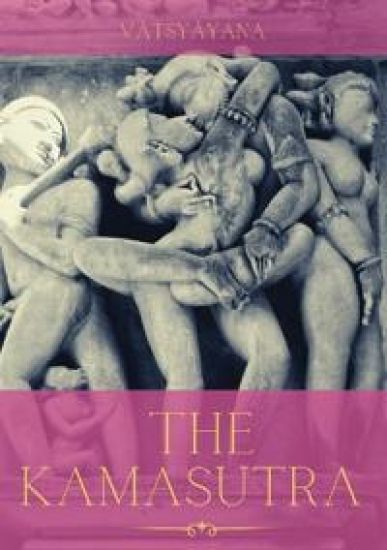
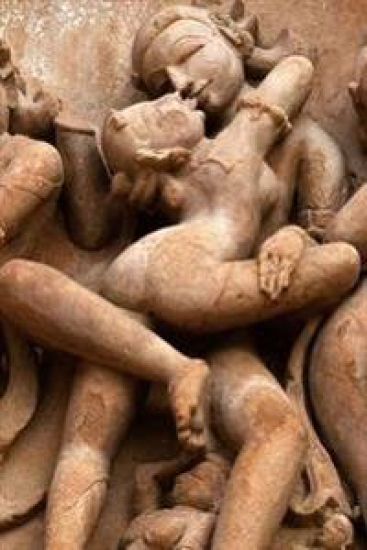
The Kama Sutra The Kama Sutra is an ancient Indian Sanskrit text on sexuality, eroticism and emotional fulfillment in life. Attributed to Vātsyāyana, the Kama Sutra is neither exclusively nor predominantly a sex manual on sex positions, but written as a guide to the "art-of-living" well, the nature of love, finding a life partner, maintaining one's love life, and other aspects pertaining to pleasure-oriented faculties of human life. Kamasutra is the oldest surviving Hindu text on erotic love. It is a sutra-genre text with terse aphoristic verses that have survived into the modern era with different bhasya (exposition and commentaries). The text is a mix of prose and anustubh-meter poetry verses. The text acknowledges the Hindu concept of Purusharthas, and lists desire, sexuality, and emotional fulfillment as one of the proper goals of life. Its chapters discuss methods for courtship, training in the arts to be socially engaging, finding a partner, flirting, maintaining power in a married life, when and how to commit adultery, sexual positions, and other topics. The majority of the book is about the philosophy and theory of love, what triggers desire, what sustains it, and how and when it is good or bad. The text is one of many Indian texts on Kama Shastra. It is a much-translated work in Indian and non-Indian languages. The Kamasutra has influenced many secondary texts that followed after the 4th-century CE, as well as the Indian arts as exemplified by the pervasive presence Kama-related reliefs and sculpture in old Hindu temples. Of these, the Khajuraho in Madhya Pradesh is a UNESCO world heritage site. Among the surviving temples in north India, one in Rajasthan sculpts all the major chapters and sexual positions to illustrate the Kamasutra. According to Wendy Doniger, the Kamasutra became "one of the most pirated books in English language" soon after it was published in 1883 by Richard Burton. This first European edition by Burton does not faithfully reflect much in the Kamasutra because he revised the collaborative translation by Bhagavanlal Indrajit and Shivaram Parashuram Bhide with Forster Arbuthnot to suit 19th-century Victorian tastes.
Le Kamasutra, un recueil indien crit entre les IVe et VIIe si cles, attribu V tsy yana. Le Kamasutra (du sanskrit K mas tra, compos de Kama, le d sir, et de sutra, l'aphorisme, soit litt ralement les aphorismes du d sir ) est un recueil indien traitant des diverses activit s de ce que recouvre l'expression vie priv e aujourd'hui, crit entre les VIe et VIIe si cles. Faisant partie du K mash stra qui d signe les ouvrages indiens sp cialis s dans les arts amoureux et les pratiques sexuelles, ce recueil destin aux classes ais es ne contient des illustrations qu' partir d' ditions du XVIe si cle, notamment pour celle de l'empereur moghol illettr Jal luddin Muhammad Akbar. Traduit pour la premi re fois en anglais en 1876 par Richard Francis Burton, le livre ne devint l gal au Royaume-Uni qu'en 1963. Il est principalement connu dans le monde pour ses 64 positions sexuelles, bien qu'elles ne constituent qu'un des sept livres de l'ouvrage (sept parties, trente-six chapitres et mille cinq cent onze shloka). Note de l' diteur: La pr sente dition est bas e sur le texte original en sanskrit du K mas tra, traduit pour la premi re fois en fran ais par le th ologien Pierre-Eug ne Lamairesse (1817-1898), et ne contient, comme son original d'avant le XVIe si cle, pas d'illustrations.
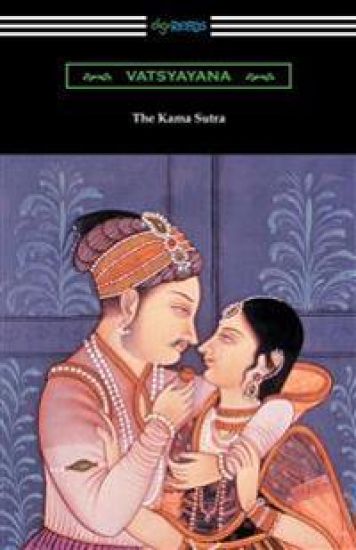
"Ka-ma," one of the four goals of Hindu life, means sensual or sexual pleasure. "Su-tra" means a thread or line that holds things together; metaphorically, an aphorism or a collection of aphorisms in the form of a manual. Thus, the Kama Sutra is literally a manual of sexual pleasure, but also a discussion of virtuous and gracious living, and of love. This ancient Indian Hindu text is the standard work on human sexual behavior in Sanskrit literature. It was composed between 2,400 and 1,800 years ago, and the compendium was collected into the form presented here in the 2nd century CE. This, the most popular English translation, was first printed privately in 1883. It is attributed to renowned orientalist and author Sir Richard Francis Burton, although he served chiefly as publisher of the work while providing the footnotes. The bulk of the actual translation work was handled by the pioneering Indian archaeologist, Bhagavanlal Indrajit and his student, Shivaram Parashuram Bhide. This volume combines some classic illustrations of the work from the 1800s with the complete English text for an eye-opening exploration of the ways of love and pleasure.

Rare edition with unique illustrations and elegant classic cream paper. The Kama Sutra is an ancient Indian Hindu 1] 2] text widely considered to be the standard work on human sexual behavior in Sanskrit literature written by Vatsyayana. A portion of the work consists of practical advice on sexual intercourse. It is largely in prose, with many inserted anustubh poetry verses. "Kama" which is one of the four goals of Hindu life, means desire including sexual desire the latter being the subject of the textbook, and "sutra" literally means a thread or line that holds things together, and more metaphorically refers to an aphorism (or line, rule, formula), or a collection of such aphorisms in the form of a manual. Contrary to popular perception, especially in the western world, Kama sutra is not exclusively a sex manual; it presents itself as a guide to a virtuous and gracious living that discusses the nature of love, family life and other aspects pertaining to pleasure oriented faculties of human life. Kama Sutra, in parts of the world, is presumed or depicted as a synonym for creative sexual positions; in reality, only 20% of Kama Sutra is about sexual positions. The majority of the book, notes Jacob Levy, is about the philosophy and theory of love, what triggers desire, what sustains it, how and when it is good or bad. The Kama Sutra is the oldest and most notable of a group of texts known generically as Kama Shastra Historians attribute Kamasutra to be composed between 400 BCE and 200 CE. John Keay says that the Kama Sutra is a compendium that was collected into its present form in the 2nd century CE Includes unique illustrations

This immortal work also serves as a window into Indian culture and mysticism. Its unique approach -combining meditations on politics and social customs with counsel on love and intimacy - features frank, direct advice on bodily pleasures, from aphrodisiacs and kissing to orgasm-delaying techniques.
A luxurious silkbound, gold-embossed edition of The Karma Sutra with full-color illustrations, presented in a decorative slipcase. The Kama Sutra is the world-famous text on lovemaking and fulfilment in matters of the heart. Originally compiled in the 3rd century AD by Vatsyayana, a celibate monk, it is a window on the social practices and sexual habits of an ancient world. In the 19th century it gained a new lease of life when translated into English by noted linguist Sir Richard Burton, who was determined to bring its perceptive ideas to a Western audience. The Kama Sutra would have presented a refreshing if shocking alternative to the stodgy marriage advice manuals of the Victorian age. Its basic tenet - that in order for marriages to be happy the participants should be well-versed in the arts of pleasure, both carnal and of the mind - still holds true. And, in spite of a risqu reputation, it is an illuminating, candid, common-sense guide to living a satisfying life. ABOUT THE SERIES: The Arcturus Silkbound Classics series brings together deluxe gift editions of literary classics, presented with luxurious silk binding, striking embossed cover designs and full-color illustrations.
The Kama Sutra, is an ancient Indian text widely considered to be the standard work on human sexual behavior in Sanskrit literature written by the Indian scholar Vatsyayana. A portion of the work consists of practical advice on sex. Kama means sensual or sexual pleasure, and sutra are the guidlines of yoga, the word itself means thread in Sanskrit. The Kama Sutra is the oldest and most notable of a group of texts known generically as Kama Shastra). Traditionally, the first transmission of Kama Shastra or "Discipline of Kama" is attributed to Nandi the sacred bull, Shiva's doorkeeper, who was moved to sacred utterance by overhearing the lovemaking of the god and his wife Parvati and later recorded his utterances for the benefit of mankind.