Kirjojen hintavertailu – 12 903 724 kirjaa ja 27 kauppaa

Kirjailija

Vaughan Lowe

Kirjat ja teokset yhdessä paikassa: 7 kirjaa, julkaisuja vuosilta 1999–2022, suosituimpiin kuuluu The Law of the Sea. Vertaile teosten hintoja ja tarkista saatavuus suomalaisista kirjakaupoista.

7 kirjaa

Kirjojen julkaisuvuodet: 1999–2022.

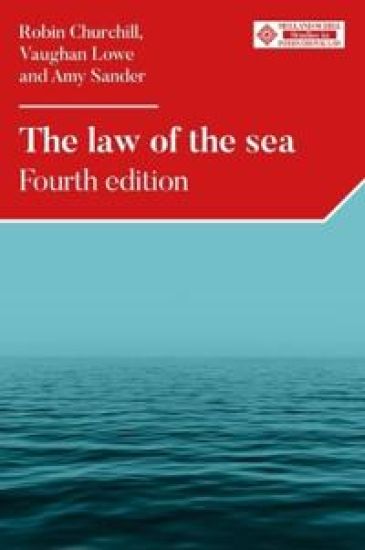
The Law of the Sea

The Law of the Sea

Robin Churchill; Vaughan Lowe; Amy Sander

MANCHESTER UNIVERSITY PRESS
2022
sidottu
For nearly forty years, The law of the sea has been regarded as an authoritative and standard work on the subject, combining detailed analysis and relevant, practical examples with a clear and engaging style. Completely revised and updated, this new edition will be a vital resource for anyone with an interest in maritime affairs. The book provides a rigorous analysis of the 1982 UN Convention on the Law of the Sea and the many other legal instruments that regulate human activities at sea, as well as taking full account of the numerous decisions of international courts and tribunals in recent years. It also traces the historical background to the law and its broader political, economic and environmental context. The new edition includes substantially expanded coverage of contemporary threats faced by the marine environment from human activities, such as the loss of marine biodiversity, the effects of climate change on the oceans and the vast amounts of plastic polluting the sea. This volume is written by three highly qualified authors, drawing on their extensive experience of teaching and researching the law of the sea, as well as their practical experience in advising governments and acting as counsel and arbitrators in international litigation. This book is relevant to United Nations Sustainable Development Goal 14, Life below water
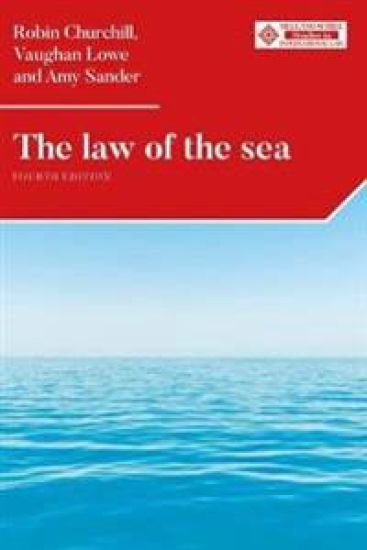
The Law of the Sea

The Law of the Sea

Robin Churchill; Vaughan Lowe; Amy Sander

MANCHESTER UNIVERSITY PRESS
2022
nidottu

Halvin toimitettuna 78,10 €

For nearly forty years, The law of the sea has been regarded as an authoritative and standard work on the subject, combining detailed analysis and relevant, practical examples with a clear and engaging style. Completely revised and updated, this new edition will be a vital resource for anyone with an interest in maritime affairs. The book provides a rigorous analysis of the 1982 UN Convention on the Law of the Sea and the many other legal instruments that regulate human activities at sea, as well as taking full account of the numerous decisions of international courts and tribunals in recent years. It also traces the historical background to the law and its broader political, economic and environmental context. The new edition includes substantially expanded coverage of contemporary threats faced by the marine environment from human activities, such as the loss of marine biodiversity, the effects of climate change on the oceans and the vast amounts of plastic polluting the sea. This volume is written by three highly qualified authors, drawing on their extensive experience of teaching and researching the law of the sea, as well as their practical experience in advising governments and acting as counsel and arbitrators in international litigation. This book is relevant to United Nations Sustainable Development Goal 14, Life below water
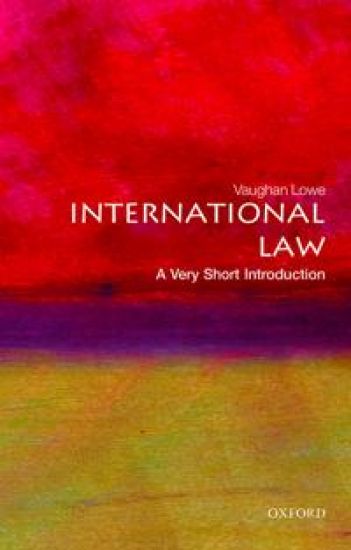
International Law

International Law

Vaughan Lowe

Oxford University Press
2015
nidottu

Halvin toimitettuna 18,90 €

Interest in international law has increased greatly over the past decade, largely because of its central place in discussions such as the Iraq War and Guantanamo, the World Trade Organisation, the anti-capitalist movement, the Kyoto Convention on climate change, and the apparent failure of the international system to deal with the situations in Palestine and Darfur, and the plights of refugees and illegal immigrants around the world. This Very Short Introduction explains what international law is, what its role in international society is, and how it operates. Vaughan Lowe examines what international law can and cannot do and what it is and what it isn't doing to make the world a better place. Focussing on the problems the world faces, Lowe uses terrorism, environmental change, poverty, and international violence to demonstrate the theories and practice of international law, and how the principles can be used for international co-operation.
International Law

International Law

Vaughan Lowe

Oxford University Press
2007
nidottu
International Law is both an introduction to the subject and a critical consideration of its central themes and debates. The opening chapters of the book explain how international law underpins the international political and economic system by establishing the basic principle of the independence of States, and their right to choose their own political, economic, and cultural systems. Subsequent chapters then focus on considerations that limit national freedom of choice (e.g. human rights, the interconnected global economy, the environment). Through the organizing concepts of territory, sovereignty, and jurisdiction the book shows how international law seeks to achieve an established set of principles according to which the power to make and enforce policies is distributed among States.
International Law

International Law

Vaughan Lowe

Oxford University Press
2007
sidottu
In the established tradition of the Clarendon Law Series, International Law is both an introduction to the subject and a critical consideration of its central themes and debates. This book explores the scope and functioning of international law, and how it helps to underpin our international political and economic systems. It goes on to examine the wider theoretical implications of international law's role in modern society. The opening chapters of the book explain how international law underpins the international political and economic system by establishing the basic principle of the independence of States, and their right to choose their own political, economic, and cultural systems. Subsequent chapters focus on the limits of national freedom of choice - the interntional minimum standards set in international human rights law, and the 'macro-political' rights of minorities, and the rights of peoples to self-determination. Two final chapters look at the international law principles applicable to the use of force and the control of international crime, as well as the processes for the prevention and settlement of international disputes. Of all legal subjects, international law is at once the most richly variegated and arguably the least understood, even by lawyers. For the past two decades it has been the focus of intense analysis and comment by legal philosophers, international relations specialists, linguists, professional lawyers, historians, economists, and political scientists, as well as those who study, teach, and practice the discipline. Yet, the realities of international trade and communication mean that regulations in one State often directly affect matters within others. This book explains how through the organizing concepts of territory, sovereignty, and jurisdiction international law seeks to achieve an established set of principles according to which the power to make and enforce policies is distributed among States.
The Settlement of Disputes in International Law

The Settlement of Disputes in International Law

John Collier; Vaughan Lowe

Oxford University Press
2000
nidottu
For many years it was said that the weakness of international law was the lack of a system for the enforcement of legal obligations. Commentators pointed to the paucity of cases in the International Court and the unwillingness of States to undertake binding obligations to settle their disputes. This position has now changed beyond recognition. The number of international tribunals has increased and many of them, such as ICSID and the International Court of Justice, are busier than at any time in their history. Increasingly, the classical procedures of diplomatic protection are circumvented as corporations and individuals litigate in their own right against States in international tribunals. This book surveys the range of procedures for the settlement of international disputes, whether the disputes arise between States or between States and corporations or individuals. The first part of the book examines non-judicial procedures such as negotiation, mediation, fact-finding, as well as judicial procedures. Among the tribunals covered are ICSID, the UNCC and the Iran-US Claim Tribunal, the WTO disputes panels, ad-hoc inter-State and international commercial arbitral tribunals and the International Court of Justice. In the second part of the book the emerging principles of procedural law applied in these tribunals are discussed. Here the authors go through the entire settlement process from the agreement to submit to a settlement procedure and the constitution of the tribunal, through to the determination of the law applicable to the merits and to the procedure of the tribunal, to the review, and ultimately the recognition and enforcement of tribunal awards.
The Settlement of Disputes in International Law

The Settlement of Disputes in International Law

John Collier; Vaughan Lowe

Oxford University Press
1999
sidottu
For many years it was said that the weakness of international law was the lack of a system for the enforcement of legal obligations. Commentators pointed to the paucity of cases in the International Court and the unwillingness of States to undertake binding obligations to settle their disputes. This position has now changed beyond recognition. The number of international tribunals has increased and many of them, such as ICSID and the International Court of Justice, are busier than at any time in their history. Increasingly, the classical procedures of diplomatic protection are circumvented as corporations and individuals litigate in their own right against States in international tribunals. This book surveys the range of procedures for the settlement of international disputes, whether the disputes arise between States or between States and corporations or individuals. The first part of the book examines non-judicial procedures such as negotiation, mediation, fact-finding, as well as judicial procedures. Among the tribunals covered are ICSID, the UNCC and the Iran-US Claim Tribunal, the WTO disputes panels, ad-hoc inter-State and international commercial arbitral tribunals and the International Court of Justice. In the second part of the book the emerging principles of procedural law applied in these tribunals are discussed. Here the authors go through the entire settlement process from the agreement to submit to a settlement procedure and the constitution of the tribunal, through to the determination of the law applicable to the merits and to the procedure of the tribunal, to the review, and ultimately the recognition and enforcement of tribunal awards.