Kirjojen hintavertailu – 12 903 725 kirjaa ja 27 kauppaa
Kirjailija
Velcheru Narayana Rao
Kirjat ja teokset yhdessä paikassa: 7 kirjaa, julkaisuja vuosilta 1994–2024, suosituimpiin kuuluu The Demon's Daughter. Vertaile teosten hintoja ja tarkista saatavuus suomalaisista kirjakaupoista.
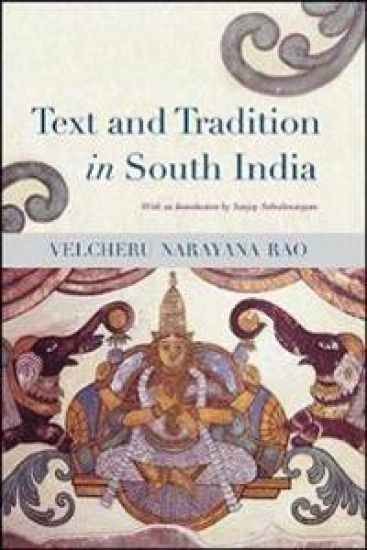
Essays on Telugu and South Indian literature and culture by distinguished Telugu scholar Narayana Rao. Velcheru Narayana Rao's contribution to understanding Indian cultural history, literary production, and intellectual life-specifically from the vantage of the Andhra region-has few parallels. He is one of the very rare scholars to be able to reflect magisterially on the precolonial and colonial periods. He moves easily between Sanskrit and the vernacular traditions, and between the worlds of orality and script. This is because of his mastery of the "classical" Telugu tradition. As Sanjay Subrahmanyam puts it in his Introduction, "To command nearly a thousand years of a literary tradition is no small feat, but more important still is VNR's ability constantly to offer fresh readings and provocative frameworks for interpretation." The essays and reflections in Text and Tradition in South India bring together the diverse and foundational contributions made by Narayana Rao to the rewriting of India's cultural and literary history. The book is for anyone interested in the history of Indian ideas, the social and cultural history of South India, and the massive intellectual traditions of the subcontinent.
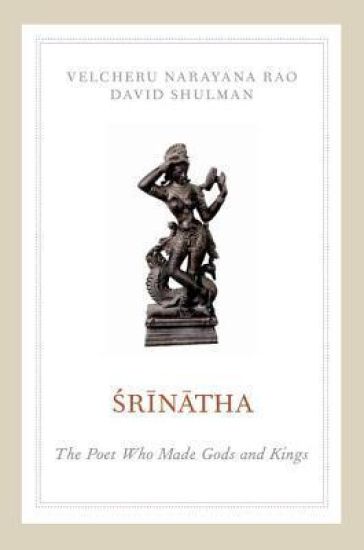
David Shulman and Velcheru Narayana Rao offer a groundbreaking cultural biography of Srinatha, arguably the most creative figure in the thousand-year history of Telugu literature. This fourteenth- and fifteenth-century poet revolutionized the classical tradition and effectively created the classical genre of sustained, thematically focused, coherent large-scale compositions. Some of his works are proto-novellas: self-consciously fictional, focused on the development of characters, and endowed with compelling, fast-paced plots. Though entirely rooted in the cultural world of medieval south India, Srinatha is a poet of universal resonance and relevance. Srinatha: The Poet who Made Gods and Kings provides extended translations of Srinatha's major works and shows how the poet bridged gaps between oral (improvised) poetry and fixed literary works; between Telugu and the classical, pan-Indian language of Sanskrit; and between local and trans-local cultural contexts. Srinatha is a protean figure whose biography served the later literary tradition as a model and emblem for primary themes of Telugu culture, including the complex relations between sensual and erotic excess and passionate devotion to the temple god. He established himself as an ''Emperor of Poets'' who could make or break a great king and who, by encompassing the entire, vast geographical range of Andhra and Telugu speech, invented the idea of a comprehensive south Indian political empire (realized after his death by the Vijayanagara kings). In this wide-ranging and perceptive study, Shulman and Rao show Srinatha's place in a great classical tradition in a moment of profound cultural transformation.
David Shulman and Velcheru Narayana Rao offer a groundbreaking cultural biography of Srinatha, arguably the most creative figure in the thousand-year history of Telugu literature. This fourteenth- and fifteenth-century poet revolutionized the classical tradition and effectively created the classical genre of sustained, thematically focused, coherent large-scale compositions. Some of his works are proto-novellas: self-consciously fictional, focused on the development of characters, and endowed with compelling, fast-paced plots. Though entirely rooted in the cultural world of medieval south India, Srinatha is a poet of universal resonance and relevance. Srinatha: The Poet who Made Gods and Kings provides extended translations of Srinatha's major works and shows how the poet bridged gaps between oral (improvised) poetry and fixed literary works; between Telugu and the classical, pan-Indian language of Sanskrit; and between local and trans-local cultural contexts. Srinatha is a protean figure whose biography served the later literary tradition as a model and emblem for primary themes of Telugu culture, including the complex relations between sensual and erotic excess and passionate devotion to the temple god. He established himself as an ''Emperor of Poets'' who could make or break a great king and who, by encompassing the entire, vast geographical range of Andhra and Telugu speech, invented the idea of a comprehensive south Indian political empire (realized after his death by the Vijayanagara kings). In this wide-ranging and perceptive study, Shulman and Rao show Srinatha's place in a great classical tradition in a moment of profound cultural transformation.
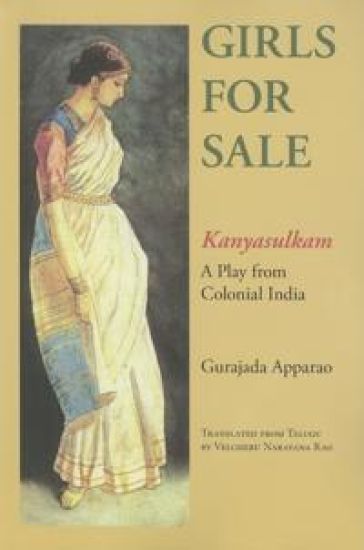
First staged in 1892, the South Indian play Girls for Sale (Kanyasulkam) is considered the greatest modern work of Telugu literature and the first major drama written in an Indian language that critiqued British colonialism's effects on Indian society. Filled with humor, biting social commentary, parody, and masquerade, the plot revolves around a clever courtesan, a young widow, and a very old man who wants to buy as his wife a very young girl. Velcheru Narayana Rao has prepared the first idiomatic English translation, with notes and a critical essay. Itself a masterpiece of Indian literature in translation, this edition makes Apparao's work available to new audiences.
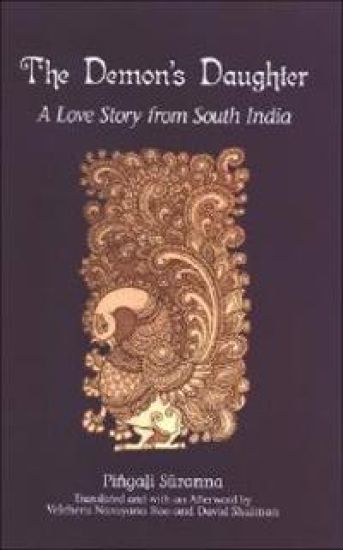
This sixteenth-century work has a modern sensibility, presenting characters' inner worlds and understanding love as the fullest realization of the individual. The Demon's Daughter (Prabhavati-pradyumnamu) is a sixteenth-century novel by the south Indian poet Pingali Suranna, originally written in Telugu, the language of present-day Andhra Pradesh. Suranna begins with a story from classical Hindu mythology in which a demon plans to overthrow the gods. Krishna's son Pradyumna is sent to foil the plot and must infiltrate the impregnable city of the demons; Krishna helps ensure his success by having a matchmaking goose cause Pradyumna to fall in love with the demon's daughter. The original story focuses on the ongoing war between gods and anti-gods, but Pingali Suranna makes it an exploration of the experience of being and falling in love. In this, the work evinces a modern sensibility, showing love as both an individualized emotion and the fullest realization of a person, transcending social and cultural barriers. The translators include an afterword that explores the cultural setting of the work and its historical and literary contexts. Anyone interested in the literature and mythology of India will find this book compelling, but all readers who love a good story will enjoy this moving book. Velcheru Narayana Rao and David Shulman have provided an elegant translation that will serve well the contemporary reader who wishes to encounter a masterwork of world literature largely unknown in the West.
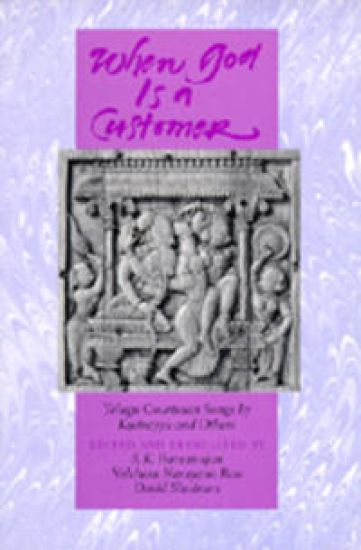
How is it that this woman's breasts glimmer so clearly through her saree? Can't you guess, my friends? What are they but rays from the crescents left by the nails of her lover pressing her in his passion, rays now luminous as the moonlight of a summer night? These South Indian devotional poems show the dramatic use of erotic language to express a religious vision. Written by men during the fifteenth to eighteenth century, the poems adopt a female voice, the voice of a courtesan addressing her customer. That customer, it turns out, is the deity, whom the courtesan teases for his infidelities and cajoles into paying her more money. Brazen, autonomous, fully at home in her body, she merges her worldly knowledge with the deity's transcendent power in the act of making love. This volume is the first substantial collection in English of these Telugu writings, which are still part of the standard repertoire of songs used by classical South Indian dancers. A foreword provides context for the poems, investigating their religious, cultural, and historical significance. Explored, too, are the attempts to contain their explicit eroticism by various apologetic and rationalizing devices. The translators, who are poets as well as highly respected scholars, render the poems with intelligence and tenderness. Unusual for their combination of overt eroticism and devotion to God, these poems are a delight to read.