Kirjailija
VI Khi Nao
Kirjat ja teokset yhdessä paikassa: 14 kirjaa, julkaisuja vuosilta 2013–2025, suosituimpiin kuuluu My Ardent Love for the Pencil. Vertaile teosten hintoja ja tarkista saatavuus suomalaisista kirjakaupoista.
14 kirjaa
Kirjojen julkaisuvuodet: 2013–2025.
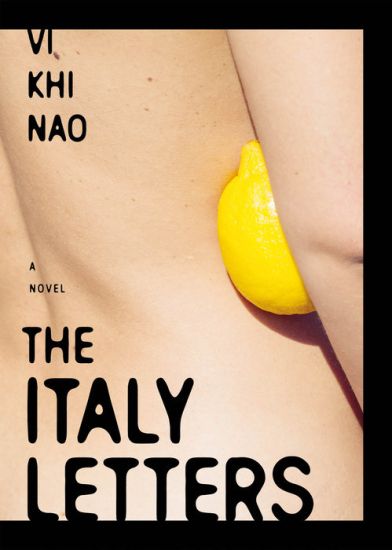
"Vi Khi Nao's fictional language is full of magical slippages ... an esoteric sadness seeps up through surface deadpan and pizzazz." --Jonathan Lethem A cult-favorite writer weaves a mesmerizing epistolary tale of a sensual queer love affair set against the backdrop of Las Vegas' gritty underbelly. The Italy Letters is a slim, powerful shot of literary fantasia from one of America's best-kept secrets. Long a cult favorite, visionary writer Vi Khi Nao weaves an unforgettable and highly distinctive story of a love affair suffused with longing, erotic passion, and heartbreak--all while painting a picture of the gritty underside of Las Vegas. This beautiful and mesmerizing novel by a queer Vietnamese American writer is a brilliant and unclassifiable work of fiction that takes the form of a series of letters written by the unnamed narrator to her lover in Italy ... part of a stream-of-consciousness narrative that is by turns poignant, bawdy, funny, and disturbing--and often beautifully poetic. Along the way, the story touches on the immigrant experience, LGBTQIA identity, social class, writing, betrayal, sex, and homesickness. The result is an authentically distinctive piece of writing from an underrated American writer on the cusp of wide acclaim.
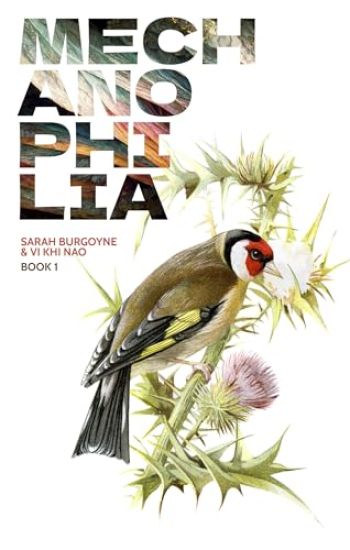
Using the numerical structure of pi (3.1415), Mechanophilia is a collaborative epic poem by the American poet Vi Khi Nao and Canadian poet Sarah Burgoyne that follows the omniscient voluble conversations and complaints of ad hoc biblical characters as they attempt to make sense of themselves on an ordered, disordered planet. Nao and Burgoyne, who have never met, began this project after discovering a mutual love of math and unending collaborations. This book, the first of four volumes presently completed, represents the first 1,000 digits of pi. Anachronistic in proportion, this work attempts to queer and rewrite myths in precise, restrictive numerical pi chronology, yet its verses remain free and ludic, time-travelling at will and often looping in present-day figures (Elon Musk, Lady Gaga, Cai Guo-Qiang, Phoebe Philo, Virgil Abloh, Donald Trump) and concerns. Feministic, irreverent, and supremely loquacious, Mechanophilia presents infinity as something reachable yet unrelated to linear time.
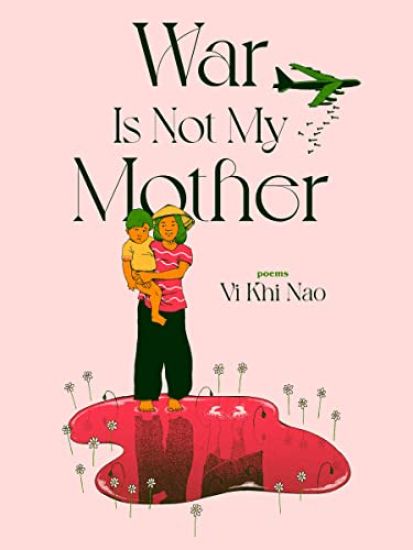
A series of poetic remixes, WAR IS NOT MY MOTHER might be considered a form of spirit possession. Each poem in this manuscript takes up another poet’s work— a selection that ranges from Lorca to CD Wright, H? Xuân Huong to Sappho, Agha Shahid Ali to Ishrat Afreen— and alters its DNA, infusing it with an other idiolect. This is an idiolect of pleasure (the wordplay, puns, and cadence of the Vietnamese language) and of pain (the long shadow of the Vietnam war in the lives of those who survived, barely survived, and became refugees). Like any possessing spirit, WAR IS NOT MY MOTHER speaks in tongues: using others’ words to articulate a personal pain. Shorn of their original context and content, the poems in this collection— mutant-hybrids who retain a trace of their skeleton while dressed in entirely other clothes— become a play of voices that call into question notions of authenticity and self in poetic production, a postmodern twist for the classical craft.
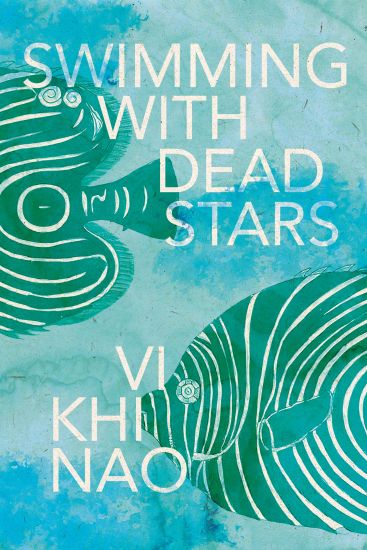
Swimming with Dead Stars
Vi Khi Nao
THE UNIVERSITY OF ALABAMA PRESS
2022
nidottu
Halvin toimitettuna 26,50 €
A hypnotic sojourn of planetary proportions through the terrestrial contingencies of bodies, health, poverty, and salvation; Maldon is an adjunct literature instructor at a prestigious East Coast university, with a deteriorating heart condition and no insurance. She finds herself caught between the demands of her job and the needs of her body, triggering economic and emotional strains that cause her to fantasize about taking her own life. But Maldon, who has pledged to safeguard her mother ever since their arrival in the US on a refugee ship from postwar Vietnam, has vowed to forgo suicide for as long as her mother is living. In time, her heart worsens rapidly, and she ventures cross-country to a place called Cloud for the operation that may save her life. In Cloud, Maldon is joined by old friend planet Neptune, who is hermaphroditic, peculiar, and has agreed to accompany Maldon through the operation. Swimming with Dead Stars is a hallucinatory meditation on the stars and planets, the precariousness of our existence, the cruel inequities of labor and healthcare, chickens and ice cream, and the grace that comes from enduring the physical and psychic pain wrought by pernicious social forces that enslave us all.
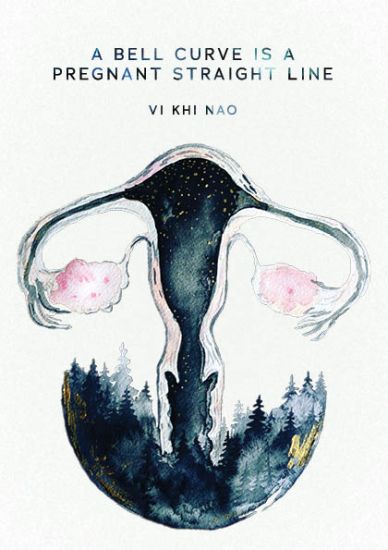
Tools for Extinction
Enrique Vila-Matas; Olivia Sudjic; Jon Fosse; Inger Wold Lund; Vi Khi Nao; Patrícia Portela; Lucie Elven; Mara Coson; Christina Hesselholdt; Jean-Baptiste Del Amo; Naja Marie Aidt; Michael Salu; Jakuta Alikavazovic; Anna Zett; Emilio Fraia; Frode Grytten; Olga Ravn; Joanna Walsh
Lolli Editions
2020
nidottu
Halvin toimitettuna 18,80 €
Enrique Vila-Matas, Olivia Sudjic, Jon Fosse, Inger Wold Lund, Vi Khi Nao, Patrícia Portela, Lucie Elven, Mara Coson, Christina Hesselholdt, Jean-Baptiste Del Amo, Naja Marie Aidt, Michael Salu, Joanna Walsh, Jakuta Alikavazovic, Anna Zett, Emilio Fraia, Frode Grytten, and Olga Ravn Translations by Margaret Jull Costa, Zoë Perry, Martin Aitken, Denise Newman, Paul Russell Garrett, Damion Searls, and Rahul Bery Eighteen international writers respond to the open-ended period of social distancing, closures, and illness caused by Covid-19. Compiled during the initial lockdown in Europe, this special collection is a meteoric publishing project with contributions from some of the most exciting and innovative authors working today. Meditating on notions of distance and closeness, sameness and alterity, extinguishing and kindling, Tools for Extinction considers how a common pause might give rise to new modes of domesticity and shift experiences of time. What gestures and actions are we willing to perform to make ourselves, and each other, feel at ease – or at work? What tools and objects are useful, or unprecedentedly useless, to us in the process? And as our species’ trademark proclivity for projecting ourselves into the future is disrupted, might we come to see the buildings, animals, plants, and foodstuffs around us in a new light? The anthology takes its name from Steven Brand’s Whole Earth Catalog, a 1960s counterculture compendium of product reviews, essays, and articles on the themes of self-sufficiency, ecology, and alternative education. By giving “access to tools”, a new social order and a more sustainable Earth was imagined. Compiled, edited and with a foreword by Denise Rose Hansen.

Winner of FC2's Ronald Sukenick Innovative Fiction Prize An unflinching and riveting meditation on the pain that attends every facet of existence–love and sacrifice and intimacy and beauty–a biography of torture. Like all of Vi Khi Nao's acclaimed and award-winning work, A Brief Alphabet of Torture bleeds across many modes and genres–poetry, essay, fiction, drama–and itself almost constitutes a novel of a different kind. Each tale captures the emotional, physical, psychological, political, and artistic concerns that pervade life like breath and which, even when very beautiful, are filled with pain. These stories are all facets of Nao's imagination that define the way she views creation, sexuality, violence, and the role of life in an ontological system that relies heavily on cultural, social, and artistic duress. Some stories like �Winter Rose� and �I Love You Me Neither� rise above the boundaries of pain to places of beauty and grace and love, where pain has no place, but make clear how rare such moments appear in life.
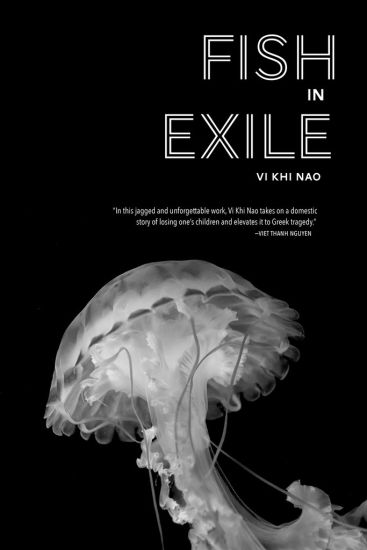
Praise for Vi Khi Nao: "Here I was allowed to forget for a while that that is what books aspire to tell, so taken was I by more enthralling and mysterious pleasures." --Carole Maso How do you bear the death of a child? With fishtanks and jellyfish burials, Persephone's pomegranate seeds, and affairs with the neighbors. Fish in Exile spins unimaginable loss through classical and magical tumblers, distorting our view so that we can see the contours of a parent's grief all the more clearly. Vi Khi Nao was born in Long Khanh, Vietnam. Vi's work includes poetry, fiction, film and cross-genre collaboration. Her poetry collection, The Old Philosopher, was the winner of 2014 Nightboat Poetry Prize. Her novel, Fish In Exile, will make its first appearance in Fall 2016 from Coffee House Press. She holds an MFA in fiction from Brown University.
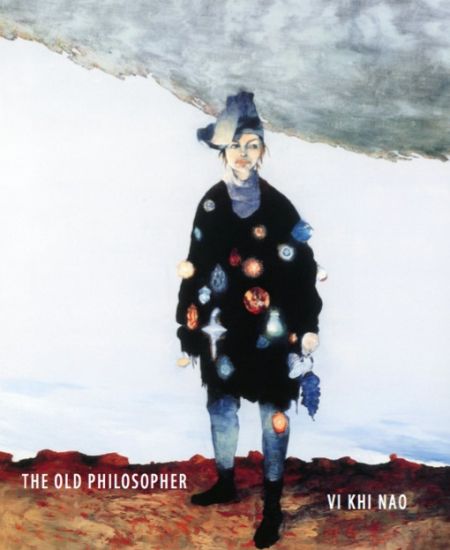
The Old Philosopher is enigmatic, sexual, biblical, anachronistic, political, and personal all at once. These quiet, implosive poems inhabit a nonlinear temporality in which Vi Khi Nao brings biblical time and political time together in the same poetic space, allowing current affairs to converse with a more ancient and historical reality.
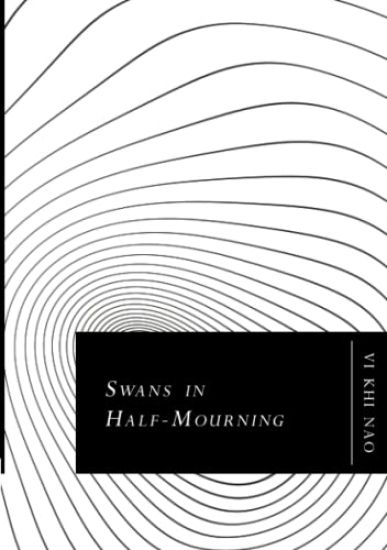
This is what happens when a powerful princess falls in love with a woman and God sits in the grass to count stars. Princes, birds, and glass bottle labyrinths wrap around a spiral of Roman numerals.