Kirjojen hintavertailu – 12 875 451 kirjaa ja 26 kauppaa

Kirjailija

Vicente Huidobro

Kirjat ja teokset yhdessä paikassa: 27 kirjaa, julkaisuja vuosilta 1982–2025, suosituimpiin kuuluu Adam. Vertaile teosten hintoja ja tarkista saatavuus suomalaisista kirjakaupoista.

27 kirjaa

Kirjojen julkaisuvuodet: 1982–2025.

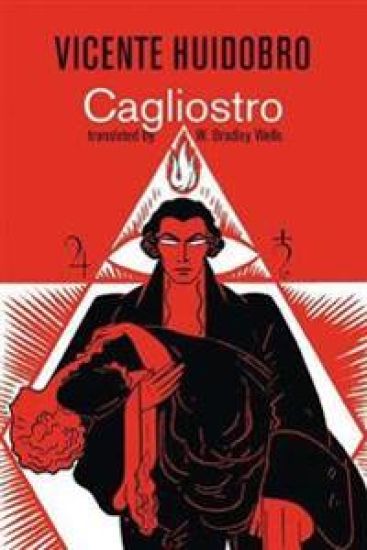
Cagliostro

Cagliostro

Vicente Huidobro

Shearsman Books
2019
nidottu
Cagliostro is a lurid tale of magic and secret societies during the reign of Luis XVI, centred on the figure of the Italian occultist Giuseppe Balsamo, known under his alias of Count Alessandro di Cagliostro. The book owes its style of presentation to the example of German expressionist cinema, of the kind exemplified by The Cabinet of Dr Caligari. In the early 1920s, Vicente Huidobro-always fascinated by the new medium of film-wrote a film script on the subject of Cagliostro, in a treatment apparently very much in tune with the German expressionist cinema of the era. The film was apparently shot in 1923 by the Romanian director Mime Mizu but it was scrapped due to dissatisfaction over the editing. No trace of the film survives, although there are three pages from a script in the author's papers. A revised version of the script was submitted to The League for Better Motion Pictures in New York and won a $10,000 award as the best candidate for filming. Alas for the author, this was just at the point when the "talkies" arrived and this style of film-making was immediately rendered outmoded. However, the novella, which has many cinematic elements, was published in English translation in 1931 in both London and New York, to positive reviews. It appeared in the original Spanish only in 1934, in Santiago, Chile, where it had no impact at all. This edition reproduces the text of the 1931 translation. "[This book] is my answer to the question whether the cinematograph can influence the novel." (Vicente Huidobro)

Selected Poems

Selected Poems

Vicente Huidobro

Shearsman Books
2019
nidottu
This selected edition presents an overview of all of Huidobro's work, from 1914 until 1948, when his final, posthumous volume was published. moving from the early symbolist work, though the high avant-garde phase towards the end of the First World War, then through the phase of Altazor and Temblor de cielo (Skyquake), the highpoint of his career (both published 1931), and on into the quieter late poetry which synthesises the previous work and settles down into a post-vanguard style. Also includes manifestos and interviews.
El Cid

El Cid

Vicente Huidobro; Tony Frazer

Shearsman Books
2019
nidottu
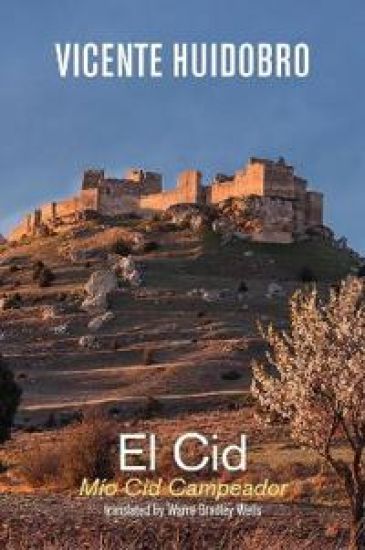
In 1928, shortly after his marriage to Ximena Amunategui, and after meeting the actor Douglas Fairbanks, who expressed interest in the possibility of a new swashbuckler, Huidobro began writing his version of the Cid legend as a novel. The result is a highly readable, if slightly arch, version of the story, that casts aside the style of romantic 19th-century historical fiction in favour of more modern approaches and cinematic influences. Style aside, the book can be read a straightforward tale of adventure that sits happily alongside the 1961 epic movie that starred Charlton Heston and Sophia Loren and had thousands of extras. More than one line of the script for that movie sounds as if lifted from Huidobro's novel. The translation by Wells appeared quickly, under the title Portrait of a Paladin in 1931, in both London and New York, and this reprint offers the original version with only some minor edits, together with a new afterword and an extensive glossary to aid with figures, both legendary and genuine, from Old Spain.
Square Horizon

Square Horizon

Vicente Huidobro

Shearsman Books
2019
nidottu
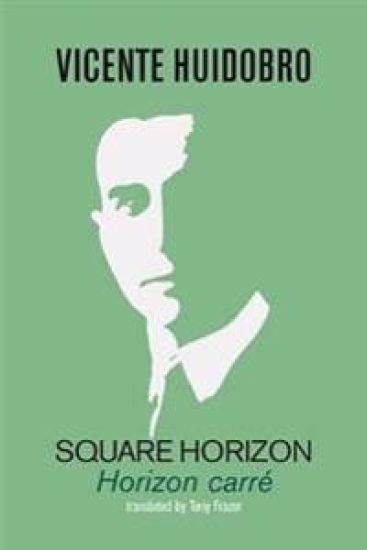
Huidobro published Horizon carre in Paris in 1917), and quickly followed it with Tour Eiffel (in French and Spanish; Madrid, 1918), Hallali (in French; Madrid, 1918); Ecuatorial (in Spanish; Madrid, 1918), Poemas articos, likewise published in Spanish in Madrid, and El espejo de agua, a Spanish-language volume from 1916, reissued in Madrid in 1918. Horizon carre is heavily influenced by the work of Guillaume Apollinaire and marks Huidobro's definitive arrival on the avant-garde scene in Paris, even if-it has to be said-the volume is derivative. Huidobro's French was good even before he arrived in Paris: he had been educated well in Santiago, but this would not have prepared him for the linguistic and intellectual ferment he would find upon arrival in the main seat of the international avant-garde. Many of his early French-language manuscripts show signs of corrections by his friends at the time-the French poet, Pierre Reverdy and the Spanish artist, Picabia, both being among them.
Últimos poemas

Últimos poemas

Vicente Huidobro

MAGO Editores
2017
pokkari
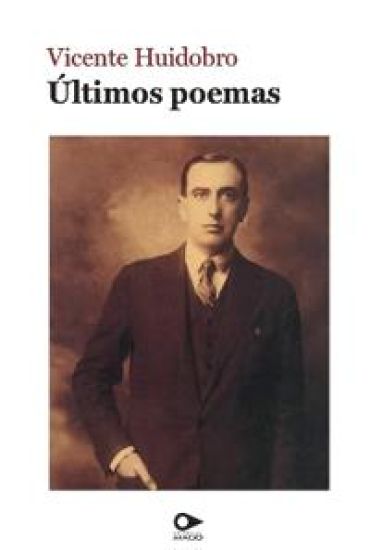
"Versos de la muerte de Vicente Huidobro nos conmueve al ingresar al umbral de un p rtico luminoso premortal en el lecho de un lirismo exultante. Hondo y profundo en los estados autoconscientes y l cidos. En un soliloquio fundamental del poeta, ante un inminente viaje como una expurgaci n desgarradora en l. Quien levanta su ceja inmortal impugnando, interroga su Ecuatorial vanguardismo junto a Altazor en su renovaci n del lenguaje en la poes a chilena. Su iracunda propuesta continuaba ajena a las controversias po ticas y pol ticas que estallaron su siglo y que su futuro, su presente, m s all de su lirismo, es esplendente en su ag nica excrecencia a la vacuidad de la existencia, el resplandor de sus vocablos, m s all del rel mpago, estelar, lejos de las ramplonas lisas y febles letras actuales". Carmen Berenguer
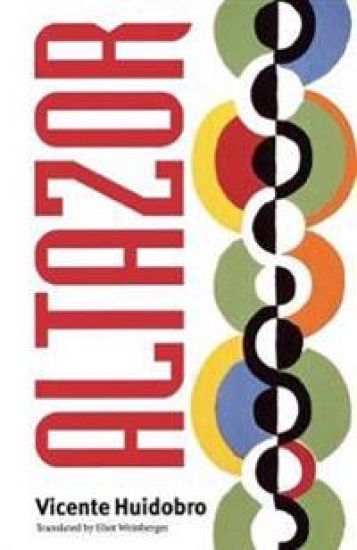
Altazor

Altazor

Vicente Huidobro

Wesleyan University Press
2004
nidottu
Often compared with Apollinaire as the first and liveliest avant-garde poet in his language, Vicente Huidobro was a one-man movement ("Creationism") in the modernist swirl of Paris and Barcelona between the two World Wars. His masterpiece was the 1931 book-length epic Altazor, a Machine Age paean to flight that sends its hero (Altazor, the "antipoet") hurtling through Einsteinian space at light speed. Perhaps the fastest-reading long poem of the century, and certainly the wildest, Altazor rushes through the universe in a lyrical babble of bird-languages, rose-languages, puns, neologisms, and pages of identical rhymes, finally ending in the pure sound of the language of the future. Universally considered untranslatable until the appearance of Eliot Weinberger's celebrated version in 1988, Altazor appears again in an extensively revised translation with an expanded introduction.