Kirjojen hintavertailu – 12 903 724 kirjaa ja 27 kauppaa

Kirjailija

Vicki C. Jackson

Kirjat ja teokset yhdessä paikassa: 4 kirjaa, julkaisuja vuosilta 2009–2026, suosituimpiin kuuluu Comparative Constitutional Law. Vertaile teosten hintoja ja tarkista saatavuus suomalaisista kirjakaupoista.

4 kirjaa

Kirjojen julkaisuvuodet: 2009–2026.

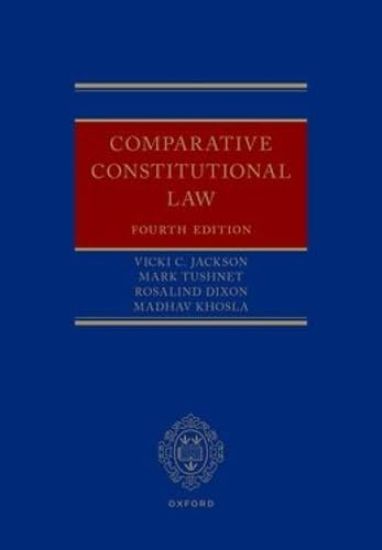
Comparative Constitutional Law

Comparative Constitutional Law

Mark Tushnet; Vicki C. Jackson; Rosalind Dixon; Madhav Khosla

OXFORD UNIVERSITY PRESS INC
2026
sidottu
Designed for use in law school courses, Comparative Constitutional Law introduces fundamental debates on the nature of constitutions, constitutional comparison, and the relationships between constitutions and constitutionalism in its various forms. The book explores how constitutions are made and changed, including recent applications of "unconstitutional constitutional amendment" doctrines, and the role of different institutions - legislatures, executives, publics, as well as courts - in constitutional interpretation and constitutional change. Following a detailed study of the structure and interpretive approaches of national apex courts that decide constitutional questions, the book goes on to consider six subject areas of importance in contemporary constitutionalism: separation of powers and emergencies; federalism and related consociational constitutional arrangements; equality and pluralism; religion; free expression; and positive rights or duties. Including excerpts of cases and scholarly material from the Global South, Europe, and North America, this volume emphasizes the need to understand the broader sociolegal contexts in which constitutional design and decisions occur. In response to growing trends of democratic retrogression in courts around the world, this new edition provides expanded coverage of abusive constitutionalism, authoritarianism, and illiberalism. It additionally offers insightful discussions on constitutional actors' responses to the COVID-19 pandemic; gender and LGBTQ+ equality issues; and indigenous peoples' rights and environmental rights. Providing an overview of constitutional law that is both comprehensive and accessible, the fourth edition of Comparative Constitutional Law is an invaluable resource for law students and academics.
Federalism

Federalism

Vicki C. Jackson; Susan Low Bloch

Praeger Publishers Inc
2013
sidottu
This book analyzes the structure of our constitutional system of government, providing an overview of the constitutional history of American federalism as it has been developed in decisions of the United States Supreme Court. Federalism: A Reference Guide to the United States Constitution provides a thorough examination of this significant and distinctive part of the U. S. constitutional system, documenting its role in major domestic constitutional controversies in every period of American history. Although the book is organized historically rather than doctrinally, the marked evolutions of important areas of doctrine are addressed over time. These subject areas include the scope of Congress's power under the Commerce Clause, the scope of Congress's powers under the Fourteenth and other post-Civil War Amendments, the states' authority to regulate commercial and economic matters when Congress is silent, the principle of the supremacy of federal law and the law of preemption that follows from it, intergovernmental and sovereign immunities, the obligation of state courts to enforce federal law, and the scope of national power to regulate or impose obligations on the states.
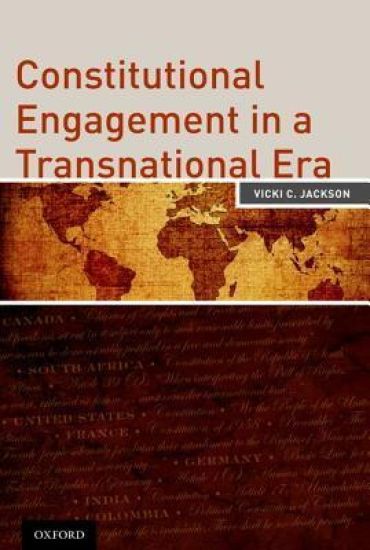
Constitutional Engagement in a Transnational Era

Constitutional Engagement in a Transnational Era

Vicki C. Jackson

Oxford University Press Inc
2013
nidottu
Constitutional law in the United States and around the world now operates within an increasingly transnational legal environment of international treaties, customary international law, supranational infrastructures of human rights and trade law, and growing comparative judicial awareness. This new environment is reflected in increasing cross-national references in constitutional court decisions around the world. The constellation of legal orders in which established constitutional regimes operate has changed - there are more bodies generating law, more international legal sources, and more multi-national interactions that bring into view various legal orders. How do these transnational phenomena affect our understanding of the role of constitutions and of courts in deciding constitutional cases? Constitutional Engagement in a Transnational Era explores this question, looking at constitutional court decisions from around the world, and identifying postures of resistance, convergence or engagement with international and foreign law. For the United States, the book argues for cautious engagement by the Supreme Court with transnational sources of law in interpreting the national constitution. Constitutional Engagement in a Transnational Era offers law school students and professors an authoritative study of comparative constitutional law by one of the most important scholars of domestic and comparative constitutional law. The book defines how international comparative experiences are relevant to constitutional analysis and discusses in detail the multiple possible connections between international law and constitutional law including a comparative overview of constitutional law in Australia, Canada, France, Germany, India, Israel, South Africa, the United Kingdom, and the United States.
Constitutional Engagement in a Transnational Era

Constitutional Engagement in a Transnational Era

Vicki C. Jackson

Oxford University Press Inc
2009
sidottu
Constitutional law in the United States and around the world now operates within an increasingly transnational legal environment of international treaties, customary international law, multilateral and bilateral agreements, a supranational infrastructure of trade law and human rights law, and increased comparative judicial awareness, reflected in increasing cross-national references in constitutional court decisions around the world. The constellation of legal orders in which established constitutional regimes operate has thus changed - there are more bodies generating law, there are more international agreements, there are more multi-national interactions and transactions that bring into view various legal orders. How, if at all, do these multiple transnational phenomena (including national law that has influence beyond its borders, as well as an expanded array of international law) affect our understanding of the role of constitutions and of courts in deciding constitutional cases? Constitutional Engagement in a Transnational Era explores the role of constitutions and constitutional law, focusing primarily on the United States, Australia, Canada, France, Germany, India, Israel, South Africa and the United Kingdom, within and in relationship to this increasingly transnational legal environment.