Kirjojen hintavertailu – 12 903 725 kirjaa ja 27 kauppaa

Kirjailija

Vicki Huddleston

Kirjat ja teokset yhdessä paikassa: 3 kirjaa, julkaisuja vuosilta 2010–2018, suosituimpiin kuuluu Learning to Salsa. Vertaile teosten hintoja ja tarkista saatavuus suomalaisista kirjakaupoista.

3 kirjaa

Kirjojen julkaisuvuodet: 2010–2018.

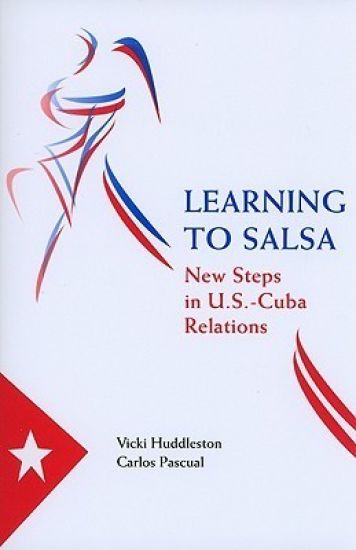
Learning to Salsa

Learning to Salsa

Vicki Huddleston; Carlos Pascual

Brookings Institution
2010
nidottu
" Today the United States has little leverage to promote change in Cuba. Indeed, Cuba enjoys normal relations with virtually every country in the world, and American attempts to isolate the Cuban government have served only to elevate its symbolic predicament as an ""underdog"" in the international arena. A new policy of engagement toward Cuba is long overdue. —From the IntroductionAs longtime U. S. diplomats Vicki Huddleston and Carlos Pascual make painfully clear in their introduction, the United States is long overdue in rethinking its policy toward Cuba. This is a propitious time for such an undertaking—the combination of change within Cuba and in the Cuban American community creates the most significant opening for a reassessment of U. S. policy since Fidel Castro took control in 1959. To that end, Huddleston and Pascual convened opinion leaders in the Cuban American community, leading scholars, and international diplomats from diverse backgrounds and political orientations to seek common ground on U. S. policy toward Cuba. This pithy yet authoritative analysis is the result. In the quest for ideas that would support the emergence of a peaceful, prosperous, and democratic Cuba—one in which the Cuban people shape their political and economic future—the authors conducted a series of simulations to identify the critical factors that the U. S. government should consider as it reformulates its Cuba policies. The advisers' wide-ranging expertise was applied to a series of hypothetical scenarios in which participants tested how different U. S. policy responses would affect a political transition in Cuba. By modeling and analyzing the decisionmaking processes of the various strategic actors and stakeholders, the simulations identified factors that might influence the success or failure of specific policy options. They then projected how key actors such as the Cuban hierarchy, civil society, and the international and Cuban American communities might act and react to internal and external events that would logically be expected to occur in the near future. The lessons drawn from these simulations led to the unanimous conclusion that the United States should adopt a proactive policy of critical and constructive engagement toward Cuba."
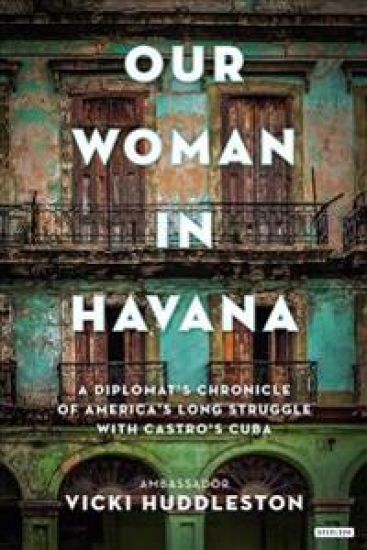
Our Woman in Havana: A Diplomat's Chronicle of America's Long Struggle with Castro's Cuba
A top US diplomat's compelling memoir of her years in Cuba and the tumultuous relationship between the two countries: "Unparalleled insight." --Culture Trip After the US embassy in Havana was closed in 1961, relations between the countries broke off. A thaw came in 1977 with the opening of a de facto embassy in Havana, the US Interests Section--where Vicki Huddleston would later serve under Presidents Clinton and George W. Bush. In her memoir of a diplomat at work, she tells gripping stories of face-to-face encounters with Fidel Castro and the initiatives she undertook, like the transistor radios she furnished to ordinary Cubans. Along with inside accounts of dramatic episodes such as the Eli n Gonz lez custody battle, Huddleston also evokes the charm of the island country and her warm affection for the Cuban people. Uniquely qualified to explain the inner workings of US-Cuba relations, Huddleston examines the Obama administration's diplomatic opening of 2014, the mysterious "sonic" brain and hearing injuries suffered by US and Canadian diplomats serving in Havana, and the rescinding of the diplomatic opening under the Trump administration. She recounts missed opportunities for d tente, and the myths, misconceptions, and lies that have long pervaded US-Cuba relations. Our Woman in Havana is essential reading for everyone interested in Cuba, including the thousands of Americans visiting the island every year, as well as policymakers and observers who study the stormy relationship with our near neighbor. "Anyone interested in the nitty-gritty of policy-making in Washington, and any young foreign service officer intrigued by worldly adventures will thoroughly enjoy." --Ambassador Joseph Wilson, author of The Politics of Truth: Inside the Lies that Led to War and Betrayed My Wife's CIA Identity
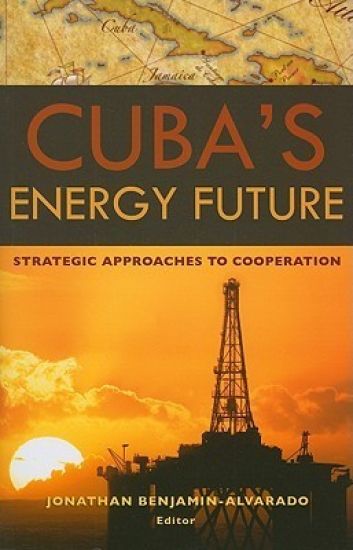
Cuba's Energy Future

Cuba's Energy Future

Vicki Huddleston

Brookings Institution
2010
nidottu
"Approaching an uncertain future without Fidel Castro, and still reeling from a downturn at the end of the cold war, Cuba must act decisively to improve its economy and living conditions. One of the major challenges facing the impoverished island nation is securing access to energy resources that are sufficient to meet the needs of its revitalization and development goals. What steps can Cuba take to achieve both short- and long-term energy sustainability and self-sufficiency? In this timely analysis, Jonathan Benjamin-Alvarado and his colleagues answer that question. Cuba's Energy Future sets the geostrategic context within which Cuba is operating. The book provides an overview of the evolving relations among Caribbean states and explains why Cuba and its longtime nemesis the United States should look for ways to cooperate on developing energy resources. The possible role of oil companies is explored, as is Cuba's energy relationship with Hugo Chavez's Venezuela. The second section of Cuba's Energy Future features economic and technical appraisals, economic projections, and trends affecting Cuba's energy needs, including oil and natural gas potential, the country's antiquated electric power sector, and the role of biofuels such as sugarcane ethanol. The concluding section focuses on the conditions necessary for, and the mutual benefits of, greater cooperative engagement with the United States. Contributors: Juan A. B. Belt (Chemonics International, formerly USAID), Jonathan Benjamin-Alvarado (University of Nebraska–Omaha and University of Georgia), Amy Myers Jaffe (Rice University), Jorge R. Piñón (Florida International University), Ronald Soligo (Rice University)."