Kirjojen hintavertailu – 12 859 818 kirjaa ja 27 kauppaa

Kirjailija

Victor Buchli

Kirjat ja teokset yhdessä paikassa: 8 kirjaa, julkaisuja vuosilta 1999–2015, suosituimpiin kuuluu An Archaeology of the Immaterial. Vertaile teosten hintoja ja tarkista saatavuus suomalaisista kirjakaupoista.

8 kirjaa

Kirjojen julkaisuvuodet: 1999–2015.

An Archaeology of the Immaterial

An Archaeology of the Immaterial

Victor Buchli

Routledge
2015
nidottu
An Archaeology of the Immaterial examines a highly significant but poorly understood aspect of material culture studies: the active rejection of the material world. Buchli argues that this is evident in a number of cultural projects, including anti-consumerism and asceticism, as well as other attempts to transcend material circumstances. Exploring the cultural work which can be achieved when the material is rejected, and the social effects of these ‘dematerialisations’, this book situates the way some people disengage from the world as a specific kind of physical engagement which has profound implications for our understanding of personhood and materiality. Using case studies which range widely in time over Western societies and the technologies of materialising the immaterial, from icons to the scanning tunnelling microscope and 3-D printing, Buchli addresses the significance of immateriality for our own economics, cultural perceptions, and emerging forms of social inclusion and exclusion. An Archaeology of the Immaterial is thus an important and innovative contribution to material cultural studies which demonstrates that the making of the immaterial is, like the making of the material, a profoundly powerful operation which works to exert social control and delineate the borders of the imaginable and the enfranchised.
An Archaeology of the Immaterial

An Archaeology of the Immaterial

Victor Buchli

Routledge
2015
sidottu
An Archaeology of the Immaterial examines a highly significant but poorly understood aspect of material culture studies: the active rejection of the material world. Buchli argues that this is evident in a number of cultural projects, including anti-consumerism and asceticism, as well as other attempts to transcend material circumstances. Exploring the cultural work which can be achieved when the material is rejected, and the social effects of these ‘dematerialisations’, this book situates the way some people disengage from the world as a specific kind of physical engagement which has profound implications for our understanding of personhood and materiality. Using case studies which range widely in time over Western societies and the technologies of materialising the immaterial, from icons to the scanning tunnelling microscope and 3-D printing, Buchli addresses the significance of immateriality for our own economics, cultural perceptions, and emerging forms of social inclusion and exclusion. An Archaeology of the Immaterial is thus an important and innovative contribution to material cultural studies which demonstrates that the making of the immaterial is, like the making of the material, a profoundly powerful operation which works to exert social control and delineate the borders of the imaginable and the enfranchised.
Architecture, photography and the contemporary past

Architecture, photography and the contemporary past

Claes Caldenby; David Kendall; Helena Mattsson; Katarina Elvén; Astrid von Rosen; Hendrik Zeitler; Staffan Schmidt; Klas Grinell; Cecilia Gronberg; Ana Betancour; Alyssa Grossman; Patrik Elgstrom; Andrej Slavik; Victor Buchli

Art and Theory
2014
nidottu
As traces left behind by the last two hundred years of profound historical change, architecture and photography contribute both to our contemporary skyline and to our image of the past. Their common history thus provides an indispensable background to every discussion of what has been called the contemporary past - that is, to modernity considered as an open problem rather than a closed historical period. Architecture can be seen as a kind of macromodernity, a social scope where the diverse discourses of modernity have assumed their most large-scale form. In analogy, photographic media constitute a micromodernity, where the underside of modern society has been registered, identified, classified, and archived. In both cases, we trace out the irregular borderline between the discursive and its opposite, the material. At this point of intersection, an interesting confrontation between traditional academic historiography and an artistic application of historical perspectives might be staged. What contribution can architecture and photography make to the exploration of our contemporary past? Victor Buchli, in his afterword, underlines the potential of such confrontations: Translation always betrays the original intention, but what might be described as the infelicities of the translation that are inherently treacherous are precisely what constitute its productive capacities.
An Anthropology of Architecture

An Anthropology of Architecture

Victor Buchli

Berg Publishers
2013
nidottu
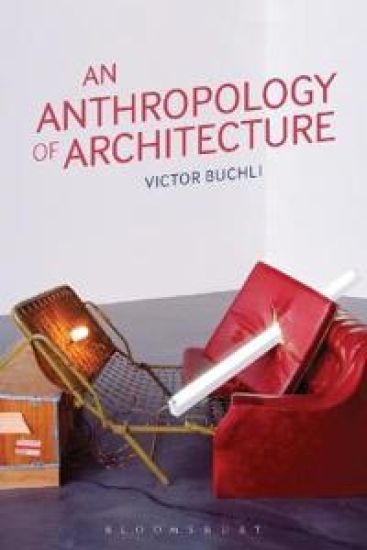
Ever since anthropology has existed as a discipline, anthropologists have thought about architectural forms. This book provides the first overview of how anthropologists have studied architecture and the extraordinarily rich thought and data this has produced. With a focus on domestic space - that intimate context in which anthropologists traditionally work - the book explains how anthropologists think about public and private boundaries, gender, sex and the body, the materiality of architectural forms and materials, building technologies and architectural representations. Each chapter uses a broad range of case studies from around the world to examine from within anthropology what architecture 'does' - how it makes people and shapes, sustains and unravels social relations. An Anthropology of Architecture is key reading for students of anthropology, material culture, geography, sociology, architectural theory, design and city planning.
Archaeologies of the Contemporary Past

Archaeologies of the Contemporary Past

Victor Buchli; Gavin Lucas

Routledge
2001
nidottu
Archaeologies of the Contemporary Past turns what is usually seen as a method for investigating the distant past onto the present. In doing so, it reveals fresh ways of looking both at ourselves and modern society as well as the discipline of archaeology. This volume represents the most recent research in this area and examines a variety of contexts including:* Art Deco* landfills* miner strikes* college fraternities* an abandoned council house.
Archaeologies of the Contemporary Past

Archaeologies of the Contemporary Past

Victor Buchli; Gavin Lucas

Routledge
2001
sidottu
Archaeologies of the Contemporary Past turns what is usually seen as a method for investigating the distant past onto the present. In doing so, it reveals fresh ways of looking both at ourselves and modern society as well as the discipline of archaeology. This volume represents the most recent research in this area and examines a variety of contexts including:* Art Deco* landfills* miner strikes* college fraternities* an abandoned council house.
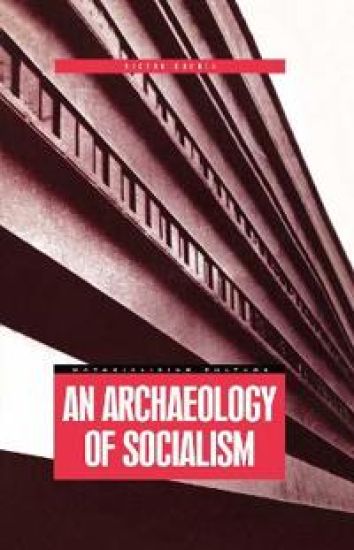
An Archaeology of Socialism

An Archaeology of Socialism

Victor Buchli

Berg Publishers
2000
nidottu
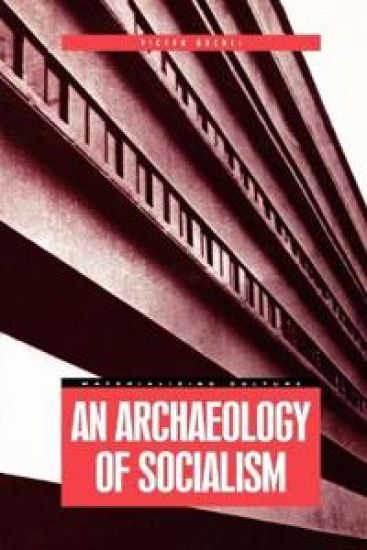
This highly original case study, which adopts a material culture perspective, is unprecedented in social and cultural histories of the Soviet period and provides a unique window on social relations. The author demonstrates how Moisei Ginzburg's Constructivist masterpiece, the Narkomfin Communal House, employed classic Marxist understandings of material culture in an effort to overturn capitalist and patriarchal social structures. Through the edifying effects of architectural forms, Ginzburg attempted to induce socialist and feminist-inspired social and gender relations. The author shows how, for the inhabitants, these principles manifested themselves, from taste to hygiene to gender roles, and how individuals variously appropriated architectural space and material culture to cope with the conditions of daily life, from the utopianism of the First Five Year Plan and Stalin's purges to the collapse of the Soviet Union. This book makes a major contribution to: the history of socialism in the Soviet Union and, more generally, Eastern Europe; material culture studies; architectural history; archaeology and social anthropology.
An Archaeology of Socialism

An Archaeology of Socialism

Victor Buchli

Berg Publishers
1999
sidottu
This highly original case study, which adopts a material culture perspective, is unprecedented in social and cultural histories of the Soviet period and provides a unique window on social relations. The author demonstrates how Moisei Ginzburg's Constructivist masterpiece, the Narkomfin Communal House, employed classic Marxist understandings of material culture in an effort to overturn capitalist and patriarchal social structures. Through the edifying effects of architectural forms, Ginzburg attempted to induce socialist and feminist-inspired social and gender relations. The author shows how, for the inhabitants, these principles manifested themselves, from taste to hygiene to gender roles, and how individuals variously appropriated architectural space and material culture to cope with the conditions of daily life, from the utopianism of the First Five Year Plan and Stalin's purges to the collapse of the Soviet Union. This book makes a major contribution to: the history of socialism in the Soviet Union and, more generally, Eastern Europe; material culture studies; architectural history; archaeology and social anthropology.