

Kirjojen hintavertailu – 12 903 724 kirjaa ja 27 kauppaa

Kirjailija

Victor G. Rodwin

Kirjat ja teokset yhdessä paikassa: 3 kirjaa, julkaisuja vuosilta 2010–2021, suosituimpiin kuuluu Health Care in World Cities. Vertaile teosten hintoja ja tarkista saatavuus suomalaisista kirjakaupoista.

3 kirjaa

Kirjojen julkaisuvuodet: 2010–2021.

The End of an Illusion

The End of an Illusion

Jean De Kervasdoue; John R. Kimberly; Victor G. Rodwin

University of California Press
2021
sidottu
The End of an Illusion: The Future of Health Policy in Western Industrialized Nations critically examines the evolving challenges in health policy, focusing on the unsustainable nature of current systems in the face of rising medical costs and limited resources. The book argues that while health has long been regarded as a fundamental right, the growing burden of healthcare expenditures in Western countries challenges the idea that the welfare state can continue to provide unlimited access to services for all. As healthcare costs outpace economic growth, the illusion of abundant resources fades, forcing difficult decisions about the allocation of medical services. Central themes include the growing role of the state in healthcare, the implications of new medical technologies, the ethical dilemmas of healthcare rationing, and the shift from idealism to realism in health policy. The book aims to frame the debate on the future of health care, identifying key issues that will shape policy discussions in the 1980s and beyond. The book is structured in four parts. Part 1 reflects on the historical context of state involvement in health systems and its impact on the current state of affairs. It critiques the notion that healthcare can remain a purely private matter, highlighting how economic retrenchment will push for alternative conceptions of medicine. Part 2 explores various perspectives on the role of the state in health policy, analyzing historical debates on disease prevention, the evolution of medical technology, and the ethics of healthcare rationing. Part 3 provides case studies from France, Britain, the United States, and Québec to offer insights into the practical realities and potential solutions in these nations' health systems. Finally, Part 4 synthesizes the findings from the case studies, speculating on the future direction of health policy. The book aims to contribute to a more informed, realistic discourse on health policy by addressing the complex interplay between economics, technology, ethics, and social values. This title is part of UC Press's Voices Revived program, which commemorates University of California Press’s mission to seek out and cultivate the brightest minds and give them voice, reach, and impact. Drawing on a backlist dating to 1893, Voices Revived makes high-quality, peer-reviewed scholarship accessible once again using print-on-demand technology. This title was originally published in 1984.

The End of an Illusion

The End of an Illusion

Jean De Kervasdoue; John R. Kimberly; Victor G. Rodwin

University of California Press
2021
pokkari
The End of an Illusion: The Future of Health Policy in Western Industrialized Nations critically examines the evolving challenges in health policy, focusing on the unsustainable nature of current systems in the face of rising medical costs and limited resources. The book argues that while health has long been regarded as a fundamental right, the growing burden of healthcare expenditures in Western countries challenges the idea that the welfare state can continue to provide unlimited access to services for all. As healthcare costs outpace economic growth, the illusion of abundant resources fades, forcing difficult decisions about the allocation of medical services. Central themes include the growing role of the state in healthcare, the implications of new medical technologies, the ethical dilemmas of healthcare rationing, and the shift from idealism to realism in health policy. The book aims to frame the debate on the future of health care, identifying key issues that will shape policy discussions in the 1980s and beyond. The book is structured in four parts. Part 1 reflects on the historical context of state involvement in health systems and its impact on the current state of affairs. It critiques the notion that healthcare can remain a purely private matter, highlighting how economic retrenchment will push for alternative conceptions of medicine. Part 2 explores various perspectives on the role of the state in health policy, analyzing historical debates on disease prevention, the evolution of medical technology, and the ethics of healthcare rationing. Part 3 provides case studies from France, Britain, the United States, and Québec to offer insights into the practical realities and potential solutions in these nations' health systems. Finally, Part 4 synthesizes the findings from the case studies, speculating on the future direction of health policy. The book aims to contribute to a more informed, realistic discourse on health policy by addressing the complex interplay between economics, technology, ethics, and social values. This title is part of UC Press's Voices Revived program, which commemorates University of California Press’s mission to seek out and cultivate the brightest minds and give them voice, reach, and impact. Drawing on a backlist dating to 1893, Voices Revived makes high-quality, peer-reviewed scholarship accessible once again using print-on-demand technology. This title was originally published in 1984.
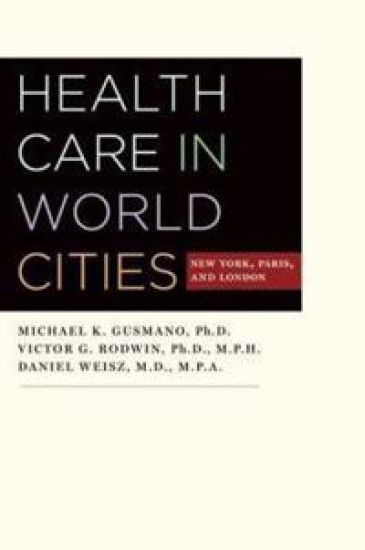
Health Care in World Cities

Health Care in World Cities

Michael K. Gusmano; Victor G. Rodwin; Daniel Weisz

Johns Hopkins University Press
2010
sidottu
New York. London. Paris. Although these cities have similar sociodemographic characteristics, including income inequalities and ethnic diversity, they have vastly different health systems and services. This book compares the three and considers lessons that can be applied to current and future debates about urban health care. Highlighting the importance of a national policy for city health systems, the authors use well-established indicators and comparable data sources to shed light on urban health policy and practice. Their detailed comparison of the three city health systems and the national policy regimes in which they function provides information about access to health care in the developed world's largest cities. The authors first review the current literature on comparative analysis of health systems and offer a brief overview of the public health infrastructure in each city. Later chapters illustrate how timely and appropriate disease prevention, primary care, and specialty health care services can help cities control such problems as premature mortality and heart disease. In providing empirical comparisons of access to care in these three health systems, the authors refute inaccurate claims about health care outside of the United States.