Kirjojen hintavertailu – 12 859 818 kirjaa ja 27 kauppaa

Kirjailija

Victor Galaz

Kirjat ja teokset yhdessä paikassa: 6 kirjaa, julkaisuja vuosilta 2014–2026, suosituimpiin kuuluu Adventskalender konst & litteratur: Tradition. Vertaile teosten hintoja ja tarkista saatavuus suomalaisista kirjakaupoista.

6 kirjaa

Kirjojen julkaisuvuodet: 2014–2026.

Adventskalender konst & litteratur: Tradition

Adventskalender konst & litteratur: Tradition

Susanna Alakoski; Marit Bergman; Helene Billgren; Ingrid Carlberg; Aris Fioretos; Torbjörn Flygt; Jens Fänge; Sara Gordan; Line Gordon; Carl Hammoud; Moa Herngren; Kati Knox; Sara Kristoffersson; Ann-Helén Laestadius; Stefan Lindberg; Bosse Lindquist; Marie Lundquist; Khashayar Lykke Naderehvandi; Andreas T Olsson; Ingela Olsson; Victor Galaz; Ann-Sofi Sidén; Jerker Virdborg; Liselotte Watkins

Akt Förlag AB
2025
nidottu
Akt Förlag grundades 2022, vars första utgivningen var en adventskalender i bokformat för vuxna. Nu följer förlaget upp sin utsålda succé och ger ut en ny Adventskalender konst & litteratur, den här gången är temat tradition. 24 samtida och etablerade forskare, författare, konstnärer, musiker, poeter och skådespelare har alla bidragit med varsin text och eller konstverk på nämnda tema, som de tolkat fritt. Varje dag, 1–24 december, öppnas dagens lucka genom att sprätta upp boksidans framkant. Medverkande: Susanna Alakoski, Marit Bergman, Helene Billgren, Ingrid Carlberg, Aris Fioretos, Jens Fänge, Sara Gordan, Line Gordon, Carl Hammoud, Moa Herngren, Kati Knox, Sara Kristoffersson, Ann-Helén Laestadius, Stefan Lindberg, Bosse Lindquist, Marie Lundquist, Khashayar Naderehvandi, Andreas T. Olsson, Ingela Olsson, Victor Galaz Rodriguez, Ann-Sofi Sidén, Jerker Virdborg och Liselotte Watkins.

Hav av öar : en berättelse om Oceanien och de krafter som for
Först kom ljuset, därefter dånet. Himlen färgades röd och en andra sol avtecknade sig över horisonten. Den 1 mars 1954 exploderade “Castle Bravo”, ett kärnvapen med en sprängkraft motsvarande tusen atombomber, över Bikiniatollen på Marshallöarna. Radioaktiv vit aska spreds med vinden över öarna och havet och föll ned över befolkningen utan förvarning. Allt förändrades efter den dagen. I Oceaniens övärld framträder vår tids globala konflikter och omställningar med särskild skärpa. Här har kärnvapen testats och skatte- och kryptoparadis vuxit fram. Hit når klimatkrisens stigande havsvatten, torka och stormar tidigare än till andra samhällen. I Hav av öar reser Victor Galaz genom Oceaniens övärld och skildrar en region vars folk och kulturer burit kostnaderna för kolonialism, kärnvapenavskräckning och klimatkris – och vars öden ytterst är sammanflätade med våra egna.
Dark Machines

Dark Machines

Victor Galaz

TAYLOR FRANCIS LTD
2024
nidottu

Halvin toimitettuna 67,40 €

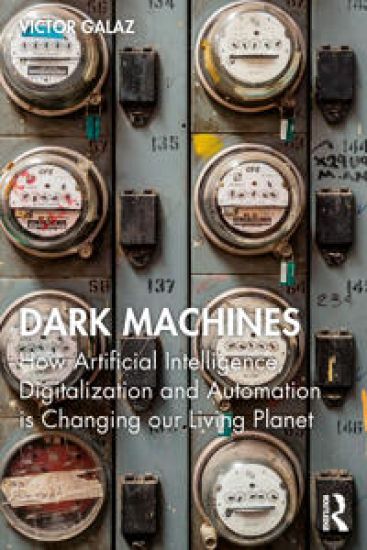
This book offers a critical primer on how Artificial Intelligence and digitalization are shaping our planet and the risks posed to society and environmental sustainability. As the pressure of human activities accelerates on Earth, so too does the hope that digital and artificially intelligent technologies will be able to help us deal with dangerous climate and environmental change. Technology giants, international think-tanks and policy-makers are increasingly keen to advance agendas that contribute to “AI for Good” or “AI for the Planet." Dark Machines explores why it is naïve and dangerous to assume converging forces of a growing climate crisis and technological change will act synergistically to the benefit of people and the planet. It explores why AI and associated digital technologies may lead to accelerated discrimination, automated inequality, and augmented diffusion of misinformation, while simultaneously amplifying risks for people and the planet. We face a profound challenge. We can either allow AI accelerate the loss of resilience of people and our planet, or we can decide to act forcefully in ways that redirects its destructive direction. This urgent book will be of interest to students and researchers with an interest in Artificial Intelligence, digitalization and automation, social and political dimensions of science and technology, and sustainability sciences.
Dark Machines

Dark Machines

Victor Galaz

TAYLOR FRANCIS LTD
2024
sidottu
This book offers a critical primer on how Artificial Intelligence and digitalization are shaping our planet and the risks posed to society and environmental sustainability. As the pressure of human activities accelerates on Earth, so too does the hope that digital and artificially intelligent technologies will be able to help us deal with dangerous climate and environmental change. Technology giants, international think-tanks and policy-makers are increasingly keen to advance agendas that contribute to “AI for Good” or “AI for the Planet." Dark Machines explores why it is naïve and dangerous to assume converging forces of a growing climate crisis and technological change will act synergistically to the benefit of people and the planet. It explores why AI and associated digital technologies may lead to accelerated discrimination, automated inequality, and augmented diffusion of misinformation, while simultaneously amplifying risks for people and the planet. We face a profound challenge. We can either allow AI accelerate the loss of resilience of people and our planet, or we can decide to act forcefully in ways that redirects its destructive direction. This urgent book will be of interest to students and researchers with an interest in Artificial Intelligence, digitalization and automation, social and political dimensions of science and technology, and sustainability sciences.
Global Environmental Governance, Technology and Politics

Global Environmental Governance, Technology and Politics

Victor Galaz

Edward Elgar Publishing Ltd
2015
nidottu
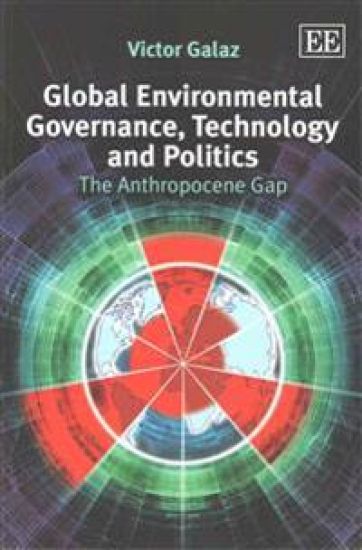
We live on an increasingly human-dominated planet. Our impact on the Earth has become so huge that researchers now suggest that it merits its own geological epoch - the 'Anthropocene' - the age of humans. Combining theory development and case studies of 'planetary boundaries', emerging infectious diseases, financial markets and geoengineering, this groundbreaking book explores the 'Anthropocene Gap' otherwise known as society's current failure to address the most profound environmental challenges of our times. What are the political and institutional implications of this new epoch? And what are some novel ways to analyze the complicated interplay between institutions, Earth system complexity and technology? This book offers one of the first explorations of political and institutional dimensions of the Anthropocene concept by providing a novel combination of institutional analysis along with insights from Earth system sciences. It provides an exploration of the role of technology for global environmental governance and defines a new agenda for political science analysis in the Anthropocene. Offering the first summary of the planetary boundaries debate, this cutting edge book will be of great interest to researchers concerned in the interplay between politics, technology, and global environmental change, and those interested in the debate surrounding the Anthropocene and 'planetary boundaries'. Contents: Foreword. The 'Anthropocene Gap' 1. Planetary Terra Incognita 2. Governance and Complexity 3. Earth System Complexity 4. Epidemics and Supernetworks 5. Engineering the Planet 6. Financial Markets, Robots and Ecosystems 7. Bridging the 'Anthropocene Gap' Epilogue: Back to London via the Baltic Sea References Index
Global Environmental Governance, Technology and Politics

Global Environmental Governance, Technology and Politics

Victor Galaz

Edward Elgar Publishing Ltd
2014
sidottu
We live on an increasingly human-dominated planet. Our impact on the Earth has become so huge that researchers now suggest that it merits its own geological epoch - the 'Anthropocene' - the age of humans. Combining theory development and case studies of 'planetary boundaries', emerging infectious diseases, financial markets and geoengineering, this groundbreaking book explores the 'Anthropocene Gap' otherwise known as society's current failure to address the most profound environmental challenges of our times. What are the political and institutional implications of this new epoch? And what are some novel ways to analyze the complicated interplay between institutions, Earth system complexity and technology? This book offers one of the first explorations of political and institutional dimensions of the Anthropocene concept by providing a novel combination of institutional analysis along with insights from Earth system sciences. It provides an exploration of the role of technology for global environmental governance and defines a new agenda for political science analysis in the Anthropocene. Offering the first summary of the planetary boundaries debate, this cutting edge book will be of great interest to researchers concerned in the interplay between politics, technology, and global environmental change, and those interested in the debate surrounding the Anthropocene and 'planetary boundaries'. Contents: Foreword. The 'Anthropocene Gap' 1. Planetary Terra Incognita 2. Governance and Complexity 3. Earth System Complexity 4. Epidemics and Supernetworks 5. Engineering the Planet 6. Financial Markets, Robots and Ecosystems 7. Bridging the 'Anthropocene Gap' Epilogue: Back to London via the Baltic Sea References Index