
Kirjailija
Victor Hugo
Kirjat ja teokset yhdessä paikassa: 2 201 kirjaa, julkaisuja vuosilta 1954–2026, suosituimpiin kuuluu Oration on Voltaire. Vertaile teosten hintoja ja tarkista saatavuus suomalaisista kirjakaupoista.
Nimi esiintyy myös muodoissa: Víctor Hugo
2 201 kirjaa
Kirjojen julkaisuvuodet: 1954–2026.

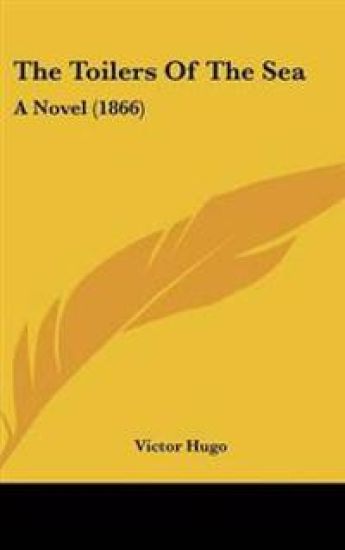

"Ursus was a man, Homo a wolf": the former a travelling mountebank, the latter his faithful companion. Gwynplaine was abducted as an infant, and cruelly mutilated so that his face shows the permanent smile of a clown. Abandoned by his abductors some years later, Gwynplaine rescues a blind baby girl from the frozen corpse of her mother at the foot of a gibbet. Time passes, and the young girl -- christened Dea -- comes to love Gwynplaine. Being blind, she is unaware of his disfigurement, but from passing her fingers over his face, assumes that he is always happy. Ursus and Homo meet up with Gwynplaine and Dea, and travel around England performing at funfairs. After some vicissitudes, Gwynplaine is, surprisingly, summoned to the court of Queen Anne, where it is revealed that he is in fact the missing heir of the murdered Lord Linnaeus Clancharlie, Marquis of Corleone. He is, accordingly, installed as an English peer; but when he addresses the House of Lords is ridiculed for his clownish features. He renounces his peerage and rejoins his companions, who resolve to abandon England forever. During the voyage, while Ursus sleeps, Dea reveals to Gwynplaine her secret passion for him, then dies. Gwynplaine drowns himself. Victor Hugo's gothic tale has been the inspiration of numerous plays, films (the first in 1909) novels and short stories. Following a distinguished career as a civil servant, James Hogarth acquired a reputation as a versatile and punctilious translator. His translations span travel guides, archaeological texts, and novels. In 2002 he won the French-American Foundation Translation Prize for his English translation of Victor Hugo's Travailleurs de la Mer. He died in 2006.

Ninety-three, the last of Victor Hugo's novels, is regarded by many -- including such diverse critics as Robert Louis Stevenson and Andre Maurois -- as his greatest work. 1793, Year Two of the Republic, saw the establishment of the National Convention, the execution of Louis XVI, the Terror, and the monarchist revolt in the Vendee, brutally suppressed by the Republic. Hugo's epic follows three protagonists through this tumultuous year: the noble royalist de Lantenac; Gauvain, who embodies a benevolent and romantic vision of the Republic; and Cimourdain, whose principles are altogether more robespierrean. The conflict of values culminates in a dramatic climax on the scaffold. Following a distinguished career as a civil servant, James Hogarth acquired a reputation as a versatile and punctilious translator. His translations span travel guides, archaeological texts, and novels. In 2002 he won the French-American Foundation Translation Prize for his English translation of Victor Hugo's Travailleurs de la Mer. He died in 2006.
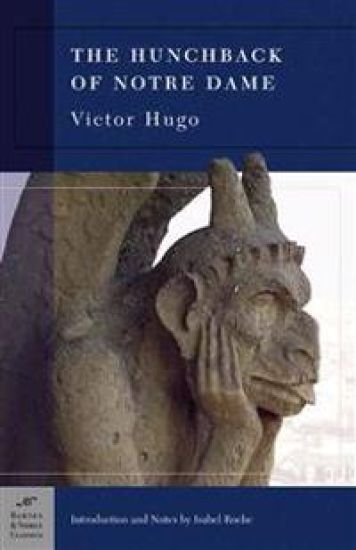
The Hunchback of Notre Dame (Barnes & Noble Classics Series)
Victor Hugo
Fine Communications,US
2008
pokkari