
Kirjailija
Victor Hugo
Kirjat ja teokset yhdessä paikassa: 2 201 kirjaa, julkaisuja vuosilta 1954–2026, suosituimpiin kuuluu Oration on Voltaire. Vertaile teosten hintoja ja tarkista saatavuus suomalaisista kirjakaupoista.
Nimi esiintyy myös muodoissa: Víctor Hugo
2 201 kirjaa
Kirjojen julkaisuvuodet: 1954–2026.
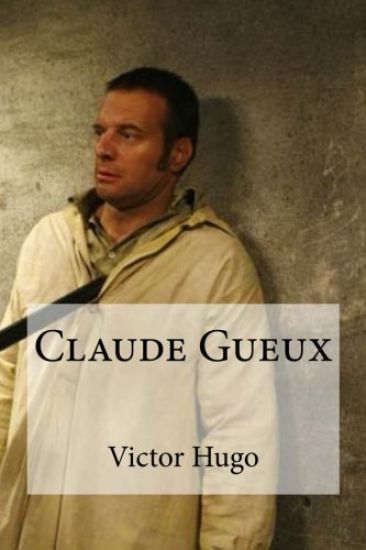
Victor Hugo ach ve la derni re pr face du Dernier Jour d'un condamn en 1832. Quand il d couvre dans la Gazette des tribunaux du 19 mars 1832, le compte rendu du proc s d'un certain Claude Gueux condamn mort pour meurtre, il y d couvre comme un cho de son plaidoyer contre la peine de mort et d cide alors d'en faire un roman. Il retranscrit donc la vie de Claude Gueux d s son entr e dans la prison jusqu' son ex cution en passant par les motifs de son crime et son proc s.
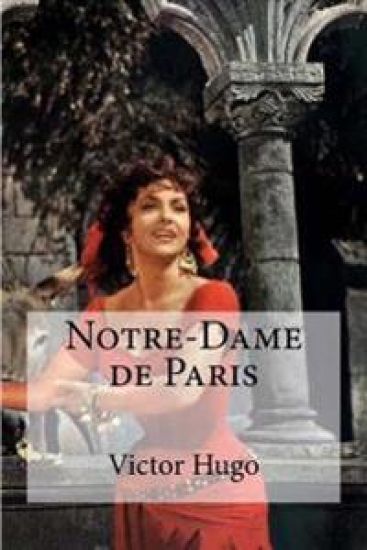

Victor Marie Hugo 1802 -1885) was a French poet, novelist, and dramatist of the Romantic movement. He is considered one of the greatest and best-known French writers. In France, Hugo's literary fame comes first from his poetry and then from his novels and his dramatic achievements. Among many volumes of poetry, Les Contemplations and La L gende des si cles stand particularly high in critical esteem. Outside France, his best-known works are the novels Les Mis rables, 1862, and Notre-Dame de Paris, 1831 (known in English as The Hunchback of Notre-Dame). He also produced more than 4,000 drawings, which have since been admired for their beauty, and earned widespread respect as a campaigner for social causes such as the abolition of capital punishment.
Oeuvres Complétes de Victor Hugo. Oeuvres Complétes de Victor Hugo: Drames T06
Victor Hugo
Hachette Livre - BNF
2016
pokkari
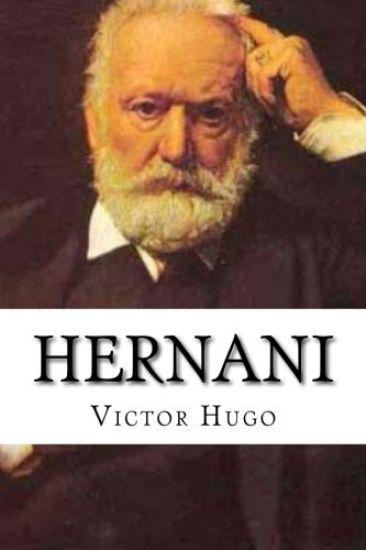
Soy una fuerza que impulsan, soy el agente ciego y sordo de los misterios f nebres, soy el alma de la desgracia impregnada de tinieblas. D nde voy? No lo s . S lo s que me impulsa con soplo impetuoso un destino insensato.
LIVRE I - LE BOIS DE LA SAUDRAIE Dans les derniers jours de mai 1793, un des bataillons parisiens amen s en Bretagne par Santerre fouillait le redoutable bois de la Saudraie en Astill . On n' tait pas plus de trois cents, car le bataillon tait d cim par cette rude guerre. C' tait l' poque o , apr s l'Argonne, Jemmapes et Valmy, du premier bataillon de Paris, qui tait de six cents volontaires, il restait vingt-sept hommes, du deuxi me trente-trois, et du troisi me cinquante-sept. Temps des luttes piques. Les bataillons envoy s de Paris en Vend e comptaient neuf cent douze hommes. Chaque bataillon avait trois pi ces de canon. Ils avaient t rapidement mis sur pied. Le 25 avril, Gohier tant ministre de la justice et Bouchotte tant ministre de la guerre, la section du Bon-Conseil avait propos d'envoyer des bataillons de volontaires en Vend e; le membre de la commune Lubin avait fait le rapport; le 1er mai, Santerre tait pr t faire partir douze mille soldats, trente pi ces de campagne et un bataillon de canonniers. Ces bataillons, faits si vite, furent si bien faits, qu'ils servent aujourd'hui de mod les; c'est d'apr s leur mode de composition qu'on forme les compagnies de ligne; ils ont chang l'ancienne proportion entre le nombre des soldats et le nombre des sous-officiers. Le 28 avril, la commune de Paris avait donn aux volontaires de Santerre cette consigne: Point de gr ce, point de quartier. la fin de mai, sur les douze mille partis de Paris, huit mille taient morts. Le bataillon engag dans le bois de la Saudraie se tenait sur ses gardes. On ne se h tait point. On regardait la fois droite et gauche, devant soi et derri re soi; Kl ber a dit: Le soldat a un oeil dans le dos. Il y avait longtemps qu'on marchait. Quelle heure pouvait-il tre ? quel moment du jour en tait-on ? Il e t t difficile de le dire, car il y a toujours une sorte de soir dans de si sauvages halliers, et il ne fait jamais clair dans ce bois-l . Le bois de la Saudraie tait tragique. C' tait dans ce taillis que, d s le mois de novembre 1792, la guerre civile avait commenc ses crimes; Mousqueton, le boiteux f roce, tait sorti de ces paisseurs funestes; la quantit de meurtres qui s' taient commis l faisait dresser les cheveux. Victor Hugo, n le 26 f vrier 1802 Besan on et mort le 22 mai 1885 Paris, est un po te, dramaturge et prosateur romantique consid r comme l'un des plus importants crivains de langue fran aise. Il est aussi une personnalit politique et un intellectuel engag qui a jou un r le majeur dans l'histoire du XIXe si cle. Victor Hugo occupe une place marquante dans l'histoire des lettres fran aises au XIXe si cle, dans des genres et des domaines d'une remarquable vari t . Il est po te lyrique avec des recueils comme Odes et Ballades (1826), Les Feuilles d'automne (1831) ou Les Contemplations (1856), mais il est aussi po te engag contre Napol on III dans Les Ch timents (1853) ou encore po te pique avec La L gende des si cles (1859 et 1877). Il est galement un romancier du peuple qui rencontre un grand succ s populaire avec notamment Notre-Dame de Paris (1831), et plus encore avec Les Mis rables (1862). Au th tre, il expose sa th orie du drame romantique dans sa pr face de Cromwell en 1827 et l'illustre principalement avec Hernani en 1830 et Ruy Blas en 1838, mais aussi Lucr ce Borgia et Le Roi s'amuse. Son oeuvre multiple comprend aussi des discours politiques la Chambre des pairs, l'Assembl e constituante et l'Assembl e l gislative, notamment sur la peine de mort, l' cole ou l'Europe, des r cits de voyages (Le Rhin, 1842, ou Choses vues, posthumes, 1887 et 1890), et une correspondance abondante.

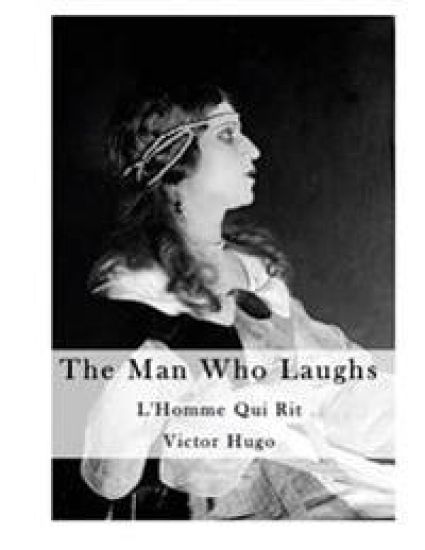
The Man Who Laughs: By Order of the King
Victor Hugo
Createspace Independent Publishing Platform
2016
nidottu
The Man Who LaughsL'Homme Qui RitVictor HugoFULL ENGLISH TRANSLATIONThe Man Who Laughs (also published under the title By Order of the King) is a novel by Victor Hugo, originally published in April 1869 under the French title L'Homme qui rit. Although among Hugo's most obscure works, it was adapted into a popular 1928 film, directed by Paul Leni and starring Conrad Veidt, Mary Philbin and Olga Baclanova. It was also again recently adapted for the 2012 French film L'Homme Qui Rit, directed by Jean-Pierre Am ris and starring G rard Depardieu, Marc-Andr Grondin and Christa Theret. The first major character whom the reader is introduced to is a mountebank who dresses in bearskins and calls himself Ursus (Latin for "bear"). His only companion is a large domesticated wolf, whom Ursus has named Homo (Latin for "man," in a pun over the Hobbesian saying "homo homini lupus," meaning "man is a wolf to his fellow] man."). Ursus lives in a caravan, which he conveys to holiday fairs and markets throughout southern England, where he sells folk remedies. The action moves to an English sea coast, on the night of January 29, 1690. A group of wanderers, their identities left unrevealed to the reader, are urgently loading a ship for departure. A boy, ten years old, is among their company, but they leave him behind and cast off. The desperate boy, barefoot and starving, wanders through a snowstorm and reaches a gibbet, where he finds the corpse of a hanged criminal. The dead man is wearing shoes: utterly worthless to him now, yet precious to this boy. In the meantime, the wanderers' ship sinks after a long struggle with the sea in the English Channel. After walking some more, the boy finds a ragged woman, frozen to death. He is about to move onward when he hears a sound within the woman's garments: He discovers an infant girl, barely alive, clutching the woman's breast. Hugo's narrative describes a single drop of frozen milk, resembling a pearl, suspended from the dead woman's nipple. Although the boy's survival seems unlikely, he now takes possession of the infant in an attempt to keep her alive. The girl's eyes are sightless and clouded, and he understands that she is blind. In the snowstorm, he encounters an isolated caravan, the domicile of Ursus.
The Last Day of a Condemned Man: Le Dernier Jour d'Un Condamne
Victor Hugo
Createspace Independent Publishing Platform
2016
nidottu
The Last Day of a Condemned Man Le Dernier jour d'un condamn ]Victor HugoTranslated by Eugenia De B. The Last Day of a Condemned Man (French: Le Dernier Jour d'un Condamn ) is a short novel by Victor Hugo first published in 1829. The novel recounts the thoughts of a man condemned to die. Victor Hugo wrote this novel to express his feelings that the death penalty should be abolished. At the head of the earlier editions of this work, published at first without the name of the author, there was nothing but the following lines." There are two ways of accounting for the existence of this work. Either there really has been found a bundle of yellow, ragged, papers, on which were inscribed, exactly as they came, the last thoughts of a wretched being; or else there has been a man, a dreamer, occupied in observing nature for the advantage of art, a philosopher, a poet, who, having been seized with these forcible ideas, could not rest until he had given them the tangible form of a volume. Of these two explanations, the reader will choose that which he prefers." As is seen, at the time when this book was first published, the author did not deem fit to give publicity to the full extent of his thoughts. He preferred waiting to see whether the work would be fully understood. It has been. The author may now, therefore, unmask the political and social ideas, which he wished to render popular under this harmless literary guise. He avows openly, that The Last Day of a Condemned is only a pleading, direct or indirect, as is preferred, for the abolition of the penalty of death. His design herein and what he would wish posterity to see in his work, if its attention should ever be given to so slight a production, is, not to make out the special defense of any particular criminal, such defense being transitory as it is easy; he would plead generally and permanently for all accused persons, present and future; it is the great point of human right, stated and pleaded before society at large, that highest judicial court; it is the sombre and fatal question which breathes obscurely in the depths of each capital offense, under the triple envelopes of pathos in which legal eloquence wraps them; it is the question of life and death, I say, laid bare, denuded and despoiled of the sonorous twistings of the bar, revealed in daylight, and placed where it should be seen; in its true and hideous position, not in the law courts, but on the scaffold, not among the judges, but with the executioner This is what he has desired to effect. If futurity should award him the glory of having succeeded, which he dares not hope, he desires no other crown.
Oxford Bookworms Library: Level 1:: Les Misérables audio pack
Victor Hugo
Oxford University Press
2015
muu
The most consistent of all series in terms of language control, length, and quality of story. David R. Hill, Director of the Edinburgh Project on Extensive Reading.