Kirjojen hintavertailu – 12 859 829 kirjaa ja 27 kauppaa

Kirjailija

Victor M. Hansen

Kirjat ja teokset yhdessä paikassa: 4 kirjaa, julkaisuja vuosilta 2009–2016, suosituimpiin kuuluu The Case for Congress. Vertaile teosten hintoja ja tarkista saatavuus suomalaisista kirjakaupoista.

4 kirjaa

Kirjojen julkaisuvuodet: 2009–2016.

The Case for Congress

The Case for Congress

Victor M. Hansen; Lawrence Friedman

Routledge
2016
nidottu
The Case for Congress: Separation of Powers and the War on Terror examines the constitutional relationship between Congress and the President in the post-September 11 world, arguing that Congress should exercise its legitimate authority in guiding United States policy. While many commentators have focused on the extent of the President's national security and foreign affairs authority, both domestically and abroad, this title focuses on the constitutional authority of Congress to serve as a check on executive power. As a national consensus has developed around the notion that the Bush administration made grave errors in its policy decisions, a reminder of the leading role that Congress can play in those decisions is particularly appropriate. Unlike scholarly work devoted either to detailing or criticizing the Bush administration's policy decisions, this accessible and balanced book focuses on the policies themselves, and on the way in which Congress can influence those policies for the better. The authors further offer specific and useful recommendations for legislative measures that may correct existing policy deficiencies and promote sounder decision-making in the area of national security and foreign affairs.
The War on Terror and the Laws of War

The War on Terror and the Laws of War

Geoffrey S. Corn; Jr. Schoettler; Dru Brenner-Beck; Victor M. Hansen; Dick Jackson; Eric Talbot Jensen; Michael W. Lewis; Jr. Dunlap

Oxford University Press Inc
2015
sidottu
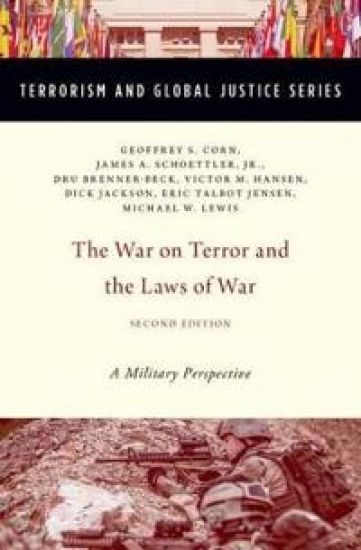
Many years after the United States initiated a military response to the terrorist attacks of September 11th, 2001, the nation continues to prosecute what it considers an armed conflict against transnational terrorist groups. Understanding how the law of armed conflict applies to and regulates military operations executed within the scope of this armed conflict against transnational non-state terrorist groups is as important today as it was in September 2001. In The War on Terror and the Laws of War seven legal scholars, each with experience as military officers, focus on how to strike an effective balance between the necessity of using armed violence to subdue a threat to the nation with the humanitarian interest of mitigating the suffering inevitably associated with that use. Each chapter addresses a specific operational issue, including the national right of self-defense, military targeting and the use of drones, detention, interrogation, trial by military commission of captured terrorist operatives, and the impact of battlefield perspectives on counter-terror military operations, while illustrating how the law of armed conflict influences resolution of that issue. This Second Edition carries on the critical mission of continuing the ongoing dialogue about the law from an unabashedly military perspective, bringing practical wisdom to the contentious topic of applying international law to the battlefield.
The War on Terror and the Laws of War

The War on Terror and the Laws of War

Geoffrey S. Corn; Jr. Schoettler; Dru Brenner-Beck; Victor M. Hansen; Dick Jackson; Eric Talbot Jensen; Michael W. Lewis; Jr. Dunlap

Oxford University Press Inc
2015
nidottu
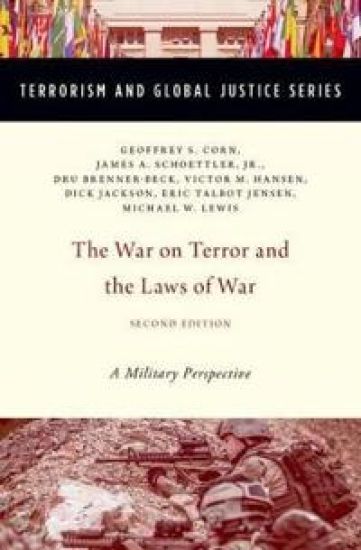
Many years after the United States initiated a military response to the terrorist attacks of September 11th, 2001, the nation continues to prosecute what it considers an armed conflict against transnational terrorist groups. Understanding how the law of armed conflict applies to and regulates military operations executed within the scope of this armed conflict against transnational non-state terrorist groups is as important today as it was in September 2001. In The War on Terror and the Laws of War seven legal scholars, each with experience as military officers, focus on how to strike an effective balance between the necessity of using armed violence to subdue a threat to the nation with the humanitarian interest of mitigating the suffering inevitably associated with that use. Each chapter addresses a specific operational issue, including the national right of self-defense, military targeting and the use of drones, detention, interrogation, trial by military commission of captured terrorist operatives, and the impact of battlefield perspectives on counter-terror military operations, while illustrating how the law of armed conflict influences resolution of that issue. This Second Edition carries on the critical mission of continuing the ongoing dialogue about the law from an unabashedly military perspective, bringing practical wisdom to the contentious topic of applying international law to the battlefield.
The Case for Congress

The Case for Congress

Victor M. Hansen; Lawrence Friedman

Ashgate Publishing Limited
2009
sidottu
The Case for Congress: Separation of Powers and the War on Terror examines the constitutional relationship between Congress and the President in the post-September 11 world, arguing that Congress should exercise its legitimate authority in guiding United States policy. While many commentators have focused on the extent of the President's national security and foreign affairs authority, both domestically and abroad, this title focuses on the constitutional authority of Congress to serve as a check on executive power. As a national consensus has developed around the notion that the Bush administration made grave errors in its policy decisions, a reminder of the leading role that Congress can play in those decisions is particularly appropriate. Unlike scholarly work devoted either to detailing or criticizing the Bush administration's policy decisions, this accessible and balanced book focuses on the policies themselves, and on the way in which Congress can influence those policies for the better. The authors further offer specific and useful recommendations for legislative measures that may correct existing policy deficiencies and promote sounder decision-making in the area of national security and foreign affairs.