Kirjojen hintavertailu – 12 903 725 kirjaa ja 27 kauppaa

Kirjailija

Victor Marchezini

Kirjat ja teokset yhdessä paikassa: 4 kirjaa, julkaisuja vuosilta 2022–2025, suosituimpiin kuuluu Understanding and Addressing Disaster Risk. Vertaile teosten hintoja ja tarkista saatavuus suomalaisista kirjakaupoista.

4 kirjaa

Kirjojen julkaisuvuodet: 2022–2025.

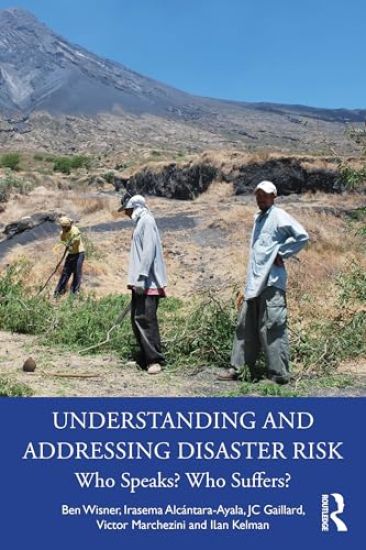
Understanding and Addressing Disaster Risk

Understanding and Addressing Disaster Risk

Ben Wisner; Irasema Alcántara-Ayala; JC Gaillard; Ilan Kelman; Victor Marchezini

TAYLOR FRANCIS LTD
2025
nidottu
In Understanding and Addressing Disaster Risk, the authors explain how people modify the environment and exert power over each other in ways that make nature potentially harmful and put people in harm’s way. Opportunities and challenges faced by those engaging with disaster risk are explored. Across 11 chapters, the authors show that disasters are not natural, are not events, and do not happen quickly. Instead, they are the result of chronic societal processes emerging from the creation and perpetuation of vulnerabilities and limitations on people’s abilities to respond to hazards. The book also explores the environmental component of disaster risk through the lens of different natural elements and phenomena, including biological-ecological and water-weather-climate processes as well as geological and outer space dynamics. The authors explain the mutual influence of the different components of disasters in creating disaster risk across diverse regions of the world. They critique attempts to reduce disaster risk through top-down, siloed assumptions, attitudes, and values. The value of people’s knowledge of hazards – often ignored or dismissed by authorities – is a central theme. This book is original because of how it re-interprets and advances understanding of the disaster process through the study of such societal processes of vulnerability, risk creation, and power imbalances. It is also unique in diving further into “root causes” of disaster in order to place them within local histories and colonial legacies as well as contemporary, typically misdirected, agendas while upending previous “solutions” which have been shown to do more harm than good. Understanding and Addressing Disaster Risk is useful for and useable by decision-makers, policy makers, researchers, and students to shatter the vicious cycle of repeating known mistakes which compound detrimental outcomes. The Open Access version of this book, available at www.taylorfrancis.com, has been made available under a Creative Commons Attribution-Non Commercial-No Derivatives (CC-BY-NC-ND) 4.0 International license.
Understanding and Addressing Disaster Risk

Understanding and Addressing Disaster Risk

Ben Wisner; Irasema Alcántara-Ayala; JC Gaillard; Ilan Kelman; Victor Marchezini

TAYLOR FRANCIS LTD
2025
sidottu
In Understanding and Addressing Disaster Risk, the authors explain how people modify the environment and exert power over each other in ways that make nature potentially harmful and put people in harm’s way. Opportunities and challenges faced by those engaging with disaster risk are explored. Across 11 chapters, the authors show that disasters are not natural, are not events, and do not happen quickly. Instead, they are the result of chronic societal processes emerging from the creation and perpetuation of vulnerabilities and limitations on people’s abilities to respond to hazards. The book also explores the environmental component of disaster risk through the lens of different natural elements and phenomena, including biological-ecological and water-weather-climate processes as well as geological and outer space dynamics. The authors explain the mutual influence of the different components of disasters in creating disaster risk across diverse regions of the world. They critique attempts to reduce disaster risk through top-down, siloed assumptions, attitudes, and values. The value of people’s knowledge of hazards – often ignored or dismissed by authorities – is a central theme. This book is original because of how it re-interprets and advances understanding of the disaster process through the study of such societal processes of vulnerability, risk creation, and power imbalances. It is also unique in diving further into “root causes” of disaster in order to place them within local histories and colonial legacies as well as contemporary, typically misdirected, agendas while upending previous “solutions” which have been shown to do more harm than good. Understanding and Addressing Disaster Risk is useful for and useable by decision-makers, policy makers, researchers, and students to shatter the vicious cycle of repeating known mistakes which compound detrimental outcomes. The Open Access version of this book, available at www.taylorfrancis.com, has been made available under a Creative Commons Attribution-Non Commercial-No Derivatives (CC-BY-NC-ND) 4.0 International license.
Disaster Risk

Disaster Risk

Irasema Alcántara-Ayala; Christopher Gomez; Ksenia Chmutina; Dewald van Niekerk; Emmanuel Raju; Victor Marchezini; Jake Rom Cadag; JC Gaillard

Routledge
2022
nidottu

Halvin toimitettuna 51,60 €

The text offers a comprehensive and unique perspective on disaster risk associated with natural hazards. It covers a wide range of topics, reflecting the most recent debates but also older and pioneering discussions in the academic field of disaster studies as well as in the policy and practical areas of disaster risk reduction (DRR). This book will be of particular interest to undergraduate students studying geography and environmental studies/science. It will also be of relevance to students/professionals from a wide range of social and physical science disciplines, including public health and public policy, sociology, anthropology, political science and geology.
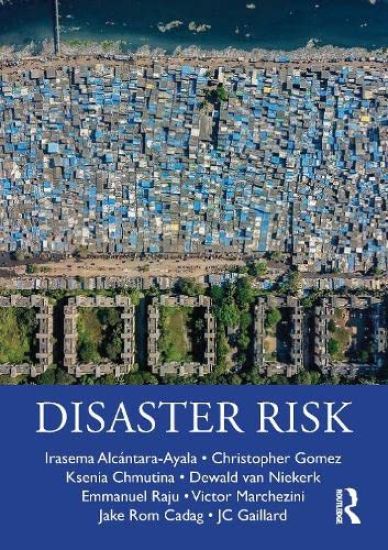
Disaster Risk

Disaster Risk

Irasema Alcántara-Ayala; Christopher Gomez; Ksenia Chmutina; Dewald van Niekerk; Emmanuel Raju; Victor Marchezini; Jake Rom Cadag; JC Gaillard

Routledge
2022
sidottu
The text offers a comprehensive and unique perspective on disaster risk associated with natural hazards. It covers a wide range of topics, reflecting the most recent debates but also older and pioneering discussions in the academic field of disaster studies as well as in the policy and practical areas of disaster risk reduction (DRR). This book will be of particular interest to undergraduate students studying geography and environmental studies/science. It will also be of relevance to students/professionals from a wide range of social and physical science disciplines, including public health and public policy, sociology, anthropology, political science and geology.