
Kirjailija
Viet Thanh Nguyen
Kirjat ja teokset yhdessä paikassa: 36 kirjaa, julkaisuja vuosilta 2002–2025, suosituimpiin kuuluu Fight of the Century. Vertaile teosten hintoja ja tarkista saatavuus suomalaisista kirjakaupoista.
36 kirjaa
Kirjojen julkaisuvuodet: 2002–2025.
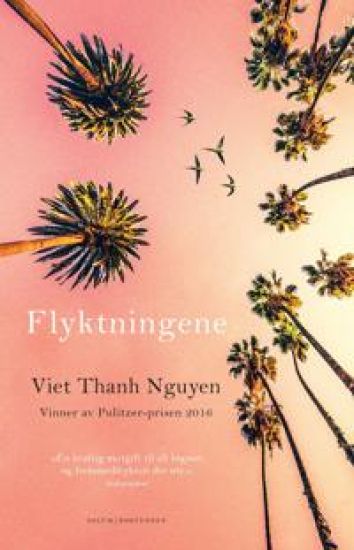
«Vet du hva jeg likte best med den tiden?» Han ristet på hodet. Vi satt i sofaen i kjellerkontoret, som var varmere enn stuen i november. «Etter bombingen gikk vi ut, og du holdt meg i hånden mens vi sto og blunket mot solen. Jeg likte så godt at det kom lys etter mørket når vi gjemte oss. Og stillhet etter tordenbrakene.» Flyktningene er en samling korte fortellinger om livene til vietnamesiske flyktninger i USA, og om de utfordringer alle immigranter står overfor i møte med en annen og helt ny virkelighet. Gjennom samlingens åtte noveller møter vi menn og kvinner på flukt fra sitt hjemland, sin arv og seg selv. Novellenes hovedpersoner befinner seg ofte i brutte familierelasjoner og ødelagte forhold, og kjemper med motstridende følelser omkring individualitet og tilhørighet. Kommunikasjon mellom mennesker er et gjennomgående tema i disse historiene, hvor språk - eller mangel på språk - både binder mennesker sammen og separerer dem, spesielt på tvers av generasjoner. Viet Thanh Nguyen (f. 1971) er født i Vietnam og oppvokst i Amerika. Han er professor og forfatter, og har tittelen Arnold Chair of English og Professor of English and American Studies and Ethnicity ved University of Southern California. For sin debutroman, The Sympathizer (2015), ble han belønnet med åtte litterære priser, inkludert Edgar Award og den høythengende Pulitzer-prisen. I 2017 mottok han The MacArthur «Genius Grant», som tildeles individer som viser ekstraordinær originalitet og dedikasjon innenfor sitt fag.
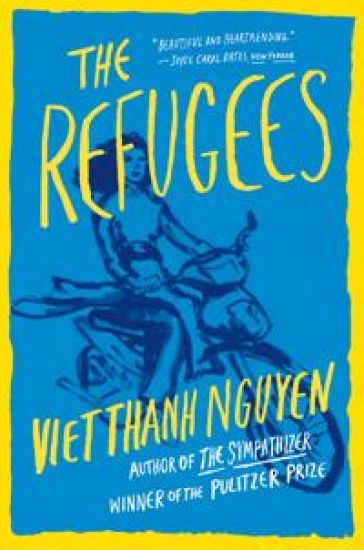
The Refugees
Viet Thanh Nguyen
Grove Press / Atlantic Monthly Press
2018
pokkari
Halvin toimitettuna 19,10 €
From the author of The Sympathizer, winner of the 2016 Pulitzer Prize for Fiction, The Refugees is the second piece of fiction from a powerful voice in American letters, praised as “beautiful and heartrending” (Joyce Carol Oates, New Yorker), “terrific” (Chicago Tribune), and “an important and incisive book” (Washington Post). Published in hardcover to astounding acclaim, The Refugees is the remarkable debut collection of short stories by Viet Thanh Nguyen, winner of the 2016 Pulitzer Prize for Fiction for his novel The Sympathizer. In these powerful stories, written over a period of twenty years and set in both Vietnam and America, Nguyen paints a vivid portrait of the experiences of people leading lives between two worlds, the adopted homeland and the country of birth. With the same incisiveness as in The Sympathizer, in The Refugees Viet Thanh Nguyen gives voice to the hopes and expectations of people making life-changing decisions to leave one country for another, and the rifts in identity, loyalties, romantic relationships, and family that accompany relocation. From a young Vietnamese refugee who suffers profound culture shock when he comes to live with two gay men in San Francisco, to a woman whose husband is suffering from dementia and starts to confuse her for a former lover, to a girl living in Ho Chi Minh City whose older half-sister comes back from America having seemingly accomplished everything she never will, the stories are a captivating testament to the dreams and hardships of migration. The second work of fiction by a major new voice in American letters, The Refugees is a beautifully written and sharply observed book about the aspirations of those who leave one country for another, and the relationships and desires for self-fulfillment that define our lives.
The Refugees is a collection of perfectly formed stories written over a period of twenty years, exploring questions of immigration, identity, love, and family.
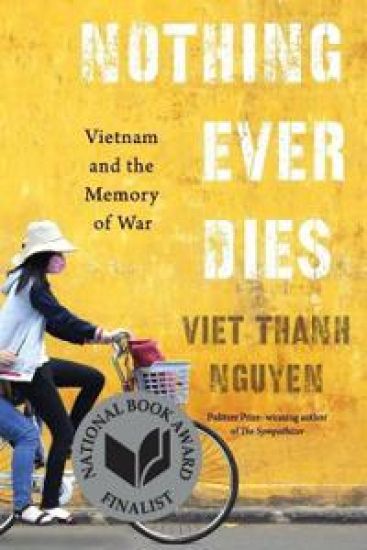
Finalist, National Book Critics Circle AwardFinalist, National Book Award in NonfictionA New York Times Book Review “The Year in Reading” SelectionAll wars are fought twice, the first time on the battlefield, the second time in memory. From the author of the Pulitzer Prize–winning novel The Sympathizer comes a searching exploration of the conflict Americans call the Vietnam War and Vietnamese call the American War—a conflict that lives on in the collective memory of both nations.“[A] gorgeous, multifaceted examination of the war Americans call the Vietnam War—and which Vietnamese call the American War…As a writer, [Nguyen] brings every conceivable gift—wisdom, wit, compassion, curiosity—to the impossible yet crucial work of arriving at what he calls ‘a just memory’ of this war.”—Kate Tuttle, Los Angeles Times“In Nothing Ever Dies, his unusually thoughtful consideration of war, self-deception and forgiveness, Viet Thanh Nguyen penetrates deeply into memories of the Vietnamese war…[An] important book, which hits hard at self-serving myths.”—Jonathan Mirsky, Literary Review“Ultimately, Nguyen’s lucid, arresting, and richly sourced inquiry, in the mode of Susan Sontag and W. G. Sebald, is a call for true and just stories of war and its perpetual legacy.”—Donna Seaman, Booklist (starred review)
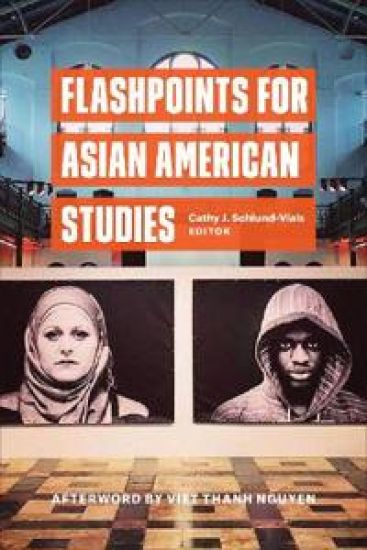
Emerging from mid-century social movements, Civil Rights Era formations, and anti-war protests, Asian American studies is now an established field of transnational inquiry, diasporic engagement, and rights activism. These histories and origin points analogously serve as initial moorings for Flashpoints for Asian American Studies, a collection that considers–almost fifty years after its student protest founding--the possibilities of and limitations inherent in Asian American studies as historically entrenched, politically embedded, and institutionally situated interdiscipline. Unequivocally, Flashpoints for Asian American Studies investigates the multivalent ways in which the field has at times and—more provocatively, has not—responded to various contemporary crises, particularly as they are manifest in prevailing racist, sexist, homophobic, and exclusionary politics at home, ever-expanding imperial and militarized practices abroad, and neoliberal practices in higher education.
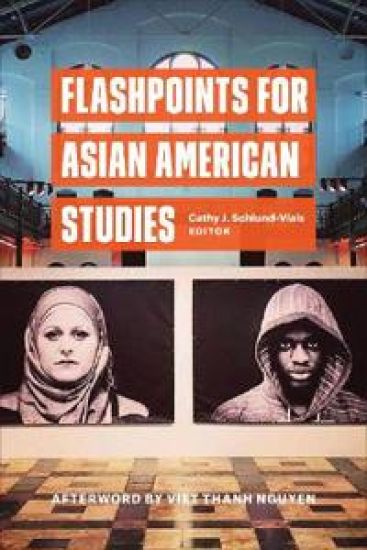
Emerging from mid-century social movements, Civil Rights Era formations, and anti-war protests, Asian American studies is now an established field of transnational inquiry, diasporic engagement, and rights activism. These histories and origin points analogously serve as initial moorings for Flashpoints for Asian American Studies, a collection that considers–almost fifty years after its student protest founding--the possibilities of and limitations inherent in Asian American studies as historically entrenched, politically embedded, and institutionally situated interdiscipline. Unequivocally, Flashpoints for Asian American Studies investigates the multivalent ways in which the field has at times and—more provocatively, has not—responded to various contemporary crises, particularly as they are manifest in prevailing racist, sexist, homophobic, and exclusionary politics at home, ever-expanding imperial and militarized practices abroad, and neoliberal practices in higher education.
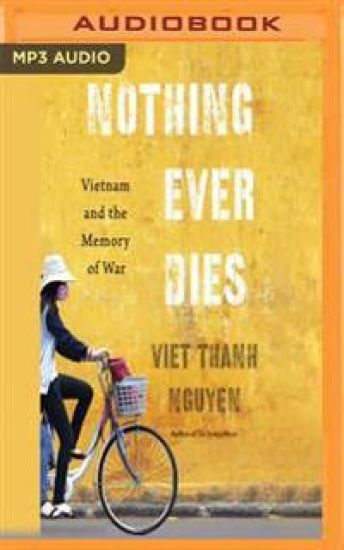
Nothing Ever Dies: Vietnam and the Memory of War
Viet Thanh Nguyen
Audible Studios on Brilliance
2017
mp3 cd-levyllä
Nothing Ever Dies, Viet Thanh Nguyen writes. All wars are fought twice, the first time on the battlefield, the second time in memory. From the author of the best-selling novel The Sympathizer comes a searching exploration of a conflict that lives on in the collective memory of both the Americans and the Vietnamese.
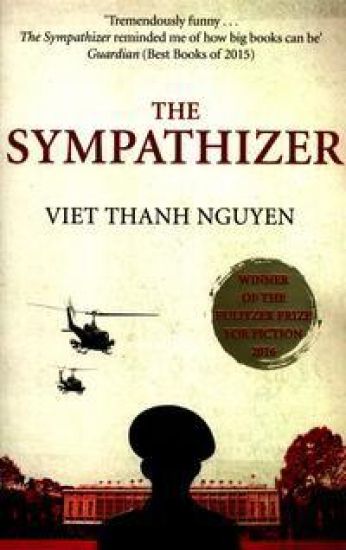
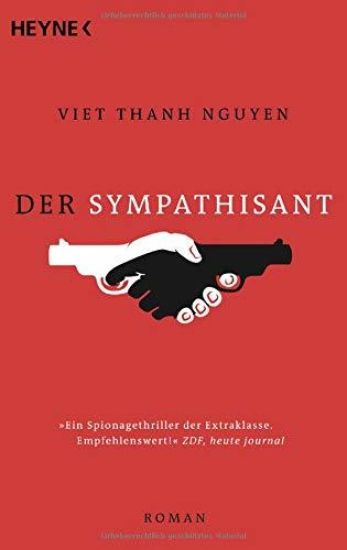
A profound, startling, and beautifully crafted debut novel, The Sympathizer is the story of a man of two minds, offering a unique perspective on the Vietnam war. Destined to become a modern classic
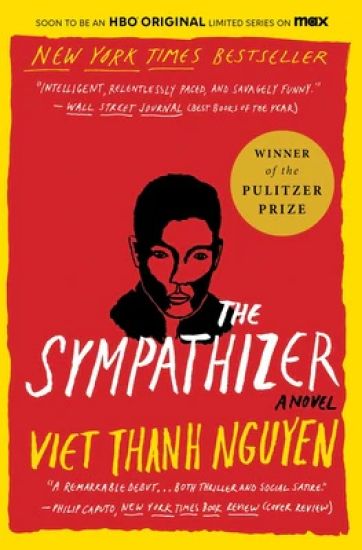
The Sympathizer
Viet Thanh Nguyen
Grove Press / Atlantic Monthly Press
2016
nidottu
Halvin toimitettuna 25,30 €
The winner of the 2016 Pulitzer Prize for Fiction, as well as seven other awards, The Sympathizer is the breakthrough novel of the year. With the pace and suspense of a thriller and prose that has been compared to Graham Greene and Saul Bellow, The Sympathizer is a sweeping epic of love and betrayal. The narrator, a communist double agent, is a "man of two minds," a half-French, half-Vietnamese army captain who arranges to come to America after the Fall of Saigon, and while building a new life with other Vietnamese refugees in Los Angeles is secretly reporting back to his communist superiors in Vietnam. The Sympathizer is a blistering exploration of identity and America, a gripping espionage novel, and a powerful story of love and friendship.
The Pacific has long been a space of conquest, exploration, fantasy, and resistance. Pacific Islanders had established civilisations and cultures of travel well before European explorers arrived, initiating centuries of upheaval and transformation. The twentieth century, with its various wars fought in and over the Pacific, is only the most recent era to witness military strife and economic competition. While “Asia Pacific” and “Pacific Rim” were late twentieth-century terms that dealt with the importance of the Pacific to the economic, political, and cultural arrangements that span Asia and the Americas, a new term has arisen—the transpacific. In the twenty-first century, U. S. efforts to dominate the ocean are symbolized not only in the “Pacific pivot” of American policy but also the development of a Transpacific Partnership. This partnership brings together a dozen countries—not including China—in a trade pact whose aim is to cement U. S. influence. That pact signals how the transpacific, up to now an academic term, has reached mass consciousness. Recognising the increasing importance of the transpacific as a word and concept, this anthology proposes a framework for transpacific studies that examines the flows of culture, capital, ideas, and labour across the Pacific. These flows involve Asia, the Americas, and the Pacific Islands. The introduction to the anthology by its editors, Janet Hoskins and Viet Thanh Nguyen, consider the advantages and limitations of models found in Asian studies, American studies, and Asian American studies for dealing with these flows. The editors argue that transpacific studies can draw from all three in order to provide a critical model for considering the geopolitical struggle over the Pacific, with its attendant possibilities for inequality and exploitation. Transpacific studies also sheds light on the cultural and political movements, artistic works, and ideas that have arisen to contest state, corporate, and military ambitions. In sum, the transpacific as a concept illuminates how flows across the Pacific can be harnessed for purposes of both domination and resistance. The anthology’s contributors include geographers (Brenda S. A. Yeoh, Weiqiang Lin), sociologists (Yen Le Espiritu, Hung Cam Thai), literary critics (John Carlos Rowe, J. Francisco Benitez, Yunte Huang, Viet Thanh Nguyen), and anthropologists (Xiang Biao, Heonik Kwon, Nancy Lutkehaus, Janet Hoskins), as well as a historian (Laurie J. Sears), and a film scholar (Akira Lippit). Together these contributors demonstrate how a transpacific model can be deployed across multiple disciplines and from varied locations, with scholars working from the United States, Singapore, Japan and England. Topics include the Cold War, the Chinese state, U. S. imperialism, diasporic and refugee cultures and economies, national cinemas, transpacific art, and the view of the transpacific from Asia. These varied topics are a result of the anthology’s purpose in bringing scholars into conversation and illuminating how location influences the perception of the transpacific. But regardless of the individual view, what the essays gathered here collectively demonstrate is the energy, excitement, and insight that can be generated from within a transpacific framework.
The Pacific has long been a space of conquest, exploration, fantasy, and resistance. Pacific Islanders had established civilisations and cultures of travel well before European explorers arrived, initiating centuries of upheaval and transformation. The twentieth century, with its various wars fought in and over the Pacific, is only the most recent era to witness military strife and economic competition. While “Asia Pacific” and “Pacific Rim” were late twentieth-century terms that dealt with the importance of the Pacific to the economic, political, and cultural arrangements that span Asia and the Americas, a new term has arisen—the transpacific. In the twenty-first century, U. S. efforts to dominate the ocean are symbolized not only in the “Pacific pivot” of American policy but also the development of a Transpacific Partnership. This partnership brings together a dozen countries—not including China—in a trade pact whose aim is to cement U. S. influence. That pact signals how the transpacific, up to now an academic term, has reached mass consciousness. Recognising the increasing importance of the transpacific as a word and concept, this anthology proposes a framework for transpacific studies that examines the flows of culture, capital, ideas, and labour across the Pacific. These flows involve Asia, the Americas, and the Pacific Islands. The introduction to the anthology by its editors, Janet Hoskins and Viet Thanh Nguyen, consider the advantages and limitations of models found in Asian studies, American studies, and Asian American studies for dealing with these flows. The editors argue that transpacific studies can draw from all three in order to provide a critical model for considering the geopolitical struggle over the Pacific, with its attendant possibilities for inequality and exploitation. Transpacific studies also sheds light on the cultural and political movements, artistic works, and ideas that have arisen to contest state, corporate, and military ambitions. In sum, the transpacific as a concept illuminates how flows across the Pacific can be harnessed for purposes of both domination and resistance. The anthology’s contributors include geographers (Brenda S. A. Yeoh, Weiqiang Lin), sociologists (Yen Le Espiritu, Hung Cam Thai), literary critics (John Carlos Rowe, J. Francisco Benitez, Yunte Huang, Viet Thanh Nguyen), and anthropologists (Xiang Biao, Heonik Kwon, Nancy Lutkehaus, Janet Hoskins), as well as a historian (Laurie J. Sears), and a film scholar (Akira Lippit). Together these contributors demonstrate how a transpacific model can be deployed across multiple disciplines and from varied locations, with scholars working from the United States, Singapore, Japan and England. Topics include the Cold War, the Chinese state, U. S. imperialism, diasporic and refugee cultures and economies, national cinemas, transpacific art, and the view of the transpacific from Asia. These varied topics are a result of the anthology’s purpose in bringing scholars into conversation and illuminating how location influences the perception of the transpacific. But regardless of the individual view, what the essays gathered here collectively demonstrate is the energy, excitement, and insight that can be generated from within a transpacific framework.
Race and Resistance: Literature and Politics in Asian America examines the idealisation of Asian America by its intellectuals, the saturation of Asian America with capitalist practices, and the challenges posed by Asian America's ideological diversity. Viet Nguyen argues that Asian American intellectuals need to examine their own assumptions about race, culture, and politics, and he makes his case through the example of literature, which still remains a cultural arena of cultural production for Asian Americans. Significantly, in examining Asian American literature, what we find is that the literature embodies the complexities, conflicts, and potential future options of Asian American culture.
Race and Resistance: Literature and Politics in Asian America examines the idealisation of Asian America by its intellectuals, the saturation of Asian America with capitalist practices, and the challenges posed by Asian America's ideological diversity. Viet Nguyen argues that Asian American intellectuals need to examine their own assumptions about race, culture, and politics, and he makes his case through the example of literature, which still remains a critical arena of cultural production for Asian Americans. Significantly, in examining Asian American literature, what we find is that the literature embodies the complexities, conflicts, and potential future options of Asian American culture.