Kirjojen hintavertailu – 12 903 724 kirjaa ja 27 kauppaa

Kirjailija

Vijay K. Garg

Kirjat ja teokset yhdessä paikassa: 10 kirjaa, julkaisuja vuosilta 1994–2019, suosituimpiin kuuluu Principles of Distributed Systems. Vertaile teosten hintoja ja tarkista saatavuus suomalaisista kirjakaupoista.

10 kirjaa

Kirjojen julkaisuvuodet: 1994–2019.

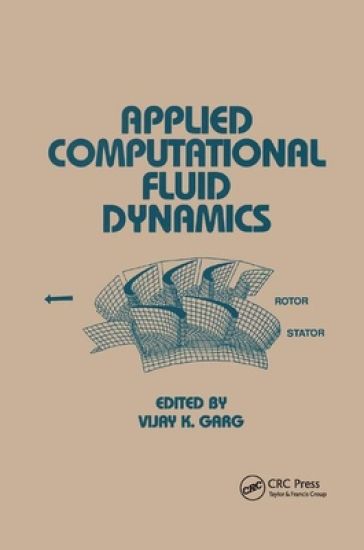
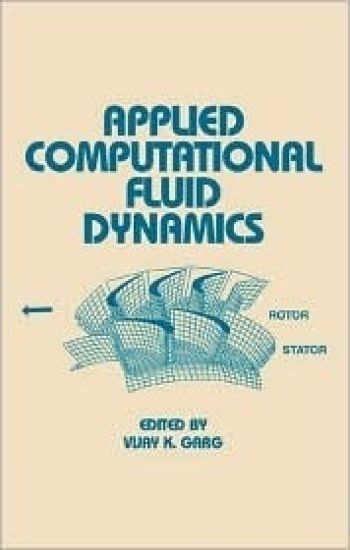
Applied Computational Fluid Dynamics
"Describes the latest techniques and real-life applications of computational fluid dynamics (CFD) and heat transfer in aeronautics, materials processing and manufacturing, electronic cooling, and environmental control. Includes new material from experienced researchers in the field. Complete with detailed equations for fluid flow and heat transfer."
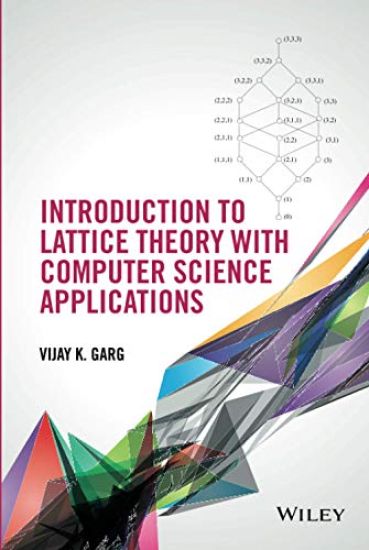
Introduction to Lattice Theory with Computer Science Applications
A computational perspective on partial order and lattice theory, focusing on algorithms and their applications This book provides a uniform treatment of the theory and applications of lattice theory. The applications covered include tracking dependency in distributed systems, combinatorics, detecting global predicates in distributed systems, set families, and integer partitions. The book presents algorithmic proofs of theorems whenever possible. These proofs are written in the calculational style advocated by Dijkstra, with arguments explicitly spelled out step by step. The author’s intent is for readers to learn not only the proofs, but the heuristics that guide said proofs. Introduction to Lattice Theory with Computer Science Applications: Examines; posets, Dilworth’s theorem, merging algorithms, lattices, lattice completion, morphisms, modular and distributive lattices, slicing, interval orders, tractable posets, lattice enumeration algorithms, and dimension theoryProvides end of chapter exercises to help readers retain newfound knowledge on each subjectIncludes supplementary material at www.ece.utexas.edu/~garg Introduction to Lattice Theory with Computer Science Applications is written for students of computer science, as well as practicing mathematicians.

Principles of Distributed Systems

Principles of Distributed Systems

Vijay K. Garg

Springer-Verlag New York Inc.
2011
nidottu
Distributed computer systems are now widely available but, despite a number of recent advances, the design of software for these systems remains a challenging task, involving two main difficulties: the absence of a shared clock and the absence of a shared memory. The absence of a shared clock means that the concept of time is not useful in distributed systems. The absence of shared memory implies that the concept of a state of a distributed system also needs to be redefined. These two important concepts occupy a major portion of this book. Principles of Distributed Systems describes tools and techniques that have been successfully applied to tackle the problem of global time and state in distributed systems. The author demonstrates that the concept of time can be replaced by that of causality, and clocks can be constructed to provide causality information. The problem of not having a global state is alleviated by developing efficient algorithms for detecting properties and computing global functions. The author's major emphasis is in developing general mechanisms that can be applied to a variety of problems. For example, instead of discussing algorithms for standard problems, such as termination detection and deadlocks, the book discusses algorithms to detect general properties of a distributed computation. Also included are several worked examples and exercise problems that can be used for individual practice and classroom instruction. Audience: Can be used to teach a one-semester graduate course on distributed systems. Also an invaluable reference book for researchers and practitioners working on the many different aspects of distributed systems.
Concurrent and Distributed Computing in Java

Concurrent and Distributed Computing in Java

Vijay K. Garg

John Wiley Sons Inc
2004
sidottu
Concurrent and Distributed Computing in Java addresses fundamental concepts in concurrent computing with Java examples. The book consists of two parts. The first part deals with techniques for programming in shared-memory based systems. The book covers concepts in Java such as threads, synchronized methods, waits, and notify to expose students to basic concepts for multi-threaded programming. It also includes algorithms for mutual exclusion, consensus, atomic objects, and wait-free data structures. The second part of the book deals with programming in a message-passing system. This part covers resource allocation problems, logical clocks, global property detection, leader election, message ordering, agreement algorithms, checkpointing, and message logging. Primarily a textbook for upper-level undergraduates and graduate students, this thorough treatment will also be of interest to professional programmers.
Applied Computational Fluid Dynamics

Applied Computational Fluid Dynamics

Vijay K. Garg

CRC Press Inc
1998
sidottu
"Describes the latest techniques and real-life applications of computational fluid dynamics (CFD) and heat transfer in aeronautics, materials processing and manufacturing, electronic cooling, and environmental control. Includes new material from experienced researchers in the field. Complete with detailed equations for fluid flow and heat transfer."
Principles of Distributed Systems
Distributed computer systems are now widely available but, despite a number of recent advances, the design of software for these systems remains a challenging task, involving two main difficulties: the absence of a shared clock and the absence of a shared memory. The absence of a shared clock means that the concept of time is not useful in distributed systems. The absence of shared memory implies that the concept of a state of a distributed system also needs to be redefined. These two important concepts occupy a major portion of this book. Principles of Distributed Systems describes tools and techniques that have been successfully applied to tackle the problem of global time and state in distributed systems. The author demonstrates that the concept of time can be replaced by that of causality, and clocks can be constructed to provide causality information. The problem of not having a global state is alleviated by developing efficient algorithms for detecting properties and computing global functions. The author's major emphasis is in developing general mechanisms that can be applied to a variety of problems. For example, instead of discussing algorithms for standard problems, such as termination detection and deadlocks, the book discusses algorithms to detect general properties of a distributed computation. Also included are several worked examples and exercise problems that can be used for individual practice and classroom instruction. Audience: Can be used to teach a one-semester graduate course on distributed systems. Also an invaluable reference book for researchers and practitioners working on the many different aspects of distributed systems.
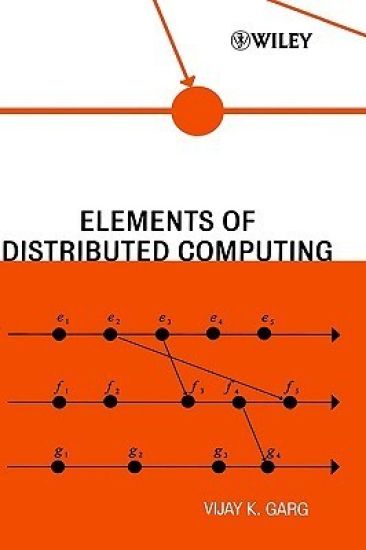
Elements of Distributed Computing

Elements of Distributed Computing

Vijay K. Garg

John Wiley Sons Inc
2015
muu
A lucid and up-to-date introduction to the fundamentals of distributed computing systems. As distributed systems become increasingly available, the need for a fundamental discussion of the subject has grown. Designed for first-year graduate students and advanced undergraduates as well as practicing computer engineers seeking a solid grounding in the subject, this well-organized text covers the fundamental concepts in distributed computing systems such as time, state, simultaneity, order, knowledge, failure, and agreement in distributed systems. Departing from the focus on shared memory and synchronous systems commonly taken by other texts, this is the first useful reference based on an asynchronous model of distributed computing, the most widely used in academia and industry. The emphasis of the book is on developing general mechanisms that can be applied to a variety of problems. Its examples - clocks, locks, cameras, sensors, controllers, slicers, and synchronizers - have been carefully chosen so that they are fundamental and yet useful in practical contexts. The text's advantages include: it emphasizes general mechanisms that can be applied to a variety of problems; it uses a simple induction-based technique to prove correctness of all algorithms; it includes a variety of exercises at the end of each chapter; it contains material that has been extensively class tested; it gives instructor flexibility in choosing appropriate balance between practice and theory of distributed computing.
Modeling and Control of Logical Discrete Event Systems

Modeling and Control of Logical Discrete Event Systems

Ratnesh Kumar; Vijay K. Garg

Springer-Verlag New York Inc.
2012
nidottu
The field of discrete event systems has emerged to provide a formal treatment of many of the man-made systems such as manufacturing systems, communica­ tion networks. automated traffic systems, database management systems, and computer systems that are event-driven, highly complex, and not amenable to the classical treatments based on differential or difference equations. Discrete event systems is a growing field that utilizes many interesting mathematical models and techniques. In this book we focus on a high level treatment of discrete event systems. where the order of events. rather than their occurrence times, is the principal concern. Such treatment is needed to guarantee that the system under study meets desired logical goals. In this framework, dis­ crete event systems are modeled by formal languages or, equivalently, by state machines. The field of logical discrete event systems is an interdisciplinary field-it in­ cludes ideas from computer science, control theory, and operations research. Our goal is to bring together in one book the relevant techniques from these fields. This is the first book of this kind, and our hope is that it will be useful to professionals in the area of discrete event systems since most of the material presented has appeared previously only in journals. The book is also designed for a graduate level course on logical discrete event systems. It contains all the necessary background material in formal language theory and lattice the­ ory. The only prerequisite is some degree of "mathematical maturity".
Elements of Distributed Computing

Elements of Distributed Computing

Vijay K. Garg

John Wiley Sons Inc
2002
sidottu
A lucid and up-to-date introduction to the fundamentals of distributed computing systems As distributed systems become increasingly available, the need for a fundamental discussion of the subject has grown. Designed for first-year graduate students and advanced undergraduates as well as practicing computer engineers seeking a solid grounding in the subject, this well-organized text covers the fundamental concepts in distributed computing systems such as time, state, simultaneity, order, knowledge, failure, and agreement in distributed systems. Departing from the focus on shared memory and synchronous systems commonly taken by other texts, this is the first useful reference based on an asynchronous model of distributed computing, the most widely used in academia and industry. The emphasis of the book is on developing general mechanisms that can be applied to a variety of problems. Its examples–clocks, locks, cameras, sensors, controllers, slicers, and synchronizers–have been carefully chosen so that they are fundamental and yet useful in practical contexts. The text’s advantages include: *Emphasizes general mechanisms that can be applied to a variety of problems *Uses a simple induction-based technique to prove correctness of all algorithms *Includes a variety of exercises at the end of each chapter *Contains material that has been extensively class tested *Gives instructor flexibility in choosing appropriate balance between practice and theory of distributed computing
Modeling and Control of Logical Discrete Event Systems

Modeling and Control of Logical Discrete Event Systems

Ratnesh Kumar; Vijay K. Garg

Springer
1994
sidottu
The field of discrete event systems has emerged to provide a formal treatment of many of the man-made systems such as manufacturing systems, communica­ tion networks. automated traffic systems, database management systems, and computer systems that are event-driven, highly complex, and not amenable to the classical treatments based on differential or difference equations. Discrete event systems is a growing field that utilizes many interesting mathematical models and techniques. In this book we focus on a high level treatment of discrete event systems. where the order of events. rather than their occurrence times, is the principal concern. Such treatment is needed to guarantee that the system under study meets desired logical goals. In this framework, dis­ crete event systems are modeled by formal languages or, equivalently, by state machines. The field of logical discrete event systems is an interdisciplinary field-it in­ cludes ideas from computer science, control theory, and operations research. Our goal is to bring together in one book the relevant techniques from these fields. This is the first book of this kind, and our hope is that it will be useful to professionals in the area of discrete event systems since most of the material presented has appeared previously only in journals. The book is also designed for a graduate level course on logical discrete event systems. It contains all the necessary background material in formal language theory and lattice the­ ory. The only prerequisite is some degree of "mathematical maturity".