Kirjojen hintavertailu – 12 903 725 kirjaa ja 27 kauppaa

Kirjailija

Vijay K. Varadan

Kirjat ja teokset yhdessä paikassa: 10 kirjaa, julkaisuja vuosilta 2001–2023, suosituimpiin kuuluu RF MEMS and Their Applications. Vertaile teosten hintoja ja tarkista saatavuus suomalaisista kirjakaupoista.

Nimi esiintyy myös muodoissa: Vijay K Varadan

10 kirjaa

Kirjojen julkaisuvuodet: 2001–2023.

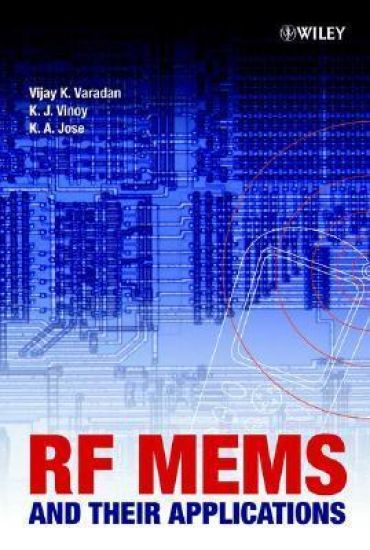
RF MEMS and Their Applications

RF MEMS and Their Applications

Vijay K. Varadan; K. J. Vinoy; K. A. Jose

John Wiley Sons Inc
2002
sidottu
Microelectromechanical systems (MEMS) refer to a collection of micro-sensors and actuators which can react to environmental change under micro-circuit control. This book examines RF MEMS and their applications.
Nanotechnology Engineering in Nano- and Bio-medicine

Nanotechnology Engineering in Nano- and Bio-medicine

Vijay K. Varadan; Sivathanu Pillai; Linfeng Chen

Wiley-Blackwell
2014
sidottu
This book introduces advanced nanotechnology, its fabrication, characterization, imaging technologies, and its applications in the development of devices for engineering and medicine (particularly for nanoelectronics and nanomedicine). It also explores thermal management applications and the potential impacts of nanotechnology for future warfare systems. * A complex technology discussed with clarity and insight.* Presents state-of-the-art nanotechnology concepts in Physics, Chemistry, Materials Science and Biology (other texts focus on one area only). An authoritative overview of this rising technology.* Accessible for emerging entrepreneurs as the book places its emphasis on applications rather than fundamental science. Technologies laid out in a way that is easy to reduce into practice.* Discusses nanotechnology applications inhealthcare, defence and biotechnology.
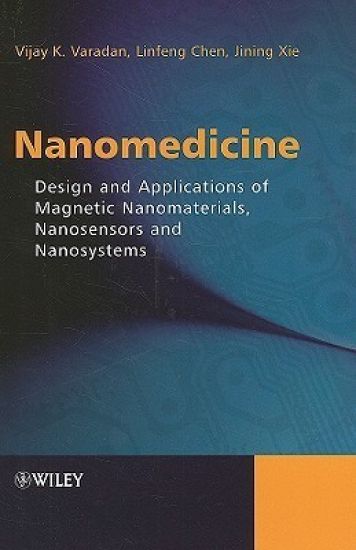
Nanomedicine

Nanomedicine

Vijay K. Varadan; LinFeng Chen; Jining Xie

John Wiley Sons Inc
2008
sidottu
Recent advances in nanomedicine offer ground-breaking methods for the prevention, diagnosis and treatment of some fatal diseases. Amongst the most promising nanomaterials being developed are magnetic nanomaterials, including magnetic nanoparticles and magnetic nanosensors. Some nanomagnetic medical applications are already commercially available with more set to be released over the coming years. Nanomedicine, Design and Applications of Magnetic Nanomaterials, Nanosensors and Nanosystems presents a comprehensive overview of the biomedical applications of various types of functional magnetic materials. The book provides an introduction to magnetic nanomaterials before systematically discussing the individual materials, their physical and chemical principles, fabrication techniques and biomedical applications. This methodical approach allows this book to be used both as a textbook for beginners to the subject and as a convenient reference for professionals in the field. Discusses magnetic nanoparticles including nanowires, nanotubes, zero-dimensional nanosperes and naturally existing magnetosomes. Examines intrinsically smart magnetic materials and describes their part in the development of biomedical sensors and biochips, which are often used in biomedical tests. Integrates the research efforts of different disciplines – from materials sciences to biology and electrical engineering to medicine – in order to provide a unified and authoritative guide to a richly interdisciplinary field. This volume is of great appeal to students and researchers in the fields of electrical and electronic engineering, biomedical engineering, nanotechnology, materials science, physics, medicine and biology. It is also of interest to practising engineers, materials scientists, chemists and research medical doctors involved in the development of magnetic materials and structures for biomedical applications.
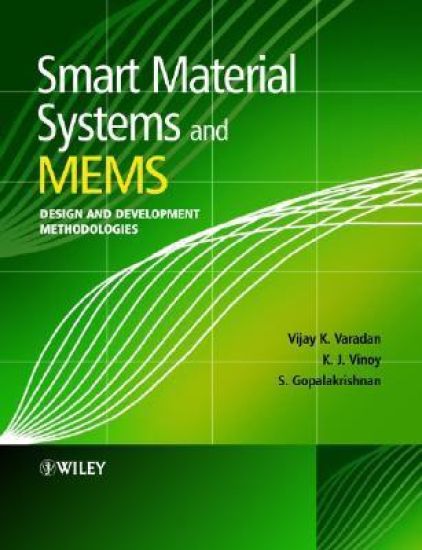
Smart Material Systems and MEMS

Smart Material Systems and MEMS

Vijay K. Varadan; K. J. Vinoy; S. Gopalakrishnan

John Wiley Sons Inc
2006
sidottu
Presenting unified coverage of the design and modeling of smart micro- and macrosystems, this book addresses fabrication issues and outlines the challenges faced by engineers working with smart sensors in a variety of applications. Part I deals with the fundamental concepts of a typical smart system and its constituent components. Preliminary fabrication and characterization concepts are introduced before design principles are discussed in detail. Part III presents a comprehensive account of the modeling of smart systems, smart sensors and actuators. Part IV builds upon the fundamental concepts to analyze fabrication techniques for silicon-based MEMS in more detail. Practicing engineers will benefit from the detailed assessment of applications in communications technology, aerospace, biomedical and mechanical engineering. The book provides an essential reference or textbook for graduates following a course in smart sensors, actuators and systems.
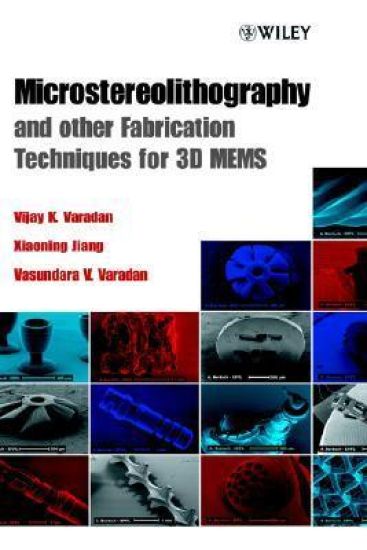
Microstereolithography and other Fabrication Techniques for 3D MEMS

Microstereolithography and other Fabrication Techniques for 3D MEMS

Vijay K. Varadan; Xiaoning Jiang; V. V. Varadan

John Wiley Sons Inc
2001
sidottu
The application of MEMS (micro-electro-mechanical systems) in such diverse fields as intelligent microsensors, data storage, biomedical engineering and wireless communication is booming. Focusing on microstereolithography, this timely work provides insight into state-of-the-art microfabrication techniques for 3D microstructures, microdevices and MEMS. * A unique and accessible overview of micro-system manufacture using the latest semiconductor processing techniques * Coverage of the developmental history of MEMS, micro-sensors, actuators and signal processing units. * Insight to a range of microfabrication techniques from laser ablation to x-ray lithography, silicon micro-machining and micro-moulding. * Describes the latest fabrication prototypes and applications, including thin-film transistors, antennas, wireless telemetry systems and transducers Microelectronics engineers will profit form this detailed overview of current technologies. Material technologists and physicists working in industrial and academic research and development will also find this a valuable reference source.
Nanotechnology in Engineering and Healthcare

Nanotechnology in Engineering and Healthcare

Vijay K. Varadan; LinFeng Chen

John Wiley Sons Inc
2023
muu
An essential overview on the development and applications of functional nanomaterials, nanodevices and nanosystems for a variety of fields in engineering and healthcare The first part provides the basic knowledge of nanotechnology, which is necessary for understanding the engineering and healthcare applications of nanotechnology. It introduces the basic concepts and theories about nanotechnology, discusses the typical methods for synthesis, fabrication and characterization of nanomaterials, nanodevices and nanosystems, and makes a brief overview about the applications of nanotechnology in engineering and healthcare. Part II deals with functional nanomaterials, nanodevices and nanosystems, mainly for engineering applications. Chapter 2 discusses nanomaterials with functionalities that can be used for engineering and healthcare purposes. Chapters 3 and 4 discuss nanosensors and nanoactuators, respectively, with emphasis laid on their engineering applications. Chapter 5 discusses the applications of nanotechnology in electronic engineering. The third part discusses the applications of nanotechnology in healthcare. Chapter 6 discusses the application of nanotechnology in neuroscience and neuroengineering, which would be helpful for the treatment of the diseases in the nervous system. Chapter 7 discusses the application of nanotechnology in wireless point-of-care monitoring. Part IV covers nanotechnology-based power sources for nanodevices and nanosystems, including rechargeable batteries, supercapacitors, thermoelectric generators, glucose-driven nanobiopower cells, and nanogenerators. This book highlights both the millstones and the latest major achievements in nanotechnology. The authors have many years of teaching and research experience in this field, and their research results are included in the book. Exercises are provided at the end of each chapter to emphasize the key points of the chapter and to test the understanding of the readers. * Integrates three major areas of nanotechnology - functional nanomaterials, nanodevices and nanosystems - with focus on their applications in engineering and healthcare (e.g. neuroscience, wireless point-of-care monitoring, nanobiopower cells) * A concise guide, it presents the latest major achievements in this field, as well as providing a thorough grounding in its history * Explains working principles and practical examples for the development of each area * Unique research results taken from the authors own findings * End-of-chapter exercises to emphasize the key points of the chapter and test readers understanding An excellent resource for graduates and senior undergraduates studying nanotechnology within in the fields of electrical and electronic engineering, mechanical engineering, materials sciences and engineering, physics, chemistry, biology, and medicine; engineers and healthcare professionals interested in the applications of nanotechnology in their fields.

Time-Harmonic Electromagnetic Fields in Chiral Media

Time-Harmonic Electromagnetic Fields in Chiral Media

Akhlesh Lakhtakia; Vijay K. Varadan; Vasundara V. Varadan

Springer-Verlag Berlin and Heidelberg GmbH Co. K
2014
nidottu
This book deals with the fundamental aspects of electromagnetic field theory in chiral media in the frequency domain. All such aspects are covered: field equations, constitutive equations, integral equations and representations, Green's functions, radiation, reciprocity relations, and equivalence and duality relations. Scattering of waves by chiral spheres and cylinders are covered, and layered chiral media are examined. This book is timely both for theorists and experimentalists. Theorists can build upon the work to discover and predict new phenomena, while experimentalists may use it to design clever experiments and construct artificially chiral materials.
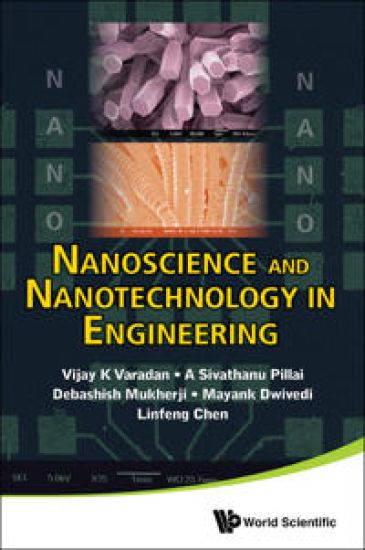
Nanoscience And Nanotechnology In Engineering

Nanoscience And Nanotechnology In Engineering

Vijay K Varadan; A Sivathanu Pillai; Debashish Mukherji; Mayank Dwivedi; Linfeng Chen

World Scientific Publishing Co Pte Ltd
2010
sidottu
The usage of nanoscience and nanotechnology in engineering directly links academic research in nanoscience and nanotechnology to industries and daily life. As a result, numerous nanomaterials, nanodevices and nanosystems for various engineering purposes have been developed and used for human betterment. This book, which consists of eight self-contained chapters, provides the essential theoretical knowledge and important experimental techniques required for the research and development on nanoscience and nanotechnology in engineering, and deals with the five key topics in this area — Nanoscience and Nanotechnology in Engineering is based on the many lectures and courses presented around the world by its authors.
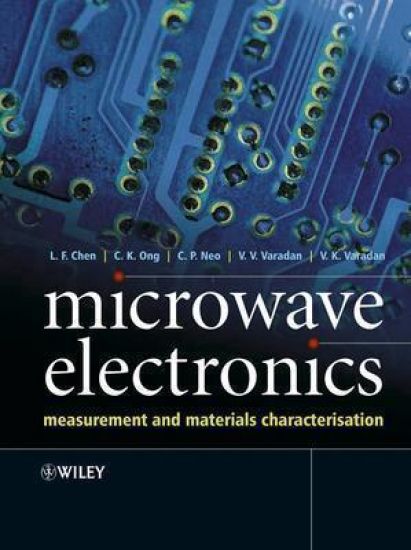
Microwave Electronics

Microwave Electronics

L. F. Chen; C. K. Ong; C. P. Neo; V. V. Varadan; Vijay K. Varadan

John Wiley Sons Inc
2004
sidottu
The development of high speed, high frequency circuits and systems requires an understanding of the properties of materials functioning at the microwave level. This comprehensive reference sets out to address this requirement by providing guidance on the development of suitable measurement methodologies tailored for a variety of materials and application systems. Bringing together coverage of a broad range of techniques in one publication for the first time, this book: *Provides a comprehensive introduction to microwave theory and microwave measurement techniques. *Examines every aspect of microwave material properties, circuit design and applications. *Presents materials property characterisation methods along with a discussion of the underlying theory. *Outlines the importance of microwave absorbers in the reduction in noise levels in microwave circuits and their importance within defence industry applications. *Relates each measurement technique to its application across the fields of microwave engineering, high-speed electronics, remote sensing and the physical sciences. This book will appeal to practising engineers and technicians working in the areas of RF, microwaves, communications, solid-state devices and radar. Senior students, researchers in microwave engineering and microelectronics and material scientists will also find this book a very useful reference.
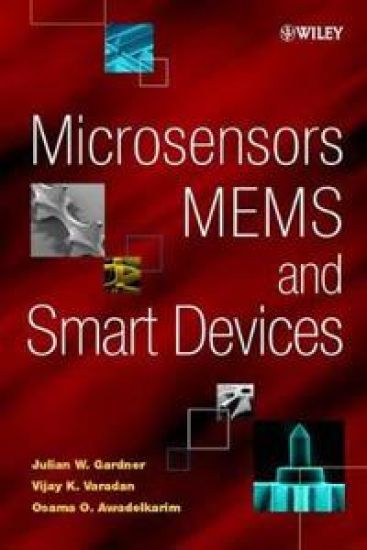
Microsensors, MEMS, and Smart Devices

Microsensors, MEMS, and Smart Devices

Julian W. Gardner; Vijay K. Varadan; Osama O. Awadelkarim

John Wiley Sons Inc
2001
sidottu
Microsensors and MEMS (micro-electro-mechanical systems) are revolutionising the semiconductor industry. A microsystem or the so-called "system-on-a-chip" combines microelectronic circuitry with microsensors and microactuators. This emergent field has seen the development of applications ranging from the electronic nose and intelligent ear to micro-tweezers and the modern ink-jet nozzle. Providing a complete overview of microsensor technologies, this unique reference addresses vital integration issues for the successful application of microsensors, MEMS and smart devices. Features include: * Review of traditional and emerging fabrication processes including bulk and silicon micromachining, microstereolithography and polymer processing methods. * Focus on the use of IDT (interdigital transducer) microsensors in the development of low energy budget, wireless MEMS or micromachines. * Coverage of the katest applications in smart devices including the electronic nose, tongue and finger, along with smart sensors and strcutures such as smart skin. * An overview of the development of intelligent sensing devices through the use of sensor arrays, parametric compensation of sensor sugnals and ASIC technology. * Comprehensive appendices outlining vital MEMS material properties, relevant web sites and a guide to key institutions active in the field. Microsensors, MEMS and Smart Devices presents readers with the means to understand and evaluate microsystems. Advanced students and researchers in microelectronics, engineers and developers of microsensor systems will find this comprehensive treatment essential reading. Detailed coverage of material properties makes this an important reference work for mechnical engineers, physicists and material scientists working in the field.