Kirjojen hintavertailu – 12 903 725 kirjaa ja 27 kauppaa

Kirjailija

Vijay P. Singh

Kirjat ja teokset yhdessä paikassa: 38 kirjaa, julkaisuja vuosilta 1996–2026, suosituimpiin kuuluu Risk and Reliability Analysis. Vertaile teosten hintoja ja tarkista saatavuus suomalaisista kirjakaupoista.

Nimi esiintyy myös muodoissa: Vijay P Singh

38 kirjaa

Kirjojen julkaisuvuodet: 1996–2026.

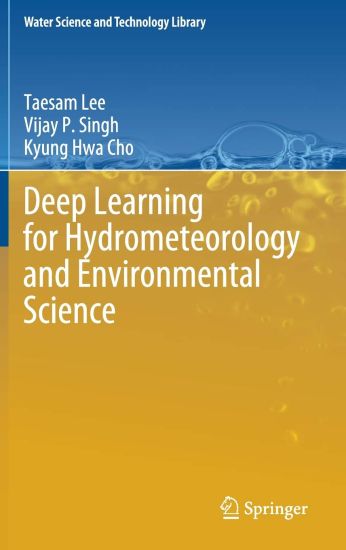
Deep Learning for Hydrometeorology and Environmental Science

Deep Learning for Hydrometeorology and Environmental Science

Taesam Lee; Vijay P. Singh; Kyung Hwa Cho

Springer Nature Switzerland AG
2021
sidottu
This book provides a step-by-step methodology and derivation of deep learning algorithms as Long Short-Term Memory (LSTM) and Convolution Neural Network (CNN), especially for estimating parameters, with back-propagation as well as examples with real datasets of hydrometeorology (e.g. streamflow and temperature) and environmental science (e.g. water quality). Deep learning is known as part of machine learning methodology based on the artificial neural network. Increasing data availability and computing power enhance applications of deep learning to hydrometeorological and environmental fields. However, books that specifically focus on applications to these fields are limited. Most of deep learning books demonstrate theoretical backgrounds and mathematics. However, examples with real data and step-by-step explanations to understand the algorithms in hydrometeorology and environmental science are very rare. This book focuses on the explanation of deep learning techniques and their applications to hydrometeorological and environmental studies with real hydrological and environmental data. This book covers the major deep learning algorithms as Long Short-Term Memory (LSTM) and Convolution Neural Network (CNN) as well as the conventional artificial neural network model.
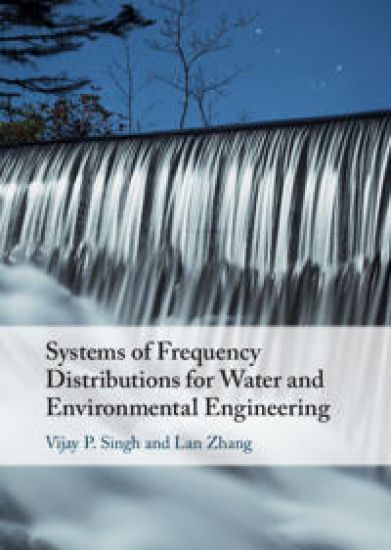
Systems of Frequency Distributions for Water and Environmental Engineering

Systems of Frequency Distributions for Water and Environmental Engineering

Vijay P. Singh; Lan Zhang

Cambridge University Press
2020
sidottu
A multitude of processes in hydrology and environmental engineering are either random or entail random components which are characterized by random variables. These variables are described by frequency distributions. This book provides an overview of different systems of frequency distributions, their properties, and applications to the fields of water resources and environmental engineering. A variety of systems are covered, including the Pearson system, Burr system, and systems commonly applied in economics, such as the D'Addario, Dagum, Stoppa, and Esteban systems. The latter chapters focus on the Singh system and the frequency distributions deduced from Bessel functions, maximum entropy theory, and the transformations of random variables. The final chapter introduces the genetic theory of frequency distributions. Using real-world data, this book provides a valuable reference for researchers, graduate students, and professionals interested in frequency analysis.
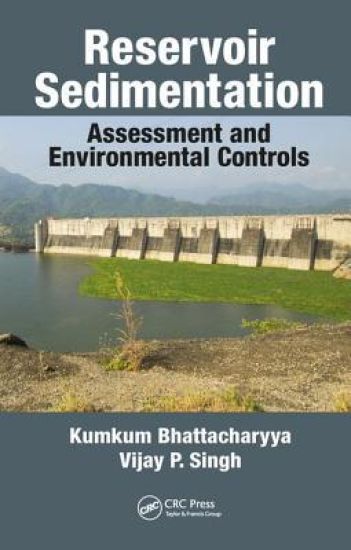
Reservoir Sedimentation

Reservoir Sedimentation

Kumkum Bhattacharyya; Vijay P. Singh

CRC Press
2019
sidottu
Reservoir Sedimentation: Assessment and Environmental Controls appraises the issues of sedimentation in reservoirs and discusses measures that can be employed for the effective management of sediment to prolong the operational life of reservoirs. It provides information for professional consultants and policymakers to enable them to manage dams in the best possible way, in order to ensure their sustainability as well as the sustainability of water resources in general. It examines the effects of anthropogenic intervention and management of sediment in dams and reservoirs, as water resources become more sensitive and the demand for clean water continues to increase. Features: Examines the issue of sedimentation in dams and reservoirs and presents water management strategies to alleviate environmental issues Presents methods to help ensure the environmental sustainability of dams and reservoirs, as well as the sustainability of water resources- with consideration of climate change and increased demand Illustrates the spatial distribution of sedimentation characteristics for several dams using geographic information systems (GIS) Explains the relationships between loss in capacity and catchment characteristics Examines regional variation in sediment yield, defines geomorphic regions on the basis of similar hydrometeorology, physiography, geology, and vegetation affecting reservoirs
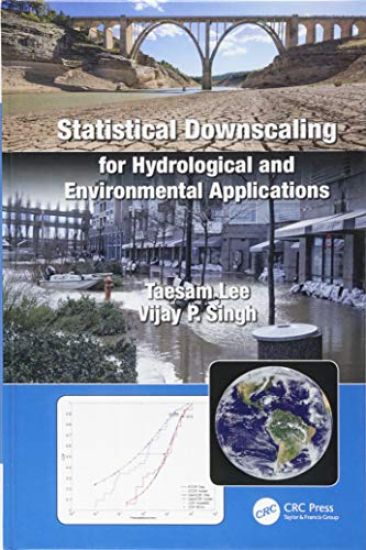
Statistical Downscaling for Hydrological and Environmental Applications
Global climate change is typically understood and modeled using global climate models (GCMs), but the outputs of these models in terms of hydrological variables are only available on coarse or large spatial and time scales, while finer spatial and temporal resolutions are needed to reliably assess the hydro-environmental impacts of climate change. To reliably obtain the required resolutions of hydrological variables, statistical downscaling is typically employed. Statistical Downscaling for Hydrological and Environmental Applications presents statistical downscaling techniques in a practical manner so that both students and practitioners can readily utilize them. Numerous methods are presented, and all are illustrated with practical examples. The book is written so that no prior background in statistics is needed, and it will be useful to graduate students, college faculty, and researchers in hydrology, hydroclimatology, agricultural and environmental sciences, and watershed management. It will also be of interest to environmental policymakers at the local, state, and national levels, as well as readers interested in climate change and its related hydrologic impacts. Features: Examines how to model hydrological events such as extreme rainfall, floods, and droughts at the local, watershed level. Explains how to properly correct for significant biases with the observational data normally found in current Global Climate Models (GCMs). Presents temporal downscaling from daily to hourly with a nonparametric approach. Discusses the myriad effects of climate change on hydrological processes.
Introduction to Tsallis Entropy Theory in Water Engineering
Focuses On an Emerging Field in Water EngineeringA broad treatment of the Tsallis entropy theory presented from a water resources engineering point of view, Introduction to Tsallis Entropy Theory in Water Engineering fills a growing need for material on this theory and its relevant applications in the area of water engineering. This self-contained text includes several solved examples, and requires only a basic knowledge of mathematics and probability theory. Divided into four parts, the book begins with a detailed discussion of Tsallis entropy, moves on to hydraulics, expounds on the subject of hydrology, and ends with broad coverage on a wide variety of areas in water engineering. The author addresses: The Tsallis entropy theory for both discrete and continuous variablesThe procedure for deriving probability distributionsOne-dimensional velocity distributions Two-dimensional velocity distributions Methods for determining sediment concentrationSediment dischargeStage–discharge rating curvePrecipitation variabilityInfiltration and the derivation of infiltration equationsAn introduction to soil moisture, soil moisture profiles, and their estimationFlow duration curvesThe eco-index and indicators of hydrologic alteration (IHA)Measures of redundancy for water distribution networks, and more Introduction to Tsallis Entropy Theory in Water Engineering examines the basic concepts of the Tsallis entropy theory, and considers its current applications and potential for future use. This book advances further research on water engineering, hydrologic sciences, environmental sciences, and water resources engineering as they relate to the Tsallis entropy theory.
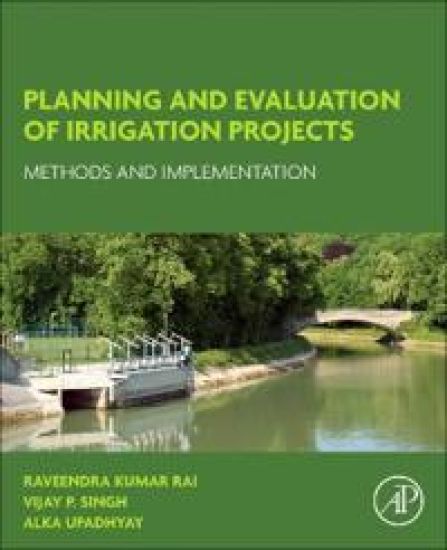
Planning and Evaluation of Irrigation Projects

Planning and Evaluation of Irrigation Projects

Raveendra Kumar Rai; Vijay P. Singh; Alka Upadhyay

Academic Press Inc
2017
nidottu
Planning and Evaluation of Irrigation Projects: Methods and Implementation presents the considerations, options and factors necessary for effective implementation of irrigation strategies, going further to provide methods for evaluating the efficiency of systems-in-place for remedial correction as needed. As the first book to take this lifecycle approach to agricultural irrigation, it includes real-world examples not only on natural resource availability concerns, but also on financial impacts and measurements. With 21 chapters divided into two sections, this book is a valuable resource for agricultural and hydrology engineers, conservation scientists and anyone seeking to implement and maintain irrigation systems.
The Geography of Georgia

The Geography of Georgia

Igor V. Bondyrev; Zurab V. Davitashvili; Vijay P. Singh

Springer International Publishing AG
2016
nidottu
This book discusses the political and economic history and geography of Georgia, the problems it has faced, and how it has overcome and is still overcoming them. In most countries, at the end of the 20th century the successful resolution of social-economic, political, demographic and ecological problems was largely dependent on effectively protecting the population and economic assets from natural disasters and on ensuring conditions for their sustainable development. These problems are most acute in mountainous regions like Georgia, where the unplanned development of natural ecosystems has had drastic consequences. It is therefore necessary to understand not only the probability of changing conditions (natural as well as political and demographic), but also the probability of the resulting economic losses. The book is divided into four sections; historical and political geography, geological processes, ecological processes and developmental geography. In the historical and political geography section the authors present a detailed discussion on ancient history, historical and political geography, ethnic groups and religions, demographics and socio-cultural geography. The geological processes section contains information on geology, geodynamical processes, glacial and periglacial processes. The ecological processes section examines a variety of landscapes and ecosystems, aspects of deforestation, reforestation and desertification along with anthropogenic impacts on the environment. The developmental geography section looks at different economies, natural resources, sustainable development and climate change.
Introduction to Tsallis Entropy Theory in Water Engineering
Focuses On an Emerging Field in Water EngineeringA broad treatment of the Tsallis entropy theory presented from a water resources engineering point of view, Introduction to Tsallis Entropy Theory in Water Engineering fills a growing need for material on this theory and its relevant applications in the area of water engineering. This self-contained text includes several solved examples, and requires only a basic knowledge of mathematics and probability theory. Divided into four parts, the book begins with a detailed discussion of Tsallis entropy, moves on to hydraulics, expounds on the subject of hydrology, and ends with broad coverage on a wide variety of areas in water engineering. The author addresses: The Tsallis entropy theory for both discrete and continuous variablesThe procedure for deriving probability distributionsOne-dimensional velocity distributions Two-dimensional velocity distributions Methods for determining sediment concentrationSediment dischargeStage–discharge rating curvePrecipitation variabilityInfiltration and the derivation of infiltration equationsAn introduction to soil moisture, soil moisture profiles, and their estimationFlow duration curvesThe eco-index and indicators of hydrologic alteration (IHA)Measures of redundancy for water distribution networks, and more Introduction to Tsallis Entropy Theory in Water Engineering examines the basic concepts of the Tsallis entropy theory, and considers its current applications and potential for future use. This book advances further research on water engineering, hydrologic sciences, environmental sciences, and water resources engineering as they relate to the Tsallis entropy theory.
The Geography of Georgia

The Geography of Georgia

Igor V. Bondyrev; Zurab V. Davitashvili; Vijay P. Singh

Springer International Publishing AG
2015
sidottu
This book discusses the political and economic history and geography of Georgia, the problems it has faced, and how it has overcome and is still overcoming them. In most countries, at the end of the 20th century the successful resolution of social-economic, political, demographic and ecological problems was largely dependent on effectively protecting the population and economic assets from natural disasters and on ensuring conditions for their sustainable development. These problems are most acute in mountainous regions like Georgia, where the unplanned development of natural ecosystems has had drastic consequences. It is therefore necessary to understand not only the probability of changing conditions (natural as well as political and demographic), but also the probability of the resulting economic losses. The book is divided into four sections; historical and political geography, geological processes, ecological processes and developmental geography. In the historical and political geography section the authors present a detailed discussion on ancient history, historical and political geography, ethnic groups and religions, demographics and socio-cultural geography. The geological processes section contains information on geology, geodynamical processes, glacial and periglacial processes. The ecological processes section examines a variety of landscapes and ecosystems, aspects of deforestation, reforestation and desertification along with anthropogenic impacts on the environment. The developmental geography section looks at different economies, natural resources, sustainable development and climate change.
Entropy Theory in Hydraulic Engineering

Entropy Theory in Hydraulic Engineering

Vijay P. Singh

American Society of Civil Engineers
2014
sidottu
Entropy Theory in Hydraulic Engineering: An Introduction is the first book to explain the basic concepts of entropy theory from a hydraulic perspective and demonstrate the theory's application in solving practical engineering problems. In the hydraulic context, entropy is valuable as a way of measuring uncertainty or surprise-or even disorder or chaos-as a type of information. As hydraulic systems become more complex, entropy theory enables hydraulic engineers to quantify uncertainty, determine risk and reliability, estimate parameters, model processes, and design more robust and dependable water hydraulic systems. Drawing on many years of experience applying and teaching hydraulics, Vijay Singh provides a clear introduction to the fundamentals of entropy theory as it has evolved over the past 40 years. He explores its application in five areas important to hydraulic engineers: velocity distributions, sediment concentration and discharge, hydraulic geometry, channel design, and water distribution systems. More than 170 solved examples illustrate these applications, and each chapter concludes with problem sets and plentiful references. By illustrating the power, usefulness, and versatility of entropy theory, this book puts a valuable tool in the hands of practitioners. Graduate students, advanced undergraduates, and their professors will benefit from the lucid explanation of a complex theory and its applications.
The Yamuna River Basin

The Yamuna River Basin

Raveendra Kumar Rai; Alka Upadhyay; C. Shekhar P. Ojha; Vijay P. Singh

Springer
2013
nidottu
This book is designed to provide concepts, methodologies, and approaches for river basin studies with respect to water resources and environment. The book is not limited to the Yamuna River basin, but will help in the study of various other river basins for integrated water resources management. The book covers the essential components of integrated water resources management, including analysis of climatic variables, climate change detection, analysis of natural resources, geology, geomorphology, socio-economics, water budgeting, flood estimation, river pollution, etc. Furthermore, the book addresses recent issues pertaining to water quality, water quality indices, environmental flows, water resources management through cropping pattern change, etc. along with methodologies and application to the Yamuna River system. However, the main objective of this book is to address important issues of water resources management of river basins. Audience: The manuscript has been designed so that it can be used as a reference for river basin studies. The book will be useful to engineers, agricultural scientists, environmentalists, planners, managers, and administrators who are concerned with water resources.
Entropy Theory and its Application in Environmental and Water Engineering
Entropy Theory and its Application in Environmental and Water Engineering responds to the need for a book that deals with basic concepts of entropy theory from a hydrologic and water engineering perspective and then for a book that deals with applications of these concepts to a range of water engineering problems. The range of applications of entropy is constantly expanding and new areas finding a use for the theory are continually emerging. The applications of concepts and techniques vary across different subject areas and this book aims to relate them directly to practical problems of environmental and water engineering. The book presents and explains the Principle of Maximum Entropy (POME) and the Principle of Minimum Cross Entropy (POMCE) and their applications to different types of probability distributions. Spatial and inverse spatial entropy are important for urban planning and are presented with clarity. Maximum entropy spectral analysis and minimum cross entropy spectral analysis are powerful techniques for addressing a variety of problems faced by environmental and water scientists and engineers and are described here with illustrative examples. Giving a thorough introduction to the use of entropy to measure the unpredictability in environmental and water systems this book will add an essential statistical method to the toolkit of postgraduates, researchers and academic hydrologists, water resource managers, environmental scientists and engineers. It will also offer a valuable resource for professionals in the same areas, governmental organizations, private companies as well as students in earth sciences, civil and agricultural engineering, and agricultural and rangeland sciences. This book: Provides a thorough introduction to entropy for beginners and more experienced usersUses numerous examples to illustrate the applications of the theoretical principlesAllows the reader to apply entropy theory to the solution of practical problemsAssumes minimal existing mathematical knowledgeDiscusses the theory and its various aspects in both univariate and bivariate casesCovers newly expanding areas including neural networks from an entropy perspective and future developments.
The Yamuna River Basin

The Yamuna River Basin

Raveendra Kumar Rai; Alka Upadhyay; C. Shekhar P. Ojha; Vijay P. Singh

Springer
2011
sidottu
This book is designed to provide concepts, methodologies, and approaches for river basin studies with respect to water resources and environment. The book is not limited to the Yamuna River basin, but will help in the study of various other river basins for integrated water resources management. The book covers the essential components of integrated water resources management, including analysis of climatic variables, climate change detection, analysis of natural resources, geology, geomorphology, socio-economics, water budgeting, flood estimation, river pollution, etc. Furthermore, the book addresses recent issues pertaining to water quality, water quality indices, environmental flows, water resources management through cropping pattern change, etc. along with methodologies and application to the Yamuna River system. However, the main objective of this book is to address important issues of water resources management of river basins. Audience: The manuscript has been designed so that it can be used as a reference for river basin studies. The book will be useful to engineers, agricultural scientists, environmentalists, planners, managers, and administrators who are concerned with water resources.
Applied Hydrometeorology

Applied Hydrometeorology

Pukhraj Rakhecha; Vijay P. Singh

Springer
2010
nidottu
Water is vital for life. Since the dawn of civilization, much effort has been made to harness sources of fresh water. Recent years have raised global awareness of the need for increasing demand of water worldwide, largely because of growing population, rising standard of living, higher demand for energy, and greater appreciation for environmental quality. As an example, the world population has increased threefold in the past five decades. In order to meet the rising water demand, water resources are being developed by building large dams, reservoirs, barrages and weirs across rivers worldwide. The guiding principle for water resources development has been to ensure adequate supply of water for agriculture, domestic use (including fine drinking water), waste disposal, industries, and energy production, with due attention to maintain the ecosystem functions. This development, however, depends on a holistic, cooperative and scientific approach. The basic inputs in the assessment of waterresources for a given region are from hydrological data and the subject of hydrology forms the core in achieving sustainable development of water resources. Barring a few exceptions, hydrological data for most river basins are sparse and therefore it is difficult to comprehensively assess their water resources. The major source of water is rainfall which occurs as a result of condensation of atmospheric moisture governed by the science of meteorology.
Applied Hydrometeorology

Applied Hydrometeorology

Pukhraj Rakhecha; Vijay P. Singh

Springer-Verlag New York Inc.
2009
sidottu
Water is vital for life. Since the dawn of civilization, much effort has been made to harness sources of fresh water. Recent years have raised global awareness of the need for increasing demand of water worldwide, largely because of growing population, rising standard of living, higher demand for energy, and greater appreciation for environmental quality. As an example, the world population has increased threefold in the past five decades. In order to meet the rising water demand, water resources are being developed by building large dams, reservoirs, barrages and weirs across rivers worldwide. The guiding principle for water resources development has been to ensure adequate supply of water for agriculture, domestic use (including fine drinking water), waste disposal, industries, and energy production, with due attention to maintain the ecosystem functions. This development, however, depends on a holistic, cooperative and scientific approach. The basic inputs in the assessment of waterresources for a given region are from hydrological data and the subject of hydrology forms the core in achieving sustainable development of water resources. Barring a few exceptions, hydrological data for most river basins are sparse and therefore it is difficult to comprehensively assess their water resources. The major source of water is rainfall which occurs as a result of condensation of atmospheric moisture governed by the science of meteorology.
Kinematic Wave Modeling in Water Resources

Kinematic Wave Modeling in Water Resources

Vijay P. Singh

John Wiley Sons Inc
1997
sidottu
Kinematic wave (KW) modeling methods are gaining wide acceptance as fast and accurate methods for handling a wide range of water modeling problems. This book provides a through reference to the application of KW methods to such problems as the spatial representation of watersheds, overland flow routing, and channel flow routing.
Kinematic Wave Modeling in Water Resources

Kinematic Wave Modeling in Water Resources

Vijay P. Singh

John Wiley Sons Inc
1996
sidottu
Kinematic wave modeling methods are gaining wide acceptance as a fast and accurate way of handling a wide range of water modeling problems. This is the first book to provide a thorough reference to the application of KW methods to such problems as the spatial representation of watersheds, overland flow routing, and channel flow routing.