

Kirjailija
Vikash Kumar
Kirjat ja teokset yhdessä paikassa: 31 kirjaa, julkaisuja vuosilta 2014–2026, suosituimpiin kuuluu Mel'kanie obscheniq. Vertaile teosten hintoja ja tarkista saatavuus suomalaisista kirjakaupoista.
31 kirjaa
Kirjojen julkaisuvuodet: 2014–2026.

This book offers a structured methodology for applying generative AI to the functional verification of complex semiconductor designs, without sacrificing engineering accountability. It presents the VEGA framework—Verification Engineering through Guided AI—a complete verification lifecycle that treats AI as a governed accelerator, preserving traceability between design intent and verification evidence from specification through silicon sign-off. Provides verification architects with a reliable framework to reduce pain of “ungoverned AI” Describes prompts, templates, and quality gates, drawn from actual design verification challenges Offers first comprehensive, methodologically grounded treatment of AI-assisted hardware verification "VEGA arrives at exactly the right moment, when AI tools are powerful enough to transform verification productivity but undisciplined enough to undermine it. Vikash's intent-centric framework equips verification engineers, team leads, and architects to maintain quality and traceability from test plan through sign-off. A must-read for every hardware verification professional." — Gaurav Jalan, Vice President, Engineering, Marvell "AI is becoming part of verification, but using it without structure can create more risk than value. Vikash's VEGA framework gives engineers a practical way to apply AI while preserving design intent, traceability, review discipline, and human accountability. This is a timely and useful book for verification engineers, leads, and students looking to understand where AI-assisted verification is heading." — Yunus Akhtar, Senior SoC Verification Engineer, Microsoft "What stands out is the discipline. This isn't AI as a shortcut, it's AI as a governed accelerator, with verification quality made measurable rather than asserted and sign-off reframed as an evidence-based argument you can actually defend. Essential reading for any architect or lead bringing LLMs into a serious verification flow." — Manish Tanwar, DV Architect, AMD

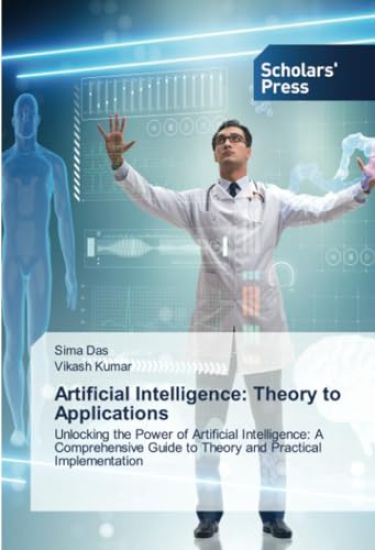
Ce livre fournit un aper u complet de l'intelligence artificielle (IA), couvrant la fois ses fondements th oriques et ses applications pratiques. Le livre explore les principes fondamentaux de l'IA, notamment la repr sentation des connaissances, le raisonnement, la recherche et les algorithmes d'apprentissage. Il explore divers langages de programmation d'IA tels que LISP et PROLOG, et examine les logiques symboliques formalis es pour g rer les incoh rences et les incertitudes dans la repr sentation des connaissances. Le concept de raisonnement probabiliste et son application dans les r seaux bay siens est discut , ainsi que la repr sentation de connaissances structur es l'aide de graphiques, de cadres et de structures associ es. Le livre explore les repr sentations orient es objet et l'utilisation de l'h ritage et de l'instanciation dans la repr sentation des connaissances. Les strat gies de recherche et de contr le pour la r solution g n rale de probl mes, les syst mes de production et les techniques de recherche heuristiques sont expliqu es en d tail. L'application de l'IA dans le jeu, les probl mes de satisfaction de contraintes et les syst mes experts est explor e, ainsi que les techniques d'appariement et l'organisation et la gestion des connaissances.
Dieses Buch bietet einen umfassenden berblick ber K nstliche Intelligenz (KI) und deckt sowohl deren theoretische Grundlagen als auch praktische Anwendungen ab. Das Buch befasst sich mit den Grundprinzipien der KI, einschlie lich Wissensdarstellung, Argumentation, Suche und Lernalgorithmen. Es untersucht verschiedene KI-Programmiersprachen wie LISP und PROLOG und untersucht formalisierte symbolische Logiken, um Inkonsistenzen und Unsicherheiten bei der Wissensdarstellung zu bew ltigen. Das Konzept des probabilistischen Denkens und seine Anwendung in Bayes'schen Netzwerken wird ebenso diskutiert wie die Darstellung strukturierten Wissens mithilfe von Graphen, Rahmen und verwandten Strukturen. Das Buch untersucht objektorientierte Darstellungen und die Nutzung von Vererbung und Instanziierung in der Wissensdarstellung. Such- und Kontrollstrategien zur allgemeinen Probleml sung, Produktionssysteme und heuristische Suchtechniken werden ausf hrlich erl utert. Die Anwendung von KI beim Spielen, bei Problemen mit der Zufriedenheit mit Einschr nkungen und bei Expertensystemen wird ebenso untersucht wie Matching-Techniken sowie Wissensorganisation und -management.
Este livro fornece uma vis o abrangente da Intelig ncia Artificial (IA), cobrindo tanto os seus fundamentos te ricos como as suas aplica es pr ticas. O livro aprofunda os princ pios fundamentais da IA, incluindo a representa o do conhecimento, o racioc nio, a pesquisa e os algoritmos de aprendizagem. Explora v rias linguagens de programa o de IA, como LISP e PROLOG, e examina l gicas simb licas formalizadas para lidar com inconsist ncias e incertezas na representa o do conhecimento. O conceito de racioc nio probabil stico e a sua aplica o em redes Bayesianas discutido, juntamente com a representa o de conhecimento estruturado utilizando gr ficos, quadros e estruturas relacionadas. O livro explora representa es orientadas para objectos e a utiliza o de heran a e instancia o na representa o do conhecimento. As estrat gias de pesquisa e controlo para a resolu o de problemas gerais, os sistemas de produ o e as t cnicas de pesquisa heur stica s o explicados em pormenor. A aplica o da IA em jogos, problemas de satisfa o de restri es e sistemas especializados explorada, juntamente com t cnicas de correspond ncia e organiza o e gest o do conhecimento. Al m disso, o livro apresenta uma introdu o l gica difusa, s redes neuronais artificiais, s redes de neur nios e aos sistemas de informa o.

Inteligencia Artificial: De la teoría a las aplicaciones
Sima Das; Vikash Kumar
Ediciones Nuestro Conocimiento
2024
nidottu
Questo libro fornisce una panoramica completa dell'Intelligenza Artificiale (AI), coprendone sia i fondamenti teorici che le applicazioni pratiche. Il libro approfondisce i principi fondamentali dell'intelligenza artificiale, tra cui la rappresentazione della conoscenza, il ragionamento, la ricerca e gli algoritmi di apprendimento. Esplora vari linguaggi di programmazione AI come LISP e PROLOG ed esamina le logiche simboliche formalizzate per gestire incoerenze e incertezze nella rappresentazione della conoscenza. Viene discusso il concetto di ragionamento probabilistico e la sua applicazione nelle reti bayesiane, insieme alla rappresentazione della conoscenza strutturata utilizzando grafici, frame e strutture correlate. Il libro esplora le rappresentazioni orientate agli oggetti e l'utilizzo dell'ereditariet e dell'istanziazione nella rappresentazione della conoscenza. Vengono spiegate in modo approfondito le strategie di ricerca e controllo per la risoluzione generale dei problemi, i sistemi di produzione e le tecniche di ricerca euristica. Viene esplorata l'applicazione dell'intelligenza artificiale nel gioco, nei problemi di soddisfazione dei vincoli e nei sistemi esperti, insieme alle tecniche di abbinamento e all'organizzazione e gestione della conoscenza.

Efecto de los niveles de nitrógeno en la mostaza
Nikhil Raghuvanshi; Jai Dev; Vikash Kumar
Ediciones Nuestro Conocimiento
2023
nidottu






Estudio de divergencia genética en la uchuva (Physalis Peruvians L.)
Vikash Kumar
Ediciones Nuestro Conocimiento
2021
nidottu

Genetische Divergenzstudie bei der Kapstachelbeere (Physalis Peruvians L.)
Vikash Kumar
Verlag Unser Wissen
2021
nidottu
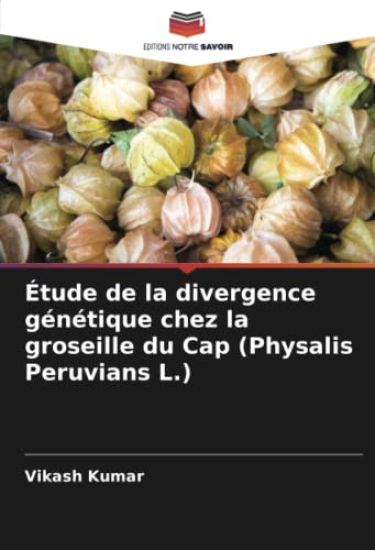
Étude de la divergence génétique chez la groseille du Cap (Physalis Peruvians L.)
Vikash Kumar
Editions Notre Savoir
2021
nidottu

Studio di divergenza genetica nell'uva spina del Capo (Physalis Peruvians L.)
Vikash Kumar
Edizioni Sapienza
2021
nidottu