

Kirjailija
Vikram Dhillon
Kirjat ja teokset yhdessä paikassa: 11 kirjaa, julkaisuja vuosilta 2016–2025, suosituimpiin kuuluu AI Frameworks Enabled by Blockchain. Vertaile teosten hintoja ja tarkista saatavuus suomalaisista kirjakaupoista.
11 kirjaa
Kirjojen julkaisuvuodet: 2016–2025.

Bitumen wird in Binde- und Deckschichten verwendet. Es kann erfolgreich durch Kunststoffabf lle mit einem Gewichtsanteil von 10 % des Bitumens ersetzt werden. Es verbessert die Eigenschaften von Bitumen durch Verbesserung seiner technischen Eigenschaften. Auf diese Weise k nnen wir beim Bau enorme Summen einsparen (pro Kilometer Fahrbahn). Dies ist ein innovativer Ansatz, um hochgradig umweltsch dliches Material, n mlich Kunststoffabf lle, auf die vorteilhafteste und kologischste Weise zu entsorgen, was nicht nur zu einem verbesserten Belagsmaterial in Deckschichten f hrt, sondern es auch wirtschaftlich und dauerhaft macht. Es tr gt auch dazu bei, die Umwelt gesund und sauber zu halten.
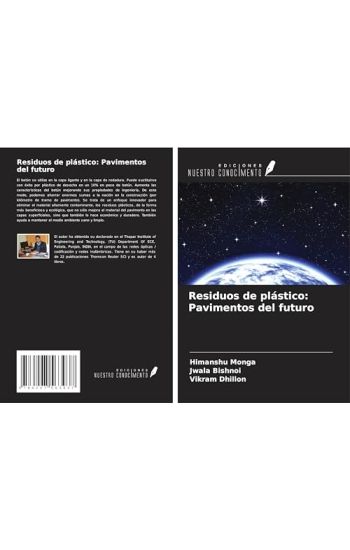
Residuos de plástico: Pavimentos del futuro
Himanshu Monga; Jwala Bishnoi; Vikram Dhillon
Ediciones Nuestro Conocimiento
2024
nidottu
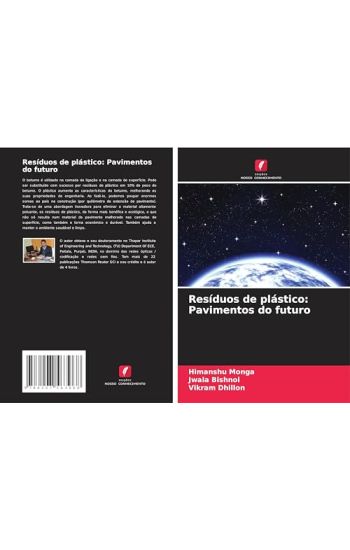
Resíduos de plástico
Himanshu Monga; Jwala Bishnoi; Vikram Dhillon
Edicoes Nosso Conhecimento
2024
pokkari
O betume utilizado na camada de liga o e na camada de superf cie. Pode ser substitu do com sucesso por res duos de pl stico em 10% do peso do betume. O pl stico aumenta as caracter sticas do betume, melhorando as suas propriedades de engenharia. Ao faz -lo, podemos poupar enormes somas ao pa s na constru o (por quil metro de extens o de pavimento). Trata-se de uma abordagem inovadora para eliminar o material altamente poluente, os res duos de pl stico, da forma mais ben fica e ecol gica, o que n o s resulta num material de pavimento melhorado nas camadas de superf cie, como tamb m o torna econ mico e dur vel. Tamb m ajuda a manter o ambiente saud vel e limpo.
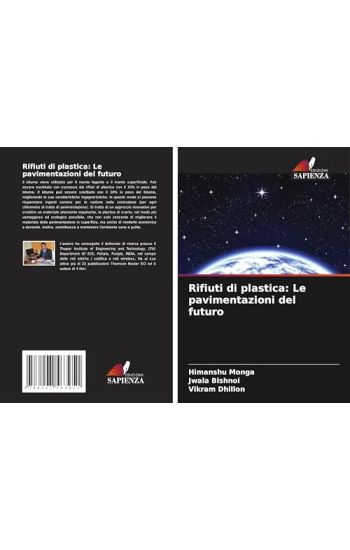
Il bitume viene utilizzato per il manto legante e il manto superficiale. Pu essere sostituito con successo dai rifiuti di plastica con il 10% in peso del bitume. Il bitume pu essere sostituito con il 10% in peso del bitume, migliorando le sue caratteristiche ingegneristiche. In questo modo si possono risparmiare ingenti somme per la nazione nella costruzione (per ogni chilometro di tratto di pavimentazione). Si tratta di un approccio innovativo per smaltire un materiale altamente inquinante, la plastica di scarto, nel modo pi vantaggioso ed ecologico possibile, che non solo consente di migliorare il materiale della pavimentazione in superficie, ma anche di renderlo economico e durevole. Inoltre, contribuisce a mantenere l'ambiente sano e pulito.

Le bitume est utilis dans la couche de liaison et la couche de surface. Il peut tre remplac avec succ s par des d chets plastiques hauteur de 10 % du poids du bitume. Il am liore les caract ristiques du bitume en am liorant ses propri t s techniques. Ce faisant, nous pouvons conomiser des sommes consid rables pour la nation dans la construction (par kilom tre de tron on de chauss e). Il s'agit d'une approche innovante pour liminer des mat riaux hautement polluants, les d chets plastiques, de la mani re la plus b n fique et la plus cologique qui soit, ce qui permet non seulement d'am liorer le mat riau de la chauss e dans les couches de surface, mais aussi de le rendre conomique et durable. Cela permet galement de pr server la sant et la propret de l'environnement.

Blockchain in Healthcare
Vikram Dhillon; John Bass; Max Hooper; David Metcalf; Alex Cahana
Taylor Francis Ltd
2021
nidottu
Blockchain technology is poised to revolutionize more than just payment and crypto-currency. Many vertical industries will be reshaped by the new trusted data models enabled and inspired by the blockchain – healthcare is no exception. In fact, healthcare may hold the greatest opportunities for meaningful use of the technology. Early pioneers have explored some of the first use cases for medical payments, electronic health records, HIPAA/data privacy, drug counterfeiting, and credentialing of healthcare professionals. We have only begun to scratch the surface in how to automate the complexities of today’s healthcare systems and design new systems which focus on trust, transparency and the alignment of incentives. Metcalf, Bass, Dhillon, and Hooper have curated a collection of examples based on the fundamentals of blockchain that build upon the early successes and examples that point to the future. After a brief introduction to bitcoin, blockchain and the protocols available, a getting-started guide is presented specific to health and healthcare. The authors discuss the complexities and possibilities of smart contracts and some of the early consortia that are exploring the possibilities. Examples and use cases are found throughout the book, with specific sections that cover the more sophisticated and far-reaching examples which have the potential to scale at the industry-level. In addition, a discussion of integrating blockchain technology into other advanced healthcare trends and IT systems – such as telemedicine, artificial intelligence, machine learning, the Internet of Things, value-based payments , patient engagement solutions, big data solutions, medical tourism, and precision medicine/genetic therapies among many others are presented. The final section provides a glimpse into the future using blockchain technology and examples of research projects that are still in labs across the globe. The appendices may prove particularly useful for additional details on how to get started, including resources and organizations specifically focusing on blockchain and distributed ledger solutions.

Learn all about blockchain and its applications in cryptocurrency, healthcare, Internet of Things, finance, decentralized organizations, and more. Featuring case studies and practical insights, this book covers a unique mix of topics and offers insight into how to overcome hurdles that arise as the market and consumers grow accustomed to blockchain-based organizations and services. The book is divided into three major sections. The first section provides a historical background to blockchain technology. You will start with a historical context to financial capital markets when Bitcoin was invented, followed by mining protocols, the need for consensus, hardware mining, etc. Next, a formal introduction to blockchain is provided covering transaction workflow, role of decentralized network, and payment verification. Then, we dive deep into a different implementation of a blockchain: Ethereum. The main technical features, such as Ethereum Virtual Machine, are presentedalong with the smart contract programming language, Solidity. In this second section, you will look at some modern use cases for blockchain from a decentralized autonomous organization, high-performance computing in Ethereum and off-grid computations, and healthcare and scientific discovery. The final section of the book looks toward the future of blockchain. This is followed by chapters covering the rise of consortia in the blockchain world, the Hyperledger project, particularly the updates since 2018, and a chapter on educational blockchain games. This is followed by updates to EOS. IO, Chain Core, and Quorum, ICOs and a look at the major changes to financial markets brought about by blockchain and decentralized networks. What You Will Learn Get an overview of the popular games employed to teach the basic concepts of blockchain and decentralized networksBe familiar with the rise of blockchain consortiums as well as updates to Hyperledger Project, 2020Find out about cloud blockchains, including Microsoft Azure and Amazon Webservices, and how to set up test environmentsStudy machine learning integration in the blockchain and the role of smart contracts Who This Book Is For Blockchain developers interested in keeping up with the newest updates and students looking for a broad overview of this vast ecosystem, plus business executives who want to make informed product decisions about including blockchain as well as policy makers who want a better understanding of the current use cases

Blockchain in Healthcare
Vikram Dhillon; John Bass; Max Hooper; David Metcalf; Alex Cahana
CRC Press
2019
sidottu
Blockchain technology is poised to revolutionize more than just payment and crypto-currency. Many vertical industries will be reshaped by the new trusted data models enabled and inspired by the blockchain – healthcare is no exception. In fact, healthcare may hold the greatest opportunities for meaningful use of the technology. Early pioneers have explored some of the first use cases for medical payments, electronic health records, HIPAA/data privacy, drug counterfeiting, and credentialing of healthcare professionals. We have only begun to scratch the surface in how to automate the complexities of today’s healthcare systems and design new systems which focus on trust, transparency and the alignment of incentives. Metcalf, Bass, Dhillon, and Hooper have curated a collection of examples based on the fundamentals of blockchain that build upon the early successes and examples that point to the future. After a brief introduction to bitcoin, blockchain and the protocols available, a getting-started guide is presented specific to health and healthcare. The authors discuss the complexities and possibilities of smart contracts and some of the early consortia that are exploring the possibilities. Examples and use cases are found throughout the book, with specific sections that cover the more sophisticated and far-reaching examples which have the potential to scale at the industry-level. In addition, a discussion of integrating blockchain technology into other advanced healthcare trends and IT systems – such as telemedicine, artificial intelligence, machine learning, the Internet of Things, value-based payments , patient engagement solutions, big data solutions, medical tourism, and precision medicine/genetic therapies among many others are presented. The final section provides a glimpse into the future using blockchain technology and examples of research projects that are still in labs across the globe. The appendices may prove particularly useful for additional details on how to get started, including resources and organizations specifically focusing on blockchain and distributed ledger solutions.

Waste Plastic: Future Pavements
Himanshu Monga; Jwala Bishnoi; Vikram Dhillon
Lap Lambert Academic Publishing
2017
nidottu

Learn to create your own blog using the Jekyll static site generator. You’ll start with a simple template, add new features to it, automate any maintenance, attach social sharing, and begin writing. By the end of Creating Blogs with Jekyll, you will be able to create custom blogs with Jekyll, update the content with ease, and reach out to your readers with minimal effort. Because you've built your blog yourself, you'll know exactly how each component works, and you won’t be dependent on an admin panel to maintain it. Creating Blogs with Jekyll equips you with the knowledge to create an elegantly designed blog and scale it to capture more readers. Recapture the magic of writing by creating great content and use an easy workflow in Jekyll to maintain it for blogging. Do new things and write about them in style with Jekyll. Takes you through building a fully functional blog from scratch using JekyllProvides a fun way to work on a side-projectand integrate cutting edge web technologiesTeaches you how to update and maintain your awesome blog Jekyll is a simple, secure and very low maintenance blog engine that converts naturally written content in markdown into a beautiful and minimal blog. It allows you to focus on content creation and expressing yourself instead of spending all your time updating the plugins and maintaining the database. Jekyll does not rely on a database as a backend so your blog will be far more secure and reliable than any traditional blogging engines such as WordPress. We live in a day and age where short attention spans make it very difficult to expose a reader to interesting content. What better way to capture a reader's attention and retain viewers by captivating them by your own unique style and taste? Jekyll allows the content to shine with minimal distractions and a greater focus on the content and easy sharing of the content. What You'll LearnChoose a base theme appropriate for your style and development Integrate various web technologies that will work well together and enhance your blog Automate social sharing components and comments workflow Make adjustments to themes, views and styles of blog posts Update any of the modular components of the blog and integrate new technologies Implement Jekyll and deploying static websites for future projectsWho This Book Is ForThe developer who is ready to move beyond the complexities of maintaining a content management system by creating their own unique blog in their own style. It’s for the project manager tired of spending all their time editing their blog on the admin panel and updating the content management system. Creating Blogs with Jekyll is an excellent choice for new developers to start blogging because of the simplicity of Jekyll’s theming layer and writing workflow. It’s anexcellent choice for the web developer wanting to build their blog from scratch and expand their knowledge of higher level web technologies.