Kirjojen hintavertailu – 12 859 826 kirjaa ja 27 kauppaa

Kirjailija

Vincent Brook

Kirjat ja teokset yhdessä paikassa: 7 kirjaa, julkaisuja vuosilta 2003–2023, suosituimpiin kuuluu Late B(l)oomer. Vertaile teosten hintoja ja tarkista saatavuus suomalaisista kirjakaupoista.

7 kirjaa

Kirjojen julkaisuvuodet: 2003–2023.

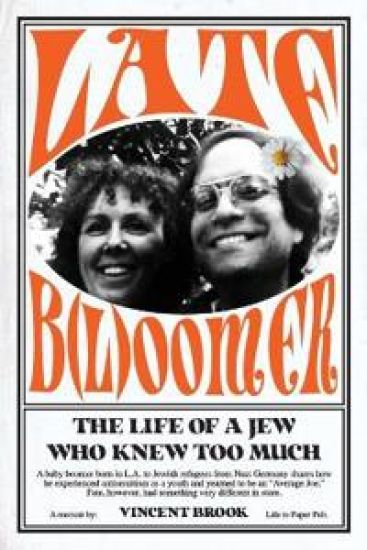
Late B(l)oomer

Late B(l)oomer

Vincent Brook

Life to Paper Publishing Inc.
2023
pokkari
In "Late B(l)oomer: The Life of a Jew Who Knew Too Much," Vincent Brook takes us on a captivating journey through his multi-faceted life. Born in Los Angeles, California, in 1946, during the exhilarating post-World War II era, Brook's memoir is a testament to the vibrant experiences and profound encounters that have shaped his identity. From the very start, Brook's life carries the weight of historical significance. The surrender of the Nazis, marked by a handshake at the Elbe River, mirrors the birthplace of his Jewish refugee parents in Germany. This connection to the past intertwines with his exploration of the cinematic world, symbolized by his subtitle, a clever reference to Alfred Hitchcock's thrillers, "The Man Who Knew Too Much." While Hitchcock's films allude to international intrigue, espionage, and murder, Brook's appropriation delves into the horrors of the Holocaust and its far-reaching impact on his family. Through poignant storytelling, he reveals the profound effects of this genocidal tragedy on his life, illuminating the depth of personal and historical loss. Brook's memoir not only explores the shadows of history but also celebrates his love for the movies and the multiculturalism that permeates his existence. Set against the backdrop of the evolving San Fernando Valley in the 1950s, his narrative becomes a tapestry of diverse experiences, enthralling encounters, and a deep appreciation for the arts." Late B(l)oomer: The Life of a Jew Who Knew Too Much" is a powerful and thought-provoking memoir that explores the complexities of identity, the enduring resonance of history, and the transformative power of cinema. Vincent Brook invites readers to join him on this remarkable journey of self-discovery, reminding us that our past, present, and future are intimately intertwined in unexpected and profound ways.
Land of Smoke and Mirrors

Land of Smoke and Mirrors

Vincent Brook

Rutgers University Press
2013
sidottu
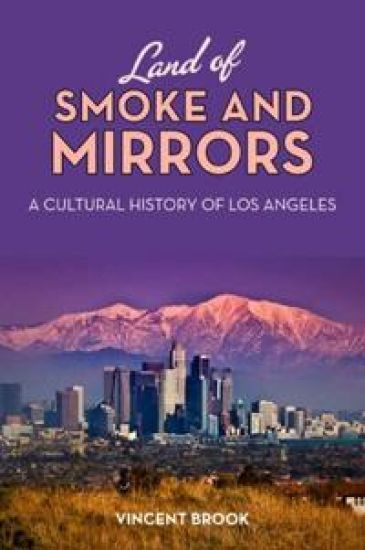
Unlike the more forthrightly mythic origins of other urban centers—think Rome via Romulus and Remus or Mexico City via the god Huitzilopochtli—Los Angeles emerged from a smoke-and-mirrors process that is simultaneously literal and figurative, real and imagined, material and metaphorical, physical and textual. Through penetrating analysis and personal engagement, Vincent Brook uncovers the many portraits of this ever-enticing, ever-ambivalent, and increasingly multicultural megalopolis. Divided into sections that probe Los Angeles’s checkered history and reflect on Hollywood’s own self-reflections, the book shows how the city, despite considerable remaining challenges, is finally blowing away some of the smoke of its not always proud past and rhetorically adjusting its rear-view mirrors. Part I is a review of the city’s history through the early 1900s, focusing on the seminal 1884 novel Ramona and its immediate effect, but also exploring its ongoing impact through interviews with present-day Tongva Indians, attendance at the 88th annual Ramona pageant, and analysis of its feature film adaptations. Brook deals with Hollywood as geographical site, film production center, and frame of mind in Part II. He charts the events leading up to Hollywood’s emergence as the world’s movie capital and explores subsequent developments of the film industry from its golden age through the so-called New Hollywood, citing such self-reflexive films as Sunset Blvd.,Singin’ in the Rain, and The Truman Show. Part III considers LA noir, a subset of film noir that emerged alongside the classical noir cycle in the 1940s and 1950s and continues today. The city’s status as a privileged noir site is analyzed in relation to its history and through discussions of such key LA noir novels and films as Double Indemnity, Chinatown, and Crash. In Part IV, Brook examines multicultural Los Angeles. Using media texts as signposts, he maps the history and contemporary situation of the city’s major ethno-racial and other minority groups, looking at such films as Mi Familia (Latinos), Boyz N the Hood (African Americans), Charlotte Sometimes (Asians), Falling Down (Whites), and The Kids Are All Right (LGBT).
Land of Smoke and Mirrors

Land of Smoke and Mirrors

Vincent Brook

Rutgers University Press
2013
nidottu
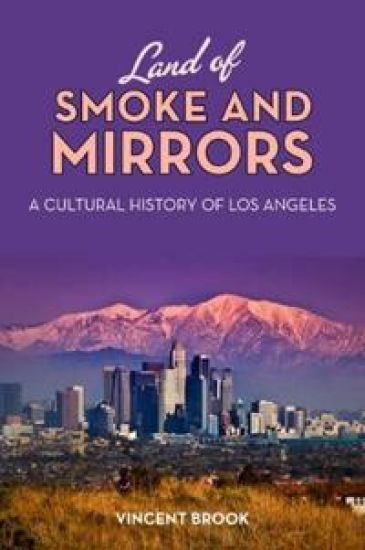
Unlike the more forthrightly mythic origins of other urban centers—think Rome via Romulus and Remus or Mexico City via the god Huitzilopochtli—Los Angeles emerged from a smoke-and-mirrors process that is simultaneously literal and figurative, real and imagined, material and metaphorical, physical and textual. Through penetrating analysis and personal engagement, Vincent Brook uncovers the many portraits of this ever-enticing, ever-ambivalent, and increasingly multicultural megalopolis. Divided into sections that probe Los Angeles’s checkered history and reflect on Hollywood’s own self-reflections, the book shows how the city, despite considerable remaining challenges, is finally blowing away some of the smoke of its not always proud past and rhetorically adjusting its rear-view mirrors. Part I is a review of the city’s history through the early 1900s, focusing on the seminal 1884 novel Ramona and its immediate effect, but also exploring its ongoing impact through interviews with present-day Tongva Indians, attendance at the 88th annual Ramona pageant, and analysis of its feature film adaptations. Brook deals with Hollywood as geographical site, film production center, and frame of mind in Part II. He charts the events leading up to Hollywood’s emergence as the world’s movie capital and explores subsequent developments of the film industry from its golden age through the so-called New Hollywood, citing such self-reflexive films as Sunset Blvd.,Singin’ in the Rain, and The Truman Show. Part III considers LA noir, a subset of film noir that emerged alongside the classical noir cycle in the 1940s and 1950s and continues today. The city’s status as a privileged noir site is analyzed in relation to its history and through discussions of such key LA noir novels and films as Double Indemnity, Chinatown, and Crash. In Part IV, Brook examines multicultural Los Angeles. Using media texts as signposts, he maps the history and contemporary situation of the city’s major ethno-racial and other minority groups, looking at such films as Mi Familia (Latinos), Boyz N the Hood (African Americans), Charlotte Sometimes (Asians), Falling Down (Whites), and The Kids Are All Right (LGBT).
Driven to Darkness

Driven to Darkness

Vincent Brook

Rutgers University Press
2009
nidottu
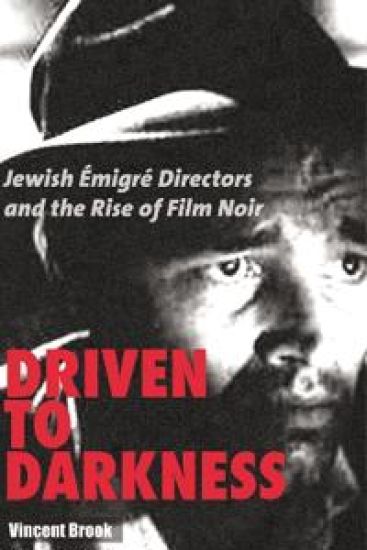
From its earliest days, the American film industry has attracted European artists. With the rise of Hitler, filmmakers of conscience in Germany and other countries, particularly those of Jewish origin, found it difficult to survive and fledùfor their work and their livesùto the United States. Some had trouble adapting to Hollywood, but many were celebrated for their cinematic contributions, especially to the dark shadows of film noir. Driven to Darkness explores the influence of Jewish TmigrT directors and the development of this genre. While filmmakers such as Fritz Lang, Billy Wilder, Otto Preminger, and Edward G. Ulmer have been acknowledged as crucial to the noir canon, the impact of their Jewishness on their work has remained largely unexamined until now. Through lively and original analyses of key films, Vincent Brook penetrates the darkness, shedding new light on this popular film form and the artists who helped create it.
'You Should See Yourself'

'You Should See Yourself'

Vincent Brook

Rutgers University Press
2006
nidottu
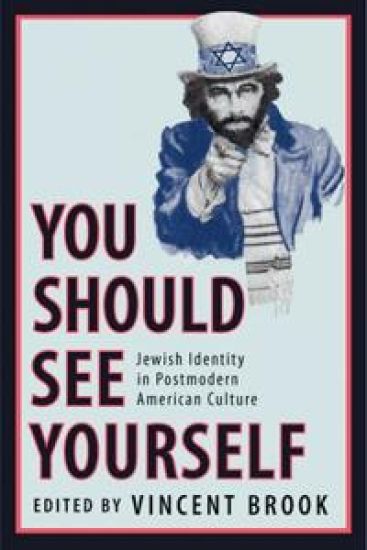
The past few decades have seen a remarkable surge in Jewish influences on American culture. Entertainers and artists such as Jerry Seinfeld, Adam Sandler, Allegra Goodman, and Tony Kushner have heralded new waves of television, film, literature, and theater; a major klezmer revival is under way; bagels are now as commonplace as pizza; and kabbalah has become as cool as crystals. Does this broad range of cultural expression accurately reflect what it means to be Jewish in America today? Bringing together fourteen new essays by leading scholars, You Should See Yourself examines the fluctuating representations of Jewishness in a variety of areas of popular culture and high art, including literature, the media, film, theater, music, dance, painting, photography, and comedy. Contributors explore the evolution that has taken place within these cultural forms and how we can best explain these changes. Are variations in our understanding of Jewishness the result of general phenomena such as multiculturalism, politics, and postmodernism, or are they the product of more specifically Jewish concerns such as the intermarriage/continuity crisis, religious renewal, and relations between the United States and Israel? Accessible to students and general readers alike, this volume takes an important step toward advancing the discussion of Jewish cultural influences in this country.
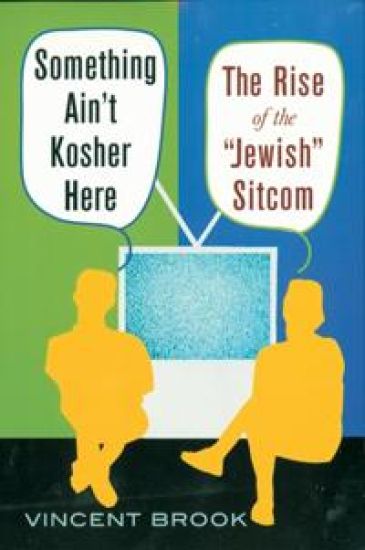
Something Ain't Kosher Here

Something Ain't Kosher Here

Vincent Brook

Rutgers University Press
2003
nidottu
From 1989 through 2002 there was an unprecedented surge in American sitcoms featuring explicitly Jewish lead characters, thirty-two compared to seven in the previous forty years. Several of these—Mad About You, The Nanny, and Friends—were among the most popular and influential of all shows over this period; one program—Seinfeld—has been singled out as the “defining” series of the nineties. In addition, scriptwriters have increasingly created “Jewish” characters, although they may not be perceived to be by the show’s audience, Rachel Green on Friends being only one example. In Something Ain’t Kosher Here, Vincent Brook asks two key questions: Why has this trend appeared at this particular historical moment and what is the significance of this phenomenon for Jews and non-Jews alike? He takes readers through three key phases of the Jewish sitcom trend: The early years of television before and after the first Jewish sitcom, The Goldbergs’, appeared; the second phase in which America found itself “Under the Sign of Seinfeld”; and the current era of what Brook calls “Post- Jewishness.” Interviews with key writers, producers, and “showrunners” such as David Kohan, (Will and Grace), Marta Kauffman (Friends and Dream On), Bill Prady (Dharma and Greg), Peter Mehlman and Carol Leifer (Seinfeld), and close readings of individual episodes and series provoke the inescapable conclusion that we have entered uncharted “post-Jewish” territory. Brook reveals that the acceptance of Jews in mainstream white America at the very time when identity politics have put a premium on celebrating difference reinforces and threatens the historically unique insider/outsider status of Jews in American society. This paradox upsets a delicate balance that has been a defining component of American Jewish identity. The rise of the Jewish sitcom represents a broader struggle in which American Jews and the TV industry, if not American society as a whole, are increasingly operating at cross-purposes— torn between the desire to celebrate unique ethnic identities, yet to assimilate: to assert independence, yet also to build a consensus to appeal to the widest possible audience. No reader of this book will ever be able to watch these television programs in quite the same way again.