Kirjojen hintavertailu – 12 903 735 kirjaa ja 27 kauppaa
Kirjailija
Vincent Marks
Kirjat ja teokset yhdessä paikassa: 7 kirjaa, julkaisuja vuosilta 1989–2020, suosituimpiin kuuluu Differential Diagnosis by Laboratory Medicine. Vertaile teosten hintoja ja tarkista saatavuus suomalaisista kirjakaupoista.
Jailed alongside some of Britain's most dangerous criminals including Charles Bronson, Marks' gripping novel describes how he became corrupted from within his role as a prison officer, the transition to becoming an inmate and the lies he had to tell in order to survive the system inside whilst concealing his past. While many true-crime books focus on the crime and following trial, 'Turning the Screw' takes you deeper into the rabbit hole, giving a brutal insight into the psychological effects and the suffering that incarceration brings. Raw, controversial and shocking, Marks' takes us on an emotional and tense journey graphically revealing what really goes on behind bars
The Forensic Aspects of Hypoglycaemia succinctly covers the medicolegal considerations of hypoglycaemia in a variety of scenarios including driving fatalities, petty crime, homicide and suicide. Covering the definitions and diagnosis of hypoglycaemia to its bearing on criminal behavior, this book draws on the author's extensive experience and contains a wealth of information for physicians and lawyers, including cases from the author's past and notable cases in the public domain.
The Forensic Aspects of Hypoglycaemia succinctly covers the medicolegal considerations of hypoglycaemia in a variety of scenarios including driving fatalities, petty crime, homicide and suicide. Covering the definitions and diagnosis of hypoglycaemia to its bearing on criminal behavior, this book draws on the author's extensive experience and contains a wealth of information for physicians and lawyers, including cases from the author's past and notable cases in the public domain.
The idea that we are one step from calamity is as old as history itself. Every step on the road of progress has been countered by those who think that we should keep to a primitive lifestyle. But despite the fact that they've been proved wrong, the pessimists are undeterred by their abysmal record. Today, industrialisation, GM crops, scientific medicine, nuclear power and the car are held up as harbingers of doom. But will pesticides kill off life in our oceans? Will chemicals in food poison us all and invisible rays from power cables give us cancer? Stanley Feldman, a professor at Imperial College of Medicine, and Vincent Marks, editor of Panic Nation and an expert on diabetes, examine the evidence.
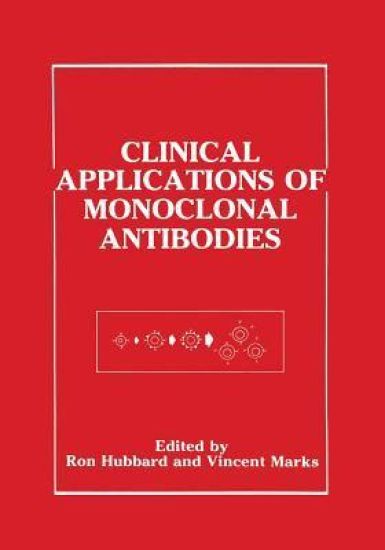
Immunology has come a long way in the hundred or so years since the general concepts were first enuciated by Metchnikoff, Ehrlich, Von Bebring and others, One of the landmarks in this progress was the invention and development of monoclonal antibody secreting hybridomas by Milstein and bis co-workers in Cambridge. Unlike most modern inventions of this importance that of monoclonal antibody production was made available to the scientific community tbroughout the world unimpeded by patent protection. This may explain tbe unusual rapidity witb which it has been applied to the benefit of mankind in general. This book, representing as it does the proceedings of tbe first International Symposium to be held on the clinical appli cations of monoclonal antibodies, shows just how much bas been achieved within the space of little more than a decade. The enormaus promise of monoclonal antibody technology, which became apparent soon after its discovery, has already progressed a long way towards fulfillment. The contributors to tbis volume, all of whom are actively engaged in monoclonal antibody development and application, represent the state of the art. Professor Vincent Marks V INTRODUCTION It has been some twelve years since the pioneering experiments of Köhler and Milstein led to the discovery of monoclonal antibodies. Single molecular species antiborlies with desired specificities could be produced by the fusion of antibody - producing cells with neoplastic cells.
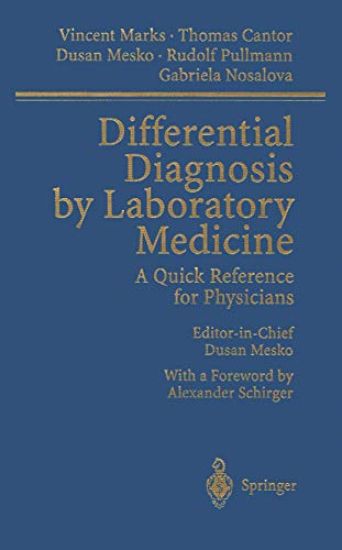
I have been asked to write a foreword to the next edition of the Vademecum of Clinical Bio chemistry renamed to Differential Diagnosis by Laboratory Medicine. The Editor in-Chief, Professor Dusan Mesko, conceived the idea of the Vademecum during a very intensely, in tellectually active period as a visiting Olga Havel Fellow from Slovak Republic at the Mayo Clinic in Rochester. It was here during his study stay that much of the conceptual planning and detailed realization was being completed. It was with much interest that I observed Professor Mesko in his effort, and I know while here he has gained admiration of those who had the privilege of interacting with him. When the first edition of the Vademecum ap peared and we received the copy for the Mayo Library and for myself, I was overcome with a genuine sense of joy. In this era of rapid information and the need to access usable infor mation book such as this cannot be but judged extremely useful. It is my hope that this work, which attests to the thoroughness of Professor Mesko's and his co-workers efforts will prove to be fruitful for the students quick reference, for clinicans and house officers lightening of burdens, particularly of on-call nights, and for the teaching staff as well to quickly access needed information. With these sentiments, we wish the authors and the book well and also hope that the potential widening circle of readers and users will benefit from the work pre sented.
Immunology has come a long way in the hundred or so years since the general concepts were first enuciated by Metchnikoff, Ehrlich, Von Bebring and others, One of the landmarks in this progress was the invention and development of monoclonal antibody secreting hybridomas by Milstein and bis co-workers in Cambridge. Unlike most modern inventions of this importance that of monoclonal antibody production was made available to the scientific community tbroughout the world unimpeded by patent protection. This may explain tbe unusual rapidity witb which it has been applied to the benefit of mankind in general. This book, representing as it does the proceedings of tbe first International Symposium to be held on the clinical appli cations of monoclonal antibodies, shows just how much bas been achieved within the space of little more than a decade. The enormaus promise of monoclonal antibody technology, which became apparent soon after its discovery, has already progressed a long way towards fulfillment. The contributors to tbis volume, all of whom are actively engaged in monoclonal antibody development and application, represent the state of the art. Professor Vincent Marks V INTRODUCTION It has been some twelve years since the pioneering experiments of Köhler and Milstein led to the discovery of monoclonal antibodies. Single molecular species antiborlies with desired specificities could be produced by the fusion of antibody - producing cells with neoplastic cells.