Kirjojen hintavertailu – 12 903 725 kirjaa ja 27 kauppaa

Kirjailija

Vincenzo Loia

Kirjat ja teokset yhdessä paikassa: 5 kirjaa, julkaisuja vuosilta 2022–2024, suosituimpiin kuuluu Contemporary Fuzzy Logic. Vertaile teosten hintoja ja tarkista saatavuus suomalaisista kirjakaupoista.

5 kirjaa

Kirjojen julkaisuvuodet: 2022–2024.

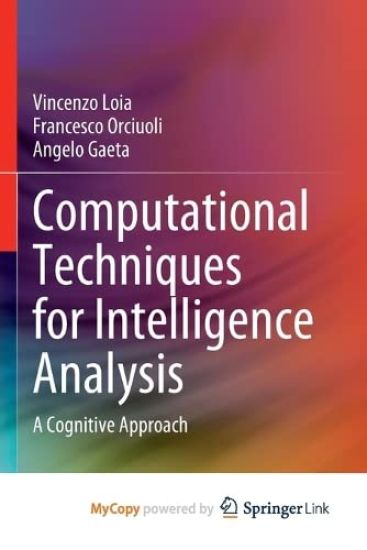
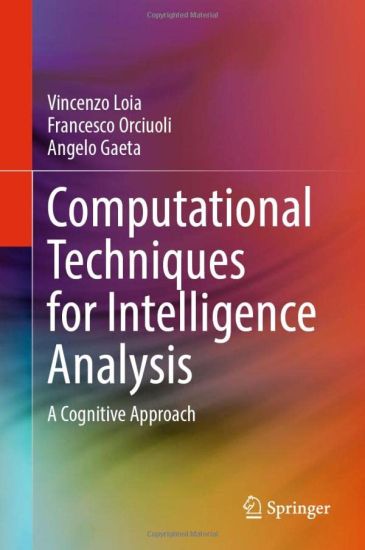
Computational Techniques for Intelligence Analysis

Computational Techniques for Intelligence Analysis

Vincenzo Loia; Francesco Orciuoli; Angelo Gaeta

Springer International Publishing AG
2024
nidottu
This book focuses on the definition and implementation of data-driven computational tools supporting decision-making along heterogeneous intelligence scenarios. Intelligence analysis includes methodologies, activities, and tools aimed at obtaining complex information from a set of isolated data gathered from different sensors. The tools aim at increasing the level of situation awareness of decision-makers through the construction of abstract structures supporting human operators in reasoning and making decisions. This book appeals to students, professionals, and academic researchers in computational intelligence and approximate reasoning applications. It is a comprehensive textbook on the subject, supported with case studies and practical examples in Python. The readers will learn how to define decision support systems for the intelligence analysis through the application of situation awareness and granular computing for information processing.
Contemporary Fuzzy Logic

Contemporary Fuzzy Logic

Stefania Tomasiello; Witold Pedrycz; Vincenzo Loia

Springer Nature Switzerland AG
2023
nidottu
This book offers an essential introduction to fuzzy logic, starting with the classical notions and going through more advanced notions from the current state-of-the-art research. Each of the major topics is accompanied by examples, problems and Scilab codes. As a free open source software, Scilab offers everyone the chance to practice the concepts learned through the book. The book represents a synthesis of authors’ research and experience through the lectures delivered to university students. It is primarily intended as a textbook for upper-level undergraduates and graduates in computer science, mathematics, physics and engineering. It also represents a valuable resource for practitioners and researchers alike, bringing ideas for projects in the broad field of fuzzy logic.
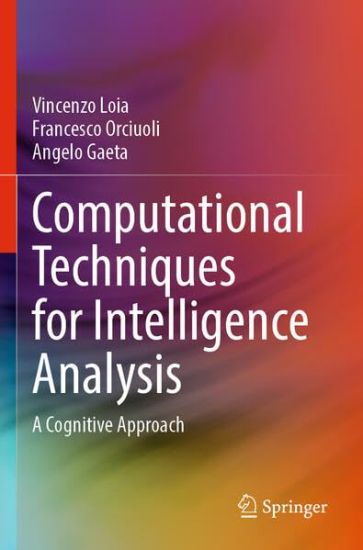
Computational Techniques for Intelligence Analysis

Computational Techniques for Intelligence Analysis

Vincenzo Loia; Francesco Orciuoli; Angelo Gaeta

Springer International Publishing AG
2023
sidottu
This book focuses on the definition and implementation of data-driven computational tools supporting decision-making along heterogeneous intelligence scenarios. Intelligence analysis includes methodologies, activities, and tools aimed at obtaining complex information from a set of isolated data gathered from different sensors. The tools aim at increasing the level of situation awareness of decision-makers through the construction of abstract structures supporting human operators in reasoning and making decisions. This book appeals to students, professionals, and academic researchers in computational intelligence and approximate reasoning applications. It is a comprehensive textbook on the subject, supported with case studies and practical examples in Python. The readers will learn how to define decision support systems for the intelligence analysis through the application of situation awareness and granular computing for information processing.
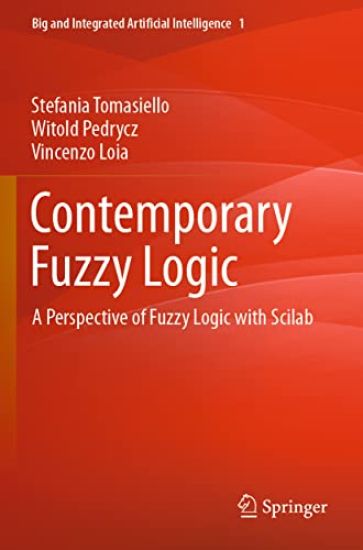
Contemporary Fuzzy Logic

Contemporary Fuzzy Logic

Stefania Tomasiello; Witold Pedrycz; Vincenzo Loia

Springer Nature Switzerland AG
2022
sidottu
This book offers an essential introduction to fuzzy logic, starting with the classical notions and going through more advanced notions from the current state-of-the-art research. Each of the major topics is accompanied by examples, problems and Scilab codes. As a free open source software, Scilab offers everyone the chance to practice the concepts learned through the book. The book represents a synthesis of authors’ research and experience through the lectures delivered to university students. It is primarily intended as a textbook for upper-level undergraduates and graduates in computer science, mathematics, physics and engineering. It also represents a valuable resource for practitioners and researchers alike, bringing ideas for projects in the broad field of fuzzy logic.