Kirjojen hintavertailu – 12 903 725 kirjaa ja 27 kauppaa

Kirjailija

Vincenzo Ruggiero

Kirjat ja teokset yhdessä paikassa: 21 kirjaa, julkaisuja vuosilta 2000–2024, suosituimpiin kuuluu Visions of Political Violence. Vertaile teosten hintoja ja tarkista saatavuus suomalaisista kirjakaupoista.

21 kirjaa

Kirjojen julkaisuvuodet: 2000–2024.

Critical Criminology Today

Critical Criminology Today

Vincenzo Ruggiero

Taylor Francis Ltd
2021
nidottu

Halvin toimitettuna 53,40 €

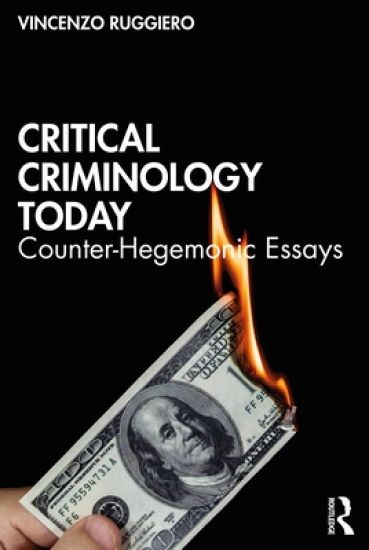
What survives of the notions, principles and values of critical criminology? Faced with contexts that could not be more dramatically different to those fostering critical approaches to crime and its control, what is left of the radical theories and practical initiatives that characterized it in the 1970s? This book argues that critical criminology today can be reimagined if new concepts are elaborated, which bring academic efforts close to the practices of social movements. Building on an original collection of anti-hegemonic essays focused on specific criminological areas, including femicide, organized crime, drug use, punishment, state-corporate terrorism and financial crime, this book identifies the radical potential inherent in the choice of areas, topics and variables that critical criminologists can address today. In discussing concepts of distance, power, mercy and troublemaking, this book considers the relationship between critical criminology, social justice and activism. An accessible and compelling read, this book will appeal to all those engaged with critical criminology, sociology and cultural studies.
Visions of Political Violence

Visions of Political Violence

Vincenzo Ruggiero

Routledge
2019
nidottu
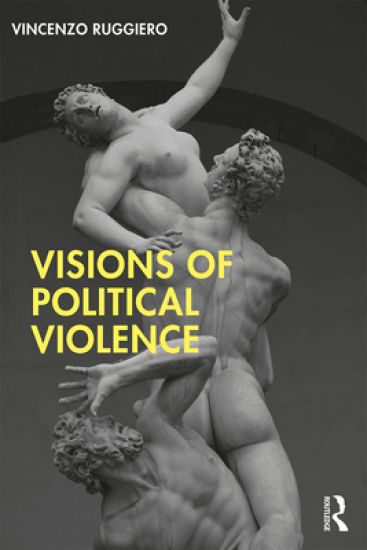
In this book, Vincenzo Ruggiero offers a typology of different forms of political violence. From systemic and institutional violence, to the behaviour of crowds, to armed conflict and terrorism, Ruggiero draws on a range of perspectives from criminology, social theory, political science, critical legal studies and literary criticism to consider how these forms of violence are linked in an interdependent field of forces. Ruggiero argues that systemic violence encourages more institutional violence, which in turn weakens the ability of citizens to set up political agendas for change. He advocates for a reduction of all types of violence, which can be enacted through fairer distribution of resources and the provision of political space for contention and negotiation. This book will be of interest to all those engaged in research on violence, terrorism, armed conflict and the crimes of the powerful. It makes an important contribution to criminological and social theory.
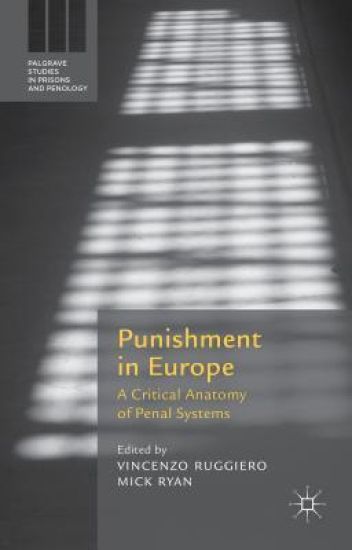
Punishment in Europe

Punishment in Europe

Vincenzo Ruggiero; Mick Ryan

Palgrave Macmillan
2013
nidottu
This collection, from a range of leading international scholars, looks at penal practice in a variety of different European countries. Noting particularities as well as similarities, such as the overuse of imprisonment and the use of harsher sanctions against the poor, this book questions how we justify and deliver punishment in Europe.
Crime and Markets

Crime and Markets

Vincenzo Ruggiero

Oxford University Press
2001
nidottu
This book examines a range of criminal activities conducted in different European contexts. Offences committed by individuals and groups endowed with different resources and status are examined. Each chapter contains an implicit rejection of generalizations and attention is paid to variations and differences. Rather than searching for a unified theory of crime, the author highlights the interpretive oscillations, which always occur when we are faced with criminal behaviour. In other words, each time we subscribe to one cause of crime we may realize that also the opposite cause possesses some reasonable validity. The originality of this book consists of the `causality of contraries' running through the chapters, whereby a tentative aetiology identified in one context finds its complete overturning in anther. The author regards the `causality of contraries' as a crucial aspect of the anti-criminological tradition to which he claims affiliation. These `essays in anti-criminology' deal with crimes of both the powerless and the powerful, and seek to demonstrate that both the deficiency and the abundance of legitimate opportunities may lead to crime. In the first part of the book a conventional criminal activity par excellence is examined, namely activity related to the economy of illicit drugs. In this economy the author notes a shift from a Fordist to a Toyota model of criminal activity, a shift determined by the expansion of demand and the growing variety of supply of illicit drugs. The second part of the book addresses specific cases of elite criminality, including illicit trafficking in arms and human beings. The chapters devoted to the analysis of political and administrative corruption in Italy, France, and Britain provide yet other examples of how illegal practices may be imputed to one cause in one context and its opposite in another. Two Intermezzos complete the book, posing more general questions, respectively, around the very concept of illicit `drugs' and the evasive character of illicit economic behaviour.
Keywords in Criminology

Keywords in Criminology

Vincenzo Ruggiero

TAYLOR FRANCIS LTD
2024
nidottu
Taking inspiration from the classic text by Raymond Williams, Keywords in Criminology reflects on the language used by criminologists and offers a one-stop guide to core concepts in the discipline. Written for the budding Criminology student, it offers a specialized but plain dictionary for a specialized discipline. From Abolitionism to Xenophobia, the entries unveil the ambiguities and conflicting interpretations of the concepts discussed, and explore their historical context, their analytical use, adoption or critical rejection. The original formulation of each concept is examined along with the practices the concept has shaped, and the favourable and unfavourable outcomes it has generated. Keywords in Criminology is a handy and pithy companion for any Criminology student. It offers excellent supplementary reading for core courses on criminological, social and cultural theory.
Keywords in Criminology

Keywords in Criminology

Vincenzo Ruggiero

TAYLOR FRANCIS LTD
2024
sidottu
Taking inspiration from the classic text by Raymond Williams, Keywords in Criminology reflects on the language used by criminologists and offers a one-stop guide to core concepts in the discipline. Written for the budding Criminology student, it offers a specialized but plain dictionary for a specialized discipline. From Abolitionism to Xenophobia, the entries unveil the ambiguities and conflicting interpretations of the concepts discussed, and explore their historical context, their analytical use, adoption or critical rejection. The original formulation of each concept is examined along with the practices the concept has shaped, and the favourable and unfavourable outcomes it has generated. Keywords in Criminology is a handy and pithy companion for any Criminology student. It offers excellent supplementary reading for core courses on criminological, social and cultural theory.
Critical Criminology Today

Critical Criminology Today

Vincenzo Ruggiero

Taylor Francis Ltd
2021
sidottu
What survives of the notions, principles and values of critical criminology? Faced with contexts that could not be more dramatically different to those fostering critical approaches to crime and its control, what is left of the radical theories and practical initiatives that characterized it in the 1970s? This book argues that critical criminology today can be reimagined if new concepts are elaborated, which bring academic efforts close to the practices of social movements. Building on an original collection of anti-hegemonic essays focused on specific criminological areas, including femicide, organized crime, drug use, punishment, state-corporate terrorism and financial crime, this book identifies the radical potential inherent in the choice of areas, topics and variables that critical criminologists can address today. In discussing concepts of distance, power, mercy and troublemaking, this book considers the relationship between critical criminology, social justice and activism. An accessible and compelling read, this book will appeal to all those engaged with critical criminology, sociology and cultural studies.
Visions of Political Violence

Visions of Political Violence

Vincenzo Ruggiero

Routledge
2019
sidottu
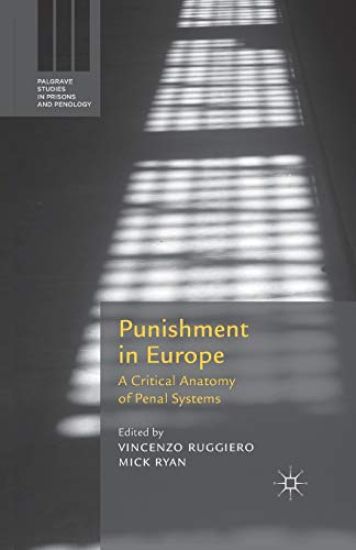
In this book, Vincenzo Ruggiero offers a typology of different forms of political violence. From systemic and institutional violence, to the behaviour of crowds, to armed conflict and terrorism, Ruggiero draws on a range of perspectives from criminology, social theory, political science, critical legal studies and literary criticism to consider how these forms of violence are linked in an interdependent field of forces. Ruggiero argues that systemic violence encourages more institutional violence, which in turn weakens the ability of citizens to set up political agendas for change. He advocates for a reduction of all types of violence, which can be enacted through fairer distribution of resources and the provision of political space for contention and negotiation. This book will be of interest to all those engaged in research on violence, terrorism, armed conflict and the crimes of the powerful. It makes an important contribution to criminological and social theory.
Dirty Money

Dirty Money

Vincenzo Ruggiero

Oxford University Press
2017
sidottu
Navigating financial crashes of the Late Middle Ages up to the present day and analysing them through the lenses of classical, positivist, functionalist and Marxist criminology, Dirty Money: On Financial Delinquency explores the growth of grey areas in the financial world and our understanding, or misunderstanding, of financial delinquency. Pope Francis, while denouncing the incapacity of governments to reduce poverty and fight the exploitation of cheap labour, has also condemned greed, repeating several times the old medieval adage: money is the excrement of the devil. This distinction between clean and excremental, pure and impure, informs the symbolic order of many traditional and contemporary societies; however, it can also be used to single out criminal activity as opposed to law-abiding conduct and, in particular, to separate acceptable from unacceptable practices in the economic domain. With a focus on financial crime, whose ambiguity, ubiquity and evolving nature make the separation between acceptable and unacceptable practices inherently problematic, this book examines the process whereby the excrement of the devil was slowly 'freed' from both its sinful and criminal character. It is a study of how human action turns something seemingly benign into an instrument for the production of harm. Its focus, therefore, is on dirty money - namely the illegitimate appropriation of financial resources by individuals and groups holding expert knowledge and, often, occupying positions of power. The ideological arguments accompanying this evolution are scrutinised, alongside the history of financial initiatives and the accompanying 'crunches'. The struggle juxtaposing criminalization and decriminalization is at the core of all chapters, which analyse a series of major events chronologically, from the exploits of John Law to the deeds of contemporary finance. Analytically located in the area of white-collar crime, Dirty Money examines episodes of financial delinquency and discusses the way in which observers, including criminologists, shape an understanding of their causes and consequences. It will be of interest to scholars and students of criminology, sociology, criminal justice, history, and economics, as well as policy makers, finance professionals, and fraud investigators.
Movements in the City

Movements in the City

Vincenzo Ruggiero

Routledge
2016
sidottu
For 2nd and 3rd year courses in urban sociology, sociology of exclusion, social stratification, planning and cultural studies in departments of sociology and urban geography. This book provides an in depth examination of social movements and urban life in European cities today. Unique in its interdisciplinary approach, it covers traditional areas of urban studies, sociological concerns about the concept of change and the characteristics of social movements. It presents current theory as well as discursive sections based around empirical work conducted in major European cities including London, Paris and Berlin.
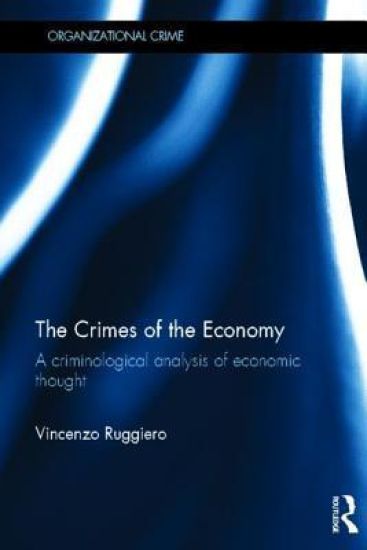
The Crimes of the Economy

The Crimes of the Economy

Vincenzo Ruggiero

Routledge
2015
nidottu
Economists have often paid visits to the field of criminology, examining the rational logic of offending. When economists examine criminal activity, they imply that offenders should be treated like any other social actor making rational choices. In The Crimes of the Economy, Vincenzo Ruggiero turns the tables by examining a variety of economic schools of thought from a criminological perspective. Each one of these schools, he argues, justifies or even encourages harm produced by economic initiative. He investigates – among others – John Locke’s notion of private property, Mercantilism, the Physiocrats and Malthus, and the arguments of Adam Smith, Marshall, Keynes and neoliberalism. In each of these, the author identifies the potential justification of different forms of ‘crimes of the economy’ and victimisation. This book re-examines the history of economic thought, assessing it as the history of a discipline which, while attempting to gain scientific status, in reality seeks to make the social harm caused by economics acceptable. The book will be interesting and relevant to students and scholars of social theory, criminology, economics, philosophy and politics.
Power and Crime

Power and Crime

Vincenzo Ruggiero

Routledge
2015
sidottu
This book provides an analysis of the two concepts of power and crime and posits that criminologists can learn more about these concepts by incorporating ideas from disciplines outside of criminology. Although arguably a 'rendezvous' discipline, Vincenzo Ruggiero argues that criminology can gain much insight from other fields such as the political sciences, ethics, social theory, critical legal studies, economic theory, and classical literature. In this book Ruggiero offers an authoritative synthesis of a range of intellectual conceptions of crime and power, drawing on the works and theories of classical, as well as contemporary thinkers, in the above fields of knowledge, arguing that criminology can ‘humbly’ renounce claims to intellectual independence and adopt notions and perspectives from other disciplines. The theories presented locate the crimes of the powerful in different disciplinary contexts and make the book essential reading for academics and students involved in the study of criminology, sociology, law, politics and philosophy.
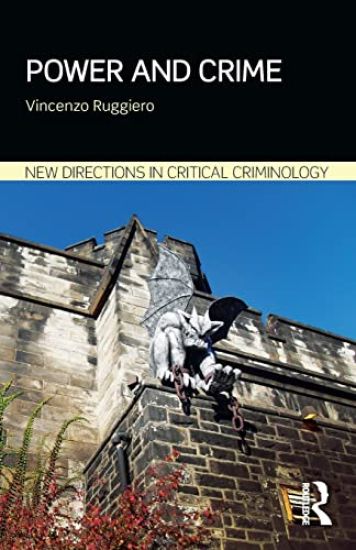
Power and Crime

Power and Crime

Vincenzo Ruggiero

Routledge
2015
nidottu
This book provides an analysis of the two concepts of power and crime and posits that criminologists can learn more about these concepts by incorporating ideas from disciplines outside of criminology. Although arguably a 'rendezvous' discipline, Vincenzo Ruggiero argues that criminology can gain much insight from other fields such as the political sciences, ethics, social theory, critical legal studies, economic theory, and classical literature. In this book Ruggiero offers an authoritative synthesis of a range of intellectual conceptions of crime and power, drawing on the works and theories of classical, as well as contemporary thinkers, in the above fields of knowledge, arguing that criminology can ‘humbly’ renounce claims to intellectual independence and adopt notions and perspectives from other disciplines. The theories presented locate the crimes of the powerful in different disciplinary contexts and make the book essential reading for academics and students involved in the study of criminology, sociology, law, politics and philosophy.
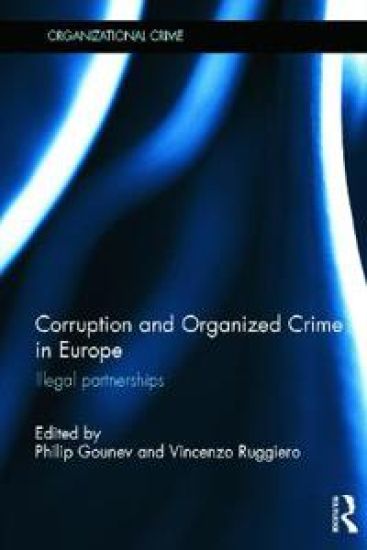
Corruption and Organized Crime in Europe

Corruption and Organized Crime in Europe

Philip Gounev; Vincenzo Ruggiero

Routledge
2014
nidottu
In Corruption and Organised Crime in Europe, Gounev and Ruggiero present a discussion of the relation between organized criminals and corruption in the EU’s 27 Member States. The book draws on research and scholarly work the editors carried out, respectively, within the Center for the Study of Democracy (CSD) in Bulgaria, and within academic institutions, as well as on behalf of the European Commission and the United Nations. Combining empirical data and theoretical debates, the book focuses on three main areas of the relationship between corruption and organised crime: public bodies, the private sector and criminal markets. It presents the findings of a recent research project carried out by the CSD on behalf of the European Commission, providing an analysis of the specific national contexts in which corruption and organized crime thrive. The essays also address institutional responses and policies, focusing particularly on how EU Member States attempt to sever the links between the official economy, the political sphere and organized crime. The second part of the book presents case studies, written by some of the foremost international experts on the subject matter, analysing corrupt exchange and criminal organisations, concentrating on specific European countries – Bulgaria, France, Greece, Italy, Russia, Spain and the UK. As the first comprehensive study of corruption and organised crime in the countries of the European Union, the book will be a valuable resource for students and scholars of criminology, sociology, law and international politics, as well policy makers and law-enforcement agencies.
Punishment in Europe

Punishment in Europe

Vincenzo Ruggiero; Mick Ryan

Palgrave Macmillan
2013
sidottu
This collection, from a range of leading international scholars, looks at penal practice in a variety of different European countries. Noting particularities as well as similarities, such as the overuse of imprisonment and the use of harsher sanctions against the poor, this book questions how we justify and deliver punishment in Europe.
Punishment in Europe

Punishment in Europe

Vincenzo Ruggiero; Mick Ryan

Palgrave Macmillan
2013
nidottu
This collection, from a range of leading international scholars, looks at penal practice in a variety of different European countries. Noting particularities as well as similarities, such as the overuse of imprisonment and the use of harsher sanctions against the poor, this book questions how we justify and deliver punishment in Europe.
The Crimes of the Economy

The Crimes of the Economy

Vincenzo Ruggiero

Routledge
2013
sidottu
Economists have often paid visits to the field of criminology, examining the rational logic of offending. When economists examine criminal activity, they imply that offenders should be treated like any other social actor making rational choices. In The Crimes of the Economy, Vincenzo Ruggiero turns the tables by examining a variety of economic schools of thought from a criminological perspective. Each one of these schools, he argues, justifies or even encourages harm produced by economic initiative. He investigates – among others – John Locke’s notion of private property, Mercantilism, the Physiocrats and Malthus, and the arguments of Adam Smith, Marshall, Keynes and neoliberalism. In each of these, the author identifies the potential justification of different forms of ‘crimes of the economy’ and victimisation. This book re-examines the history of economic thought, assessing it as the history of a discipline which, while attempting to gain scientific status, in reality seeks to make the social harm caused by economics acceptable. The book will be interesting and relevant to students and scholars of social theory, criminology, economics, philosophy and politics.
Corruption and Organized Crime in Europe

Corruption and Organized Crime in Europe

Philip Gounev; Vincenzo Ruggiero

Routledge
2012
sidottu
In Corruption and Organised Crime in Europe, Gounev and Ruggiero present a discussion of the relation between organized criminals and corruption in the EU’s 27 Member States. The book draws on research and scholarly work the editors carried out, respectively, within the Center for the Study of Democracy (CSD) in Bulgaria, and within academic institutions, as well as on behalf of the European Commission and the United Nations. Combining empirical data and theoretical debates, the book focuses on three main areas of the relationship between corruption and organised crime: public bodies, the private sector and criminal markets. It presents the findings of a recent research project carried out by the CSD on behalf of the European Commission, providing an analysis of the specific national contexts in which corruption and organized crime thrive. The essays also address institutional responses and policies, focusing particularly on how EU Member States attempt to sever the links between the official economy, the political sphere and organized crime. The second part of the book presents case studies, written by some of the foremost international experts on the subject matter, analysing corrupt exchange and criminal organisations, concentrating on specific European countries – Bulgaria, France, Greece, Italy, Russia, Spain and the UK. As the first comprehensive study of corruption and organised crime in the countries of the European Union, the book will be a valuable resource for students and scholars of criminology, sociology, law and international politics, as well policy makers and law-enforcement agencies.
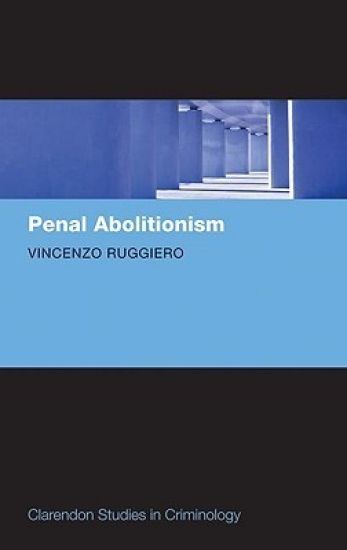
Penal Abolitionism

Penal Abolitionism

Vincenzo Ruggiero

Oxford University Press
2010
sidottu
Abolitionism is not only a strategy or a set of demands, aimed at the reduction (or suppression) of custody, it is also a perspective, a philosophy, an approach which challenges conventional definitions of crime. This book examines the origin, philosophy and achievements of abolitionism and reviews the literature on penal abolitionism from the 1960s to the 1980s. By collecting and discussing the key abolitionist arguments, the author critically analyses the views expressed by its leading proponents; Nils Christie, Louk Hulsman, Thomas Mathiesen and Herman Bianchi, examining in particular how their views took shape, their philosophical foundations, and the social and political context of abolitionist ideas and perspectives. Policies, such as the virtual abolition of custody for young offenders in Italy, are presented and the area of informal justice is also addressed, with an overview of mediation and compensation practices, and an assessment of the degree of their effectiveness and desirability. Through assessment of these achievements and experiments of specific abolitionist ideas, the author attempts to identify the legacy of abolitionism from a European perspective, whilst bringing into focus more recent contributions concerning the study of terrorism and war.
Crime in Literature

Crime in Literature

Vincenzo Ruggiero

Verso Books
2003
nidottu
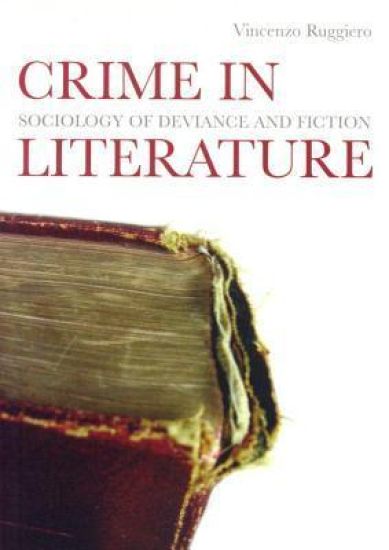
Crime in Literature addresses the issues of crime and crime control through the reading of several classical literary works. It is not a work of literary criticism, but a book written by a sociologist who reads fiction sociologically. Vincenzo Ruggiero's wide-ranging study takes in several authors, including Hugo, Dostoevsky, Camus, Cervantes, Mann and Zola, and addresses themes such as organized crime, the links between crime and drugs, political and administrative corruption, concepts of deviancy, and the criminal justice process. Ruggiero recounts Alessandro Manzoni's La colonna infame, drawing provocative parallels between the way the authorities in Milan dealt with the devastating plague of 1630 and the ways in which contemporary law incessantly seeks new "plague spreaders" in order to legitimize its own operations. Accessible to the general reader, Crime in Literature offers an original and thought-provoking survey that will be of interest to sociologists and criminologists as well as cultural and literary theorists.