Kirjojen hintavertailu – 12 859 828 kirjaa ja 27 kauppaa

Kirjailija

Vipul Kashyap

Kirjat ja teokset yhdessä paikassa: 4 kirjaa, julkaisuja vuosilta 2000–2010, suosituimpiin kuuluu The Semantic Web. Vertaile teosten hintoja ja tarkista saatavuus suomalaisista kirjakaupoista.

4 kirjaa

Kirjojen julkaisuvuodet: 2000–2010.

Information Brokering Across Heterogeneous Digital Data

Information Brokering Across Heterogeneous Digital Data

Vipul Kashyap; Amit P. Sheth

Springer-Verlag New York Inc.
2010
nidottu
Information intermediation is the foundation stone of some of the most successful Internet companies, and is perhaps second only to the Internet Infrastructure companies. On the heels of information integration and interoperability, this book on information brokering discusses the next step in information interoperability and integration. The emerging Internet economy based on burgeoning B2B and B2C trading will soon demand semantics-based information intermediation for its feasibility and success. B2B ventures are involved in the `rationalization' of new vertical markets and construction of domain specific product catalogs. This book provides approaches for re-use of existing vocabularies and domain ontologies as a basis for this rationalization and provides a framework based on inter-ontology interoperation. Infrastructural trade-offs that identify optimizations in performance and scalability of web sites will soon give way to information based trade-offs as alternate rationalization schemes come into play and the necessity of interoperating across these schemes is realized. Information Brokering Across Heterogeneous Digital Data's intended readers are researchers, software architects and CTOs, advanced product developers dealing with information intermediation issues in the context of e-commerce (B2B and B2C), information technology professionals in various vertical markets (e.g., geo-spatial information, medicine, auto), and all librarians interested in information brokering.
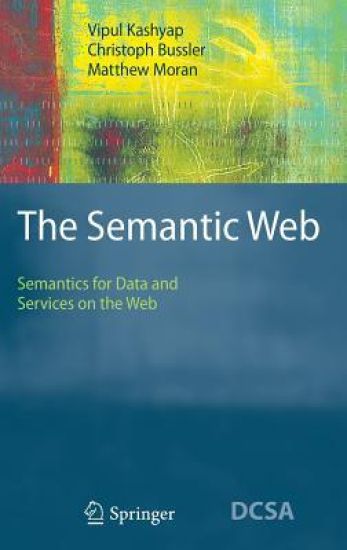
The Semantic Web

The Semantic Web

Vipul Kashyap; Christoph Bussler; Matthew Moran

Springer-Verlag Berlin and Heidelberg GmbH Co. K
2010
nidottu
A decade ago Tim Berners-Lee proposed an extraordinary vision: despite the p- nomenal success of the Web, it would not, and could not, reach its full potential unless it became a place where automated processes could participate as well as people. This meant the publication of documents and data to the web in such a way that they could be interpreted, integrated, aggregated and queried to reveal new connections and answer questions, rather than just browsed and searched. Many scoffed at this idea, interpreting the early emphasis on language design and reas- ing as AI in new clothes. This missed the point. The Grand Challenge of the Semantic Web is one that needs not only the information structure of ontologies, metadata, and data, but also the computational infrastructure of Web Services, P2P and Grid distributed computing and workflows. Consequently, it is a truly who- system and multi-disciplinary effort. This is also an initiative that has to be put into practice. That means a pragmatic approach to standards, tools, mechanisms and methodologies, and real, challenging examples. It would seem self-evident that the Semantic Web should be able to make a major contribution to clinical information discovery. Scientific commu- ties are ideal incubators: knowledge-driven, fragmented, diverse, a range of str- tured and unstructured resources with many disconnected suppliers and consumers of knowledge. Moreover, the clinicians and biosciences have embraced the notions of annotation and classification using ontologies for centuries, and have dema- ing requirements for trust, security, fidelity and expressivity.
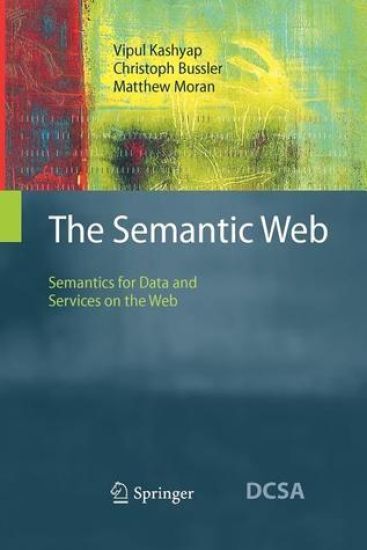
The Semantic Web

The Semantic Web

Vipul Kashyap; Christoph Bussler; Matthew Moran

Springer-Verlag Berlin and Heidelberg GmbH Co. K
2008
sidottu
A decade ago Tim Berners-Lee proposed an extraordinary vision: despite the p- nomenal success of the Web, it would not, and could not, reach its full potential unless it became a place where automated processes could participate as well as people. This meant the publication of documents and data to the web in such a way that they could be interpreted, integrated, aggregated and queried to reveal new connections and answer questions, rather than just browsed and searched. Many scoffed at this idea, interpreting the early emphasis on language design and reas- ing as AI in new clothes. This missed the point. The Grand Challenge of the Semantic Web is one that needs not only the information structure of ontologies, metadata, and data, but also the computational infrastructure of Web Services, P2P and Grid distributed computing and workflows. Consequently, it is a truly who- system and multi-disciplinary effort. This is also an initiative that has to be put into practice. That means a pragmatic approach to standards, tools, mechanisms and methodologies, and real, challenging examples. It would seem self-evident that the Semantic Web should be able to make a major contribution to clinical information discovery. Scientific commu- ties are ideal incubators: knowledge-driven, fragmented, diverse, a range of str- tured and unstructured resources with many disconnected suppliers and consumers of knowledge. Moreover, the clinicians and biosciences have embraced the notions of annotation and classification using ontologies for centuries, and have dema- ing requirements for trust, security, fidelity and expressivity.
Information Brokering Across Heterogeneous Digital Data

Information Brokering Across Heterogeneous Digital Data

Vipul Kashyap; Amit P. Sheth

Springer
2000
sidottu
Information intermediation is the foundation stone of some of the most successful Internet companies, and is perhaps second only to the Internet Infrastructure companies. On the heels of information integration and interoperability, this book on information brokering discusses the next step in information interoperability and integration. The emerging Internet economy based on burgeoning B2B and B2C trading will soon demand semantics-based information intermediation for its feasibility and success. B2B ventures are involved in the `rationalization' of new vertical markets and construction of domain specific product catalogs. This book provides approaches for re-use of existing vocabularies and domain ontologies as a basis for this rationalization and provides a framework based on inter-ontology interoperation. Infrastructural trade-offs that identify optimizations in performance and scalability of web sites will soon give way to information based trade-offs as alternate rationalization schemes come into play and the necessity of interoperating across these schemes is realized. Information Brokering Across Heterogeneous Digital Data's intended readers are researchers, software architects and CTOs, advanced product developers dealing with information intermediation issues in the context of e-commerce (B2B and B2C), information technology professionals in various vertical markets (e.g., geo-spatial information, medicine, auto), and all librarians interested in information brokering.