

Kirjailija
Virgil
Kirjat ja teokset yhdessä paikassa: 318 kirjaa, julkaisuja vuosilta 1823–2026, suosituimpiin kuuluu Virgil's Eclogues. Vertaile teosten hintoja ja tarkista saatavuus suomalaisista kirjakaupoista.
318 kirjaa
Kirjojen julkaisuvuodet: 1823–2026.


David Hadbawnik's astonishing modern translation of the Aeneid first appeared from Shearsman Books in two volumes, in 2015 and 2021, in both cases with extensive illustrations. We now offer an un-illustrated, single-volume edition of the whole epic, in a more affordable format. "David Hadbawnik has made Virgil our guest in ways that other translators of the Aeneid have not. He has recast the poem in contemporary verse, in poetic forms that are innovative and visually compelling. Moreover, he has used form to offer insight into the action of the epic and into the minds of its actors. Through Hadbawnik, Virgil speaks in our modern American idiom." -John Tipton, Chicago Review "... Hadbawnik's ironic wit brings Virgil's text to life for a contemporary readership even more impatient than its historic counterpart with the potential longueurs of traditional epic. [... his] version is fresh, irreverent, and radical. [...] In sum, this is a startling and stimulating version of Virgil's great epic for a twenty-first century readership which will engage student attention and has some interest for Translation Studies. Its lively irreverence reflects the way in which classical reception now (at last) feels able to tackle one of the central texts of Latin and European literature with up-to-date brio and gusto. Its in-your-face tactics will surely bring new readers and enthusiasts to the Aeneid, and has something to say to old ones too." -Stephen Harrison,Translation and Literature "...the pleasure Hadbawnik derives from Virgil's Latin provides a lesson in how readers might attend ancient storytelling from our perspective today. Translation for Hadbawnik is a site of poetic play and textual investigation, and such an approach enlivens our ability to listen across time and culture as a way to better inform our own." -DaleMartin Smith "Few narrative poems have possessed the Western imagination like Virgil's twelve-book epic written during Augustus's triumphant consolidation of the Roman Empire. [...] This volume goes a long way toward moving the narrative into the hands of contemporary readers, drawing out a playful understanding of the ancient story while exhibiting modern preferences for poetic interaction and inquiry into the history and terms of poetic form and translation. Hadbawnik shows the fun to be had in language's etymological resonance, and he delights in scenes of dramatic fulfillment and failure. His translation distills the essence of the narrative by directing a reader's perception of the tale." -from Dale Martin Smith's Introduction, 'The Warrior Agon'.

The Aeneid
Virgil; Richard F. Thomas
University of Chicago Press
2022
nidottu
Halvin toimitettuna 23,50 €
This volume represents the most ambitious project of distinguished poet David Ferry’s life: a complete translation of Virgil’s Aeneid. Ferry has long been known as the foremost contemporary translator of Latin poetry, and his translations of Virgil’s Eclogues and Georgics have become standards. He brings to the Aeneid the same genius, rendering Virgil’s formal, metrical lines into an English that is familiar, all while surrendering none of the poem’s original feel of the ancient world. In Ferry’s hands, the Aeneid becomes once more a lively, dramatic poem of daring and adventure, of love and loss, devotion and death. The paperback and e-book editions include a new introduction by Richard F. Thomas, along with a new glossary of names that makes the book even more accessible for students and for general readers coming to the Aeneid for the first time who may need help acclimating to Virgil’s world.

A fresh and faithful translation of Vergil's Aeneid restores the epic's spare language and fast pace and sheds new light on one of the cornerstone narratives of Western culture. "Vivid and haunting . . . a model of how to render Latin poetry in English."--Tom Holland, New StatesmanFor two thousand years, the epic tale of Aeneas's dramatic flight from Troy, his doomed love affair with Dido, his descent into the underworld, and the bloody story behind the establishment of Rome has electrified audiences around the world. In Vergil's telling, Aeneas's heroic journey not only gave Romans and Italians a thrilling origin story, it established many of the fundamental themes of Western life and literature--the role of duty and self-sacrifice, the place of love and passion in human life, the relationship between art and violence, the tension between immigrant and indigenous people, and the way new foundations are so often built upon the wreckage of those who came before. Throughout the course of Western history, the Aeneid has affirmed our best and worst intentions and forced us to confront our deepest contradictions. Shadi Bartsch, Guggenheim Laureate, award-winning translator, and chaired professor at the University of Chicago, confronts the contradictions inherent in the text itself, illuminating the epic's subversive approach to storytelling. Even as Vergil writes the foundation myth for Rome, he seems to comment on this tendency to mythologize our heroes and societies, and to gesture to the stories that get lost in the mythmaking. Bartsch's groundbreaking translation, brilliantly maintaining the brisk pace of Vergil's Latin even as it offers readers a metrical line-by-line translation, provides a literary and historical context to make the Aeneid resonant for a new generation of readers.
David Hadbawnik's astonishing modern translation of the Aeneid has been appearing in excerpts in a number of US publications, but this was the first time that the first half of the sequence hadbeen brought together. This handsome volume presents Hadbawnik's version of the first half of Virgil's great national epic of ancient Rome, with atmospheric illustrations from Carrie Kaser. This hardcover edition is released in 2021, shortly before publication of Volume 2, covering the remaining six books of the epic. These translations are not only full of light, but also speed ... Hadbawnik's Aeneid is not the creative destruction of erasure, but rather the well-crafted impoverishment of something potentially too rich to take in. -Joe Milutis, Jacket2 David Hadbawnik's free translation of the text steers away from the affectations of seamlessness that direct translations attempt, [and] instead shows the self-awareness of the translation as an effort at subsuming and translator's role as appropriator. Hadbawnik uses this awareness to work against a translation of replacement by exposing the tension between the language and the text. -Jonathan Lohr, Actuary Lit Juxtaposed with the gore and horror are Carrie Kaser's amazing illustrations, which evoke both the soft touch of watercolor and the grittiness of smudged charcoal. Deer and sheep graze. Swans, like the ones Venus describes "flock[ing] and sing[ing] in the sky," soar, and some "in a long line look down / at the others," echoing the image of the wandering men of Troy. -Lisa Ampleman, Diagram

The Aeneid of Virgil (19 BC) is an epic poem by Roman poet Virgil. Virgil’s legendary epic is the story of the hero Aeneas, a castaway from Troy whose adventures across the Mediterranean led him to Italy, where he discovered what would later become the city of Rome. Presented here in an accessible prose translation, The Aeneid of Virgil is a treasure of classical literature and a story of romance, war, and adventure to rival the best of Homer. Fleeing the destruction of Troy by Greek forces, Aeneas brings his son Ascanius and father Anchises on a voyage across the sea. Landing in Carthage, Aeneas, his family, and his crew are rescued by Dido, Queen of Tyre. There, Aeneas, despite mourning the loss of his beloved wife Creusa, falls in love with Dido, who offers him refuge and her devoted love. Knowing that he is destined to found a city in Italy, however, Aeneas abandons the queen, leading her to commit suicide. Now determined to fulfill his destiny at any cost, Aeneas sails to Sicily, journeys to the underworld, and eventually arrives in the region of Latium, where he is swept up in conflict with Turnus, the Rutulian king. Flawed and feared, Aeneas exemplifies the imperfect hero compelled by fate and the gods, yet ultimately driven through a will to survive and provide for his fledgling people. Faithfully but concisely translated into accessible English prose, The Aeneid of Virgil is best read aloud with friends and family, and iconic masterpiece of ancient Rome still relevant for our modern world. With a beautifully designed cover and professionally typeset manuscript, this edition of The Aeneid of Virgil is a classic work of Roman literature reimagined for modern readers.

“In the whole of European literature there is no poet who can furnish the texts for a more significant variety of discourse than Virgil. [He] symbolizes so much in the history of Europe, and represents such central European values…” –T. S. Eliot The Aeneid (19 BC) is an epic poem by Roman poet Virgil. Translated by English poet laureate John Dryden in 1697, Virgil’s legendary epic is the story of the hero Aeneas, a castaway from Troy whose adventures across the Mediterranean led him to Italy, where he discovered what would later become the city of Rome. Presented here in faithful translation, though rearranged to accommodate Dryden’s rhyming couplets, The Aeneid is a treasure of classical literature and a story of romance, war, and adventure to rival the best of Homer. “Arms, and the man I sing, who, forc’d by fate, / And haughty Juno’s unrelenting hate, / Expell’d and exil’d, left the Trojan shore.” Fleeing the destruction of Troy by Greek forces, Aeneas brings his son Ascanius and father Anchises on a voyage across the sea. Landing in Carthage, Aeneas, his family, and his crew are rescued by Dido, Queen of Tyre. There, Aeneas, despite mourning the loss of his beloved wife Creusa, falls in love with Dido, who offers him refuge and her devoted love. Knowing that he is destined to found a city in Italy, however, Aeneas abandons the queen, leading her to commit suicide. Now determined to fulfill his destiny at any cost, Aeneas sails to Sicily, journeys to the underworld, and eventually arrives in the region of Latium, where he is swept up in conflict with Turnus, the Rutulian king. Flawed and feared, Aeneas exemplifies the imperfect hero compelled by fate and the gods, yet ultimately driven through a will to survive and provide for his fledgling people. With a beautifully designed cover and professionally typeset manuscript, this edition of Virgil’s The Aeneid is a classic work of Roman literature reimagined for modern readers.

“In the whole of European literature there is no poet who can furnish the texts for a more significant variety of discourse than Virgil. [He] symbolizes so much in the history of Europe, and represents such central European values…” –T. S. EliotThe Eclogues (38 BC), also known as the Bucolics, is a work by Roman poet Virgil. Although less prominent than The Aeneid, Virgil’s legendary epic of the Trojan hero Aeneas and his discovery of what would later become the city of Rome, The Eclogues have endured as a landmark in the history of pastoral poetry. The Eclogues were inspired by the bucolic idylls of Hellenistic poet Theocritus, poems set in the rural region of Arcadia in Ancient Greece. In contrast to Theocritus, whose poems idealized agricultural life for a cosmopolitan audience based in Alexandria, Virgil’s work is grounded in the complex sociopolitical realities of its day, a time of civil war following the assassination of Julius Caesar.“Some brutal soldier will possess these fields / An alien master. Ah! To what a pass / Has civil discord brought our hapless folk!” Displaced from his land, Meliboeus laments his fate to the farmer Tityrus, who has been fortunate enough to retain his ancestral home. Set amidst civil war, poverty, and cultural upheaval, the Eclogues vary in tone and scope from the tragic dialogue just described to a lonely shepherd crying for lost love and a singing competition held between two gifted men. In emphasizing the connection between poetry, singing, and labor, Virgil recalls the roots of written language in an older, oral tradition, restoring what has been lost—peace, land, possessions, love—in what can never be taken away. “Love conquers all things; yield we too to love!” In a time of widespread uncertainty, Virgil found solace in surrendering to the unknown while remaining certain of one eternal truth: as long as love survives, there will be songs. With a beautifully designed cover and professionally typeset manuscript, this edition of Virgil’s The Eclogues is a classic work of Roman literature reimagined for modern readers.

“In the whole of European literature there is no poet who can furnish the texts for a more significant variety of discourse than Virgil. [He] symbolizes so much in the history of Europe, and represents such central European values…” –T. S. EliotThe Georgics (29 BC) is a poem by Roman poet Virgil. Although less prominent than The Aeneid, Virgil’s legendary epic of the Trojan hero Aeneas and his discovery of what would later become the city of Rome, The Georgics have endured as a landmark in the history of poetry. The Georgics were inspired by Lucretius’s De Rerum Natura and Hesiod’s Works and Days, an Ancient Greek poem describing the creation of the cosmos, the history of Earth, and the role of agriculture in human life. The Georgics is considered Virgil’s second major work of three and has inspired generations of poets and scholars interested in the ability of literature to bridge the artificial gap between humanity and the natural world.“What makes the cornfield smile […] What pains for cattle-keeping, or what proof / Of patient trial serves for thrifty bees; / Such are my themes.” Beginning with these lines, Virgil’s Georgics is a poem about the life of the world and the need for order to ensure humanity’s survival. Surveying such diverse topics as the creation of the universe, the cycles of human history, and the technical processes applied to soil and animals to produce food and sustain life itself, this poem attempts to rekindle in its reader a sense of unity with the world. Written in a time of immense political upheaval following the death of Julius Caesar and the rise of Emperor Augustus, The Georgics is as much a poem of survival as of faith, a falling back on the old ways that sustain and nurture life, a way of preserving a volatile present for a future forever in the making. With a beautifully designed cover and professionally typeset manuscript, this edition of Virgil’s The Georgics is a classic work of Roman literature reimagined for modern readers.

A fresh and faithful translation of Vergil's Aeneid restores the epic's spare language and fast pace and sheds new light on one of the cornerstone narratives of Western culture. "Vivid and haunting . . . a model of how to render Latin poetry in English."--Tom Holland, New StatesmanFor two thousand years, the epic tale of Aeneas's dramatic flight from Troy, his doomed love affair with Dido, his descent into the underworld, and the bloody story behind the establishment of Rome has electrified audiences around the world. In Vergil's telling, Aeneas's heroic journey not only gave Romans and Italians a thrilling origin story, it established many of the fundamental themes of Western life and literature--the role of duty and self-sacrifice, the place of love and passion in human life, the relationship between art and violence, the tension between immigrant and indigenous people, and the way new foundations are so often built upon the wreckage of those who came before. Throughout the course of Western history, the Aeneid has affirmed our best and worst intentions and forced us to confront our deepest contradictions. Shadi Bartsch, Guggenheim Laureate, award-winning translator, and chaired professor at the University of Chicago, confronts the contradictions inherent in the text itself, illuminating the epic's subversive approach to storytelling. Even as Vergil writes the foundation myth for Rome, he seems to comment on this tendency to mythologize our heroes and societies, and to gesture to the stories that get lost in the mythmaking. Bartsch's groundbreaking translation, brilliantly maintaining the brisk pace of Vergil's Latin even as it offers readers a metrical line-by-line translation, provides a literary and historical context to make the Aeneid resonant for a new generation of readers.

This book has been considered by academicians and scholars of great significance and value to literature. This forms a part of the knowledge base for future generations. So that the book is never forgotten we have represented this book in a print format as the same form as it was originally first published. Hence any marks or annotations seen are left intentionally to preserve its true nature.
Virgil's masterpiece and one of the greatest works in all of literature, now in a beautiful clothbound edition designed by Coralie Bickford-SmithVirgil's Aeneid, inspired by Homer and the inspiration for Dante and Milton, is an immortal poem that sits at the heart of Western life and culture. Virgil took as his hero Aeneas, legendary survivor of the fall of Troy and father of the Roman race. In telling a story of dispossession and defeat, love and war, he portrayed human life in all its nobility and suffering, in its physicality and its mystery.


The Gift To Be Simple: An Answer to a Students Question
Virgil
Falcon Books Publishing Ltd
2020
nidottu
Take a moment to close your eyes and imagine an old man sitting in a rocking chair deep in thought. See the dull grey hair on his balding head, the creases on his brow, and the stains on his worn-out shirt. This man is a student of Franz Bardon's system of magical training, and has been since the day he first came across IIH in his early twenties. As he rocks back and forth, he desperately tries to figure out why he is still stuck on Step 1. Throughout his lifetime, he read many articles about the exercises of IIH, frequently corresponded with renowned Bardon-trained magicians like William Mistele and Rawn Clark, and even supplemented his training with additional exercises from Dzogchen, Huna, and Western esotericism. Yet, despite these efforts, he never did move on to Step 2. With the information contained in this book, you can avoid the fate of the old man you have just pictured. This book will teach you many things that will help you make real progress in your training, including: Why you should throw out all your books on Qabalah Why you should learn how to practice nishkama karma instead of Golden Dawn rituals like the LBRP Why you should not draw magical symbols on the cover of your magical journal Why a rudimentary understanding of economics can help you decide what magical exercises to practice Why a cryptic statement by a Zen master can help you avoid buying Bardon-related books Why you should not ask the author of this book questions about the spirits of PME Why the way you urinate affects the speed of your magical advancement Why writing a particular number on a piece of paper and taping it over your desk can help you train better In 56 simple and to the point chapters, Virgil covers the common mistakes that keep students stuck on Step 1 their entire lives and discusses the one key principle that underlies all effective approaches to Bardon system training. Note: This book was written specifically for students of Franz Bardon's system of magical training. While students of other systems are welcome to read it, they may need to adapt the teachings contained herein to fit the systems they study.
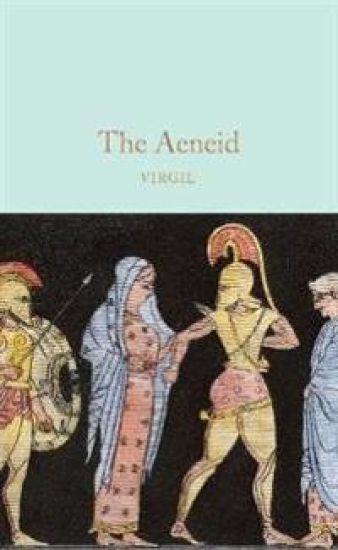
An epic tale of war, love, and the founding of Rome – Virgil's masterpiece continues to captivate readers centuries after its creation. The Aeneid, thrilling, terrifying and poignant in equal measure, has inspired centuries of artists, writers and musicians. Part of the Macmillan Collector's Library, a series of stunning, clothbound, pocket-sized classics with gold foiled edges and ribbon markers. These beautiful books make perfect gifts or a treat for any book lover. This edition is translated by J. W. Mackail and has an afterword by Coco Stevenson. Virgil's epic tale tells the story of Aeneas, a Trojan hero, who flees his city after its fall, with his father Anchises and his young son Ascanius – for Aeneas is destined to found Rome and father the Roman race. As Aeneas journeys closer to his goal, he must first prove his worth and attain the maturity necessary for such an illustrious task. He battles raging storms in the Mediterranean, encounters the fearsome Cyclopes, falls in love with Dido, Queen of Carthage, travels into the Underworld and wages war in Italy.
Bucolica, Georgica, Aencis the works of Virgil, with a commentary and appendices, for the use of schools and colleges
Virgil; Benjamin Hall Kennedy
Alpha Edition
2019
pokkari
Halvin toimitettuna 40,60 €
This book has been considered by academicians and scholars of great significance and value to literature. This forms a part of the knowledge base for future generations. So that the book is never forgotten we have represented this book in a print format as the same form as it was originally first published. Hence any marks or annotations seen are left intentionally to preserve its true nature.
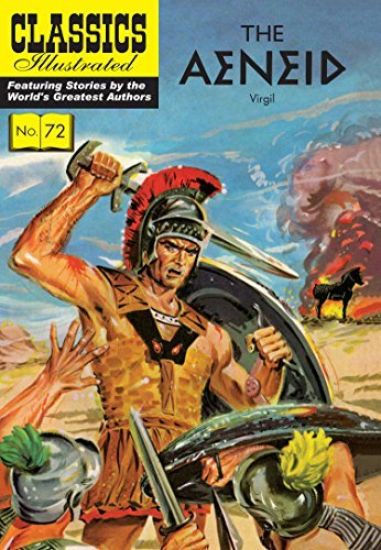
"The Aeneid" tells of the adventures of the Trojan hero, Aeneas, the ancestor of the Romans. Classics Illustrated tells this wonderful tale in colourful comic strip form, offering an excellent introduction for younger readers. This edition also includes theme discussions and study questions, which can be used both in the classroom and at home to further engage the reader in the story.