
Kirjojen hintavertailu – 12 859 818 kirjaa ja 27 kauppaa

Kirjailija

Virupax C. Baligar

Kirjat ja teokset yhdessä paikassa: 3 kirjaa, julkaisuja vuosilta 2010–2021, suosituimpiin kuuluu Phosphorus Management in Crop Production. Vertaile teosten hintoja ja tarkista saatavuus suomalaisista kirjakaupoista.

3 kirjaa

Kirjojen julkaisuvuodet: 2010–2021.

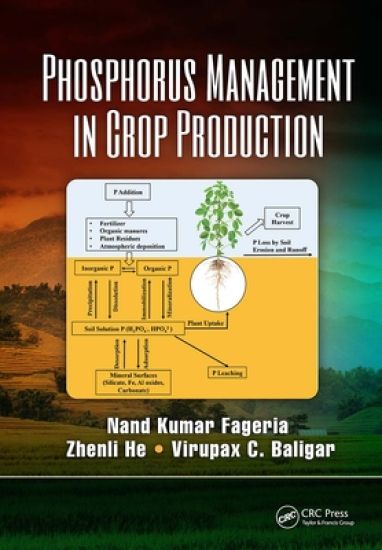
Phosphorus Management in Crop Production

Phosphorus Management in Crop Production

Nand Kumar Fageria; Zhenli He; Virupax C. Baligar

Taylor Francis Ltd
2021
nidottu
The world population is projected to reach nine billion by 2050, and in the coming years, global food demand is expected to increase by 50% or more. Higher crop productivity gains in the future will have to be achieved in developing countries through better natural resources management and crop improvement. After nitrogen, phosphorus (P) has more widespread influence on both natural and agricultural ecosystems than any other essential plant element. It has been estimated that 5.7 billion hectares of land worldwide contain insufficient amounts of available P for sustainable crop production, and P deficiency in crop plants is a widespread problem in various parts of the world. However, it has been estimated that worldwide minable P could last less than 40 years. For sustaining future food supplies, it is vital to enhance plant P use efficiency. To bring the latest knowledge and research advances in efficient management of P for economically viable and environmentally beneficial crop production in sustainable agriculture, Phosphorus Management in Crop Production contains chapters covering functions and diagnostic techniques for P requirements in crop plants, P use efficiency and interactions with other nutrients in crop plants, management of P for optimal crop production and environmental quality, and basic principles and methodology regarding P nutrition in crop plants. The majority of research data included are derived from many years of field, greenhouse, and lab work, hence the information is practical in nature and will have a significant impact on efficient management of P-fertilizers to enhance P use efficiency, improve crop production, promote sustainable agriculture, and reduce P losses through eluviations, leaching, and erosion to minimize environmental degradation. A comprehensive book that combines practical and applied information, Phosphorus Management in Crop Production is an excellent reference for students, professors, agricultural research scientists, food scientists, agricultural extension specialists, private consultants, fertilizer companies, and government agencies that deal with agricultural and environmental issues.
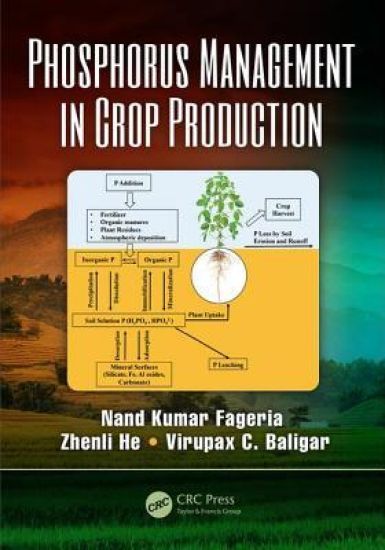
Phosphorus Management in Crop Production

Phosphorus Management in Crop Production

Nand Kumar Fageria; Zhenli He; Virupax C. Baligar

Productivity Press
2017
sidottu
The world population is projected to reach nine billion by 2050, and in the coming years, global food demand is expected to increase by 50% or more. Higher crop productivity gains in the future will have to be achieved in developing countries through better natural resources management and crop improvement. After nitrogen, phosphorus (P) has more widespread influence on both natural and agricultural ecosystems than any other essential plant element. It has been estimated that 5.7 billion hectares of land worldwide contain insufficient amounts of available P for sustainable crop production, and P deficiency in crop plants is a widespread problem in various parts of the world. However, it has been estimated that worldwide minable P could last less than 40 years. For sustaining future food supplies, it is vital to enhance plant P use efficiency. To bring the latest knowledge and research advances in efficient management of P for economically viable and environmentally beneficial crop production in sustainable agriculture, Phosphorus Management in Crop Production contains chapters covering functions and diagnostic techniques for P requirements in crop plants, P use efficiency and interactions with other nutrients in crop plants, management of P for optimal crop production and environmental quality, and basic principles and methodology regarding P nutrition in crop plants. The majority of research data included are derived from many years of field, greenhouse, and lab work, hence the information is practical in nature and will have a significant impact on efficient management of P-fertilizers to enhance P use efficiency, improve crop production, promote sustainable agriculture, and reduce P losses through eluviations, leaching, and erosion to minimize environmental degradation. A comprehensive book that combines practical and applied information, Phosphorus Management in Crop Production is an excellent reference for students, professors, agricultural research scientists, food scientists, agricultural extension specialists, private consultants, fertilizer companies, and government agencies that deal with agricultural and environmental issues.
Growth and Mineral Nutrition of Field Crops

Growth and Mineral Nutrition of Field Crops

Nand Kumar Fageria; Virupax C. Baligar; Charles Allan Jones

CRC Press Inc
2010
sidottu
By the year 2050, the world’s population is expected to reach nine billion. To feed and sustain this projected population, world food production must increase by at least 50 percent on much of the same land that we farm today. To meet this staggering challenge, scientists must develop the technology required to achieve an "evergreen" revolution—one that increases crop productivity without degrading natural resources. With 30 percent new material, the updated and revised third edition of Growth and Mineral Nutrition of Field Crops covers all aspects of crop growth and mineral nutrition that contribute to sustainable, high-yield agriculture. Bringing together international scientific knowledge of crop production and the impacts of agriculture on the environment, this book: Includes two new chapters on remediation of heavy-metal contaminated soils and cover cropsCovers theoretical and practical aspects of mineral nutrition of field cropsProvides recommendations for judicious use of fertilizers, which will reduce cost of crop production and enhance high crop yields without risking environmental pollutionProvides growth patterns for annual crops and foragesIncludes a handful of color pictures of nutrient deficiencies for easy diagnostic purposesTo make the book as practical as possible, each chapter is supported by experimental results and extensive references. A large number of figures and tables are also included to save readers time when researching. The overall emphasis of this reference is on the soil’s ability to sustain high crop yields and a healthy human population.