Kirjojen hintavertailu – 12 859 829 kirjaa ja 27 kauppaa

Kirjailija

Vishwas Kharsan

Kirjat ja teokset yhdessä paikassa: 3 kirjaa, julkaisuja vuosilta 2019–2020, suosituimpiin kuuluu Implant Biomaterials. Vertaile teosten hintoja ja tarkista saatavuus suomalaisista kirjakaupoista.

3 kirjaa

Kirjojen julkaisuvuodet: 2019–2020.

Textbook of Materials in Maxillofacial Prosthodontics

Textbook of Materials in Maxillofacial Prosthodontics

Vishwas Kharsan

LAP Lambert Academic Publishing
2020
pokkari
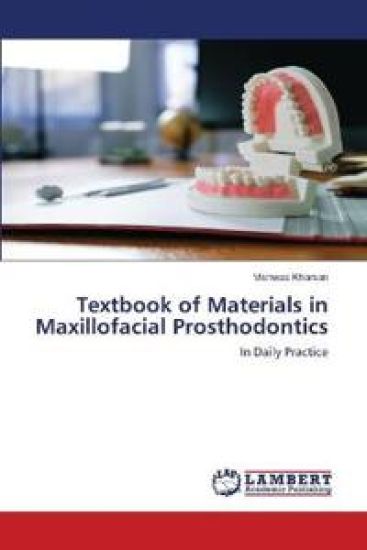
Maxillofacial prosthetic materials are used to replace facial parts lost through disease or trauma. Facial defect should be surgically corrected to restore function and esthetics. However, surgical reconstruction may not be possible because of size of defect and location of the defect hence prosthetic rehabilitation is indicated in such cases. The appearance can be restored by maxillofacial prosthesis and provides great psychological benefits to the patient. Materials for maxillofacial prosthetic reconstruction span the full range of chemical structures with physical properties ranging from hard polymers to soft flexible polymers and elastomers and their formulations as latex and plastisols. The historical development followed closely and adjunctively over years with innovations in dental materials from primitive to sophisticated and intricate configurations, in conformity with required functionality and cosmetic appearance.

Occlusal Consideration In Implant Supported Prosthesis

Occlusal Consideration In Implant Supported Prosthesis

Swapnali Mhatre; Vishwas Kharsan; Reema Srichand

LAP Lambert Academic Publishing
2019
pokkari
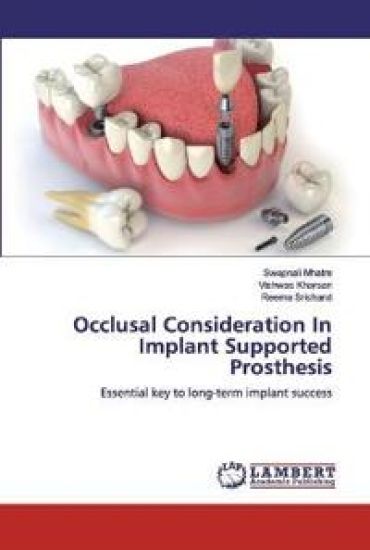
Osseointegration is the direct structural and functional connection between living bone and the surface of a load-bearing artificial implant. The function of an implant supported restoration is to restore missing teeth, its form, function, aesthetics and to optimize the longevity of the restored or remaining dentition. Dental implants have different biological and mechanical characteristics as compared to natural teeth. Since they are more susceptible to occlusal overloading, one of the most important criteria for implant success is implant occlusion. An implant protected occlusion is very essential as it provides the maximum intercuspation and also reduces occlusal load on implants. The ideal occlusal scheme for an implant prosthesis is designed to control the stress, provide a prosthetic and biologically acceptable implant interface and maintain long term stability of the marginal bone, soft tissue and prosthesis.