Kirjojen hintavertailu – 12 859 819 kirjaa ja 27 kauppaa

Kirjailija

Vishwas Satgar

Kirjat ja teokset yhdessä paikassa: 9 kirjaa, julkaisuja vuosilta 2020–2025, suosituimpiin kuuluu A Love Letter to the Many. Vertaile teosten hintoja ja tarkista saatavuus suomalaisista kirjakaupoista.

9 kirjaa

Kirjojen julkaisuvuodet: 2020–2025.

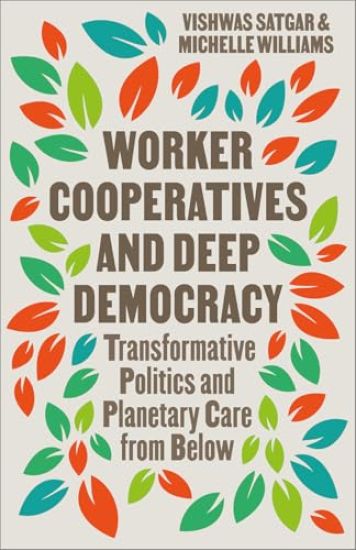
Worker Cooperatives and Deep Democracy

Worker Cooperatives and Deep Democracy

Vishwas Satgar; Michelle Williams

PLUTO PRESS
2025
pokkari

Halvin toimitettuna 31,00 €

Capitalism’s crisis is planetary. It is a system upending nature and society, causing many to live and work in despair. So far, the left has been incapable of inspiring an effective challenge to it. In Worker Cooperatives and Deep Democracy, Vishwas Satgar and Michelle Williams map a new transformative politics arising from inspiring worker cooperative systems that advance planetary care from below and which have the potential to undermine the capitalist status quo. Based on over a decade of research across 15 countries, the authors examine case studies that explore transformative approaches to social reproduction, public power, nature and territorial expansion in opposition to global hegemonic power. They also uncover the power of solidarities engendering emancipatory, utopian imaginaries in the global north and south. They show how, against all the odds, people are experimenting with deep democracy and building systems of care to live differently and exit the planetary crisis.
A Love Letter to the Many

A Love Letter to the Many

Vishwas Satgar

Haymarket Books
2025
nidottu
A Love Letter to the Many is both an in-depth account of how and why the politics of national liberation in South Africa failed, and a bold call for a new praxis-centered transformative politics. South Africa was once the hope of the world with its impressive and rich tradition of left politics. At the heart of post-apartheid democracy-making was a revolutionary nationalist ANC, the oldest Communist Party in Africa, the SACP, and one of the most militant labour union federations in the world, COSATU. But the country is at a crossroads and many are deeply concerned about its future. Drawing from political economy and ecology, Vishwas Satgar offers a new approach to left politics in South Africa based on social and climate justice.
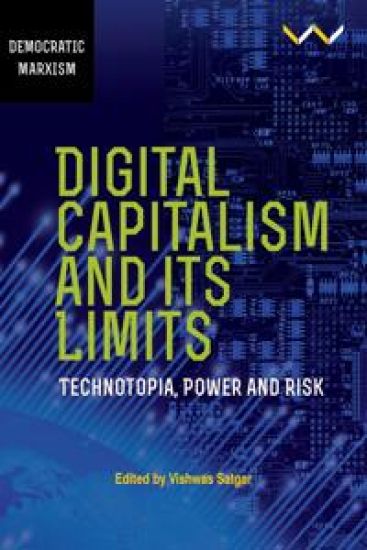
Digital Capitalism and Its Limits

Digital Capitalism and Its Limits

Vishwas Satgar

WITS UNIVERSITY PRESS
2025
pokkari
The Fourth Industrial Revolution (4IR) has been described as the next big leap in digital capitalism. Digital technologies such as artificial intelligence, quantum computing, 3D printing and robotisation, we are led to believe, will bring more progress, growth and development while also helping us to resolve the deep and multiple crises the world is in. Billions are being invested in these technologies, accompanied by sharp geopolitical rivalries to secure an edge in the control over them. Volume 8 in the Democratic Marxism series invites readers to think more deeply and critically about digital capitalism and its limits. While most governments in the world, including South Africa, have accepted a techno-nationalist narrative and have deliberated on the risks for the planet and humanity, the volume interrogates the effects and consequences of advances in artificial intelligence and heightened technological innovation and industrialisation on employment, democracy and the climate. Viewing the grand social engineering of 4IR through a Marxist lens, the volume contributors engage critically with the class project of digital monopoly capitalism and its powerful totalitarian tendencies. They question the dangerous technotopian imaginary shaping this digital techno-shift, the implications of algorithmic data extractivism, the securitisation of already weak market democracies, the social consequences of digital learning, lack of regulation, and the power dynamics in the labour process. Anchored in techno-realism, the interdisciplinary perspective captured in this volume puts forward alternatives for democratisation and a just transition to protect human and non-human life.
A Love Letter to the Many

A Love Letter to the Many

Vishwas Satgar

BRILL
2024
sidottu
South Africa was the hope of the world. It had an impressive and rich tradition of left politics. At the heart of post-apartheid democracy-making was a revolutionary nationalist ANC, the oldest Communist Party in Africa, the SACP, and one of the most militant labour union federations in the world, COSATU. Yet, South Africa is at a crossroads and many are deeply concerned about its future. This book explains through a political economy/ecology analysis why and how the degeneration of national liberation politics has happened, while making praxis-centered arguments for a new transformative left politics.
A Love Letter to the Many

A Love Letter to the Many

Vishwas Satgar

JACANA MEDIA (PTY) LTD
2024
pokkari
South Africa was the hope of the leftist world when it emerged from apartheid in 1994. It had an impressive and rich tradition of left politics. At the heart of post-apartheid democracy-making was a revolutionary nationalist ANC, the oldest Communist Party in Africa, the SACP, and one of the most militant labour union federations in the world, COSATU. Yet, today South Africa finds itself at a crossroads. It can either devour itself through inequality engendered social conflict; plunge further into racial polarisation due to the resurgence of exclusionary nationalist and neo-fascist politics; or risk being overcome with failure as socio-ecological systems collapse and the country gets overwhelmed by the many persistent crises. Many are deeply concerned about what South Africa has become and where it is headed. This book explains through a political economy/ecology analysis why and how the degeneration, delegitimation and crisis of national liberation politics has happened. Moreover, Left politics have failed. The world historical defeats of Soviet socialism, social democracy and revolutionary nationalism also became defeats for the South African left. This was not inevitable. At the same time, neoliberal dogma’s primacy of the sovereignty of capital and markets, over the state, people and nature, has also not worked. The grand and deep criminalized experiment has reached its limits. Its product: a hollow and criminalized market democracy predicated on an unviable society while producing a dialectic of reaction; the new extreme right. In these informed writings there is pushback against the neoliberal turn, Zumafication, emergent neofascism, the fraud of the National Democratic Revolution and the normalisation of the dangerous climate contradiction. At the same time there is a consistent transformative intellectual praxis, against the grain of defeat, that embraces the opportunity of left renewal initially inside the SACP but extending beyond. These arguments document 27 years of working with trade unions, township communities, waste pickers, unemployed peoples’ movements, informal traders, social movements and the global left to reconstruct the left imaginary beyond the traditional left, reform versus revolution, binary. These writings provide critical resources for transformative left politics and points to new frontiers for further elaboration. Finally, this volume curates a small part of post-apartheid history. It adds to the invisible archive of the left and takes its readers into a world that has been feared, misunderstood or caricatured. This volume is a contribution to decolonial South African thought. It is shared as a gift to the many, specifically to the next generation, so that they continue to struggle for and build an emancipated country and world in the present, before it is too late. Through a self-reflexive transformative politics, informed by an ethics of care, another future is possible.

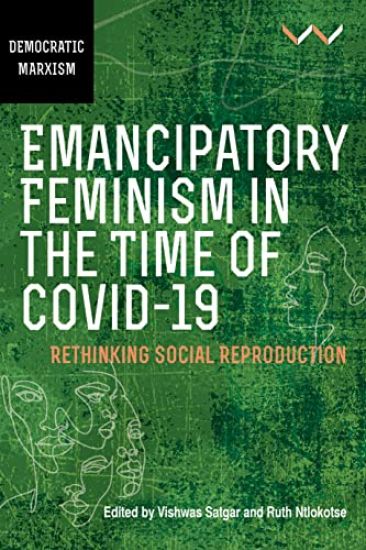
Emancipatory Feminism in the Time of Covid-19

Emancipatory Feminism in the Time of Covid-19

Vishwas Satgar; Ruth Ntlokotse; Hawzhin Azeez; Asanda Benya; Christine Bischoff; Jane Cherry; Jacklyn Cock; Samantha Hargreaves; Inge Konik; Jane Mbithi-Dikgol; Courtney Morgan; Sonia Phalatse; Busi Sibeko; Dineo Skosana

WITS UNIVERSITY PRESS
2023
pokkari
This edited volume provides an eco-socialist feminist analysis of the current social reproduction debate in South Africa, outlining existing and African alternatives to mainstream liberal feminism.
Emancipatory Feminism in the Time of Covid-19

Emancipatory Feminism in the Time of Covid-19

Vishwas Satgar; Ruth Ntlokotse; Hawzhin Azeez; Asanda Benya; Christine Bischoff; Jane Cherry; Jacklyn Cock; Samantha Hargreaves; Inge Konik; Jane Mbithi-Dikgol; Courtney Morgan; Sonia Phalatse; Busi Sibeko; Dineo Skosana

WITS UNIVERSITY PRESS
2023
sidottu
This edited volume provides an eco-socialist feminist analysis of the current social reproduction debate in South Africa, outlining existing and African alternatives to mainstream liberal feminism.
BRICS and the New American Imperialism

BRICS and the New American Imperialism

Vishwas Satgar; Ferrial Adam; Samir Amin; Patrick Bond; William K Carroll; Christopher Chase-Dunn; Alexander Gallas; Ana Garcia; Karina Kato; Nivedita Majumdar; Keamogetswe Seipato

Wits University Press
2020
pokkari
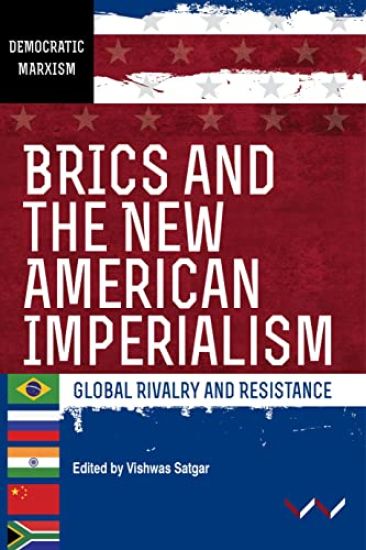
Challenges the mainstream understanding of BRICS and US dominance to situate the new global rivalries engulfing capitalism BRICS is a grouping of the five major emerging economies of Brazil, Russia, India, China and South Africa. Volume five in the Democratic Marxism series, BRICS and the New American Imperialism challenges the mainstream understanding of BRICS and US dominance to situate the new global rivalries engulfing capitalism. It offers novel analyses of BRICS in the context of increasing US induced imperial chaos, deepening environmental crisis tendencies (such as climate change and water scarcity), contradictory dynamics inside BRICS countries and growing subaltern resistance. The authors revisit contemporary thinking on imperialism and anti-imperialism, drawing on the work of Rosa Luxemburg, one of the leading theorists after Marx, who attempted to understand the expansionary nature of capitalism from the heartlands to the peripheries. The richness of Luxemburg's pioneering work inspires most of the volume's contributors in their analyses of the dangerous contradictions of the contemporary world as well as forms of democratic agency advancing resistance. While various forms of resistance are highlighted, among them water protests, mass worker strikes, anti-corporate campaigning and forms of cultural critique, this volume grapples with the challenge of renewing anti-imperialism beyond the NGO-driven World Social Forum and considers the prospects of a new horizontal political vessel to build global convergence. It also explores the prospects of a Fifth International of Peoples and Workers.
Brics and the New American Imperialism

Brics and the New American Imperialism

Vishwas Satgar; Ferrial Adam; Samir Amin; Patrick Bond; William K Carroll; Christopher Chase-Dunn; Alexander Gallas; Ana Garcia; Karina Kato; Nivedita Majumdar; Keamogetswe Seipato

WITS UNIVERSITY PRESS
2020
sidottu
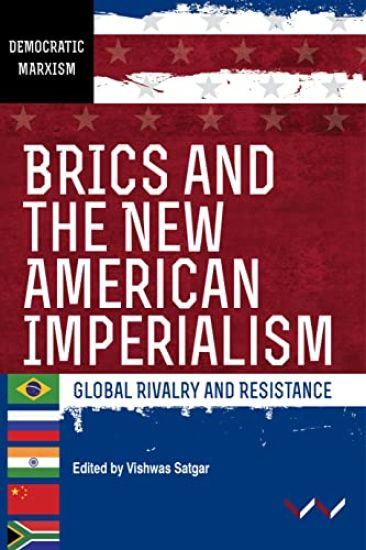
Challenges the mainstream understanding of BRICS and US dominance to situate the new global rivalries engulfing capitalism BRICS is a grouping of the five major emerging economies of Brazil, Russia, India, China and South Africa. Volume five in the Democratic Marxism series, BRICS and the New American Imperialism challenges the mainstream understanding of BRICS and US dominance to situate the new global rivalries engulfing capitalism. It offers novel analyses of BRICS in the context of increasing US induced imperial chaos, deepening environmental crisis tendencies (such as climate change and water scarcity), contradictory dynamics inside BRICS countries and growing subaltern resistance. The authors revisit contemporary thinking on imperialism and anti-imperialism, drawing on the work of Rosa Luxemburg, one of the leading theorists after Marx, who attempted to understand the expansionary nature of capitalism from the heartlands to the peripheries. The richness of Luxemburg's pioneering work inspires most of the volume's contributors in their analyses of the dangerous contradictions of the contemporary world as well as forms of democratic agency advancing resistance. While various forms of resistance are highlighted, among them water protests, mass worker strikes, anti-corporate campaigning and forms of cultural critique, this volume grapples with the challenge of renewing anti-imperialism beyond the NGO-driven World Social Forum and considers the prospects of a new horizontal political vessel to build global convergence. It also explores the prospects of a Fifth International of Peoples and Workers.