Kirjojen hintavertailu – 12 903 725 kirjaa ja 27 kauppaa

Kirjailija

Vitali Silitski

Kirjat ja teokset yhdessä paikassa: 5 kirjaa, julkaisuja vuosilta 2010–2025, suosituimpiin kuuluu Political Trends in the New Eastern Europe. Vertaile teosten hintoja ja tarkista saatavuus suomalaisista kirjakaupoista.

5 kirjaa

Kirjojen julkaisuvuodet: 2010–2025.

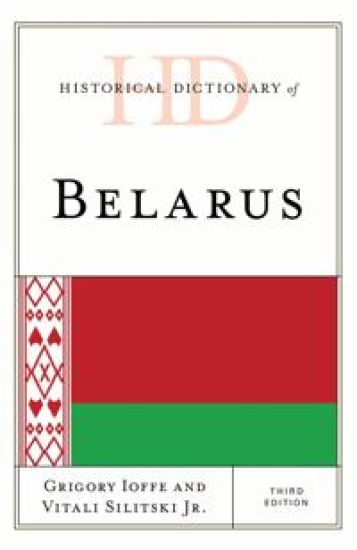
Historical Dictionary of Belarus

Historical Dictionary of Belarus

Grigory V. Ioffe; Vitali Silitski

Rowman Littlefield
2018
sidottu
Belarus is one of fifteen successor states of the former Soviet Union. It’s the only post-Soviet state that is in full of control of its territory and has no territorial conflicts with its neighbors. It’s squeezed between Russia and the European Union. Belarus had never been an independent nation prior to the Soviet Union’s disintegration and its identity is still evolving. This third edition of Historical Dictionary of Belarus contains a chronology, an introduction, appendixes, and an extensive bibliography. The dictionary section has over 500 cross-referenced entries on important personalities, politics, economy, foreign relations, religion, and culture. This book is an excellent resource for students, researchers, and anyone wanting to know more about Belarus.
Political Trends in the New Eastern Europe: Ukraine and Belarus - Belarus and Russia: Comradeship-in-Arms in Preempting Democracy - Ukraine: Domestic Changes and Foreign Policy Reconfiguration
Belarus remains the last true dictatorship in Europe. As such, its internal and external security agenda is an abiding matter of concern to the European and Western communities. But its trajectory is of equal concern to Moscow, which has been the prime external supporter and subsidizer of the Belarussian government under President Alyaksandr Lukashenka. So while Europe seeks to induce democratic change and democratic forces are trying to establish themselves in the face of withering oppression, Russia has hitherto been the main external prop for Lukashenka's policies. But despite this support-most pronounced until 2007 in terms of defense cooperation which is continuing, and in energy subsidies which are being terminated-tensions between Moscow and Minsk are growing. The brief energy cutoffs imposed by Moscow at the start of the year and Belarus' retaliation shows that not all is well in that relationship.
The A to Z of Belarus

The A to Z of Belarus

Vitali Silitski; Jan Zaprudnik

Scarecrow Press
2010
nidottu
The political map of Eastern Europe changed dramatically in December 1991 when the leaders of Belarus, Russia, and Ukraine huddled together in a Bielavieza Forest retreat and decided to dissolve the 15 union republics, which composed the Union of Soviet Socialist Republics (USSR). One of those republics was the Belorussian Soviet Socialist Republic (BSSR). A United Nations member since 1945, Belarus has a rich cultural heritage that is seen as a promising base for the development of a solid national identity and for real independence. It is this cultural heritage and sense of history that nourish the ongoing efforts of the nationalist minority, as well as the larger democratic opposition, to resist the regime of President Alaksandr Luka?enka who is bent on restoring ties to Russia. Thus Belarus, with its burdens of the past and potential for the future, finds itself in a struggle that will affect not only its own destiny, but also the international structure of Eastern Europe. The A to Z of Belarus—through its chronology, introductory essays, appendixes, map, bibliography, and hundreds of cross-referenced dictionary entries on important persons, places, events, and institutions and significant political, economic, social, and cultural aspects—traces Belarus' history and provides a compass for the direction the country is heading.