Kirjailija
Vitezslav Nezval
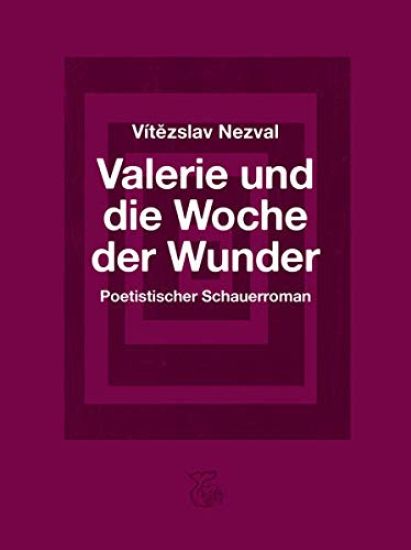
Kirjat ja teokset yhdessä paikassa: 9 kirjaa, julkaisuja vuosilta 2007–2024, suosituimpiin kuuluu Valerie und die Woche der Wunder. Vertaile teosten hintoja ja tarkista saatavuus suomalaisista kirjakaupoista.
Nimi esiintyy myös muodoissa: Vítezslav Nezval
9 kirjaa
Kirjojen julkaisuvuodet: 2007–2024.
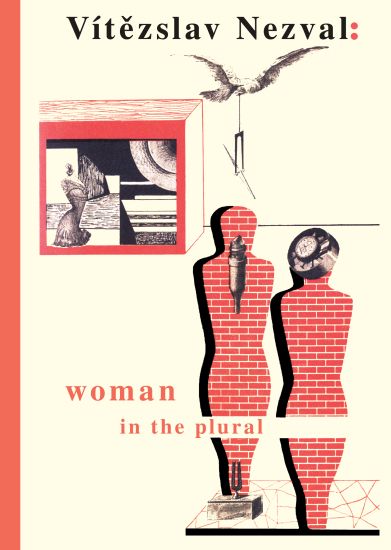
In the summer of 1935, V -t zslav Nezval, already one of the most celebrated Czech poets of his generation, embarked on a period of manic creativity that would result in three volumes of poetry written and published in a two-year span (1935-37), mirrored by three volumes of memoir-like poetic prose. These collections would not only reshape Czech poetry, blending approaches developed by the French Surrealists with national cultural sensibilities and political concerns, taken together they are among the highest achievements of the interwar avant-garde. Each of the three volumes adopted a different principle of Surrealism as its general modus operandi. For Woman in the Plural (1936), the first volume in this loose trilogy, it was objective chance (while the third and final volume, The Absolute Gravedigger (1937), adopted the paranoiac-critical method). As the title suggests, the collection is an extended meditation on the female form, the images of which Nezval spins zoetrope-like to convey novel and hallucinatory ways to conceive Woman (TM)s mythical, divine, and creative power. Aligned with the international modernism of the era, Woman in the Plural addresses the social and political instability of the 1930s while also serving to display Nezval (TM)s prodigious talents in a variety of forms, styles, and genres. Alongside the madcap, entertainingly profound poetry in couplets, litanies, and stanzas of varying lengths, the collection also includes pages from Nezval (TM)s dream journal, a set of exuberant Surrealist exercises, and a full-length play of chance encounters with "a woman like any other." Never before translated into English, this is a vibrant, volatile collection, a true tour de force from one of the greatest poets of the European avant-garde.
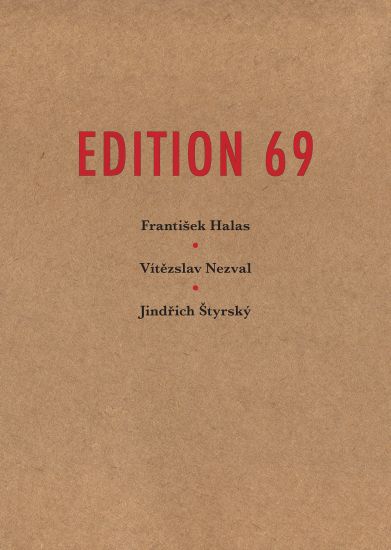
Launched in 1931 by Jindřich Styrsk , Edition 69 consisted of six volumes of erotic literature and illustration that followed the path marked out by Louis Aragon's Irene's Cunt and Georges Bataille's Story of the Eye. Including the first Czech translation of Marquis de Sade's Justine and Pietro Aretino (both illustrated by Toyen), three volumes were from contemporary Czech avant-garde artists, and these were all illustrated by Styrsk himself, who also contributed the text for the last volume of the series. Bringing together original English translations of the three Czech contributions to the Edition 69 series, this volume comprises Nezval's "Sexual Nocturne"; Halas's erotic poetry collection "Thyrsos"; and Styrsk 's "Emilie Comes to Me in a Dream," including the original essay from psychoanalyst and fellow Surrealist Bohuslav Brouk, all complemented by Styrsk 's artwork, ranging from pen and ink drawings to graphic collages to pornographic photomontages. Influenced by Max Ernst's collage-novels, Andre Masson's illustrations, and the book as object, Styrsk 's overall conception for the Edition 69 series rank it among the notable achievements of European Surrealism, representing as well a sustained attempt by the interwar Czech avant-garde to investigate the taboos of bourgeois culture.
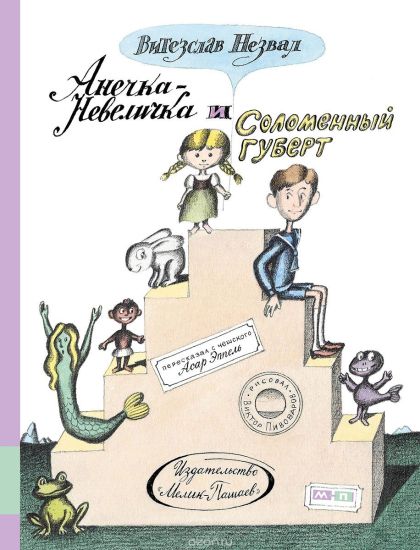
Genialnyj tekst, genialnyj perevod i genialnye illjustratsii - vot chto otlichaet russkoe izdanie etoj neobychnoj povesti-skazki, blizkoj po dukhu znamenitoj "Alise v Strane chudes". Pervyj i edinstvennyj vykhod v svet "Anechki-Nevelichki i Solomennogo Guberta" na russkom jazyke sostojalsja v1980 g., no u knigi do sikh por est zavidnoe soobschestvo fanatov. Knigu sozdali tri nezaurjadnykh cheloveka: Vitezslav Nezval - znamenityj cheshskij avangardist i eksperimentator v oblasti jazyka, Viktor Pivovarov - odin iz samykh izvestnykh "neofitsialnykh" russkikh khudozhnikov XX veka; Asar Eppel - pisatel, poet i perevodchik, virtuoznyj master slova. Zasnuv odnazhdy v telege, derevenskaja devochka Anechka-Nevelichka prosypaetsja v gorode. Ee sputnikom stanovitsja malchik po imeni Solomennyj Gubert. Oni popadajut v udivitelnoe prostranstvo, imenuemoe stranoj Gdetotam. V Gdetotam obitajut umu nepostizhimye personazhi: Verbljud s gorbom, kotoryj mozhno rasstegnut i obnaruzhit vnutri radio; Chelovek s Kleshnjami, kompostirujuschij bilety; Direktor Tsirka, kotoryj plachet zhemchuzhinami; Popugaj, kotoryj ne vyderzhivaet putanitsy i skhodit s uma; malenkie Negritjata-Liliputanniki, kotorye prevraschajutsja v malenkikh belykh negritjat, zatem v malenkikh belykh rybok, zatem v malenkikh belykh muravev, i t.d. Geroev ozhidajut zagadochnye i v vysshej stepeni neobychnye prikljuchenija. Nesmotrja na kazhuschujusja sjurrealistichnost, skazka imeet strojnyj sjuzhet. Nesomnennoe ukrashenie knigi - stikhotvornye priskazki i pesenki. Blagodarja izyskannoj jazykovoj igre, intrigujuschemu sjuzhetu i prekrasnym illjustratsijam kniga po pravu schitaetsja nastojaschim shedevrom detskoj literatury. Rekomenduetsja chitat i naslazhdatsja, nachinaja s mladshego shkolnogo vozrasta i do starosti.
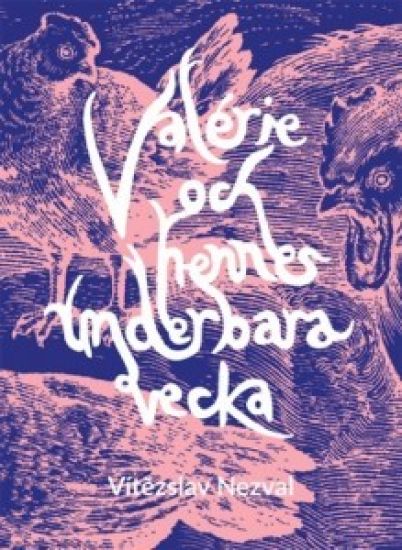
Valérie och hennes underbara vecka
Vítezslav Nezval; Kristoffer Noheden
Sphinx Bokförlag
2018
nidottu
Valérie och hennes underbara vecka är en skimrande legering av den gotiska romanen, den melodramatiska följetongen och fesagan. När Valérie får sin första menstruation omvandlas hennes verklighet av hastigt uppblossande begär. Likt en detektiv skärskådar Valérie skiftande identiteter och fördolda samband. Till slut blottlägger hon den hädiska hemligheten i familjehistoriens hjärta och finner den befriande sanningen om sig själv. Med lika delar svart humor och förtrollande äventyrslystnad har Vítezslav Nezval skapat en roman som raserar vanevardagens fängelse. Vítezslav Nezval var poet och var med och grundade surrealistgruppen i Prag år 1934. Han skrev Valérie och hennes underbara vecka året därpå, men romanen publicerades först tio år senare. Nu utkommer den för första gången på svenska, i översättning av Karin Mossdal.
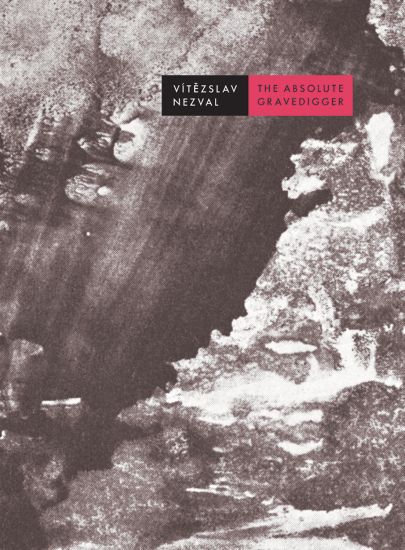
The Absolute Gravedigger, published in 1937, is in many ways the culmination of Vitězslav Nezval's work as an avant-garde poet, combining the Poetism of his earlier work and his turn to Surrealism in the 1930s with his political concerns in the years leading up to World War II. It is above all a collection of startling verbal and visual inventiveness. And while a number of salient political issues emerge from the Surrealist ommatidia, Nezval's imagination here is completely free-wheeling and untethered to any specific locale as he displays mastery of a variety of forms, from long-limbed imaginative free verse narratives to short, formally rhymed meditations in quatrains, to prose and even visual art (the volume includes six of his decalcomania images). Together with his previous two collections, The Absolute Gravedigger forms one of the most important corpora of interwar Surrealist poetry. Yet here Nezval's wild albeit restrained mix of absolute freedom and formal perfection has shifted its focus to explore the darker imagery of putrefaction and entropy, the line breaks in the shorter lyric poems slicing the language into fragments that float in the mind with open-ended meaning and a multiplicity of readings. Inspired by Salvador Dali's paranoiac-critical method, the poems go in directions that are at first unimaginable but continue to evolve unexpectedly until they resolve or dissolve - like electron clouds, they have a form within which a seemingly chaotic energy reigns. Nezval's language, however, is under absolute control, allowing him to reach into the polychromatic clouds of Surrealist uncertainty to form shapes we recognize, though never expected to see, to meld images and concepts into a constantly developing and dazzling kaleidoscope.
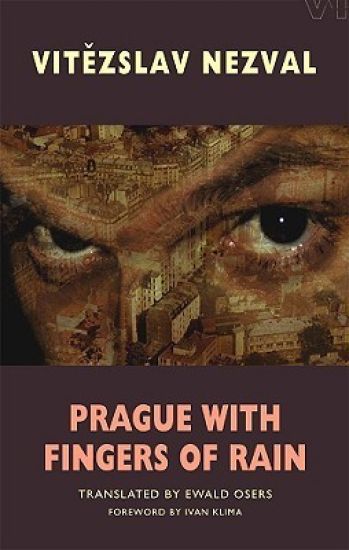
Czech writer Vitezslav Nezval (1900-58) was one of the leading Surrealist poets of the 20th century. "Prague with Fingers of Rain" is his classic 1936 collection in which Prague's many-sided life - its glamorous history, various weathers, different kinds of people - becomes symbolic of what is contradictory and paradoxical in life itself. Mixing real and surreal, Nezval evokes life's contradictoriness in a series of psalm-like poems of puzzled love and generous humanity. Nezval was perhaps the most prolific writer in Prague during the 1920s and 30s. An original member of the avant-garde group of artists Devetsil ("Butterbur", literally: "Nine Forces"), he was a founding figure of the Poetist movement. His numerous books included poetry collections, experimental plays and novels, memoirs, essays and translations. His best work is from the interwar period. Along with Karel Teige, Jindrich Aetyrsku, and Toyen, Nezval frequently travelled to Paris, engaging with the French surrealists. Forging a friendship with Andre Breton and Paul Aeluard, he was instrumental in founding The Surrealist Group of Czechoslovakia in 1934 (the first such group outside of France), serving as editor of the group's journal Surrealismus. His mastery of language and prosody was unparalleled - contemporaries referred to it as wizardry. Alongside with surrealist poetry, he wrote poems that sounded like genuine folksongs and for some time he teased the Czech literary public by the anonymous publication of three books attributed to a fictitious Robert David - one of 52 Villonesque ballades, another of 100 sonnets, all in strict classical form. His identity was guessed by the critics only because 'no one else would be able to do that'. This selection from his seminal collection has a specially commissioned foreword by Ivan Klima.