Kirjojen hintavertailu – 12 859 818 kirjaa ja 27 kauppaa

Kirjailija

Vivian Gussin Paley

Kirjat ja teokset yhdessä paikassa: 15 kirjaa, julkaisuja vuosilta 1987–2014, suosituimpiin kuuluu The Boy Who Would Be a Helicopter. Vertaile teosten hintoja ja tarkista saatavuus suomalaisista kirjakaupoista.

15 kirjaa

Kirjojen julkaisuvuodet: 1987–2014.

The Boy Who Would Be a Helicopter

The Boy Who Would Be a Helicopter

Vivian Gussin Paley; Robert Coles

Harvard University Press
1991
nidottu
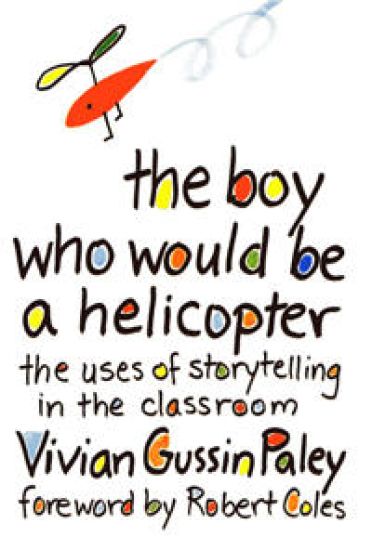
How does a teacher begin to appreciate and tap the rich creative resources of the fantasy world of children? What social functions do story playing and storytelling serve in the preschool classroom? And how can the child who is trapped in private fantasies be brought into the richly imaginative social play that surrounds him? The Boy Who Would Be a Helicopter focuses on the challenge posed by the isolated child to teachers and classmates alike in the unique community of the classroom. It is the dramatic story of Jason—the loner and outsider—and of his ultimate triumph and homecoming into the society of his classmates. As we follow Jason’s struggle, we see that the classroom is indeed the crucible within which the young discover themselves and learn to confront new problems in their daily experience. Vivian Paley recreates the stage upon which children emerge as natural and ingenious storytellers. She supplements these real-life vignettes with brilliant insights into the teaching process, offering detailed discussions about control, authority, and the misuse of punishment in the preschool classroom. She shows a more effective and natural dynamic of limit-setting that emerges in the control children exert over their own fantasies. And here for the first time the author introduces a triumvirate of teachers (Paley herself and two apprentices) who reflect on the meaning of events unfolding before them.
The Boy on the Beach

The Boy on the Beach

Vivian Gussin Paley

University of Chicago Press
2014
nidottu

Halvin toimitettuna 26,50 €

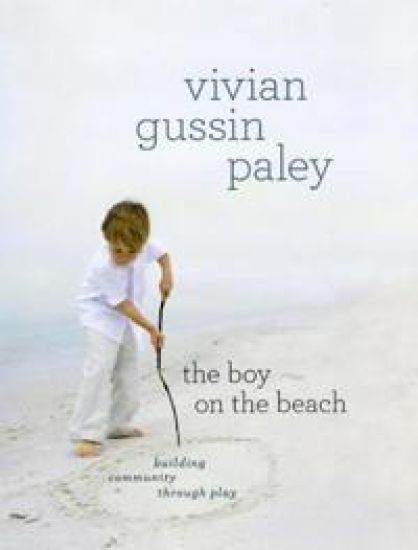
What can the richly imagined, impressively adaptable fantasy world of children tell us about childhood, development, education, and even life itself? For fifty years, teacher and writer Vivian Gussin Paley has been exploring the imagery, language, and lore of young children, asking the questions they ask of themselves. With the publication of Boys and Girls in 1984, Paley took readers inside a kindergarten classroom to show them how boys and girls play-and how, by playing and fantasizing in different ways, they work through complicated notions of gender roles and identity. This new edition of Paley's classic book reignites issues that are more important than ever for a new generation of students, parents, and teachers. The Boy on the Beach, meanwhile, continues Paley's work, going deeper into the mystery of play as she follows a group of children through the kindergarten year. Rich with the words of children and teachers themselves, the book delves into questions new and old, reminding us that Paley's interests and approach remain as vital as ever. Both books are vintage Paley, wise and provocative appreciations of the importance of play and the nature of childhood and the imagination.
Boys and Girls

Boys and Girls

Vivian Gussin Paley

University of Chicago Press
2014
nidottu
What can the richly imagined, impressively adaptable fantasy world of children tell us about childhood, development, education, and even life itself? For fifty years, teacher and writer Vivian Gussin Paley has been exploring the imagery, language, and lore of young children, asking the questions they ask of themselves. With the publication of Boys and Girls in 1984, Paley took readers inside a kindergarten classroom to show them how boys and girls play-and how, by playing and fantasizing in different ways, they work through complicated notions of gender roles and identity. This new edition of Paley's classic book reignites issues that are more important than ever for a new generation of students, parents, and teachers. The Boy on the Beach, meanwhile, continues Paley's work, going deeper into the mystery of play as she follows a group of children through the kindergarten year. Rich with the words of children and teachers themselves, the book delves into questions new and old, reminding us that Paley's interests and approach remain as vital as ever. Both books are vintage Paley, wise and provocative appreciations of the importance of play and the nature of childhood and the imagination.
Unsmiling Faces

Unsmiling Faces

Vivian Gussin Paley

Teachers' College Press
2007
nidottu
The first edition of this indispensable book set the standard for high-quality intervention and prevention programs in early childhood practice. Since its publication, many new forces have impacted the landscape of early childhood education, presenting both great opportunities and great risks for today's emotionally fragile young children. Once again making complex psychological concepts available to classroom teachers, this thorough revision: incorporates important understandings gained since the tragic events of 9/11; addresses many of the challenging issues that confront educators in the current high-pressure climate focused on academic performance; includes recent scientific research that supports the concepts underlying high-quality intervention and prevention in early childhood practice - concepts that were the basis for the first edition of this book; and provides an essential framework to help teachers understand the emotional lives of the young children they serve.
A Child`s Work – The Importance of Fantasy Play

A Child`s Work – The Importance of Fantasy Play

Vivian Gussin Paley

University of Chicago Press
2005
nidottu

Halvin toimitettuna 24,10 €

In A Child's Work, innovative and widely respected educator Vivian Gussin Paley offers a manifesto against the decline of children's creative time, making the case for the critical role of fantasy play in the psychological, intellectual, and social development of young children. Paley speaks from firsthand experience about the limitless growth of young children who are allowed the time for fantasy play as she enters classrooms around the globe to explore the stunningly original language of these children in their role-playing and storytelling. Drawing from their own words, Paley examines the developing logic and learning that allow children to construct meaning in their worlds, meaning that is crucial to their adult lives. Proof that play is the work of children, this compelling and enchanting book will inspire and instruct teachers and parents as well as point to a fundamental misdirection in today's educational programs and strategies.
Thriving in the Multicultural Classroom

Thriving in the Multicultural Classroom

Mary Dilg; Vivian Gussin Paley

Teachers' College Press
2003
nidottu
In this timely and practical resource, Mary Dilg helps teachers understand and enjoy working with students from different cultural backgrounds. Focusing on the special needs of adolescents, Dilg recommends ways of thinking about curriculum and pedagogy that will enable both teachers and students to thrive in the multicultural classroom. Drawing on over 25 years of experience teaching in urban schools across the country, the author: Provides many examples of student observations, conversations, and writings, both in and out of school. Details approaches to curriculum and pedagogy that are particularly effective in the multicultural classroom. Offers a much-needed exploration of racial identity formation among adolescents, including how teachers can recognize, understand, and respond to this process. Addresses critical issues that many educators avoid, such as the special challenges faced by racially- and culturally-mixed student bodies. Describes and analyzes the forces that emerge in the multicultural classroom and influence the way students respond to each other and to curriculum, pedagogy, and their teacher.
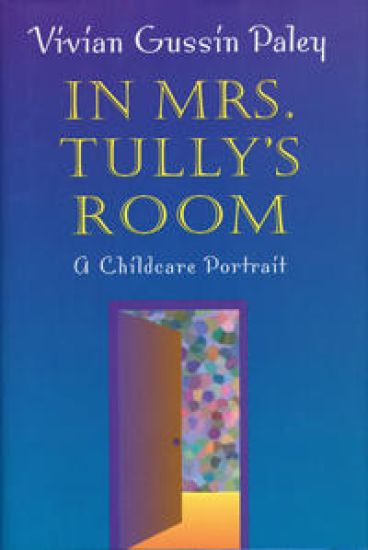
In Mrs. Tully's Room

In Mrs. Tully's Room

Vivian Gussin Paley

Harvard University Press
2003
nidottu
In Mrs. Tully's Room makes a quiet but powerful case for the pedagogical skill and psychological insight that childcare providers—so often underpaid and undervalued—can bring to their work. It also emphasizes how warm, quasi-familial, even mentoring relationships can develop between childcare providers and their preschool families.
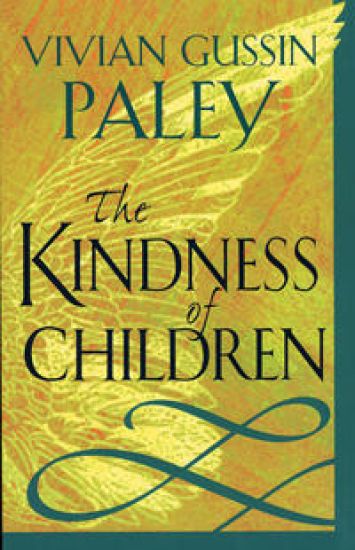
The Kindness of Children

The Kindness of Children

Vivian Gussin Paley

Harvard University Press
2000
nidottu
Visiting a London nursery school, Vivian Paley observes the schoolchildren's reception of another visitor, a handicapped boy named Teddy, who is strapped into a wheelchair, wearing a helmet, and barely able to speak. A predicament arises, and the children's response--simple and immediate--offers Paley the purest evidence of kindness she has ever seen. In subsequent encounters, "the Teddy story" draws forth other tales of impulsive goodness from Paley's listeners. Just so, it resonates through this book as one story leads to another--taking surprising turns, intersecting with the narrative unfolding before us, and illuminating the moral meanings that children may be learning to create among themselves. Paley's journey takes us into the different worlds of urban London, Chicago, Oakland, and New York City, and to a close-knit small town in Michigan's Upper Peninsula. Her own story connects those of children from nursery school to high school, and circles back to her elderly mother, whose experiences as a frightened immigrant girl, helped through a strange school and a new language by another child, reappear in the story of a young Mexican American girl. Thus the book quietly brings together the moral life of the very young and the very old. With her characteristic unpretentious charm, Paley lets her listeners and storytellers take us down unexpected paths, where the meeting of story and real life make us wonder: Are children wiser about the nature of kindness than we think they are?
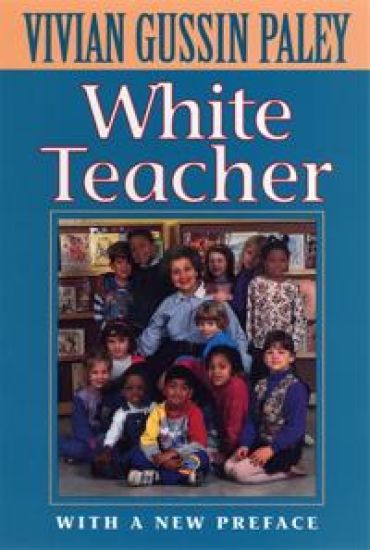
White Teacher

White Teacher

Vivian Gussin Paley

Harvard University Press
2000
nidottu
Vivian Paley presents a moving personal account of her experiences teaching kindergarten in an integrated school within a predominantly white, middle-class neighborhood. In a new preface, she reflects on the way that even simple terminology can convey unintended meanings and show a speaker's blind spots. She also vividly describes what her readers have taught her over the years about herself as a "white teacher."
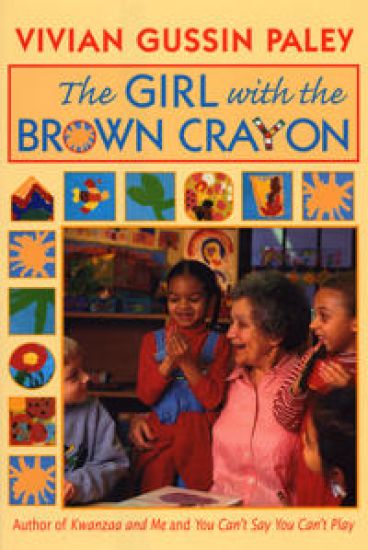
The Girl with the Brown Crayon

The Girl with the Brown Crayon

Vivian Gussin Paley

Harvard University Press
1998
nidottu
Once again Vivian Paley takes us into the inquiring minds and the dramatic worlds of young children learning in the kindergarten classroom. As she enters her final year of teaching, Paley tells in this book a story of farewell and a story of self-discovery—through the thoughts and blossoming spirit of Reeny, a little girl with a fondness for the color brown and an astonishing sense of herself. "This brown girl dancing is me," Reeny announces, as her crayoned figures flit across the classroom walls. Soon enough we are drawn into Reeny's remarkable dance of self-revelation and celebration, and into the literary turn it takes when Reeny discovers a kindred spirit in Leo Lionni—a writer of books and a teller of tales. Led by Reeny, Paley takes us on a tour through the landscape of characters created by Lionni. These characters come to dominate a whole year of discussion and debate, as the children argue the virtues and weaknesses of Lionni's creations and his themes of self-definition and an individual's place in the community. The Girl with the Brown Crayon tells a simple personal story of a teacher and a child, interweaving the themes of race, identity, gender, and the essential human needs to create and to belong. With characteristic charm and wonder, Paley discovers how the unexplored territory unfolding before her and Reeny comes to mark the very essence of school, a common core of reference, something to ponder deeply and expand on extravagantly.
Kwanzaa and Me

Kwanzaa and Me

Vivian Gussin Paley

Harvard University Press
1996
nidottu
"All these white schools I've been sent to are racist," Sonya says. "I'd have done better in a black school. I was an outsider here." These are hard words for Vivian Paley, whose own kindergarten was one of Sonya's schools, the integrated classroom so lovingly and hopefully depicted by Paley in White Teacher. Confronted with the grown-up Sonya, now on her way to a black college, and with a chorus of voices questioning the fairness and effectiveness of integrated education, Paley sets out to discover the truth about the multicultural classroom from those who participate in it. This is an odyssey undertaken on the wings of conversation and storytelling in which every voice adds new meaning to the idea of belonging, really belonging, to a school culture. Here are black teachers and minority parents, immigrant families, a Native American educator, and the children themselves, whose stories mingle with the author's to create a candid picture of the successes and failures of the integrated classroom. As Paley travels the country listening to these stories, we see what lies behind recent moves toward self-segregation: an ongoing frustration with racism as well as an abiding need for a nurturing community. And yet, among these diverse voices, we hear again and again the shared dream of a classroom where no family heritage is obscured and every child's story enriches the life of the schoolhouse." It's all about dialogue, isn't it?" asks Lorraine, a black third-grade teacher whose story becomes a central motif. And indeed, it is the dialogue that prevails in this warmly provocative and deeply engaging book, as parents and teachers learn how they must talk to each other, and to their children, if every child is to secure a sense of self in the schoolroom, no matter what the predominant ethnic background. Vivian Paley offers these discoveries to readers as a starting point for their own journeys toward community and kinship in today's schools and tomorrow's culture.
You Can’t Say You Can’t Play

You Can’t Say You Can’t Play

Vivian Gussin Paley

Harvard University Press
1993
nidottu
Who of us cannot remember the pain and humiliation of being rejected by our classmates? However thick-skinned or immune to such assaults we may become as adults, the memory of those early exclusions is as palpable to each of us today as it is common to human experience. We remember the uncertainty of separating from our home and entering school as strangers and, more than the relief of making friends, we recall the cruel moments of our own isolation as well as those children we knew were destined to remain strangers. In this book Vivian Paley employs a unique strategy to probe the moral dimensions of the classroom. She departs from her previous work by extending her analysis to children through the fifth grade, all the while weaving remarkable fairy tale into her narrative description. Paley introduces a new rule—“You can’t say you can’t play”—to her kindergarten classroom and solicits the opinions of older children regarding the fairness of such a rule. We hear from those who are rejected as well as those who do the rejecting. One child, objecting to the rule, says, “It will be fairer, but how are we going to have any fun?” Another child defends the principle of classroom bosses as a more benign way of excluding the unwanted. In a brilliant twist, Paley mixes fantasy and reality, and introduces a new voice into the debate: Magpie, a magical bird, who brings lonely people to a place where a full share of the sun is rightfully theirs. Myth and morality begin to proclaim the same message and the schoolhouse will be the crucible in which the new order is tried. A struggle ensues and even the Magpie stories cannot avoid the scrutiny of this merciless pack of social philosophers who will not be easily caught in a morality tale. You Can’t Say You Can’t Play speaks to some of our most deeply held beliefs. Is exclusivity part of human nature? Can we legislate fairness and still nurture creativity and individuality? Can children be freed from the habit of rejection? These are some of the questions. The answers are to be found in the words of Paley’s schoolchildren and in the wisdom of their teacher who respectfully listens to them.
Bad Guys Don't Have Birthdays

Bad Guys Don't Have Birthdays

Vivian Gussin Paley

University of Chicago Press
1991
nidottu
Bad guys are not allowed to have birthdays, pick blueberries, or disturb the baby. So say the four-year-olds who announce life's risks and dangers as they play out the school year in Vivian Paley's classroom. Their play is filled with warnings. They invent chaos in order to show that everything is under control. They portray fear to prove that it can be conquered. No theme is too large or too small for their intense scrutiny. Fantasy play is their ever dependable pathway to knowledge and certainty. " It ...takes a special teacher to value the young child's communications sufficiently, enter into a meaningful dialogue with the youngster, and thereby stimulate more productivity without overwhelming the child with her own ideas. Vivian Paley is such a teacher."--Maria W. Piers, in the American Journal of Education "[Mrs. Paley's books] should be required reading wherever children are growing. Mrs. Paley does not presume to understand preschool children, or to theorize. Her strength lies equally in knowing that she does not know and in trying to learn. When she cannot help children--because she can neither anticipate nor follow their thinking--she strives not to hinder them. She avoids the arrogance of adult to small child; of teacher to student; or writer to reader."--Penelope Leach, author of Your Baby & Child in the New York Times Book Review
Mollie Is Three

Mollie Is Three

Vivian Gussin Paley

University of Chicago Press
1988
nidottu
"No adult can escape the adult perspective; but simply recognizing its inevitable limitations in a children's world enables a few gifted educators to accept the existence and validity of whole kindergartens full of different perspectives. One such person is Vivian Gussin Paley. . . . Her books. . .should be required reading wherever children are growing."—New York Times Book Review "With a delightful, almost magical touch, Paley shares her observations and insights about three-year-olds. The use of a tape recorder in the classroom gives her a second chance to hear students' thoughts from the doll corner to the playground, and to reflect on the ways in which young children make sense of the experience of school. . . . Paley lets the children speak for themselves, and through their words we reenter the world of the child in all its fantasy and inventiveness."—Harvard Educational Review "Paley's vivid and accurate descriptions depict both spontaneous and recurring incidents and outline increasingly complex interactions among the children. Included in the narrative are questions or ideas to challenge the reader to gain more insight and understanding into the motives and conceptualizations of Mollie and other children."—Karen L. Peterson, Young Children
Wally’s Stories

Wally’s Stories

Vivian Gussin Paley

Harvard University Press
1987
nidottu
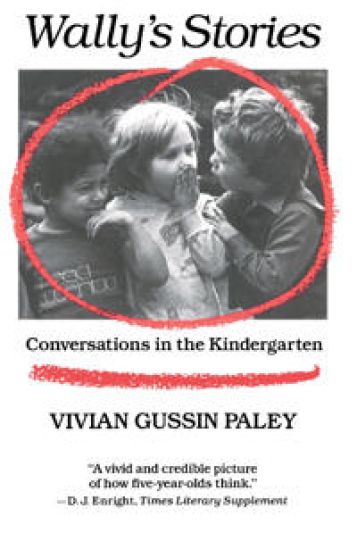
Teachers are often taught that young children are incapable of logical thought. Prone to fantasy and unruffled by inconsistency, preschool children are frequently baffled by the first lessons of early schooling. Trained to gently resist the child’s illogic, teachers sometimes create just the incomprehension and anxiety they mean to avoid. In Wally’s Stories, Vivian Paley shows that none of this need be so. Wally’s Stories is itself a story: the story of the evolution of a kindergarten classroom in which Paley learned to stop fighting childish fantasy and instead make use of it to stimulate the very best brand of thinking her five-year-olds can muster. Stories also lie at the heart of her classroom: stories that are first told by one of the children, then transcribed by the teacher, and then acted out by the class in dramatic productions of their own design. Paley shows that in the course of creating their own dramatic world, five-year-olds are capable of thought and language far in advance of what they accomplish in traditional classroom exercises. The children’s stories also become a vehicle that they can use to explain themselves to their teacher and to one another. Together, teacher and children develop an unusual environment, one that is logical and literate, based on rules of fairness, friendship, and fantasy. Vivian Paley’s book is as refreshing as her teaching method—a new kind of book about a new kind of classroom.