Kirjojen hintavertailu – 12 903 725 kirjaa ja 27 kauppaa
Kirjailija
Vladimir Kara-Murza
Kirjat ja teokset yhdessä paikassa: 4 kirjaa, julkaisuja vuosilta 2021–2024, suosituimpiin kuuluu Liberties Journal of Culture and Politics. Vertaile teosten hintoja ja tarkista saatavuus suomalaisista kirjakaupoista.
Giles Kepel; Ingrid Rowland; Vladimir Kara-Murza; Enrique Krauze; Paul Muldoon; Mitchell Abidor; Agnes Callard; Henri Cole; William Deresiewicz; Benjamin Moser; David Nirenberg; Peter Phillips; Becca Rothfeld; Paul Starr; David Thomson; Chaim Nacham Bialik
“A Meteor of Intelligent Substance” “Something was Missing in our Culture, and Here It Is” “Liberties sure is needed in these times.” In a short time since its launch, Liberties - A Journal of Culture and Politics, a quarterly, has become essential reading for those engaged in the cultural and political issues and causes of our time. The writers in Liberties offer deep experience from across borders, national identities, political affiliations and artistic achievements. As the introductory essay in the inaugural edition noted, “At this journal we are betting on what used to be called the common reader, who would rather reflect than belong and asks of our intellectual life more than a choice between orthodoxies.” Each issue of Liberties features original in-depth essays and compelling new poetry from some of the world's most significant writers, artists, and scholars, as well as introducing new talent, to inspire and impact the intellectual and creative lifeblood of today’s culture and politics. This spring issue of Liberties includes: Giles Kepel on the Murder of Samuel Paty; Ingrid Rowland’s Long Live the Classics!; Vladimir Kara-Murza Surviving Putin’s Poisons; Paul Starr on Reckoning with National Failure from Covid; Becca Rothfeld on Today's Sanctimony Literature; Enrique Krauze explores What is Latin America?; William Deresiewicz on Why Great Visual Art Forces Us to Think; Benjamin Moser on Rediscovering Frans Hals; David Nirenberg on What We Can Learn from Earlier Plagues; Agnes Callard’s view of Romance without Love, Love without Romance; Mitchell Abidor looks back to “Social Media” in 1895 to Understand a Crowd’s “Wisdom”; The Tallis Scholars' Peter Phillips on the Secrets of Josquin; David Thomson on Movies’ Poetic Desire; Poetry from Henri Cole, Chaim Nachman Bialik, and Paul Muldoon; and, Leon Wieseltier (editor) asks "Where Are the Americans?” and Celeste Marcus (managing editor) writes for a Pluralistic Heart.
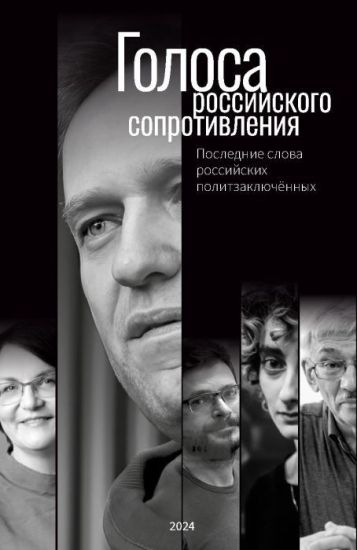
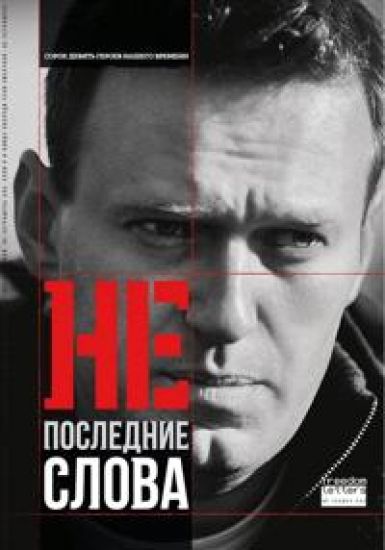
The book is in Russian. Not the last words: Speeches of the accused and political prisoners. Forty-nine heroes of our time (Second edition). "I will fear no evil" series. In modern Russia, perhaps the only place where free speech can still be heard is the cage in the courtroom. From there, the defendants make their last word, using this one opportunity to state what is most important. Condemn war, do not give in to fear, resist lies and violence, support others. The last words are more than a political declaration, more than a testimony of personal courage. It is they who create the most poignant portrait of the era. The collection "Not the Last Words" is the voice of free people of an unfree country, our medicine against fear, giving hope for healing. Sasha Skochilenko, Oleg Orlov, Mikhail Afanasyev, Olga Smirnova, Dmitry Skurikhin, Igor Paskar, Nikita Tushkanov, Maria Alyokhina, Armen Aramyan, Dmitry Vasilets, Yulia Galyamina, Alexey Gaskarov, Dmitry Glukhovsky, Alexey Gorinov, Alla Gutnikova, Ildar Dadin, Maria Dubovik, Alexandra Dukhanina, Egor Zhukov, Dmitry Ivanov, Vladimir Kara-Murza, Konstantin Kotov, Mikhail Kriger, Vasily Kuksov, Alexey Malobrodsky, Vladimir Metelkin, Olga Misik, Oleg Navalny, Alexey Navalny, Andrey Novashov, Andrey Pivovarov, Alexey Polikhovich, Maria Ponomarenko, Svetlana Prokopyeva, Ekaterina Samutsevich, Zarifa Sautieva, Ivan Safronov, Kirill Serebrennikov, Nadezhda Tolokonnikova, Natalya Tyshkevich, Nikita Uvarov, Maslag Uzhakhov, Victor Filinkov, Mikhail Khodorkovsky, Ilya Shakursky, Anastasia Shevchenko, Lyusya Stein, Ilya Yashin, Liliya Chanysheva
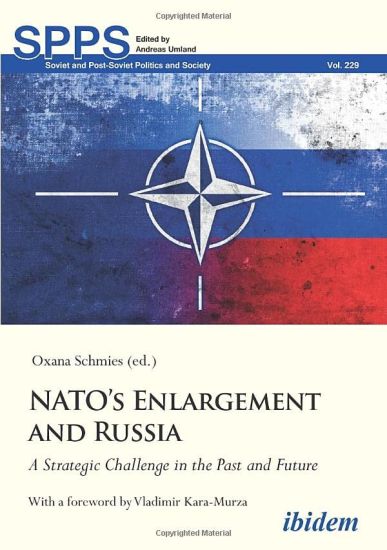
The Kremlin has sought to establish an exclusive Russian sphere of influence in the nations lying between Russia and the EU, from Georgia in 2008 to Ukraine in 2014 and Belarus in 2020. It has extended its control by means of military intervention, territorial annexation, economic pressure and covert activities. Moscow seeks to justify this behaviour by referring to an alleged threat from NATO and the Alliances eastward enlargement. In the rhetoric of the Kremlin, NATO expansion is the main source for Moscows stand-off with the West. This collection of essays and analyses by prominent politicians, diplomats, and scholars from the US, Russia, and Europe provides personal perspectives on the sources of the Russian-Western estrangement. They draw on historical experience, including the Russian-Western controversies that intensified with NATO's eastward expansion in the 1990s, and reflect on possible perspectives of reconciliation within the renewed transatlantic relationship. The volume touches upon alleged and real security guarantees for the countries of Eastern and Central Europe as well as past and current deficits in the Western strategy for dealing with an increasingly hostile Russia. Thus, it contributes to the ongoing Western debate on which policies towards Russia can help to overcome the deep current divisions and to best meet Europes future challenges.