Kirjojen hintavertailu – 12 859 828 kirjaa ja 27 kauppaa

Kirjailija

Volker Radke

Kirjat ja teokset yhdessä paikassa: 4 kirjaa, julkaisuja vuosilta 1999–2018, suosituimpiin kuuluu Economics for Environmental Studies. Vertaile teosten hintoja ja tarkista saatavuus suomalaisista kirjakaupoista.

4 kirjaa

Kirjojen julkaisuvuodet: 1999–2018.

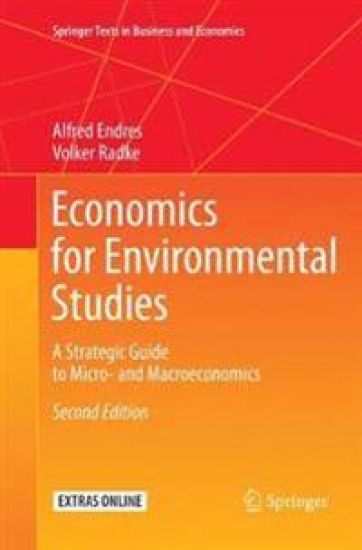
Economics for Environmental Studies

Economics for Environmental Studies

Alfred Endres; Volker Radke

Springer-Verlag Berlin and Heidelberg GmbH Co. K
2018
nidottu
This textbook provides a concise introduction to micro- and macroeconomics and demonstrates how economic tools and approaches can be used to analyze environmental issues. Written in an accessible style without compromising depth of the analysis, central issues in the public policy debate on environmental problems and environmental policy are discussed and analyzed from an economics perspective. The book is meant as an introductory (and in some parts intermediate) text for undergraduate students in environmental sciences without a background in economics. It also serves as a companion for economists interested in a presentation of the micro and macro foundations of environmental economics, in a nutshell. The second edition has been revised, updated and extended in may ways, for instance by adding a microeconomic section on environmental technical change, a discussion of the significance of technical change for a sustainable development and a considerably extended macroeconomic section on economic growth.
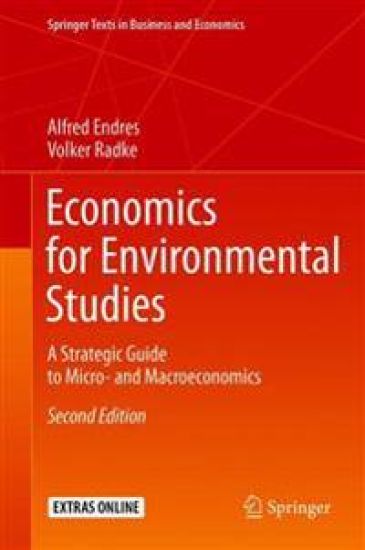
Economics for Environmental Studies

Economics for Environmental Studies

Alfred Endres; Volker Radke

Springer-Verlag Berlin and Heidelberg GmbH Co. K
2018
sidottu
This textbook provides a concise introduction to micro- and macroeconomics and demonstrates how economic tools and approaches can be used to analyze environmental issues. Written in an accessible style without compromising depth of the analysis, central issues in the public policy debate on environmental problems and environmental policy are discussed and analyzed from an economics perspective. The book is meant as an introductory (and in some parts intermediate) text for undergraduate students in environmental sciences without a background in economics. It also serves as a companion for economists interested in a presentation of the micro and macro foundations of environmental economics, in a nutshell. The second edition has been revised, updated and extended in may ways, for instance by adding a microeconomic section on environmental technical change, a discussion of the significance of technical change for a sustainable development and a considerably extended macroeconomic section on economic growth.
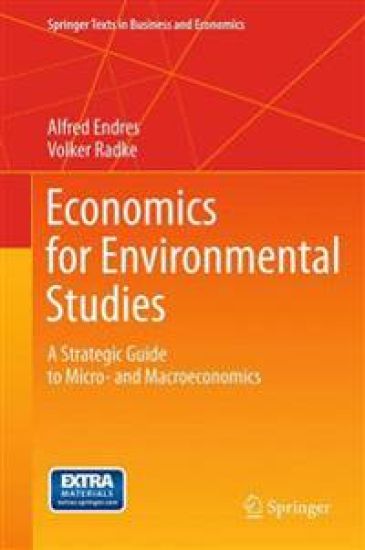
Economics for Environmental Studies

Economics for Environmental Studies

Alfred Endres; Volker Radke

Springer-Verlag Berlin and Heidelberg GmbH Co. K
2014
nidottu
An understanding of fundamental economic concepts is essential for students in environmental studies programs around the world. The present textbook addresses their needs, providing a concise introduction to micro- and macroeconomics and demonstrating how these economic tools and approaches can be used to analyze environmental issues. Written in an accessible style without compromising depth of the analysis, central issues in the public policy debate on environmental problems and environmental policy are discussed and analyzed from an economics perspective. The book is meant both as an introductory text for undergraduate students in environmental sciences without a background in economics, and as a companion for economists interested in a presentation of the micro and macro foundations of environmental economics, in a nutshell.
Nachhaltige Entwicklung

Nachhaltige Entwicklung

Volker Radke

Physica-Verlag GmbH Co
1999
nidottu
Der Begriff der nachhaltigen Entwicklung hat in der umwelt- und ressourcenökonomischen Literatur einen beispiellosen Siegeszug erlebt. Zwei Aspekte sind besonders augenfällig: Erstens ist eine bemerkenswerte Heterogenität hinsichtlich der inhaltlichen Auslegungen dieses Begriffes zu konstatieren. Zweitens ist ein intensives Bemühen um eine Operationalisierung des Nachhaltigkeitsgrundsatzes festzustellen, wobei der Schwerpunkt im Bereich der Entwicklung aussagefähiger Nachhaltigkeitsindikatoren liegt. Die Operationalisierbarkeit eines Zieles, so ist jedoch zu vermuten, steigt grundsätzlich mit der Exaktheit seiner Definition. Aus dieser Spannung bezieht dieses Buch seine Motivation. Auf der Grundlage definitorischer Vorüberlegungen werden Nachhaltigkeitsindikatoren entwickelt, die "schwache" und "starke" Nachhaltigkeitskonzeptionen integrieren.