Kirjojen hintavertailu – 12 859 826 kirjaa ja 27 kauppaa
Kirjailija
Volker Wulf
Kirjat ja teokset yhdessä paikassa: 4 kirjaa, julkaisuja vuosilta 2016–2024, suosituimpiin kuuluu Human-Computer Interaction and International Public Policymaking. Vertaile teosten hintoja ja tarkista saatavuus suomalaisista kirjakaupoista.
Jonathan Lazar; Julio Abascal; Simone Barbosa; Jeremy Barksdale; Batya Friedman; Jens Grossklags; Jan Gulliksen; Jeff Johnson; Tom McEwan; Loïc Martínez-Normand; Wibke Michalk; Janice Tsai; Gerrit van der Veer; Hans von Axelson; Ake Walldius; Gill Whitney; Marco Winckler; Volker Wulf; Elizabeth F. Churchill; Lorrie Cranor; Janet Davis; Alan Hedge; Harry Hochheiser; Juan Pablo Hourcade; Clayton Lewis; Lisa Nathan; Fabio Paterno; Blake Reid; Whitney Quesenbery; Ted Selker; Brian Wentz
This monograph lays out a discussion framework for understanding the role of human-computer interaction (HCI) in public policymaking. It takes an international view, discussing potential areas for research and application and their potential for impact. The aim is to provide a solid foundation for discussion, cooperation and collaborative interaction, and to outline future programs of activity. It starts with an introduction to HCI and public policy and goes on to discuss how HCI research and practices already inform public policy, providing representative examples. It then discusses how public policy influences HCI and provides representative public policy areas that are relevant to HCI, and where HCI could have even more impact in the future. It concludes by laying out a framework for involvement and suggested actions by the HCI community in public policy internationally. This monograph summarizes the observations and recommendations from a daylong workshop at the CHI 2013 conference in Paris, France. The workshop invited the community’s perspectives regarding the intersection of governmental policies, international and domestic standards, recent HCI research discoveries, and emergent considerations and challenges. It also incorporates contributions made after the workshop by workshop participants and by individuals who were unable to participate in the workshop but whose work and interests were highly related and relevant.
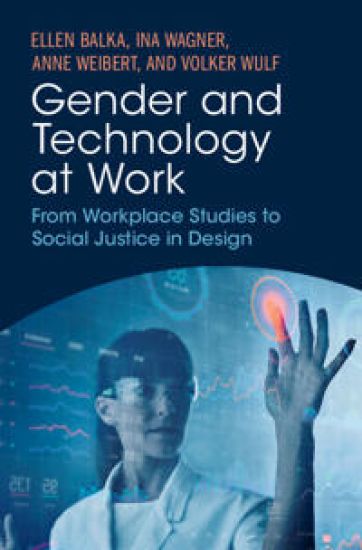
This book brings together the vast research literature about gender and technology to help designers understand what a gender perspective and a focus on intersectionality can contribute to designing information technology systems and artifacts, and to assist organizations as they work to develop work cultures that are supportive of women and marginalized genders and people. Drawing on empirical and analytical studies of women's work and technology in many parts of the world, the book addresses how to make invisible aspects of work visible; how to recognize women's skills without falling into the trap of gender stereotyping; how to engage in improving working conditions; and how to defend care of life situations and needs against a managerial logic. It addresses challenges for design, including many overlooked and undervalued aspects, such as the complexities involved in human–machine interactions, as well as the need to create safe spaces for research subjects.
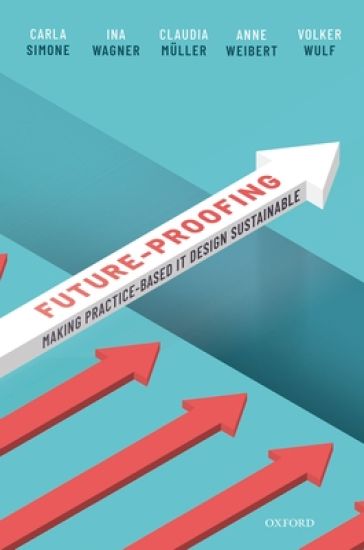
Innovative research solutions increasingly require deep engagement with practitioners to manage the complex problems they are attempting to solve. This often project-based research is equipped with finite resources over a limited period without much thought into future-proofing the practice. These projects must face questions of what happens when a product comes to an end and whether there are any lasting positive effects once the IT systems are no longer being actively developed. From a computing perspective, the challenge is to design IT artifacts that contribute to improving the user's work and everyday life in a sustainable way, thereby also contributing to social and ecological sustainability. Future-Proofing: Making Practice-Based IT Design Sustainable documents the experiences made by several leading research groups in Europe, North America, and South Africa. It describes their efforts to achieve sustainable design results, the difficulties that barred the way but also the strategies they adopted to achieve the goal of sustainability. The analysis of these cases has inspired thinking about how to more systematically address and possibly overcome the impediments to sustainability. This book develops a strong future-oriented perspective that conceptualizes sustainability as a complex and highly variegated issue and formulates insights and recommendations with a view to help researchers to better design for sustainability.