Kirjojen hintavertailu – 12 859 828 kirjaa ja 27 kauppaa
Kirjailija
Vusi Gumede
Kirjat ja teokset yhdessä paikassa: 7 kirjaa, julkaisuja vuosilta 2015–2026, suosituimpiin kuuluu Regional Integration and Migration in Africa. Vertaile teosten hintoja ja tarkista saatavuus suomalaisista kirjakaupoista.
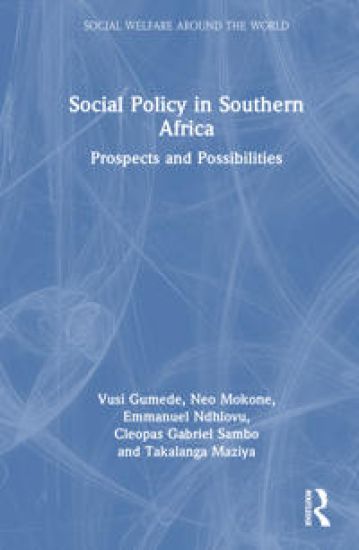
This book, dealing with social policy in Southern Africa, offers a comprehensive collection of possible social policy-based interventions in Southern Africa’s socio-economic and development realities, starting with the history or background to existing social policies and ultimately proposing the kinds of social policies that are ideal for Southern African countries. Southern Africa as a sub-region has a political history and socio-economic profile that allows a focused study of the sub-region, particularly in relation to socio-economic transformation. The sub-region has been shaped by complex experiences of the various groups over millennia, and the borders are a reflection of events of the colonial era which lasted well into the 20th century. Southern African countries have struggled with socio-economic development. The lack of comprehensive social policies in the sub-region is among the chief reasons for poor socio-economic development outcomes in the sub-region with progress hindered by widespread poverty, rising inequality, massive youth unemployment, female marginalization, and deficits in domestic productivity, competitiveness, value addition, infrastructure, and development planning. Demonstrating how social policy can confront the basic challenges of development in agriculture and the informal sector and showing both the theoretical and practical applicability of social policy in Southern Africa, particularly with regard to responding to contemporary regional challenges such as climate change, war and conflict, and pandemics, this book is necessary reading for all scholars and students of African politics, social policy, and socio-economic development broadly.
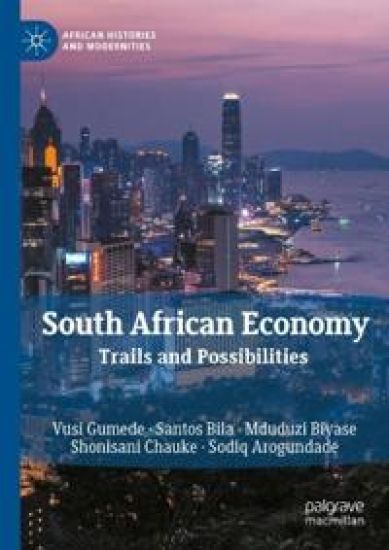
The South African economy has largely performed below its potential. Although the size of the South African economy has significantly increased since 1994, its performance has lagged behind other comparable economies, and has even been overtaken by Nigeria as the largest economy in Africa. Unemployment, income inequality, and poverty have remained high since 1994. In the past decade, South African economic performance has been so poor that is has resulted in declining per capita incomes. In this study, Vusi Gumede and his co-authors offer a comprehensive analysis of the South African economy since 1994, dealing with many important issues, ranging from its history to its political travails in an effort to provide better understanding and find possible solutions to ensuring inclusive growth.
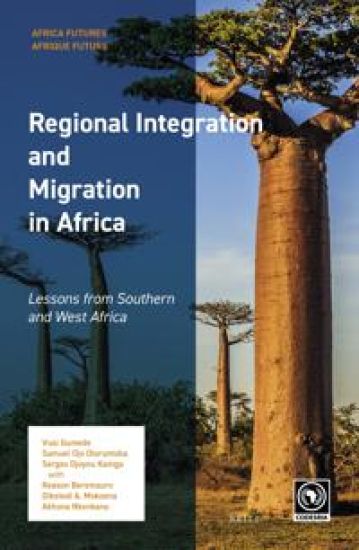
This comparative book debates migration and regional integration in the two regional economic blocs, namely the Southern African Development Community (SADC) and the Economic Community of West African States (ECOWAS). The book takes a historical and nuanced citizenship approach to integration by analysing regional integration from the perspective of non-state actors and how they negotiate various structures and institutions in their pursuit for life and livelihood in a contemporary context marked by mobility and economic fragmentation.