
Kirjailija
W. B. Yeats
Kirjat ja teokset yhdessä paikassa: 289 kirjaa, julkaisuja vuosilta 1959–2026, suosituimpiin kuuluu W B Yeats - Collected Poems. Vertaile teosten hintoja ja tarkista saatavuus suomalaisista kirjakaupoista.
Nimi esiintyy myös muodoissa: W B Yeats, W.B. Yeats
289 kirjaa
Kirjojen julkaisuvuodet: 1959–2026.
Ireland is home to some of the world's most enchanting myths and tales. But many of these stories would have been lost if they hadn't been recorded and written down. Poet and Nobel laureate William Butler Yeats was one of these fo
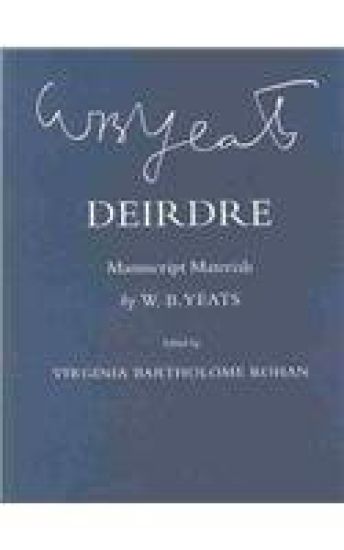
From reviews of The Cornell Yeats series:"For students of Yeats the whole series is bound to become an essential reference source and a stimulus to important critical re-readings of Yeats's major works. In a wider context, the series will also provide an extraordinary and perhaps unique insight into the creative process of a great artists."—Irish Literary Supplement"I consider the Cornell Yeats one of the most important scholarly projects of our time."—A. Walton Litz, Princeton University, coeditor of The Collected Poems of William Carols Williams and Personae: The Shorter Poems of Ezra Pound"The most ambitious of the many important projects in current studies of Yeats and perhaps of modern poetry generally.... The list of both general and series editors, as well as prospective preparers of individual volumes, reads like a Who's Who of Yeats textual studies in North America. Further, the project carries the blessing of Yeats's heirs and bespeaks an ongoing commitment from a major university press.... The series will inevitably engender critical studies based on a more solid footing than those of any other modern poet.... Its volumes will be consulted long after gyres of currently fashionable theory have run on."—Yeats Annual (1983)The ancient story of the ill-fated Deirdre and the Sons of Usnach has a special place in Irish literature—as a tale prefatory to The Táin—and a durable hold on the Irish imagination. Building on the many earlier literary retellings of the story, W. B. Yeats deliberately frames his 1906 play as an extension of the legend, writing a new death-tale for Deirdre that is also a personal statement about love, death, and the making of art. This edition of the manuscripts of Deirdre presents the transcription of work from three substantially different versions of the play through its first performance, together with post-performance revisions that throw light on what Yeats learned from producing the play on stage. Deirdre is an important transitional play in Yeats's career as a playwright. The manuscripts included here show him extending the limits of the conventionally staged play and initiating the development of some of the features of the dance plays (the use of chorus and song, the unity of metaphor, the compression of language). Most intriguing, however, is the view they offer of the play as it was first performed at the Abbey Theatre. The Cornell Yeats edition of Deirdre features a series of sketches for staging the play, one of a very few pieces of evidence for Yeats's production plans for any of his early plays.
Where There Is Nothing, Being Volume One of Plays for an Irish Theatre, 1903
W. B. Yeats
Kessinger Pub
2003
pokkari
"Parnell's Funeral and Other Poems" from "a Full Moon in March"
W. B. Yeats
Cornell University Press
2003
sidottu
From reviews of The Cornell Yeats series: "For students of Yeats the whole series is bound to become an essential reference source and a stimulus to important critical re-readings of Yeats's major works. In a wider context, the series will also provide an extraordinary and perhaps unique insight into the creative process of a great artist."—Irish Literary Supplement "I consider the Cornell Yeats one of the most important scholarly projects of our time."—A. Walton Litz, Princeton University, coeditor of The Collected Poems of William Carols Williams and Personae: The Shorter Poems of Ezra Pound "The most ambitious of the many important projects in current studies of Yeats and perhaps of modern poetry generally.... The list of both general and series editors, as well as prospective preparers of individual volumes, reads like a Who's Who of Yeats textual studies in North America. Further, the project carries the blessing of Yeats's heirs and bespeaks an ongoing commitment from a major university press.... The series will inevitably engender critical studies based on a more solid footing than those of any other modern poet.... Its volumes will be consulted long after gyres of currently fashionable theory have run on."—Yeats Annual (1983) The manuscripts transcribed and reproduced in this volume of the Cornell Yeats were written from spring 1933 through December 1934. "Parnell's Funeral and Other Poems" is the third section of W. B. Yeats's book A Full Moon in March (1935), following the two plays "A Full Moon in March" and "The King of the Great Clock Tower." David R. Clark's introduction relates biographical events to what the manuscripts show about the chronological order in which the poems were written. The poems, which illuminate such facets of Yeats's life as the poet's flirtations with fascism and Hinduism and his concern, at age sixty-eight, that his poetic powers were waning, are presented in the order in which they appeared in A Full Moon in March. Of the twenty-one poems here, eighteen are called songs. Only "Parnell's Funeral" itself is un-songlike, a somber and powerful declaration made by a Parnellite. Each poem is accompanied by comments on its content and its manuscripts. Ninety-nine illustrations show Yeats's handwritten drafts, typescripts, and revisions. Because of the poems' exotic references, a long section of the introduction provides relevant material from Yeats's letters and commentary and an independent analysis of each poem. Early in his career Yeats, with his fellow poets in the Rymers' Club, had "taken delight in poetry that was, before all else, speech or song, and could hold the attention of a fitting audience like a good play or a good conversation." Throughout "Parnell's Funeral and Other Poems," Yeats's desire for a direct lyrical urge is evident.