Kirjojen hintavertailu – 12 859 827 kirjaa ja 27 kauppaa
Kirjailija
W. E. B. Du Bois
Kirjat ja teokset yhdessä paikassa: 286 kirjaa, julkaisuja vuosilta 1899–2026, suosituimpiin kuuluu The Souls of Black Folk: Introduction by Arnold Rampersad. Vertaile teosten hintoja ja tarkista saatavuus suomalaisista kirjakaupoista.
Nimi esiintyy myös muodoissa: W E B Du Bois, W.E.B. Du Bois, W.E.B Du Bois
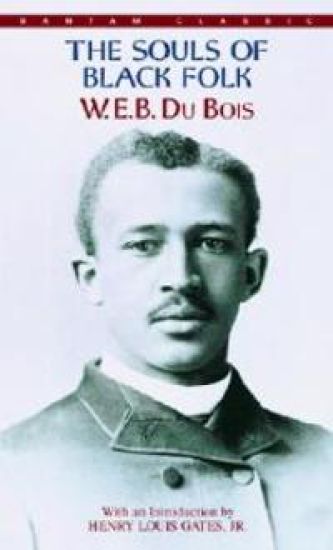
"The problem of the twentieth century is the problem of the color line." Thus speaks W. E. B. Du Bois in The Souls Of Black Folk, one of the most prophetic and influental works in American literature. In this eloquent collection of essays, first published in 1903, Du Bois dares as no one has before to describe the magnitude of American racism and demand an end to it. He draws on his own life for illustration, from his early experiences teaching in the hills of Tennessee to the death of his infant son and his historic break with the conciliatory position of Booker T. Washington. Far ahead of its time, The Souls Of Black Folk both anticipated and inspired much of the black conciousness and activism of the 1960's and is a classic in the literature of civil rights. The elegance of DuBois's prose and the passion of his message are as crucial today as they were upon the book's first publication.
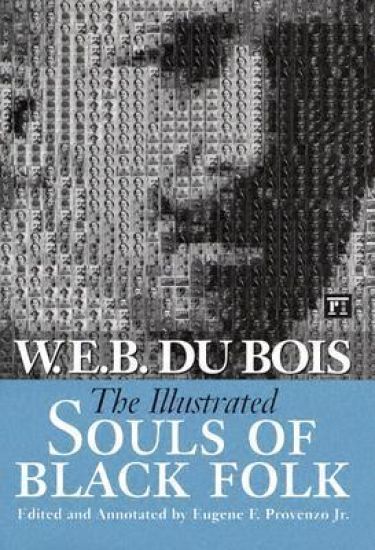
This prophetic statement made by W. E. B. Du Bois over a century ago is from The Souls of Black Folk. One hundred years later, Souls remains the most important treatment of African-American life and culture published in the twentieth century. Richly illustrated, this special edition of Du Bois's seminal work includes historical woodcuts and engravings, photos and documents. Most of the photos, engravings, and documents are from the 19th and early 20th century and depict American slavery and its legacy, African-American life, and the prominent figures and events associated with the book's content. Assembled by Eugene F. Provenzo Jr., this illustrated edition of The Souls of Black Folk also offers extensive annotations, commentary and related materials from government, the media, advertising, and popular culture. Documents include the Act Establishing the Freedman's Bureau, Booker T. Washington's Atlanta Exposition Speech, W. E. B. Du Bois's essay "The Talented Tenth," Ida B. Wells-Barnett's The Lynch Law in Georgia, W. E. B. Du Bois's report "The Negro in the Black Belt," Alexander Crummell's sermon, "Common Sense and Schooling," W. E. B. Du Bois's story, "The Black Man Brings His Gifts," Thomas Wentworth Higginson's article "Negro Spirituals," and more.
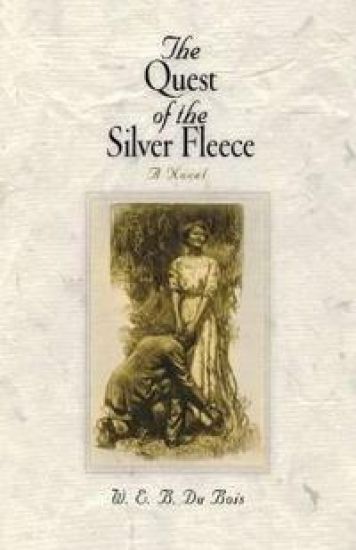
The first novel of the famous crusader for racial equality follows the adventures of Blessed "Bles" Alwyn, a young man in search of formal education, his encounters with the mysterious woman Zora, and his struggle with a hypocritical society in the early years of the twentieth century. Reprint.
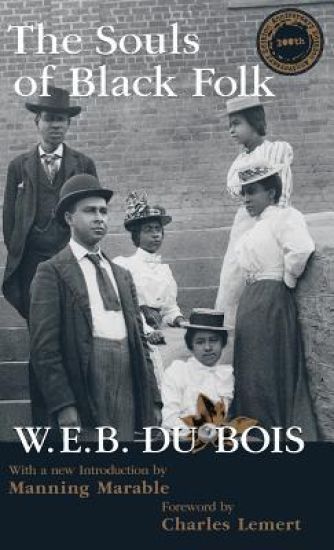
This 100th Anniversary edition of Du Bois's most widely read book offers significant updates and advantages over all other editions of this classic of African American history. A new Introduction by Manning Marable, Du Bois biographer and eminent historian, puts The Souls of Black Folk into context for 21st Century readers and recounts Du Bois's life-long relationship with his text, which Du Bois continued to rework over many decades. A rarely seen 1953 Re-Introduction by Du Bois is included in this edition, as are the many corrections and changes Du Bois made to the original text during this era. Finally, an explication of the Du Bois text in the new Foreword by Charles Lemert helps the reader better understand the book's historical and current relevance, as does the afterword by Cheryl Townsend Gilkes reflecting on Du Bois's influence on feminism.
This 100th Anniversary edition of Du Bois's most widely read book offers significant updates and advantages over all other editions of this classic of African American history. A new Introduction by Manning Marable, Du Bois biographer and eminent historian, puts The Souls of Black Folk into context for 21st Century readers and recounts Du Bois's life-long relationship with his text, which Du Bois continued to rework over many decades. A rarely seen 1953 Re-Introduction by Du Bois is included in this edition, as are the many corrections and changes Du Bois made to the original text during this era. Finally, an explication of the Du Bois text in the new Foreword by Charles Lemert helps the reader better understand the book's historical and current relevance, as does the afterword by Cheryl Townsend Gilkes reflecting on Du Bois's influence on feminism.
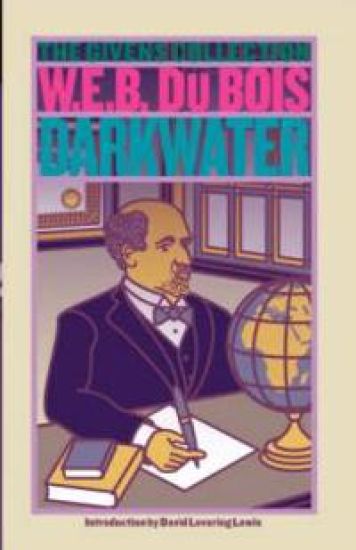
W. E. B. Du Bois, one of the most celebrated intellectuals of the twentieth century, published Darkwater -- a powerful collection of essays, verse and fiction -- in 1920, two decades after his most famous book, The Souls of Black Folk. Throughout his long life and extraordinary career as a scholar, activist, writer and educator, Du Bois's body of work illumined America's understanding of the "problem of the color line." While much of his early texts were sociological investigations of the Black community, the author increasingly incorporated autobiographical, poetic and spiritual elements into his works. The results are some of the most electrifying commentaries ever written on race and class in America. After decades of obscurity, this literary jewel is presented with a new introduction written by David Levering Lewis, author of W. E. B. Du Bois: Biography of a Race, 1868-1919 and W. E. B. Du Bois: The Fight for Equality and the American Century, 1919-1963; Lewis is the foremost scholar of the work of Du Bois. "If The Souls of Black Folk achieved its singular impact through W. E. B. Du Bois's masterly interweaving of the personal and the universal in such a way that each appropriated something of the illustrative and symbolic value of the other, much of Darkwater: Voices from Within the Veil was a cri de coeur in which the author's anger at the absurdities of racial prejudice crackled through the text like electric jolts that scorched, illumined, or stunned." -- David Levering Lewis, from the Introduction
One hundred years ago, African Americans looked forward to the new twentieth century with mixed feelings of pride and discouragement. On the one hand, they could point to the tremendous progress many of them had made since the end of slavery under the dynamic leadership of Booker T. Washington, whose thriving vocational school, the Tuskegee Institute, was famous throughout the nation. Washington had become the confidant of powerful and influential white Americans, and in 1901 he even dined with President Theodore Roosevelt at the White House. But on the other hand, the majority of white Americans showed little willingness to accept blacks as equals, and in the South segregation was practically institutionalized through the recently enacted Jim Crow laws. It was at this uncertain time that this interesting collection of articles by leading African American citizens was published to address what was then commonly known as "the Negro problem." Looking back at this synopsis of African American affairs one can get a good sense of both the progress made and the problems yet to be overcome, some of which have still not been fully addressed. Predictably, the collection begins with a piece by Booker T. Washington on the value and purpose of stressing industrial education for black Americans. This is followed by a now-famous article by W. E. B. Du Bois called "The Talented Tenth," in which he argued for the cultivation of an elite corps of black intellectuals who would then work to uplift the African American masses. Though Du Bois later changed his approach, one can see in this article how different his philosophy was from Washington's, a difference that later led to a complete break between the two men. The other contributors are Charles W. Chesnutt, Wilford H. Smith, H. T. Kealing, Paul Laurence Dunbar, and T. Thomas Fortune, who discuss the disenfranchisement of blacks; the broader subject of the law and the rights of African Americans; real versus perceived characteristics of people of color; and outstanding representative black Americans, some famous, others little-known. The collection concludes with a sober assessment of "the Negro's place in American life." Issued in the centennial year of its original publication, this new edition of a valuable classic is complemented by an informative introduction by Bernard R. Boxill, professor of philosophy at the University of North Carolina, Chapel Hill.
The distinguished American civil rights leader, W. E. B. Du Bois first published these fiery essays, sketches, and poems individually nearly 80 years ago in the Atlantic, the Journal of Race Development, and other periodicals. Reflecting the author’s ideas as a politician, historian, and artis
Africa is at once the most romantic and the most tragic of continents. So begins The Negro, the first comprehensive history of African and African-derived people, from their early cultures through the period of the slave trade and into the twentieth century. Originally published in 1915, the book was acclaimed in its time, widely read, and deeply influential in both the white and black communities, yet this beautifully written history is virtually unknown today. As a wellspring of critical studies of Africa and African Americans, it directly and indirectly influenced and inspired the works of scholars such as C. L. R. James, Eric Williams, Herbert Aptheker, Eric Foner, Kwame Anthony Appiah, and Henry Louis Gates, Jr. One of the most important books on Africa ever written, it remains fresh, dynamic, and insightful to this day. The Negro is compelling on many levels. By comparing W. E. B. Du Bois's analysis with subsequent scholarship, Robert Gregg demonstrates in his afterword that The Negro was well ahead of its time: Du Bois's view of slavery prefigures both paternalistic perspectives and the materialist view that the system was part of the capitalist mode of production. On black contributions to the Civil War and to the emancipation of slaves, historians have yet to acknowledge all that Du Bois delineated. In his discussion of Reconstruction, Du Bois preempts much later historiography. His identification of segregation as an issue of class rather than race is almost forty years ahead of C. Vann Woodward's similar thesis. As to the matter of race, Du Bois is clear that the concept is a social construct having no foundation in biology. Intellectually and historically prescient, Du Bois assumed globalization as a matter of course, so that his definition of the color line in The Negro links all colonized peoples, not just people of African descent. With the resolution of the Cold War and the ascendancy of the global market, Du Bois's sweeping vision of Africans and the diaspora seems more relevant now than at any time in the past hundred years.
This vintage book contains W. E. B. Du Bois' 1903 work, "The Souls of Black Folk". A classic work of American history and sociology, it constitutes a seminal piece of African-American literary history. It contains essays chiefly on the subject of race and is based on the author's own experiences as an African-American in the late nineteenth century. "The Souls of Black Folk" is a seminal early work in the field of sociology and is highly recommended for those with an interest in American history. Contents include: "The Forethought", "Of Our Spiritual Strivings", "Of the Dawn of Freedom", "Of Mr. Booker T. Washington and Others", "Of the Meaning of Progress", "Of the Wings of Atalanta", "Of the Training of Black Men", "Of the Black Belt", "Of the Quest of the Golden Fleece", "Of the Sons of Master and Man", "Of the Faith of the Fathers", et cetera. Many vintage books such as this are increasingly scarce and expensive. We are republishing this volume now in an affordable, modern edition complete with a specially commissioned new biography of the author.
The pioneering work in the study of the role of Black Americans during Reconstruction by the most influential Black intellectual of his time. This pioneering work was the first full-length study of the role black Americans played in the crucial period after the Civil War, when the slaves had been freed and the attempt was made to reconstruct American society. Hailed at the time, Black Reconstruction in America 1860-1880 has justly been called a classic.
First published in 1903, this eloquent collection of essays exposed the magnitude of racism in society. The book endures today as a classic document of American and political history.
In 1897 the promising young sociologist William Edward Burghardt Du Bois (1868-1963) was given a temporary post as Assistant in Sociology at the University of Pennsylvania in order to conduct a systematic investigation of social conditions in the seventh ward of Philadelphia. The product of those studies was the first great empirical book on the Negro in American society. More than one hundred years after its original publication by the University of Pennsylvania Press, The Philadelphia Negro remains a classic work. It is the first, and perhaps still the finest, example of engaged sociological scholarship—the kind of work that, in contemplating social reality, helps to change it. In his introduction, Elijah Anderson examines how the neighborhood studied by Du Bois has changed over the years and compares the status of blacks today with their status when the book was initially published.
The problem of ""the color line,"" W. E. B. Du Bois's ever-present polemical theme, is at the core of this novel of sensual love, radical politics, and the quest for racial justice. Originally published by Harcourt Brace and Co. in 1928, Dark Princess was one of two novels written by Du Bois. Toward the end of his life he ranked it as his favorite of all his works. For the fantastical storyline, heavy with propagandist overtones, Du Bois depicts 1920s America as a racist nation primed for radical protest and terrorism. Matthew Townes, the protagonist, is a medical student expelled because his race bars him from the required course in obstetrics in a white hospital. Self-exiled in Berlin after his political idealism is corrupted, Townes falls in love with Princess Kautilya, daughter of a maharajah, and joins the international team she heads in which people of color unite against white imperialism. Du Bois recounts their quest for liberation in a whites-only world that overwhelms their passionate love and separates them. Du Bois concludes the novel with the birth of their son--proclaimed as the Maharajah of Bwodpur and ""Messenger and Messiah to all the Darker Worlds.""The reviewer for the New York Herald Tribune found ""amidst much pure romance and preciosity of style there are rich deposits of straight sociology [as well as] interesting and revealing reading [for] the white reader who has yet few ways of looking into the many closed chambers of Negro life or of seeing into the dilemmas of the intellectual Negro mind and heart.""
First published in 1896, The Suppression of the African Slave Trade remains the standard work on the efforts made in the United States, from 1638 to 1870, to limit and suppress the trade in slaves between Africa and America. In the foreword to this new edition, John Hope Franklin, James B. Duke Professor of History Emeritus, and professor of legal history at Duke University, explains the attitude toward slavery at the time Du Bois wrote his book, gives a brief background of Du Bois's growth as an educator and writer, and examines the methods Du Bois used to write the book. Those doing work on th subject of American slavery will find this volume an important source book.
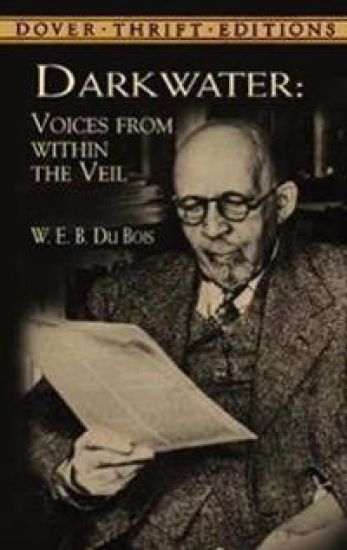
"Darkwater: Voices from Within the Veil" is a collection of essays, poetry, and sketches by W. E. B. Du Bois, first published in 1920. In this work, Du Bois addresses issues of race, class, and gender, exploring the complexities of African American life and the ongoing struggle for civil rights and social justice. The book reflects Du Bois's thoughts and experiences as a Black intellectual and activist in the early 20th century, providing a powerful critique of racism and advocating for equality and human rights. Some of the key themes and topics in "Darkwater" include: Racism and Segregation: Du Bois discusses the pervasive impact of racism and segregation on African American communities, highlighting the injustices and challenges they face. Economic Inequality: The essays examine the economic disparities between Black and white Americans, emphasizing the need for economic justice and opportunities for all. Education: Du Bois stresses the importance of education in empowering African Americans and promoting social change. Gender Equality: The work also addresses issues of gender, particularly the experiences and struggles of Black women. Spirituality and Religion: Du Bois explores the role of spirituality and religion in the African American experience, reflecting on their significance in the fight for justice and equality." Darkwater" is considered a seminal work in African American literature and continues to be influential in discussions of race, equality, and social justice.