
Kirjojen hintavertailu – 12 903 725 kirjaa ja 27 kauppaa

Kirjailija

W. Eugene George

Kirjat ja teokset yhdessä paikassa: 2 kirjaa, julkaisuja vuosilta 2008–2016, suosituimpiin kuuluu Master Builder of the Lower Rio Grande. Vertaile teosten hintoja ja tarkista saatavuus suomalaisista kirjakaupoista.

2 kirjaa

Kirjojen julkaisuvuodet: 2008–2016.

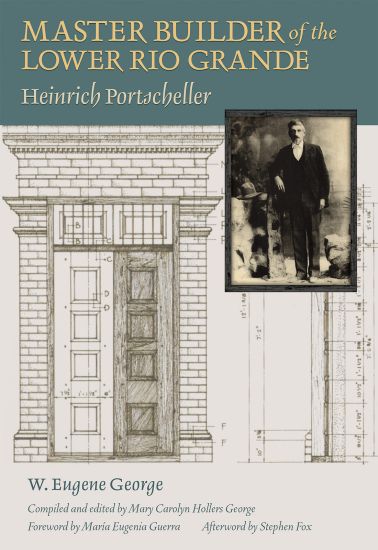
Master Builder of the Lower Rio Grande

Master Builder of the Lower Rio Grande

W. Eugene George; Mary Carolyn Hollers George; Mariá Eugenia Guerra; Stephen Fox

Texas A M University Press
2016
sidottu
In 1865, Heinrich Portscheller emigrated to Mexico from his native Germany, perhaps motivated by a desire to avoid compulsory military service in the Austro-Prussian War. The scion of a well-known family of masons and master builders, he had the misfortune to disembark at Veracruz during the Franco-Mexican War. Portscheller and his traveling companion were impressed into the imperialist forces and sent to northern Mexico. Sometime following the Battle of Santa Gertrudis in1866, Portscheller deserted the army and eventually made a place for himself in Roma, a small town in Starr County, Texas. Over the next decades, Portscheller acquired a reputation as a master builder and architect. He brought to the Lower Rio Grande Valley his long heritage of Old World building knowledge and skills and integrated them with the practices of local Mexican construction and vernacular architecture. However, despite his many contributions to the distinctive architecture of Roma and surrounding places, by the mid-twentieth century he was largely forgotten. During nearly fift y years of historical sleuthing in South Texas and Germany, W. Eugene George reconstructed many of the details of the life and career of this important South Texas craft sman. Containing editorial contributions by Mary Carolyn Hollers George and featuring a foreword by Mari. Eugenia Guerra and a concluding assessment by noted architectural historian Stephen Fox, Master Builder of the Lower Rio Grande: Heinrich Portscheller at last permits a long-overdue appreciation of the legacy of this influential architect and builder of the Texas-Mexico borderlands.
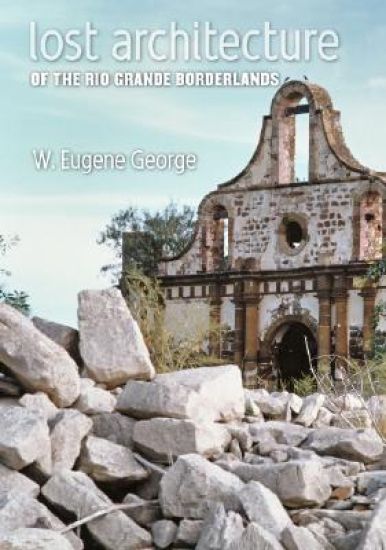
Lost Architecture of the Rio Grande Borderlands

Lost Architecture of the Rio Grande Borderlands

W. Eugene George; Ricardo Paz Trevino

Texas A M University Press
2008
sidottu
Mexican settlers first came to the valley of the Rio Grande to establish their ranchos in the 1750s. Two centuries later the Great River, dammed in an international effort by the U. S. and Mexican governments to provide flood control and a more dependable water supply, inundated twelve settlements that had been built there. Under the waters of the new Falcon Reservoir lay homes, businesses, churches, and cemeteries abandoned by residents on both sides of the river when the floods of 1953 filled the 115,000-acre area two years ahead of schedule. The Smithsonian Institution, the National Park Service, and the University of Texas at Austin conducted an initial survey of the communities lost to the Falcon Reservoir, but these studies were never completed or fully reported. When architect W. Eugene George came to the area in the 1960s, he found a way of life waiting to be preserved in words, photographs, and drawings. Two subsequent recessions of the reservoir - in 1983-86 and again in 1996-98 - gave George new access to one of the settlements, Guerrero Viejo in Mexico. Unfortunately, the receding lake waters also made the village accessible to looters. George's work, then, was crucial in documenting the indigenous architecture of these villages, both as it existed prior to the flooding and as it remained before it was despoiled by vandals' hands.""Lost Architecture of the Rio Grande Borderlands"" combines George's original 1975 Texas Historical Commission report with the information he gleaned during the two low-water periods. This handsome, extended photographic essay casts new light on the architecture and lives of the people of the Texas-Mexico borderlands.