Kirjojen hintavertailu – 12 903 725 kirjaa ja 27 kauppaa

Kirjailija

W. George Lovell

Kirjat ja teokset yhdessä paikassa: 12 kirjaa, julkaisuja vuosilta 1992–2026, suosituimpiin kuuluu The Conquest That Never Was. Vertaile teosten hintoja ja tarkista saatavuus suomalaisista kirjakaupoista.

12 kirjaa

Kirjojen julkaisuvuodet: 1992–2026.

The Conquest That Never Was

The Conquest That Never Was

W. George Lovell

Pennsylvania State University Press
2026
sidottu
The Conquest That Never Was uncovers one of the most ambitious but disastrous campaigns of the early colonial period. Pedro de Alvarado—best known as Cortés’s lieutenant in Mexico and later as the conqueror of Guatemala—sought to extend his fame and fortune by seizing Quito in the northern Inca Empire. Instead, his massive fleet and army met ruin in the high Andes, leaving Alvarado humiliated and forcing him to transfer his forces to rival conquistadors. This volume traces Alvarado’s career after Guatemala, focusing on the ill-fated expedition of 1534 as well as his unrealized license to conquer the Spice Islands, his involvement in the Spanish conquest of Ecuador, and his eventual death in battle in Mexico. Drawing on transatlantic correspondence, legal testimony, Spanish chronicles, and a Maya-authored history, Lovell reconstructs both the trajectory of Alvarado’s campaigns and the mind of a conquistador driven by greed and glory. Vivid descriptions carry readers from Guatemala’s rainforests to the snowbound passes of the Andes, revealing how fragile imperial ambitions could be in practice. By documenting Alvarado’s failed bid to contest Pizarro in Peru, The Conquest That Never Was complicates the triumphalist narrative of Spanish expansion. It illuminates the contradictions, rivalries, and violence at the heart of the colonial project, while foregrounding Indigenous labor and suffering in conquest. Designed for upper-level undergraduate and graduate courses, the book also offers scholars of Latin American history, historical geography, and the Andes a gripping case study of imperial aspiration and collapse.
The Conquest That Never Was

The Conquest That Never Was

W. George Lovell

Pennsylvania State University Press
2026
pokkari
The Conquest That Never Was uncovers one of the most ambitious but disastrous campaigns of the early colonial period. Pedro de Alvarado—best known as Cortés’s lieutenant in Mexico and later as the conqueror of Guatemala—sought to extend his fame and fortune by seizing Quito in the northern Inca Empire. Instead, his massive fleet and army met ruin in the high Andes, leaving Alvarado humiliated and forcing him to transfer his forces to rival conquistadors. This volume traces Alvarado’s career after Guatemala, focusing on the ill-fated expedition of 1534 as well as his unrealized license to conquer the Spice Islands, his involvement in the Spanish conquest of Ecuador, and his eventual death in battle in Mexico. Drawing on transatlantic correspondence, legal testimony, Spanish chronicles, and a Maya-authored history, Lovell reconstructs both the trajectory of Alvarado’s campaigns and the mind of a conquistador driven by greed and glory. Vivid descriptions carry readers from Guatemala’s rainforests to the snowbound passes of the Andes, revealing how fragile imperial ambitions could be in practice. By documenting Alvarado’s failed bid to contest Pizarro in Peru, The Conquest That Never Was complicates the triumphalist narrative of Spanish expansion. It illuminates the contradictions, rivalries, and violence at the heart of the colonial project, while foregrounding Indigenous labor and suffering in conquest. Designed for upper-level undergraduate and graduate courses, the book also offers scholars of Latin American history, historical geography, and the Andes a gripping case study of imperial aspiration and collapse.
Death in the Snow

Death in the Snow

W. George Lovell

MCGILL-QUEEN'S UNIVERSITY PRESS
2022
sidottu
Pedro de Alvarado is best known as the right-hand man of Hernando Cortés in the conquest of Mexico (1519–21) and the ruthless conqueror of Guatemala some years later. Far less known is his intent to intrude in the conquest of Peru and lay claim to Quito, a wealthy domain in the far north of the Inca Empire. To this end, Alvarado constructed a massive fleet, which sailed south from Central America to what is now Ecuador, making landfall on 25 February 1534. Engaging both the European and Indigenous contexts in which Alvarado operated, George Lovell illuminates this gap in the record, narrating a dramatic story of greed and hubris. Upon reaching Ecuador, Alvarado’s formidable entourage – some five hundred Spanish combatants and two thousand Indigenous conscripts – marched from the Pacific coast to the Andean sierra. Though Quito was his intended destination, he never made it. During a treacherous transit across the mountains, Alvarado’s party was engulfed by heavy snowfall and numbing cold, which proved the expedition’s undoing. Those who survived the ordeal discovered that other Spaniards – Diego de Almagro and Sebastián de BeLalcázar, acting in allegiance with Francisco Pizarro – had reached Quito before them, thereby claiming first right of conquest. Believing he had no option, if strife between rival sides was to be avoided, Alvarado sold his costly machinery of war – men, horses, weaponry, and ships – to those who had beaten him to the prize. All but ruined, he returned humiliated to Central America. Death in the Snow brings to light the delusions of one headstrong conquistador and mourns the loss of untold Indigenous lives, casualties of Alvarado’s lust for fame and fortune.
Strike Fear in the Land

Strike Fear in the Land

W. George Lovell; Christopher H. Lutz; Wendy Kramer

UNIVERSITY OF OKLAHOMA PRESS
2022
nidottu
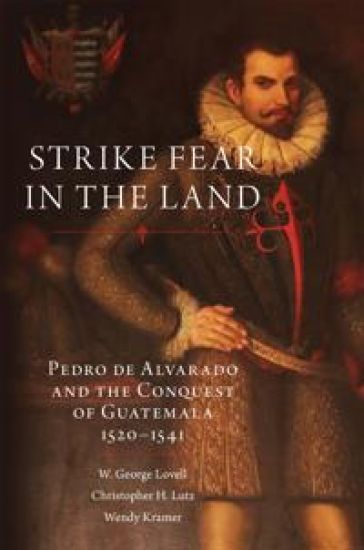
The conquest of Guatemala was brutal, prolonged and complex, fraught with intrigue and deception, and not at all clear-cut. Yet views persist of it as an armed confrontation whose stakes were evident and whose outcomes were decisive, especially in favor of the Spaniards. A critical reappraisal is long overdue, one that calls for us to reconsider events and circumstances in the light of not only new evidence but also keener awareness of indigenous roles in the drama. While acknowledging the prominent role played by Pedro de Alvarado (1485–1541), Strike Fear in the Land reexamines the conquest to give us a greater appreciation of indigenous involvement in it, and sustained opposition to it. Authors W. George Lovell, Christopher H. Lutz, and Wendy Kramer develop a fresh perspective on Alvarado as well as the alliances forged with native groups that facilitated Spanish objectives. The book reveals, for instance, that during the years most crucial to the conquest, Alvarado was absent from Guatemala more often than he was present; he relied on his brother, Jorge de Alvarado, to act in his stead. A pact with the Kaqchikel Maya was also not nearly as solid or long-lived as previously thought, as Alvarado’s erstwhile allies soon turned against the Spaniards, fomenting a prolonged rebellion. Even the story of the K’iche’ leader TecÚn UmÁn, hailed in Guatemala as a national hero who fronted native resistance, undergoes significant revision. Strike Fear in the Land is an arresting saga of personalities and controversies, conveying as never before the turmoil of this pivotal period in Mesoamerican history.
Strange Lands and Different Peoples

Strange Lands and Different Peoples

W. George Lovell; Christopher H. Lutz

University of Oklahoma Press
2021
nidottu
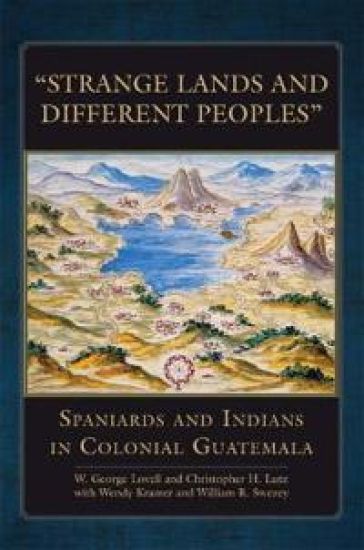
Guatemala emerged from the clash between Spanish invaders and Maya cultures that began five centuries ago. The conquest of these 'rich and strange lands,' as Hernán Cortés called them, and their 'many different peoples' was brutal and prolonged. 'Strange Lands and Different Peoples' examines the myriad ramifications of Spanish intrusion, especially Maya resistance to it and the changes that took place in native life because of it. The studies assembled here, focusing on the first century of colonial rule (1524-1624), discuss issues of conquest and resistance, settlement and colonization, labor and tribute, and Maya survival in the wake of Spanish invasion. The authors reappraise the complex relationship between Spaniards and Indians, which was marked from the outset by mutual feelings of resentment and mistrust. While acknowledging the pivotal role of native agency, the authors also document the excesses of Spanish exploitation and the devastating impact of epidemic disease. Drawing on research findings in Spanish and Guatemalan archives, they offer fresh insight into the Kaqchikel Maya uprising of 1524, showing that despite strategic resistance, colonization imposed a burden on the indigenous population more onerous than previously thought. Guatemala remains a deeply divided and unjust society, a country whose current condition can be understood only in light of the colonial experiences that forged it. Affording readers a critical perspective on how Guatemala came to be, 'Strange Lands and Different Peoples' shows the events of the past to have enduring contemporary relevance.
Demography And Empire

Demography And Empire

W. George Lovell

Routledge
2020
nidottu
The first bibliography of its kind, Demography and Empire offers a comprehensive survey of recent literature in Spanish and in English pertaining to the population history of colonial Central America.
Strike Fear in the Land

Strike Fear in the Land

W. George Lovell; Christopher H. Lutz; Wendy Kramer

University of Oklahoma Press
2020
sidottu
The conquest of Guatemala was brutal, prolonged and complex, fraught with intrigue and deception, and not at all clear-cut. Yet views persist of it as an armed confrontation whose stakes were evident and whose outcomes were decisive, especially in favor of the Spaniards. A critical reappraisal is long overdue, one that calls for us to reconsider events and circumstances in the light of not only new evidence but also keener awareness of indigenous roles in the drama. While acknowledging the prominent role played by Pedro de Alvarado (1485-1541), Strike Fear in the Land reexamines the conquest to give us a greater appreciation of indigenous involvement in it, and sustained opposition to it. Authors W. George Lovell, Christopher H. Lutz, and Wendy Kramer develop a fresh perspective on Alvarado as well as the alliances forged with native groups that facilitated Spanish objectives. The book reveals, for instance, that during the years most crucial to the conquest, Alvarado was absent from Guatemala more often than he was present; he relied on his brother, Jorge de Alvarado, to act in his stead. A pact with the Kaqchikel Maya was also not nearly as solid or long-lived as previously thought, as Alvarado's erstwhile allies soon turned against the Spaniards, fomenting a prolonged rebellion. Even the story of the K'iche' leader Tecún Umán, hailed in Guatemala as a national hero who fronted native resistance, undergoes significant revision. Strike Fear in the Land is an arresting saga of personalities and controversies, conveying as never before the turmoil of this pivotal period in Mesoamerican history.
Demography And Empire

Demography And Empire

W. George Lovell

Routledge
2019
sidottu
Research on the Central American colonial experience—long overshadowed by the scholarly focus on Mexico and Peru—has begun to blossom, greatly expanding our knowledge of land and life in the region under Spanish rule. The first bibliography of its kind, Demography and Empire offers a comprehensive survey of recent literature in Spanish and i
Conquest and Survival in Colonial Guatemala

Conquest and Survival in Colonial Guatemala

W. George Lovell

McGill-Queen's University Press
2015
sidottu
Conquest and Survival in Colonial Guatemala examines the impact of Spanish conquest and colonial rule on the Sierra de los Cuchumatanes, a frontier region of Guatemala adjoining the country's northwestern border with Mexico. While Spaniards penetrated and left an enduring mark on the region, the vibrant Maya culture they encountered was not obliterated and, though subjected to considerable duress from the sixteenth century on, endures to this day. This fourth edition of George Lovell's classic work incorporates new data and recent research findings and emphasizes native resistance and strategic adaptation to Spanish intrusion. Drawing on four decades of archival foraging, Lovell focuses attention on issues of land, labour, settlement, and population to unveil colonial experiences that continue to affect how Guatemala operates as a troubled modern nation. Acclaimed by scholars across the humanities and social sciences, Conquest and Survival in Colonial Guatemala remains a seminal account of the impact of Spanish colonialism in the Americas and a landmark contribution to Mesoamerican studies.
Conquest and Survival in Colonial Guatemala

Conquest and Survival in Colonial Guatemala

W. George Lovell

McGill-Queen's University Press
2015
nidottu
Conquest and Survival in Colonial Guatemala examines the impact of Spanish conquest and colonial rule on the Sierra de los Cuchumatanes, a frontier region of Guatemala adjoining the country's northwestern border with Mexico. While Spaniards penetrated and left an enduring mark on the region, the vibrant Maya culture they encountered was not obliterated and, though subjected to considerable duress from the sixteenth century on, endures to this day. This fourth edition of George Lovell's classic work incorporates new data and recent research findings and emphasizes native resistance and strategic adaptation to Spanish intrusion. Drawing on four decades of archival foraging, Lovell focuses attention on issues of land, labour, settlement, and population to unveil colonial experiences that continue to affect how Guatemala operates as a troubled modern nation. Acclaimed by scholars across the humanities and social sciences, Conquest and Survival in Colonial Guatemala remains a seminal account of the impact of Spanish colonialism in the Americas and a landmark contribution to Mesoamerican studies.
Strange Lands and Different Peoples

Strange Lands and Different Peoples

W. George Lovell; Christopher H. Lutz

University of Oklahoma Press
2013
sidottu
Guatemala emerged from the clash between Spanish invaders and Maya cultures that began five centuries ago. The conquest of these ""rich and strange lands,"" as Hernán Cortés called them, and their ""many different peoples"" was brutal and prolonged. ""Strange Lands and Different Peoples"" examines the myriad ramifications of Spanish intrusion, especially Maya resistance to it and the changes that took place in native life because of it. The studies assembled here, focusing on the first century of colonial rule (1524-1624), discuss issues of conquest and resistance, settlement and colonization, labor and tribute, and Maya survival in the wake of Spanish invasion. The authors reappraise the complex relationship between Spaniards and Indians, which was marked from the outset by mutual feelings of resentment and mistrust. While acknowledging the pivotal role of native agency, the authors also document the excesses of Spanish exploitation and the devastating impact of epidemic disease. Drawing on research findings in Spanish and Guatemalan archives, they offer fresh insight into the Kaqchikel Maya uprising of 1524, showing that despite strategic resistance, colonization imposed a burden on the indigenous population more onerous than previously thought. Guatemala remains a deeply divided and unjust society, a country whose current condition can be understood only in light of the colonial experiences that forged it. Affording readers a critical perspective on how Guatemala came to be, ""Strange Lands and Different Peoples"" shows the events of the past to have enduring contemporary relevance.
The Native Population of the Americas in 1492

The Native Population of the Americas in 1492

W. George Lovell

University of Wisconsin Press
1992
nidottu
Research by some scholars provides population estimates of the pre-contact Americas as high as 112 million in 1492, while others estimate the population to have been as low as eight million. In any case, the native population declined to less than five million by 1650. In this collection of essays, historians, anthropologists and historical demographers discuss the discrepancies in the population estimates and the evidence for the post-European decline. Woodrow Borah, Angel Rosenblat and William T. Sanders, among others, examine such topics as the Indian slave trade, disease, military action and the disruption of the social systems of the native peoples. Offering varying points of view, the contributions critically analyse major hemispheric and regional data and estimates for pre- and post-European contact.