Kirjojen hintavertailu – 12 866 600 kirjaa ja 27 kauppaa

Kirjailija

W. H. Auden

Kirjat ja teokset yhdessä paikassa: 48 kirjaa, julkaisuja vuosilta 1977–2026, suosituimpiin kuuluu The Enchafèd Flood. Vertaile teosten hintoja ja tarkista saatavuus suomalaisista kirjakaupoista.

Nimi esiintyy myös muodoissa: W.H. Auden, W H Auden

48 kirjaa

Kirjojen julkaisuvuodet: 1977–2026.

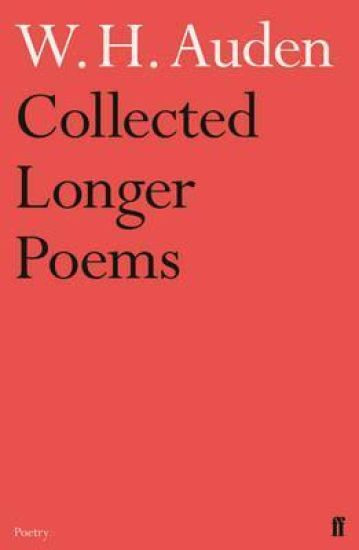
Collected Longer Poems

Collected Longer Poems

W.H. Auden

Faber Faber
2012
nidottu
First published in 1968, this companion volume to the Collected Shorter Poems was compiled by W. H. Auden to bring together six of his longer poetic works, originally published between 1930 and 1947. Auden was one of the modern masters of the extended poem, and these works are among his most enduring achievements, both for their technical virtuosity and for the emotional and intellectual precision with which they dissected the malaise and turmoil of their age. Collected Longer Poems includes Paid on Both Sides, Letter to Lord Byron, For the Time Being, The Sea and the Mirror, and The Age of Anxiety.
Some Trees: Yale Series of Younger Poets

Some Trees: Yale Series of Younger Poets

John Ashbery; W. H. Auden

Literary Licensing, LLC
2011
sidottu
Some Trees is a collection of poems by John Ashbery, published as part of the Yale Series of Younger Poets in 1956. The book contains 29 poems, many of which explore themes of memory, identity, and the nature of language. Ashbery's style is often characterized as surrealistic and fragmented, with an emphasis on the use of language as a tool for exploring the subconscious. The poems in Some Trees are marked by a sense of ambiguity and uncertainty, as Ashbery challenges traditional notions of meaning and representation. Despite this, the collection is widely regarded as a landmark in American poetry, and has been praised for its innovative approach to form and language. This scarce antiquarian book is a facsimile reprint of the old original and may contain some imperfections such as library marks and notations. Because we believe this work is culturally important, we have made it available as part of our commitment for protecting, preserving, and promoting the world's literature in affordable, high quality, modern editions, that are true to their original work.
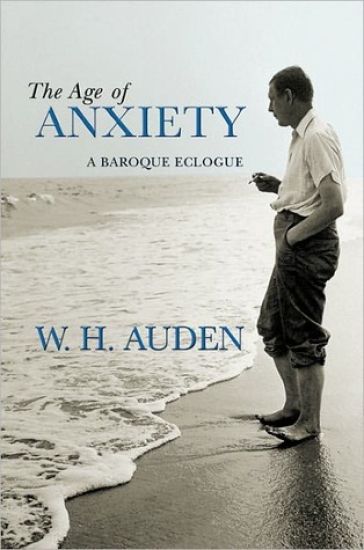
The Age of Anxiety

The Age of Anxiety

W. H. Auden

PRINCETON UNIVERSITY PRESS
2011
sidottu
When it was first published in 1947, The Age of Anxiety--W. H. Auden's last, longest, and most ambitious book-length poem--immediately struck a powerful chord, capturing the imagination of the cultural moment that it diagnosed and named. Beginning as a conversation among four strangers in a barroom on New York's Third Avenue, Auden's analysis of Western culture during the Second World War won the Pulitzer Prize and inspired a symphony by Leonard Bernstein as well as a ballet by Jerome Robbins. Yet reviews of the poem were sharply divided, and today, despite its continuing fame, it is unjustly neglected by readers. This volume--the first annotated, critical edition of the poem--introduces this important work to a new generation of readers by putting it in historical and biographical context and elucidating its difficulties. Alan Jacobs's introduction and thorough annotations help today's readers understand and appreciate the full richness of a poem that contains some of Auden's most powerful and beautiful verse, and that still deserves a central place in the canon of twentieth-century poetry.
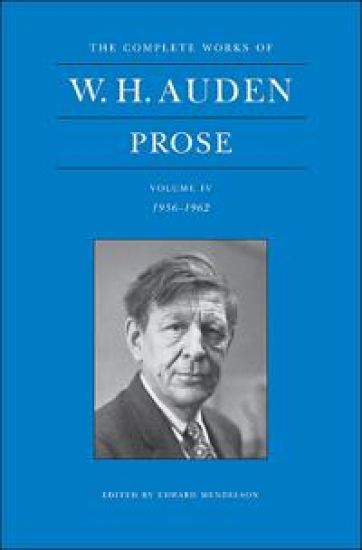
The Complete Works of W. H. Auden: Prose, Volume IV

The Complete Works of W. H. Auden: Prose, Volume IV

W. H. Auden

Princeton University Press
2010
sidottu
This fourth volume of W. H. Auden's prose provides a unique picture of this legendary writer's mind and art when he was at the height of his powers, from 1956 through 1962, including the years when he was Professor of Poetry at Oxford. The volume includes his best-known and most important prose collection, "The Dyer's Hand", as well as scores of essays, reviews, and lectures on subjects ranging from J. R. R. Tolkien and Martin Luther to psychedelic drugs, cooking, and Homer. Much of the material has never been collected in book form, and some selections, such as the witty orations Auden wrote for ceremonies at Oxford University, are almost entirely unknown. Edward Mendelson's introduction and comprehensive notes provide biographical and historical explanations of all obscure references. The text includes extensive corrections and revisions that Auden marked in personal copies of his work and which are printed here for the first time.
Selected Poems

Selected Poems

W.H. Auden

Faber Faber
2010
pokkari

Halvin toimitettuna 25,60 €

Edward Mendelson has significantly expanded his authoritative, chronological ordered edition of Auden's Selected Poems (first published in 1979), adding twenty items to the hundred in the original edition, and broadening the focus to reflect the wealth of forms, the rhetorical and tonal range, and the variousness of content in Auden's poetry, in the confines of one volume. In particular, there are newly included examples of Auden's mastery of light verse: the self-descriptive sequence of haiku called 'Profiles', the barbed wartime quatrains of 'Leap Before You Look', or 'Funeral Blues' itself. Also included are brief notes explaining references that may have become obscure, and a revised introduction drawing on recent additions to Auden scholarship.
Nineteenth-Century Minor Poets

Nineteenth-Century Minor Poets

W.H. Auden

Faber Faber
2010
nidottu
Who is a major, who is a minor poet? Inevitably, in his introduction, W. H. Auden offers a stimulating rationale for distinguishing between the two. To paraphrase him, one cannot say that a major poet always writes better poems than a minor poet. Nor is it a matter of pleasure the poet gives an individual reader - Auden himself confesses to not liking Shelley but being 'delighted by every line of William Barnes', but not doubting for a moment the former is a major poet and the latter a minor one. One does not always enjoy what one most admires. Yet everyone is to some extent familiar with the work of the major nineteenth century poets and few have had the chance to read the patriotic poems of Thomas Campbell, several of which rank among the finest such poems in English literature, the songs of Tom Moore or his political and social satires, the humorous verse of Thomas Hood, the superb lyrics of Thomas Lovell Beddoes, the odes of Coventry Patmore, the satirical poems of Samuel Butler. These poets and many more are discerningly represented in this anthology which puts into the limelight every genuine minor poet (they must have written at least one good poem) born between 1770 and 1870.
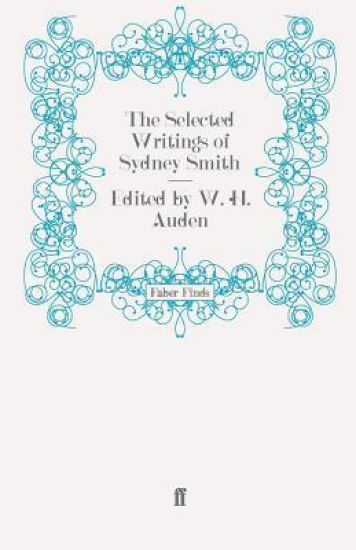
The Selected Writings of Sydney Smith
'He is a very clever fellow, but he will never be a bishop.' George III'A more profligate parson I never met.' George IV'I sat next to Sydney Smith, who was delightful ... I don't remember a more agreeable party.' Benjamin Disraeli'I wish you would tell Mr Sydney Smith that of all the men I ever heard of and never saw, I have the greatest curiosity to see ... and to know him.' Charles DickensHow one agrees with Dickens. Without doubt, Sydney Smith was the most famous wit of his generation. But there was more to him than that, he was an outstanding representative of the English liberal tradition. Starting as an impoverished village curate he went to Edinburgh as a tutor, and co-founded the Edinburgh Review, the first major nineteenth-century periodical. Happily married, he moved in 1803 to London, where he was introduced into the Holland House circle - of which he quickly became an admired and popular member - but at the age of thirty-eight a Tory government banished him to a village parsonage. There he became 'one of the best country vicars of whom there is a record', and after his two chief causes - the Catholic Emancipation Act of 1829 and the Reform Bill of 1832 - triumphed, he was rewarded by a canonry of St. Paul's. This generous selection of his writings gives the full flavour of his mind and intellectual personality. In a characteristically stimulating introduction in which he discusses Sydney Smith both as an individual and as a shining exemplar of the liberal mind, W. H. Auden places him with Jonathan Swift and Bernard Shaw among the few polemic authors 'who must be ranked very high by any literary standard.'As Macaulay said he was 'The Smith of Smiths'.
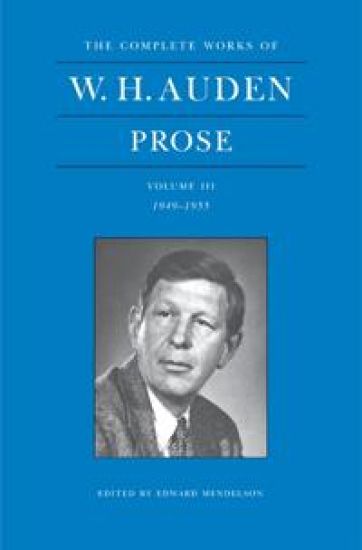
The Complete Works of W. H. Auden: Prose, Volume III

The Complete Works of W. H. Auden: Prose, Volume III

W. H. Auden

PRINCETON UNIVERSITY PRESS
2008
sidottu
This volume contains all of W. H. Auden's prose works from 1949 through 1955, including many little-known essays that exemplify his range, wit, depth, and wisdom. The book includes the complete text of Auden's first separately published prose book, The Enchafed Flood, or, The Romantic Iconography of the Sea, followed by more than one hundred separate essays, reviews, introductions, and lectures, as well as a questionnaire (complete with his own answers) about the reader's fantasy version of Eden. Two reviews that Auden wrote for the New Yorker, but which the magazine never printed, appear here for the first time, and a series of aphorisms previously published only in a French translation are printed in English. Among the previously unpublished lectures is a long account of the composition of his poem "Prime," complete with his comments on early rejected drafts. The variety of style and subject in this book is almost inexhaustible. Auden writes about the imaginary mirrors that everyone carries through life; French existentialism and New Yorker cartoons; Freud, Kierkegaard, Dostoyevsky, and Camus; Keats, Cervantes, Melville, Colette, Byron, Virgil, Yeats, Tolkien, and Virginia Woolf; opera, ballet, cinema, prosody, and music; English and American poetry and society; and politics and religion. The introduction by Edward Mendelson places the essays in biographical and historical context, and the extensive textual notes explain obscure contemporary references and provide an often-amusing history of Auden's work as an editor of anthologies and a series of books by younger poets.

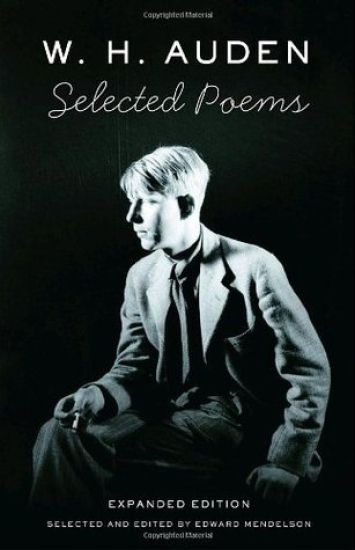
Selected Poems

Selected Poems

W. H. Auden

Vintage Books
2007
nidottu
This significantly expanded edition of W. H. Auden's Selected Poems adds twenty poems to the hundred in the original edition, broadening its focus to better reflect the enormous wealth of form, rhetoric, tone, and content in Auden's work. Newly included are such favorites as "Funeral Blues" and other works that represent Auden's lighter, comic side, giving a fuller picture of the range of his genius. Also new are brief notes explaining references that may have become obscure to younger generations of readers and a revised introduction that draws on recent additions to knowledge about Auden. As in the original edition, the new Selected Poems makes available the preferred original versions of some thirty poems that Auden revised later in life, making it the best source for enjoying the many facets of Auden's art in one volume.
Another Time

Another Time

W.H. Auden

Faber Faber
2007
nidottu
Another Time was the first volume that Auden published after his departure to America with Christopher Isherwood in January 1939. It was dedicated to Chester Kallman. The poems, some of which date from the early thirties, are about people, places and the intellectual climate of the times, and they show greater variety of tone and technique than in any previous book of Auden's. Some of his most famous and often quoted (or misquoted) lines appear in their original form, including the text of two poems in particular - 'Spain 1937' and 'September 1,1939' - that he later altered or repudiated.'[He] has made himself into a kind of unofficial poet laureate. If I am bombed I hope he will write a few sapphics about me.' Stephen Spender, 1941
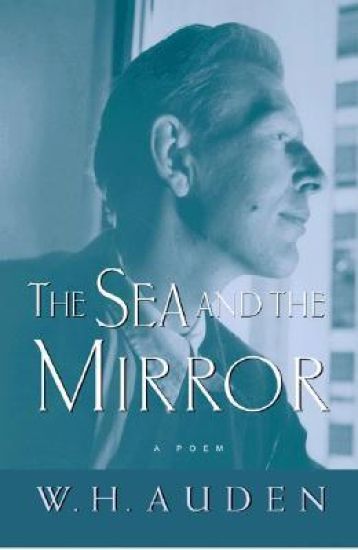
The Sea and the Mirror

The Sea and the Mirror

W. H. Auden

Princeton University Press
2005
pokkari
Written in the midst of World War II after its author emigrated to America, "The Sea and the Mirror" is not merely a great poem but ranks as one of the most profound interpretations of Shakespeare's final play in the twentieth century. As W. H. Auden told friends, it is "really about the Christian conception of art" and it is "my Ars Poetica, in the same way I believe The Tempest to be Shakespeare's." This is the first critical edition. Arthur Kirsch's introduction and notes make the poem newly accessible to readers of Auden, readers of Shakespeare, and all those interested in the relation of life and literature--those two classic themes alluded to in its title. The poem begins in a theater after a performance of The Tempest has ended. It includes a moving speech in verse by Prospero bidding farewell to Ariel, a section in which the supporting characters speak in a dazzling variety of verse forms about their experiences on the island, and an extravagantly inventive section in prose that sees the uncivilized Caliban address the audience on art--an unalloyed example of what Auden's friend Oliver Sachs has called his "wild, extraordinary and demonic imagination." Besides annotating Auden's allusions and sources (in notes after the text), Kirsch provides extensive quotations from his manuscript drafts, permitting the reader to follow the poem's genesis in Auden's imagination. This book, which incorporates for the first time previously ignored corrections that Auden made on the galleys of the first edition, also provides an unusual opportunity to see the effect of one literary genius upon another.
Collected Auden

Collected Auden

W.H. Auden

Faber Faber
2004
pokkari

Halvin toimitettuna 29,20 €

This collection presents all the poems Auden wished to preserve, in the texts that received his final approval. It included the full contents of his previous collected editions along with all the later volumes of his shorter poems. Together, these works display the astonishing range of Auden's voice and the breadth of his concerns, his deep knowledge of the traditions he inherited, and his ability to recast those traditions in modern times.
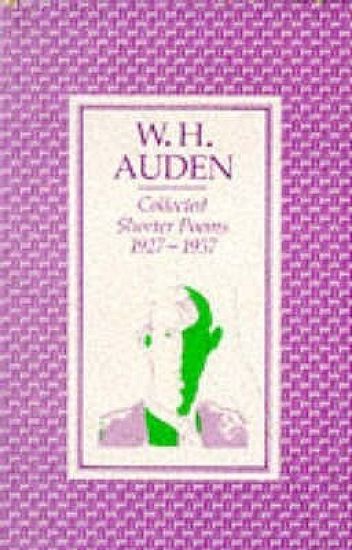
Collected Shorter Poems 1927-1957

Collected Shorter Poems 1927-1957

W.H. Auden

Faber Faber
2003
nidottu

Halvin toimitettuna 25,60 €

W. H. Auden was once described as the Picasso of modern poetry - a tribute to his ceaseless experimentation with form and subject matter. Beginning with Anglo-Saxon poetry and ending with an Horatian expansiveness and conversational sweep, this volume is essential reading for anyone seriously interested in modern poetry after T. S. Eliot. In his lifetime a controversial, outspoken, yet enigmatic, writer, Auden has gradually come to seem an intimate poet, as we have learned to read him correctly. This volume is the best possible introduction to his consummate craftsmanship and his unparalleled originality which made him the master-poet of his generation.
Juvenilia

Juvenilia

W. H. Auden

Princeton University Press
2003
pokkari
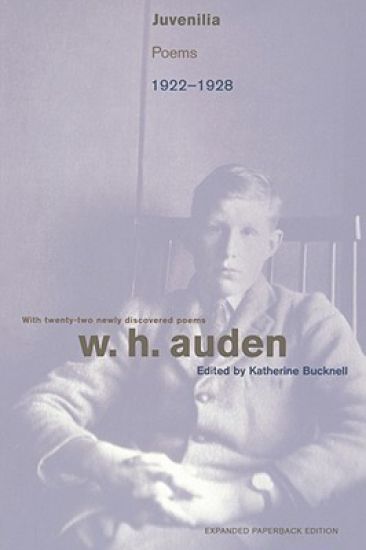
You know the terror that for poets lurks Beyond the ferry when to Minos brought. Poets must utter their Collected Works, Including Juvenilia...--from "Letter to Lord Byron" (1936) Regardless of how poets feel about their youthful attempts at verse, their early poems not only enrich our understanding of their artistic growth, but also reveal much about the nature of literary genius. No other twentieth-century poet has left behind such a wealth of early poetry as did W. H. Auden. By bringing together for the first time all the poems written by Auden between the ages of fifteen and twenty-one (1922-1928), this book allows us a rare, detailed look at the literary personality, development, and preoccupations of a major poet. Auden's readers will be fascinated to find in these poems the earliest evidence of his interest in psychoanalysis, his conflicted attitude toward his homosexuality, his self-conscious approach to poetry, and his life-long journey toward a religious sense of the world. This collection includes over two hundred poems, most of them never published before, concluding with the contents of Auden's privately printed volume, Poems (1928). The poems are generously annotated with information on Auden's education, reading, literary concerns, and personal life. In her introduction, Katherine Bucknell traces important themes relating to the poet's entire career, and describes crucial but hitherto unknown aspects of his youth during his years at Gresham's School and at Christ Church, Oxford. Throughout this work we see in Auden an admirable instinct for experiment, a thorough testing of tradition, and a gathering mastery of technique and thematic argument.
History in English Words

History in English Words

Owen Barfield; W. H. Auden

Lindisfarne Books
2002
nidottu

Halvin toimitettuna 26,90 €

A classic historical excursion through the English language. Owen Barfield's original and thought-provoking works over three-quarters of a century made him a legendary cult figure. This popular book provides a brief, brilliant history of those who have spoken the Indo-European tongues. It is illustrated throughout by current English words -- whose derivation from other languages, whose history in use and changes of meaning, record and unlock the larger history.
The Complete Works of W. H. Auden: Prose, Volume II

The Complete Works of W. H. Auden: Prose, Volume II

W. H. Auden

Princeton University Press
2002
sidottu
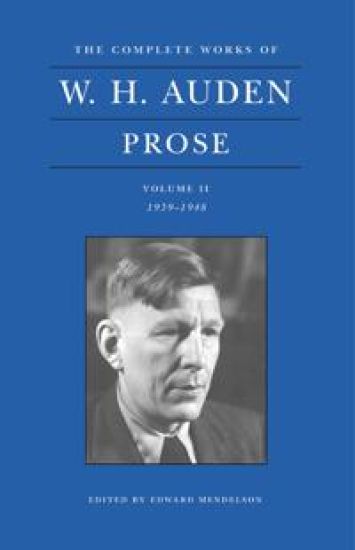
W. H. Auden's first ten years in the United States were marked by rapid and extensive change in his life and thought. He became an American citizen, fell in love with Chester Kallman, and began to reflect on American culture and to explore the ideas of Reinhold Niebuhr and other Protestant theologians. This volume contains every piece of prose that Auden wrote during these years, including essays and reviews he published under pseudonyms. Most have never been reprinted in any form since their initial publication in such magazines and newspapers as the Nation, the New Republic, Common Sense, Vogue, and the New York Times. Auden's prose during this period is frequently directly autobiographical even as he comments on literature, psychology, politics, and religion. The writings range from a dialogue about W. B. Yeats through a respectful parody of Gertrude Stein to Jamesian essays on Henry James. They also include lively and often profound responses to ancient and modern history as well as to contemporary issues in politics and religion. Other highlights include writings on opera and poetry as well as reports of Auden's lectures and the text of an unfinished autobiographical book, The Prolific and the Devourer. Throughout, Edward Mendelson's extensive and illuminating editor's notes explain all contemporary and private allusions. By making available a large cache of important but previously difficult-to-obtain writings on key subjects, this volume will be of obvious appeal to Auden's legions of admirers. It will also be enjoyed by everyone interested in twentieth-century literature, religion, and culture.
Look, Stranger!

Look, Stranger!

W.H. Auden

Faber Faber
2001
nidottu
Faber are pleased to announce the relaunch of the poetry list - starting in Spring 2001 and continuing, with publication dates each month, for the rest of the year. This will involve a new jacket design recalling the typographic virtues of the classic Faber poetry covers, connecting the backlist and the new titles within a single embracing cover solution. A major reissue program is scheduled, to include classic individual collections from each decade, some of which have long been unavailable: Wallace Stevens's Harmonium and Ezra Pound's Personae from the 1920s; W. H. Auden's Poems (1930); Robert Lowell's Life Studies from the 1950s; John Berryman's 77 Dream Songs and Philip Larkin's The Whitsun Weddings from the 1960s; Ted Hughes's Gaudete and Seamus Heaney's Field Work from the 1970s; Michael Hofmann's Acrimony and Douglas Dunn's Elegies from the 1980s. Timed to celebrate publication of Seamus Heaney's new collection, Electric Light, the relaunch is intended to re-emphasize the predominance of Faber Poetry, and to celebrate a series which has played a shaping role in the history of modern poetry since its inception in the 1920s.