
Kirjailija
W. Heath Robinson
Kirjat ja teokset yhdessä paikassa: 18 kirjaa, julkaisuja vuosilta 1993–2022, suosituimpiin kuuluu Bill the Minder. Vertaile teosten hintoja ja tarkista saatavuus suomalaisista kirjakaupoista.
Nimi esiintyy myös muodoissa: W Heath Robinson
18 kirjaa
Kirjojen julkaisuvuodet: 1993–2022.
This book has been considered by academicians and scholars of great significance and value to literature. This forms a part of the knowledge base for future generations. So that the book is never forgotten we have represented this book in a print format as the same form as it was originally first published. Hence any marks or annotations seen are left intentionally to preserve its true nature.

Reproduction of the original: Bill the Minder by W. Heath Robinson
Reproduction of the original: Bill the Minder by W. Heath Robinson
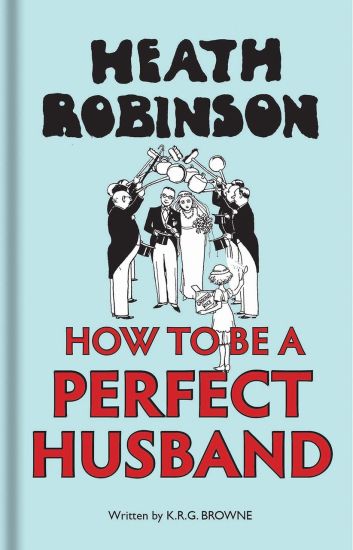
Heath Robinson: How to be a Perfect Husband
W. Heath Robinson; K R G Brown
Bodleian Library
2017
sidottu
What makes a perfect husband? In this tongue-in-cheek guide, illustrated by Heath Robinson’s inimitable cartoons and contraptions, there are many charmingly old-fashioned tips for how to succeed in almost all aspects of married life. First published in 1937, this delightful book gives an insight into how the roles of both wife and husband were viewed at the time and pokes gentle fun at them both. The perfect husband presses his own trousers; he can tend the lawn and entertain the baby simultaneously by means of two simple attachments to the garden roller; he can peel onions behind his back, with the help of a mirror, and thus avoid tears; he can make a vacuum cleaner and he even has a device to help him climb the stairs silently after a late night out with the boys. When offered the choice of a glass of milk or a Manhattan, he will choose the former. With chapters on courtship and proposal, the wedding, early married life, bringing up children, sports and hobbies, domestic difficulties and middle age, this book makes a highly amusing gift for those who are considering tying the knot or wish to celebrate wedded bliss.
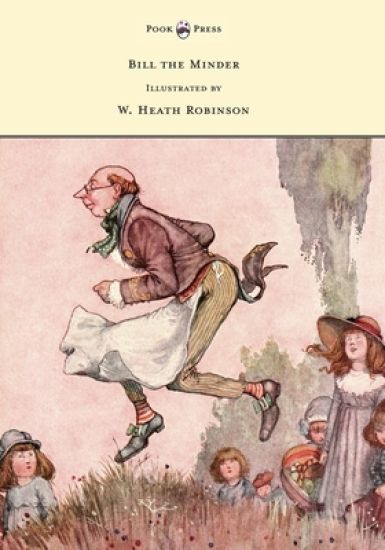
Old Crispin, the mushroom gatherer, and his good wife Chloe had ten children, and nine of them were bad-tempered. There was Chad, the youngest and most bad-tempered of the lot, Hannibal and Quentin the twins, Randall with the red head, Noah, Ratchett the short-sighted, Nero the worrit, weeping Biddulph and Knut. The only good-tempered child was a little girl named Boadicea. It is well known that a boy usually takes after his father, and a girl after her mother, and these children were no exception to the rule, for the boys all resembled old Crispin, whose temper had been rather tried, poor man, by the early hours at which he had to rise, in order to gather the mushrooms when they were quite new and young. On the other hand, Boadicea could only have inherited her good-temper from Chloe, who without doubt was the most good-tempered dame alive.
A Song of the English (1909). By: Rudyard Kipling, illustrated By: W. Heath Robinson: William Heath Robinson (31 May 1872 - 13 September 1944) was an
W. Heath Robinson; Rudyard Kipling
Createspace Independent Publishing Platform
2017
nidottu
Joseph Rudyard Kipling ( 30 December 1865 - 18 January 1936) was an English journalist, short-story writer, poet, and novelist. Kipling's works of fiction include The Jungle Book (1894), Kim (1901), and many short stories, including "The Man Who Would Be King" (1888). His poems include "Mandalay" (1890), "Gunga Din" (1890), "The Gods of the Copybook Headings" (1919), "The White Man's Burden" (1899), and "If-" (1910). He is regarded as a major innovator in the art of the short story; his children's books are classics of children's literature; and one critic described his work as exhibiting "a versatile and luminous narrative gift". Kipling was one of the most popular writers in the United Kingdom, in both prose and verse, in the late 19th and early 20th centuries. Henry James said: "Kipling strikes me personally as the most complete man of genius, as distinct from fine intelligence, that I have ever known." In 1907, at the age of 42, he was awarded the Nobel Prize in Literature, making him the first English-language writer to receive the prize, and its youngest recipient to date. He was also sounded out for the British Poet Laureateship and on several occasions for a knighthood, both of which he declined. Kipling's subsequent reputation has changed according to the political and social climate of the age and the resulting contrasting views about him continued for much of the 20th century. George Orwell called him a "prophet of British imperialism". Literary critic Douglas Kerr wrote: " Kipling] is still an author who can inspire passionate disagreement and his place in literary and cultural history is far from settled. But as the age of the European empires recedes, he is recognised as an incomparable, if controversial, interpreter of how empire was experienced. That, and an increasing recognition of his extraordinary narrative gifts, make him a force to be reckoned with." William Heath Robinson (31 May 1872 - 13 September 1944) was an English cartoonist and illustrator best known for drawings of ridiculously complicated machines for achieving simple objectives. In the UK, the term "Heath Robinson" entered the language during the 1914-1918 First World War as a description of any unnecessarily complex and implausible contrivance, much as "Rube Goldberg machines" came to be used in the US from the 1920s onwards as a term for similar efforts. "Heath Robinson contraption" is perhaps more often used in relation to temporary fixes using ingenuity and whatever is to hand, often string and tape, or unlikely cannibalisations. Its continuing popularity was undoubtedly linked to Second World War Britain's shortages and the need to "make do and mend".
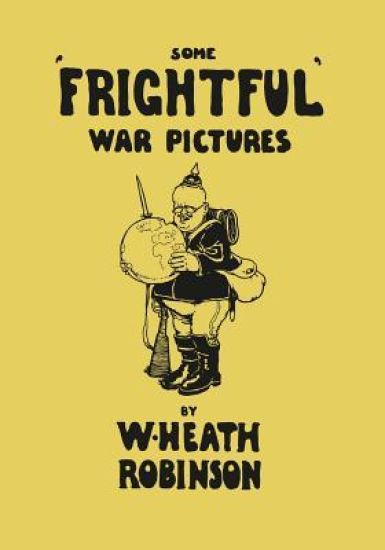
Some 'Frightful' War Pictures - Illustrated by W. Heath Robinson
W Heath Robinson
Last Post Press
2016
pokkari
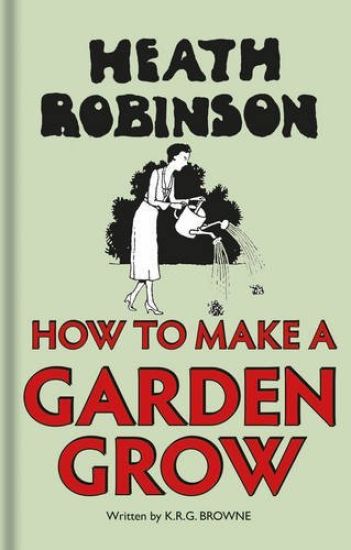
Heath Robinson: How to Make a Garden Grow
W. Heath Robinson; K.R.G. Browne
Bodleian Library
2016
sidottu
Ever wondered how to make a garden attractive in December? Or what to do with that corner by the dustbin? Answers to these questions can be found in this compact and charming book of tips for the green-fingered, accompanied by Heath Robinson’s highly inventive and humorous cartoons. First published in 1938, the book gives an insight into gardening trends on the eve of the Second World War while also addressing common concerns faced by gardeners. It features many typically elaborate contraptions such as the Combined Telescopic Spaderake for digging and raking at the same time, the Inebriate Roller for making wobbly garden paths and the Osoeezi Slugsticker. While some are patently ridiculous – a lawn is de-thistled and resown with the help of a barrel of grass seed strapped onto a small donkey – others are before their time, such as a special pump that can divert your bathwater into your garden hose, a contraption that is not wildly dissimilar to gadgets on the market today. Finally, the growing of vegetables inspires some sage advice: ‘with the right kind of upbringing, a marrow will attain astonishing dimensions, and can be used for boasting purposes.’ Poking gentle fun at a British obsession with a detailed illustration on almost every page, this book will delight both aspiring and experienced gardeners alike.
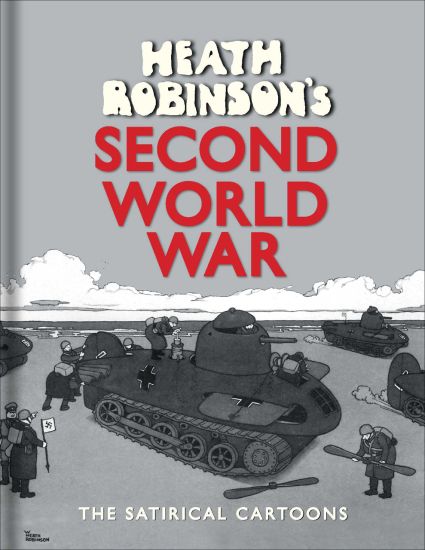
Soldiers disguised as a herd of cows, cork bath mats for troops crossing streams and a tank with a piano attachment for camp concerts are just some of the absurd inventions to be found in this book of cartoons designed to keep spirits up during the Second World War. These intricate comic drawings poke gentle fun at both the instruments of war and the indignity of the air-raid shelter in Heath Robinson’s inimitable style.
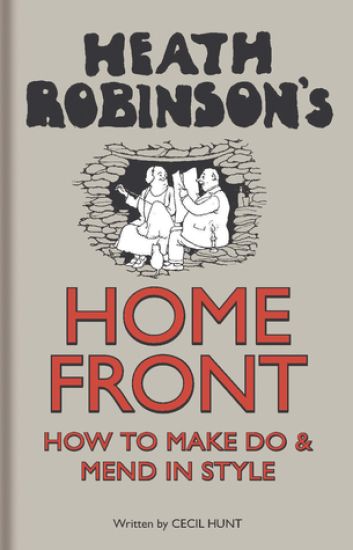
How does one play bridge in a gas mask? Or enjoy motoring without consuming petrol? Or deal with a nationwide shortage of pea-sticks? For this compact little book Heath Robinson joined forces with writer Cecil Hunt to show civilians ‘how to make the best of things’ during the air raids, rationing, allotment tending and blackouts of the Second World War. The result is a warm celebration of the British population’s ability to ‘make do and mend’.
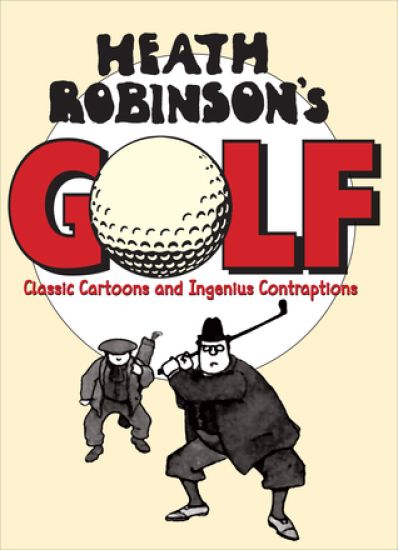
W. Heath Robinson is best known for his hilarious drawings of zany contraptions, though his work ranged across a wide variety of topics covering many aspects of British life in the decades following the First World War. Starting out as a watercolour artist, he quickly turned to the more lucrative field of book illustration and developed his forte in satirical drawings and cartoons. He was regularly commissioned by the editors of Tatler and The Sketch and in great demand from advertising companies. Collections of his drawings were subsequently published in many different editions and became so successful as to transform Heath Robinson into a household name, celebrated for his eccentric brand of British humour. A collection of full-page cartoons on the hapless antics of the portly golfer and his long-suffering caddie, including ‘How Noah Managed to Keep his Hand in during the Flood’, the ‘Origin of Plus Fours’, the multiple meanings of ‘an Awkward Lie’ and the highly amusing invention of ‘Pogo Golf’: a gem for the golf enthusiast.
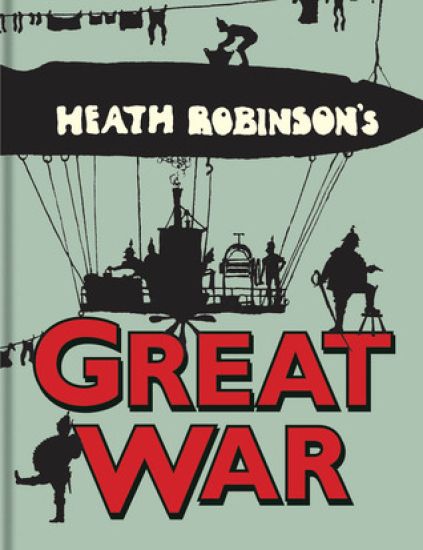
W. Heath Robinson is best known for his hilarious drawings of zany contraptions, though his work ranged across a wide variety of topics covering many aspects of British life in the decades following the First World War. Starting out as a watercolour artist, he quickly turned to the more lucrative field of book illustration and developed his forte in satirical drawings and cartoons. He was regularly commissioned by the editors of Tatler and The Sketch and in great demand from advertising companies. Collections of his drawings were subsequently published in many different editions and became so successful as to transform Heath Robinson into a household name, celebrated for his eccentric brand of British humour. Heath Robinson drew many cartoons lampooning the excesses of the First World War and poking fun at the German army, bringing welcome comic relief to British soldiers and civilians. This book presents his complete First World War satire, from ridiculous weapons such as ‘Button Magnets’ to aeronautical antics and a demonstration of how to have a ‘Quiet Cup of Tea at the Front.’
Heath Robinson: How to Live in a Flat
W. Heath Robinson; K.R.G. Browne
Bodleian Library
2015
sidottu
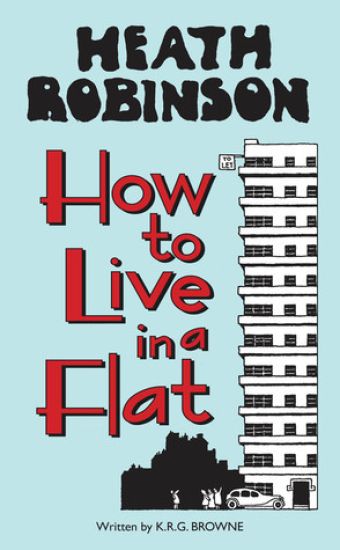
W. Heath Robinson is best known for his hilarious drawings of zany contraptions, though his work ranged across a wide variety of topics covering many aspects of British life in the decades following the First World War. Starting out as a watercolour artist, he quickly turned to the more lucrative field of book illustration and developed his forte in satirical drawings and cartoons. He was regularly commissioned by the editors of Tatler and The Sketch and in great demand from advertising companies. Collections of his drawings were subsequently published in many different editions and became so successful as to transform Heath Robinson into a household name, celebrated for his eccentric brand of British humour. The perfect antidote to the estate agent’s property description, this book, with illustrations by Heath Robinson and a witty commentary by K. R. G. Browne, shows you how to prove there is room to swing a cat in your living-room and offers many inventive space-saving solutions, such as the ‘Combination Bath and Writing Desk for Business Men’, the ‘Bed Dining-table’ and the ‘Dresser-Piano’.
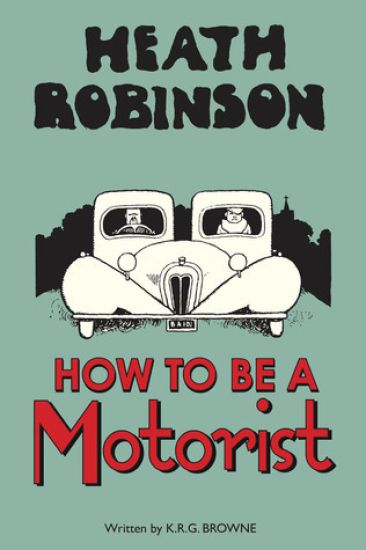
W. Heath Robinson is best known for his hilarious drawings of zany contraptions, though his work ranged across a wide variety of topics covering many aspects of British life in the decades following the First World War. Starting out as a watercolour artist, he quickly turned to the more lucrative field of book illustration and developed his forte in satirical drawings and cartoons. He was regularly commissioned by the editors of Tatler and The Sketch and in great demand from advertising companies. Collections of his drawings were subsequently published in many different editions and became so successful as to transform Heath Robinson into a household name, celebrated for his eccentric brand of British humour. Presenting such innovations as the ‘Zip-Opening Bonnet’, the ‘Duo-car for the Incompatible’ and the handy ‘New Rear Wheel Gear for Turning the Car in One Movement’, this volume of Heath Robinson illustrations with commentary by K. R. G. Browne will appeal to ‘everybody who is ever likely to drive, be driven in, or get run over by a mechanically propelled vehicle’.
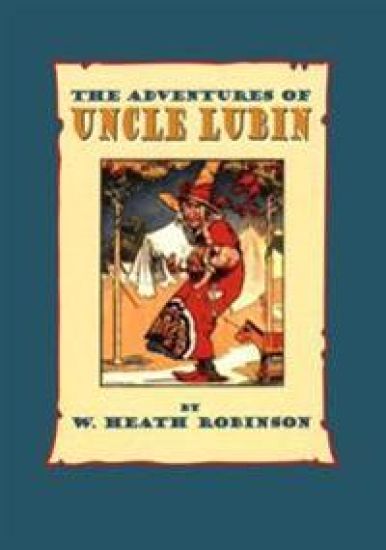
First published in England in 1902, and full of whimsical charm, The Adventures of Uncle Lubin, presents one of literature’s most guileless and sincere characters. With his comically floppy hat and striped baggy stockings, gentle, serious Uncle Lubin is left in charge of his beloved nephew Peter. One fateful day, a great Bagbird swoops down while Uncle Lubin is innocently napping, whisks away the screaming child in his beak, and flies to the moon. Deeply horrified by the unexpected turn of affairs, Uncle Lubin nonetheless recognizes his duty as Peter’s guardian and sets out on a series of adventures to deliver the child from the wretched bag-bird, searching high and low (literally) for the kidnapped child. His ingenuity proves boundless: he builds an air-ship to follow the bird to the moon (using his hat as a parachute to descend); he invents a submersible sea-boat to search for Peter among the mer-men and mer-children of the deep; he kills a sea-serpent by putting salt on its tail (which we all know is the only way to kill a sea-serpent). He even melts an iceberg with a candle to reach the wicked bag-bird perched mockingly on top. These fantastic adventures are enhanced by Robinson’s detailed pen-and-ink drawings depicting, among other things, Uncle Lubin’s remarkable inventions and contraptions. Robinson had a profound affection for the ridiculous, and was a genius at sensitively and inventively depicting the absurd.
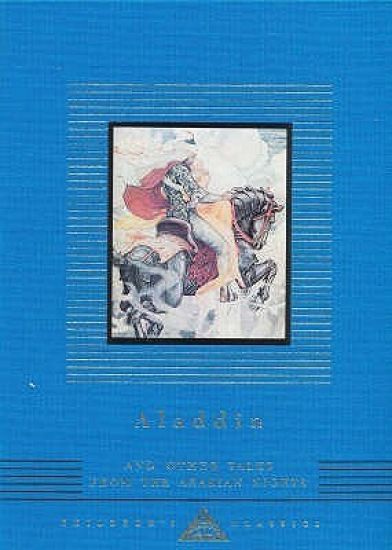
From the Eastern folk tales that make up the vast collection known as THE THOUSAND AND ONE NIGHTS certain stories - of Aladdin, Sindbad and Ali Baba - have become everlasting favourites with children and a magical ingredient of Christmas pantomine.