Kirjojen hintavertailu – 12 903 733 kirjaa ja 27 kauppaa

Kirjailija

W. John Morgan

Kirjat ja teokset yhdessä paikassa: 10 kirjaa, julkaisuja vuosilta 1993–2026, suosituimpiin kuuluu Cultural Cold Wars and UNESCO in the Twentieth Century. Vertaile teosten hintoja ja tarkista saatavuus suomalaisista kirjakaupoista.

Nimi esiintyy myös muodoissa: W John Morgan

10 kirjaa

Kirjojen julkaisuvuodet: 1993–2026.

Cultural Cold Wars and UNESCO in the Twentieth Century
Cultural Cold Wars and UNESCO in the Twentieth Century addresses the now-considerable interest in the concept of cultural cold war as a means of advancing ideologies. The book charts the development of the concept in the twentieth century. Structured in two parts, Part I considers the League of Nations’ idealist attempts at international intellectual cooperation. It discusses also the first cultural cold war with the Communist International’s attempts to advance communism. It also analyses the ideological and cultural appeal of Italian fascism, German national socialism, and Japanese nationalist militarism; and the transition from a wartime alliance to a new cold war. Part II examines the renewal of international intellectual co-operation through the United Nations Educational, Scientific, and Cultural Organization (UNESCO) in the context of a second cultural cold war between the capitalist democracies and the communist bloc. The book shows that UNESCO became a site of this ideological competition and an example of its tensions. Based on original research and a comprehensive review of the literature, including in Russian, German, and French, the book will appeal to academics, postgraduate researchers, advanced undergraduates, and others interested in recent international history and the comparative politics of ideas.
Cultural Cold Wars and UNESCO in the Twentieth Century
Cultural Cold Wars and UNESCO in the Twentieth Century addresses the now-considerable interest in the concept of cultural cold war as a means of advancing ideologies. The book charts the development of the concept in the twentieth century. Structured in two parts, Part I considers the League of Nations’ idealist attempts at international intellectual cooperation. It discusses also the first cultural cold war with the Communist International’s attempts to advance communism. It also analyses the ideological and cultural appeal of Italian fascism, German national socialism, and Japanese nationalist militarism; and the transition from a wartime alliance to a new cold war. Part II examines the renewal of international intellectual co-operation through the United Nations Educational, Scientific, and Cultural Organization (UNESCO) in the context of a second cultural cold war between the capitalist democracies and the communist bloc. The book shows that UNESCO became a site of this ideological competition and an example of its tensions. Based on original research and a comprehensive review of the literature, including in Russian, German, and French, the book will appeal to academics, postgraduate researchers, advanced undergraduates, and others interested in recent international history and the comparative politics of ideas.
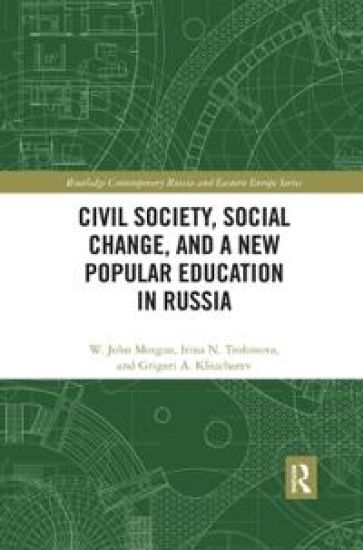
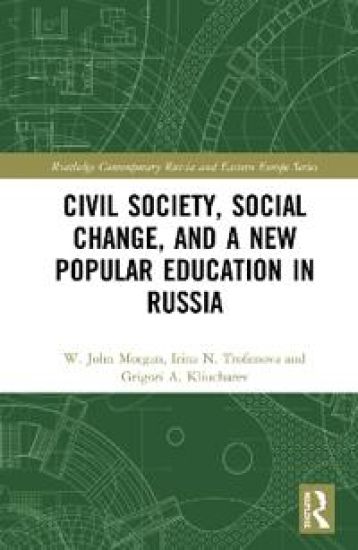
Civil Society, Social Change, and a New Popular Education in Russia

Civil Society, Social Change, and a New Popular Education in Russia

W. John Morgan; Irina N. Trofimova; Grigori A. Kliucharev

Routledge
2020
nidottu
Civil Society, Social Change and a New Popular Education in Russia is a detailed account of contemporary issues that draws upon recent survey research conducted by the Institute of Sociology, Russian Academy of Sciences, as well as from secondary published work in both Russian and English. The book explores how social change and developments in civil society are occurring in Russia and the role played by a new popular education. The right to lifelong learning is guaranteed by the Russian state, as it was by the Soviet Union, where formal education, based on communist ideology, emphasised the needs of the state over those of individuals. In practice a wide range of educational needs, many of which relate to coping with changing economic, social and technological circumstances, are being met by non-governmental providers, including commercial companies, self-help groups, and community and neighbourhood clubs. This book discusses how this new popular education is both an example of developing civil society and stimulates its further development. However, as the book points out, it is also part of a growing educational divide, where motivated, articulate people take advantage of new opportunities, while disadvantaged groups such as the unemployed and the rural poor continue to be excluded.
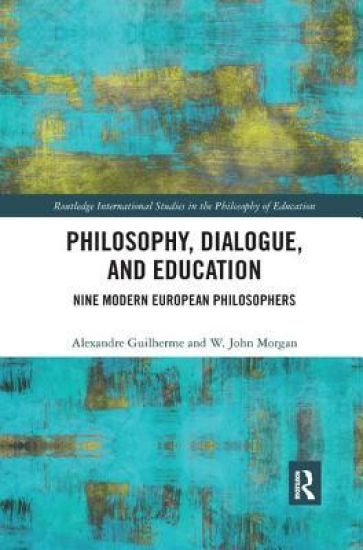
Philosophy, Dialogue, and Education

Philosophy, Dialogue, and Education

Alexandre Guilherme; W. John Morgan

Routledge
2019
nidottu
Philosophy, Dialogue, and Education is an advanced introduction to nine key European social philosophers: Martin Buber, Mikhail Bakhtin, Lev Vygotsky, Hannah Arendt, Emmanuel Levinas, Maurice Merleau-Ponty, Simone Weil, Michael Oakeshott, and Jürgen Habermas. This detailed yet highly readable work positions the socio-political views of each philosopher within a European tradition of dialogical philosophy; and reflects on the continuing theoretical relevance of the work of each to education generally and to critical pedagogy. The discussion in each chapter is informed by materials drawn from various scholarly sources in English and is enriched by materials from other languages, particularly French, German, and Russian. This enhances the comparative European cultural perspective of the book; and connects the work of each philosopher to wider intellectual, political, and social debates. The book will appeal to academics, postgraduates, and researchers working in philosophy, philosophy of education, and in educational, cultural, and social studies more generally. Advanced undergraduate students would also benefit from the book’s discussion of primary sources and the authors’ suggestions for further reading.
Civil Society, Social Change, and a New Popular Education in Russia

Civil Society, Social Change, and a New Popular Education in Russia

W. John Morgan; Irina N. Trofimova; Grigori A. Kliucharev

Routledge
2018
sidottu
Civil Society, Social Change and a New Popular Education in Russia is a detailed account of contemporary issues that draws upon recent survey research conducted by the Institute of Sociology, Russian Academy of Sciences, as well as from secondary published work in both Russian and English. The book explores how social change and developments in civil society are occurring in Russia and the role played by a new popular education. The right to lifelong learning is guaranteed by the Russian state, as it was by the Soviet Union, where formal education, based on communist ideology, emphasised the needs of the state over those of individuals. In practice a wide range of educational needs, many of which relate to coping with changing economic, social and technological circumstances, are being met by non-governmental providers, including commercial companies, self-help groups, and community and neighbourhood clubs. This book discusses how this new popular education is both an example of developing civil society and stimulates its further development. However, as the book points out, it is also part of a growing educational divide, where motivated, articulate people take advantage of new opportunities, while disadvantaged groups such as the unemployed and the rural poor continue to be excluded.
Philosophy, Dialogue, and Education

Philosophy, Dialogue, and Education

Alexandre Guilherme; W. John Morgan

Routledge
2017
sidottu
Philosophy, Dialogue, and Education is an advanced introduction to nine key European social philosophers: Martin Buber, Mikhail Bakhtin, Lev Vygotsky, Hannah Arendt, Emmanuel Levinas, Maurice Merleau-Ponty, Simone Weil, Michael Oakeshott, and Jürgen Habermas. This detailed yet highly readable work positions the socio-political views of each philosopher within a European tradition of dialogical philosophy; and reflects on the continuing theoretical relevance of the work of each to education generally and to critical pedagogy. The discussion in each chapter is informed by materials drawn from various scholarly sources in English and is enriched by materials from other languages, particularly French, German, and Russian. This enhances the comparative European cultural perspective of the book; and connects the work of each philosopher to wider intellectual, political, and social debates. The book will appeal to academics, postgraduates, and researchers working in philosophy, philosophy of education, and in educational, cultural, and social studies more generally. Advanced undergraduate students would also benefit from the book’s discussion of primary sources and the authors’ suggestions for further reading.
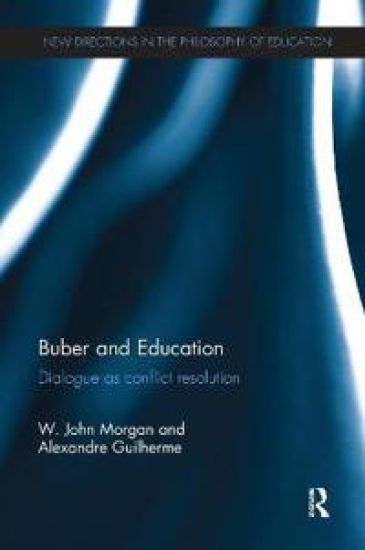
Buber and Education

Buber and Education

W. John Morgan; Alexandre Guilherme

Routledge
2016
nidottu
Martin Buber (1878-1965) is considered one of the 20th century’s greatest thinkers and his contributions to philosophy, theology and education are testimony to this. His thought is founded on the idea that people are capable of two kinds of relations, namely I-Thou and I-It, emphasising the centrality of dialogue in all spheres of human life. For this reason, Buber is considered by many to be the philosopher of dialogue par excellence. After Buber’s death the appreciation of his considerable legacy to the various disciplines in which he had worked became rather muted, but was never completely forgotten. There is now a renewed and growing interest in Buber’s thought, especially in his philosophy of education. This book brings together aspects of Buber’s philosophy and educational practice, and explains their significance for peace dialogue and for conflict resolution, both between individuals and communities. Buber's philosophy of dialogue and views on education are pivotal in demonstrating the personal and social benefits of dialogical education as well as the dangers of non-dialogical education. The book will be valuable reading for academics, researchers and postgraduate students interested in Martin Buber, education, peace dialogue and conflict resolution.
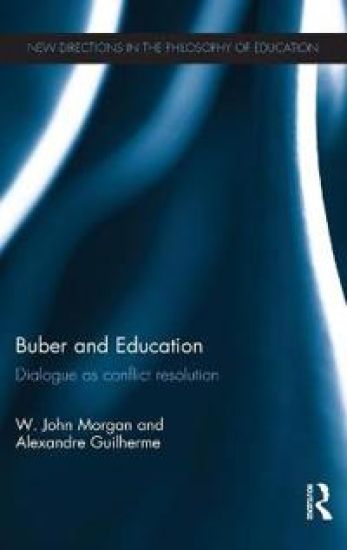
Buber and Education

Buber and Education

W. John Morgan; Alexandre Guilherme

Routledge
2013
sidottu
Martin Buber (1878-1965) is considered one of the 20th century’s greatest thinkers and his contributions to philosophy, theology and education are testimony to this. His thought is founded on the idea that people are capable of two kinds of relations, namely I-Thou and I-It, emphasising the centrality of dialogue in all spheres of human life. For this reason, Buber is considered by many to be the philosopher of dialogue par excellence. After Buber’s death the appreciation of his considerable legacy to the various disciplines in which he had worked became rather muted, but was never completely forgotten. There is now a renewed and growing interest in Buber’s thought, especially in his philosophy of education. This book brings together aspects of Buber’s philosophy and educational practice, and explains their significance for peace dialogue and for conflict resolution, both between individuals and communities. Buber's philosophy of dialogue and views on education are pivotal in demonstrating the personal and social benefits of dialogical education as well as the dangers of non-dialogical education. The book will be valuable reading for academics, researchers and postgraduate students interested in Martin Buber, education, peace dialogue and conflict resolution.