Kirjojen hintavertailu – 12 903 725 kirjaa ja 27 kauppaa

Kirjailija

W M Flinders Petrie

Kirjat ja teokset yhdessä paikassa: 82 kirjaa, julkaisuja vuosilta 1906–2025, suosituimpiin kuuluu The Book of history. Vertaile teosten hintoja ja tarkista saatavuus suomalaisista kirjakaupoista.

Nimi esiintyy myös muodoissa: W. M. Flinders Petrie, W.M. Flinders Petrie

82 kirjaa

Kirjojen julkaisuvuodet: 1906–2025.

Naqada and Ballas

Naqada and Ballas

W M Flinders Petrie

Casemate Publishers
2023
nidottu
Facsimile edition of the 1974 reissue of Flinders Petrie’s 1896 account of the excavation (mainly) of tombs in the area around Ballas and Naqada on the edge of the Egyptian desert, 30 miles north of Thebes. Several areas of the ancient towns of Deir and Nubt – the latter identified as the center of Set worship – and more tombs were investigated. At each cemetery, traditionally furnished Old and Middle Kingdom tombs were examined and many proved to have been plundered and reused in antiquity. Petrie named these later burials as of a New Race and describes them in detail at Ballas and Naqada. A collection of mostly Palaeolithic flint artefacts is also described. This series comprises facsimile re-issues of typological catalogues produced between 1898 and 1937 by W. M. Flinders Petrie, based on his vast collection of Egyptian artefacts which now reside in The Petrie Museum of Egyptian and Sudanese Archaeology, University College, London. Long out of print, the catalogues were re-issued in facsimile by publishers Aris & Phillips in the 1970s alongside newly-commissioned titles by contemporary experts. Petrie’s catalogues remain invaluable source material today. The Oxbow Classics in Egyptology series now makes a selection of these important resources available again in print for a new generation of students and scholars.
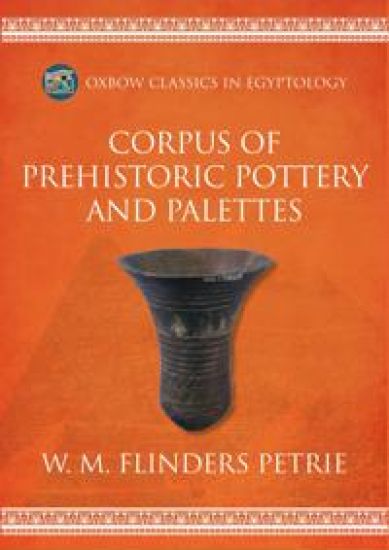
Corpus of Prehistoric Pottery and Palettes

Corpus of Prehistoric Pottery and Palettes

W M Flinders Petrie

Casemate Publishers
2023
nidottu
Facsimile edition of the 1974 reissue of Flinders Petrie’s 1921 corpus of prehistoric pottery and slate palettes from pre-dynastic, prehistoric Egypt. The pottery corpus was produced separately to accompany the catalogue of Egyptian artifacts in the volume Prehistoric Egypt and comprises hundreds of line drawings illustrating the shapes, forms and types of decoration. It was intended to be a ‘graveside’ aid for use during excavation, with the intent that it be used with record cards to classify and date pottery that could then be returned to the grave. The corpus of palettes updated Petrie’s original classification published Ballas and Naqada, to include many new finds and refine the typology and sequence. This series comprises facsimile re-issues of typological catalogues produced between 1898 and 1937 by W. M. Flinders Petrie, based on his vast collection of Egyptian artefacts which now reside in The Petrie Museum of Egyptian and Sudanese Archaeology, University College, London. Long out of print, the catalogues were re-issued in facsimile by publishers Aris & Phillips in the 1970s alongside newly-commissioned titles by contemporary experts. Petrie’s catalogues remain invaluable source material today. The Oxbow Classics in Egyptology series now makes a selection of these important resources available again in print for a new generation of students and scholars.
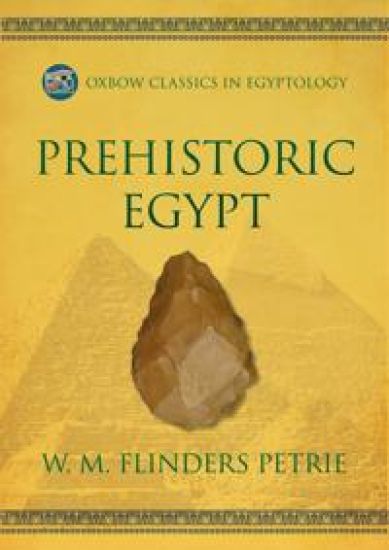
Prehistoric Egypt

Prehistoric Egypt

W M Flinders Petrie

Casemate Publishers
2023
nidottu
This is the facsimile edition of the 1974 reissue of Flinders Petrie’s 1921 description and catalogue of pre-dynastic, prehistoric artifacts from Egypt. Draws together evidence from various excavations and surveys undertaken by himself and others to present a fully illustrated, detailed catalogue of recovered artifacts of flint, other stone, clay, pottery, ivory/tusk and bone, metalwork, wood, shell and glass. He attempts to establish relative dating sequence based on a combination of object typologies and grave associations, combined with the then-latest geological and sedimentological information, concluding that the material covered a period from around 10,000–5000 BC. Objects are described by material and form, set within his established chronological framework. This series comprises facsimile re-issues of typological catalogues produced between 1898 and 1937 by W. M. Flinders Petrie, based on his vast collection of Egyptian artefacts which now reside in The Petrie Museum of Egyptian and Sudanese Archaeology, University College, London. Long out of print, the catalogues were re-issued in facsimile by publishers Aris & Phillips in the 1970s alongside newly-commissioned titles by contemporary experts. Petrie’s catalogues remain invaluable source material today. The Oxbow Classics in Egyptology series now makes a selection of these important resources available again in print for a new generation of students and scholars.
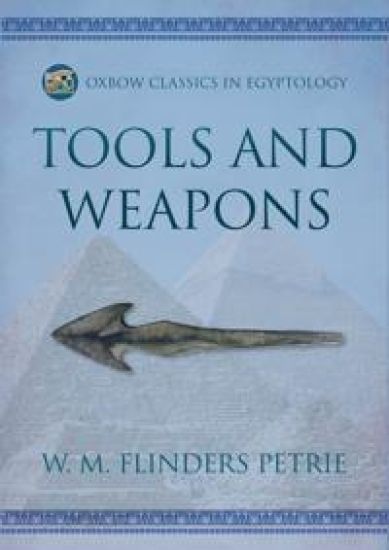
Tools and Weapons

Tools and Weapons

W M Flinders Petrie

Casemate Publishers
2023
nidottu
Facsimile edition of the 1974 reissue of Flinders Petrie’s 1917 pioneering typological catalogue of Egyptian metal, wooden and composite tools and weapons, one of a number of such catalogues to be reissued in this new series. The volume is arranged by category, first of general tools, including axes, chisels and knives, and then weapons, such as daggers and spears. This is followed by sections on woodworking (artisans') and builders’ tools, personal items, agricultural equipment and a range of domestic items. Within each category, sub-categories are defined, described and discussed and the full range is illustrated as outline drawings and photographs across 79 plates. The catalogue addresses questions of chronology, typological development, and distribution, and provides a limited discussion of comparable material from outside Egypt. This series comprises facsimile re-issues of typological catalogues produced between 1898 and 1937 by W. M. Flinders Petrie, based on his vast collection of Egyptian artefacts which now reside in The Petrie Museum of Egyptian and Sudanese Archaeology, University College, London. Long out of print, the catalogues were re-issued in facsimile by publishers Aris & Phillips in the 1970s alongside newly-commissioned titles by contemporary experts. Petrie’s catalogues remain invaluable source material today. The Oxbow Classics in Egyptology series now makes a selection of these important resources available again in print for a new generation of students and scholars.
Buttons and Design Scarabs

Buttons and Design Scarabs

W M Flinders Petrie

Casemate Publishers
2023
nidottu
This facsimile reissue of Flinders Petrie’s extensive catalog of buttons and scarabs describes and illustrates over 1500 examples, along with an appendix on additions to the ‘Scarabs and Cylinders’ volume published earlier. In keeping with his other object catalogs, Petrie devises object classifications based on form with an attempt at dating their sequences. He describes the back of the objects, materials, their designs and inscriptions, and offers ideas on their meanings. Particular attention is paid to animal and human representations and those possibly of gods. He also identifies several local series. This volume is part of a new series comprising facsimile re-issues of typological catalogues produced between 1898 and 1937 by Sir W. M. Flinders Petrie, based on his vast collection of Egyptian artefacts. Mostly excavated by Petrie during many seasons of campaign in the latter years of the 19th and early decades of the 20th century, these artefacts now reside in the Petrie Museum at University College, London. Long out of print, the catalogues were re-issued in facsimile by publishers Aris & Phillips in the 1970s alongside newly-commissioned titles, based on more recent examination of elements of the Petrie Collection by contemporary experts. The Oxbow Classics in Egyptology series makes a selection of these important resources available again in print for a new generation of students and scholars.
Scarabs and Cylinders (with Names)

Scarabs and Cylinders (with Names)

W M Flinders Petrie

Casemate Publishers
2023
nidottu
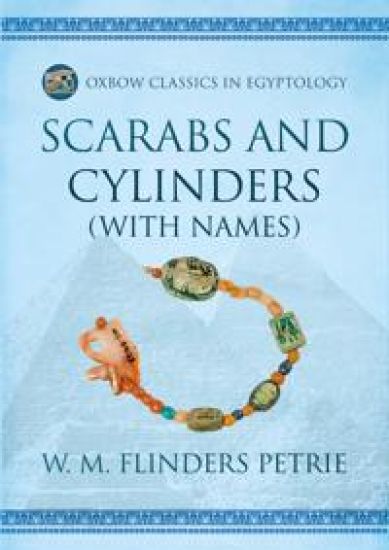
Facsimile edition of the 1974 reissue of Flinders Petrie’s 1917 pioneering typological catalogue of Egyptian name-scarabs and cylinders, one of a number of such catalogues to be reissued in this new series. The beetle form of amulets are common finds on Egyptian sites but examples with engraved names represent a small proportion of the total. Over 240 different royal persons are named among the various major museum collections. Petrie here illustrates and discusses over 1,600 examples in his own collection together with a selection of inscribed steatite cylinders. He discusses the religious aspects of scarabs and their magical use, their varieties, materials and manufacture, and presents a chronological discussion with fully illustrated catalog of both line drawings and photographs. This volume is part of a new series comprising facsimile re-issues of typological catalogues produced between 1898 and 1937 by W. M. Flinders Petrie, based on his vast collection of Egyptian artefacts. Mostly excavated by Petrie during many seasons of campaign in the latter years of the 19th and early decades of the 20th century, these artefacts now reside in the Petrie Museum at University College, London. Long out of print, the catalogues were re-issued in facsimile by publishers Aris & Phillips in the 1970s alongside newly-commissioned titles, based on more recent examination of elements of the Petrie Collection by contemporary experts. The Oxbow Classics in Egyptology series makes a selection of these important resources available again in print for a new generation of students and scholars.
Amulets

Amulets

W M Flinders Petrie

Casemate Publishers
2023
nidottu
This facsimile edition of the 1972 reissue of Flinders Petrie’s 1914 pioneering typological catalogue of Egyptian amulets, is one of a number of such catalogues to be reissued in this new series. Remarkably – although points of detail emanating from more recent research have surfaced – it remains unsurpassed in its comprehensive description, typological classification, and interpretation. While an absence of reasoned argument for the dating of his various groups is a weak point of Petrie’s study from the point of view of modern scholarship, his attention to detail and careful consideration of typology and potential meaning, borne of decades of observation, means that this, and the other catalogues in the series, remain as invaluable reference books for Egyptologists. Based on examination of his own extensive collection of Egyptian artifacts, Petrie presents a typologically ordered catalogue divided into seven main groups defined on the basis of interpretation rather than subject: amulets of ‘similar’ kind, for example, relating to body parts; power; property; protection; human-headed; animal-headed; and animal gods. Each class of object is described along with its varieties: material, distribution, position within burials, its chronological position as defined by Petrie himself, and its meaning interpreted. Collections containing examples are listed and hundreds of objects are presented in photographs and a selection of burial associations illustrated by coffin plans.
Glass Stamps and Weights

Glass Stamps and Weights

W M Flinders Petrie

Casemate Publishers
2023
nidottu
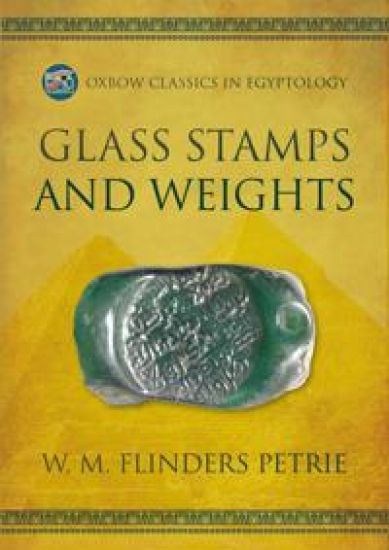
A facsimile volume of a detailed catalogue prepared by Flinders Petrie on artifacts largely collected from his Egyptian explorations of a series of glass stamps of Egyptian manufacture that were used from the Roman to Abbasid period variously as tokens, counters, weights, or attached to glass cups as indications of measure. Various categories are identified and described, makers’ names discussed, and weight standards considered. Over 700 stamps are illustrated both as photographs and transcribed line drawings. This volume is part of a new series comprising facsimile re-issues of typological catalogues produced between 1898 and 1937 by W. M. Flinders Petrie, based on his vast collection of Egyptian artefacts. Mostly excavated by Petrie during many seasons of campaign in the latter years of the 19th and early decades of the 20th century, these artefacts now reside in the Petrie Museum at University College, London. Long out of print, the catalogues were re-issued in facsimile by publishers Aris & Phillips in the 1970s alongside newly-commissioned titles, based on more recent examination of elements of the Petrie Collection by contemporary experts. The Oxbow Classics in Egyptology series makes a selection of these important resources available again in print for a new generation of students and scholars.
Methods and Aims in Archaeology

Methods and Aims in Archaeology

W M Flinders Petrie

MJP Publisher
2022
sidottu
ARCHAEOLOGY is the latest born of the sciences. It has but scarcely struggled into freedom, out of the swaddling clothes of dilettante speculations. It is still attracted by pretty things, rather than by real knowledge. It has to find shelter with the Fine Arts or with History, and not a single home has yet been provided for its real growth. All other sciences deal with the things around us; with subjects which may, or may not, affect us. Even medical sciences are concerned with the mechanical structure of the body, rather than with the nature and abilities of the mind. But the science which enquires into all the products and works of our own species, which shows what man has been doing in all ages and under all conditions, which reveals his mind, his thoughts, his tastes, his feelings, -such a science touches us more closely than any other. By this science, of which History forms a part, we trace the nature of man, age after age, -his capacities, his abilities; we learn where he succeeds, where he fails, and what his possibilities may be. From another point of view the subject should be considered; it gives a more truly "liberal education" than any other subject, as at present taught. A complete archaeological training would require a full knowledge of history and art, a fair use of languages, and a working familiarity with many sciences. The one-sided growth of modern training, which produces a B. A. who knows nothing of natural science, or else a B. Sc. who knows nothing of human nature, is assuredly not the ideal for a reasonable man. Archaeology, -the knowledge of how man has acquired his present position and powers-is one of the widest studies, best fitted to open the mind, and to produce that type of wide interests and toleration which is the highest result of education. Though this volume is a book of reference for those engaged in actual work, yet it will also serve to give the public a view of the way in which this work is done, the mode in which results are obtained, the ends which are pursued, and the important questions which must be considered. We have nothing here to do with the details of the facts discovered; but deal only with the methods and aims, which have been slowly learned in a quarter of a century. Yet every year there are fresh methods to add, and more clear views of the aims; and far more might easily have been said about each of the subjects here discussed. If in this outline there is much more reference to Egypt than to other countries, it is for the reason that most of my own work has lain there; and there is the more need to deal with that land, as more exploration is going on there than elsewhere. I have to thank my friends for six of the photographs here used. W. M. FLINDERS PETRIE. UNIVERSITY COLLEGE, LOND

Janus in Modern Life

Janus in Modern Life

W M Flinders Petrie

ALPHA EDITION
2022
pokkari
This book "" Janus in Modern Life "", has been considered important throughout the human history, and so that this work is never forgotten we have made efforts in its preservation by republishing this book in a modern format for present and future generations. This whole book has been reformatted, retyped and designed. These books are not made of scanned copies and hence the text is clear and readable.